Chain-of-thought (CoT) reasoning has emerged as a powerful tool for multimodal large language models in video understanding. However, its necessity and advantages over direct answering remain underexplored. In this paper, we first demonstrate that for RL-trained video models, direct answering often matches or even surpasses CoT performance, despite CoT producing step-by-step analyses at a higher compute cost. Motivated by this, we propose VideoAutoThink, a video understanding framework that adopts a ``reason-when-necessary'' strategy. During training, our approach follows a Thinking Once, Answering Twice paradigm: the model first generates an initial answer, then performs reasoning, and finally outputs a reviewed answer. Both answers are supervised with verifiable rewards. During inference, the model uses the confidence score of the initial answer to determine whether to proceed with reasoning. Across video QA and grounding benchmarks, VideoAutoThink achieves state-of-the-art accuracy with significantly improved efficiency, reducing the average response length by ~3.3x, e.g., from 144 to just 44 tokens. Moreover, we observe low activation of thinking on perception-oriented tasks, but higher activation on reasoning-intensive tasks. This suggests that explicit language-based reasoning is generally beneficial but not always necessary.
Real-time AI experiences call for on-device large language models (OD-LLMs) optimized for efficient deployment on resource-constrained hardware. The most useful OD-LLMs produce near-real-time responses and exhibit broad hardware compatibility, maximizing user reach. We present a methodology for designing such models using hardware-in-the-loop architecture search under mobile latency constraints. This system is amenable to industry-scale deployment: it generates models deployable without custom kernels and compatible with standard mobile runtimes like Executorch. Our methodology avoids specialized attention mechanisms and instead uses attention skipping for long-context acceleration. Our approach jointly optimizes model architecture (layers, dimensions) and attention pattern. To efficiently evaluate candidates, we treat each as a pruned version of a pretrained backbone with inherited weights, thereby achieving high accuracy with minimal continued pretraining. We leverage the low cost of latency evaluation in a staged process: learning an accurate latency model first, then searching for the Pareto-frontier across latency and quality. This yields MobileLLM-Flash, a family of foundation models (350M, 650M, 1.4B) for efficient on-device use with strong capabilities, supporting up to 8k context length. MobileLLM-Flash delivers up to 1.8x and 1.6x faster prefill and decode on mobile CPUs with comparable or superior quality. Our analysis of Pareto-frontier design choices offers actionable principles for OD-LLM design.
Diffusion Large Language Models (dLLMs) introduce a new paradigm for language generation and thus induce new challenges in aligning dLLMs for human preference. In this work, aim to optimize the dLLM generation process by developing a theoretical formulation and an efficient and effective quantification of the probability of generation trajectory. We prove that (i) under reference policy regularization, the probability ratio of intermediate diffusion states equals to that of the newly unmasked tokens, and (ii) the probability of the entire generation can be estimated using a single forward pass with block attention. Integrating the two estimations into preference optimization objective, we propose Trajectory Reduction Policy Optimization (dTRPO). We evaluate dTRPO on 7B dLLMs across instruction-following and reasoning benchmarks and show that it substantially improves the core performance of state-of-the-art dLLMs, achieving gains of up to 9.6\% on STEM tasks, up to 4.3\% on coding tasks, and up to 3.0\% on instruction-following tasks.
Adapting Multimodal Large Language Models (MLLMs) for hour-long videos is bottlenecked by context limits. Dense visual streams saturate token budgets and exacerbate the lost-in-the-middle phenomenon. Existing heuristics, like sparse sampling or uniform pooling, blindly sacrifice fidelity by discarding decisive moments and wasting bandwidth on irrelevant backgrounds. We propose Tempo, an efficient query-aware framework compressing long videos for downstream understanding. Tempo leverages a Small Vision-Language Model (SVLM) as a local temporal compressor, casting token reduction as an early cross-modal distillation process to generate compact, intent-aligned representations in a single forward pass. To enforce strict budgets without breaking causality, we introduce Adaptive Token Allocation (ATA). Exploiting the SVLM's zero-shot relevance prior and semantic front-loading, ATA acts as a training-free O(1) dynamic router. It allocates dense bandwidth to query-critical segments while compressing redundancies into minimal temporal anchors to maintain the global storyline. Extensive experiments show our 6B architecture achieves state-of-the-art performance with aggressive dynamic compression (0.5-16 tokens/frame). On the extreme-long LVBench (4101s), Tempo scores 52.3 under a strict 8K visual budget, outperforming GPT-4o and Gemini 1.5 Pro. Scaling to 2048 frames reaches 53.7. Crucially, Tempo compresses hour-long videos substantially below theoretical limits, proving true long-form video understanding relies on intent-driven efficiency rather than greedily padded context windows.
3D Gaussian Splatting (3DGS) has emerged as a powerful technique for real-time, high-resolution novel view synthesis. By representing scenes as a mixture of Gaussian primitives, 3DGS leverages GPU rasterization pipelines for efficient rendering and reconstruction. To optimize scene coverage and capture fine details, 3DGS employs a densification algorithm to generate additional points. However, this process often leads to redundant point clouds, resulting in excessive memory usage, slower performance, and substantial storage demands-posing significant challenges for deployment on resource-constrained devices. To address this limitation, we propose a theoretical framework that demystifies and improves density control in 3DGS. Our analysis reveals that splitting is crucial for escaping saddle points. Through an optimization-theoretic approach, we establish the necessary conditions for densification, determine the minimal number of offspring Gaussians, identify the optimal parameter update direction, and provide an analytical solution for normalizing off-spring opacity. Building on these insights, we introduce SteepGS, incorporating steepest density control, a principled strategy that minimizes loss while maintaining a compact point cloud. SteepGS achieves a similar to 50% reduction in Gaussian points without compromising rendering quality, significantly enhancing both efficiency and scalability.
The most fundamental capability of modern AI methods such as Large Language Models (LLMs) is the ability to predict the next token in a long sequence of tokens, known as “sequence modeling.” Although the Transformers model is the current dominant approach to sequence modeling, its quadratic computational cost with respect to sequence length is a significant drawback. State-space models (SSMs) offer a promising alternative due to their linear decoding efficiency and high parallelizability during training. However, existing SSMs often rely on seemingly ad hoc linear recurrence designs.In this work, we explore SSM design through the lens of online learning, conceptualizing SSMs as meta-modules for specific online learning problems. This approach links SSM design to formulating precise online learning objectives, with state transition rules derived from optimizing these objectives.Based on this insight, we introduce a novel deep SSM architecture based on the implicit update for optimizing an online regression objective. Our experimental results show that our models outperform state-of-the-art SSMs, including the Mamba model, on standard sequence modeling benchmarks and language modeling tasks.
Segment Anything Model 2 (SAM 2) has emerged as a powerful tool for video object segmentation and tracking anything. Key components of SAM 2 that drive the impressive video object segmentation performance include a large multistage image encoder for frame feature extraction and a memory mechanism that stores memory contexts from past frames to help current frame segmentation. The high computation complexity of multistage image encoder and memory module has limited its applications in real-world tasks, e.g., video object segmentation on mobile devices. To address this limitation, we propose EfficientTAMs, lightweight track anything models that produce high-quality results with low latency and model size. Our idea is based on revisiting the plain, nonhierarchical Vision Transformer (ViT) as an image encoder for video object segmentation, and introducing an efficient memory module, which reduces the complexity for both frame feature extraction and memory computation for current frame segmentation. We take vanilla lightweight ViTs and efficient memory module to build EfficientTAMs, and train the models on SA-1B and SA-V datasets for video object segmentation and track anything tasks. We evaluate on multiple video segmentation benchmarks including semi-supervised VOS and promptable video segmentation, and find that our proposed EfficientTAM with vanilla ViT perform comparably to SAM 2 model (HieraB+SAM 2) with 2x speedup on A100 and 2.4x parameter reduction. On segment anything image tasks, our EfficientTAMs also perform favorably over original SAM with 20x speedup on A100 and 20x parameter reduction. On mobile devices such as iPhone 15 Pro Max, our EfficientTAMs can run at 10 FPS for performing video object segmentation with reasonable quality, highlighting the capability of small models for on-device video object segmentation applications.
On top of Segment Anything Model (SAM), SAM 2 further extends its capability from image to video inputs through a memory bank mechanism and obtains a remarkable performance compared with previous methods, making it a foundation model for video segmentation task. In this paper, we aim at making SAM 2 much more efficient so that it even runs on mobile devices while maintaining a comparable performance. Despite several works optimizing SAM for better efficiency, we find they are not sufficient for SAM 2 because they all focus on compressing the image encoder, while our benchmark shows that the newly introduced memory attention blocks are also the latency bottleneck. Given this observation, we propose EdgeTAM, which leverages a novel 2D Spatial Perceiver to reduce the computational cost. In particular, the proposed 2D Spatial Perceiver encodes the densely stored frame-level memories with a lightweight Transformer that contains a fixed set of learnable queries. Given that video segmentation is a dense prediction task, we find preserving the spatial structure of the memories is essential so that the queries are split into global-level and patch-level groups. We also propose a distillation pipeline that further improves the performance without inference overhead. As a result, EdgeTAM achieves 87.7, 70.0, 72.3, and 71.7 J F on DAVIS 2017, MOSE, SA-V val, and SA-V test, while running at 16 FPS on iPhone 15 Pro Max.
Multimodal Large Language Models (MLLMs) have shown promising progress in understanding and analyzing video content. However, processing long videos remains a significant challenge constrained by LLM's context size. To address this limitation, we propose LongVU, a spatiotemporal adaptive compression mechanism thats reduces the number of video tokens while preserving visual details of long videos. Our idea is based on leveraging cross-modal query and inter-frame dependencies to adaptively reduce temporal and spatial redundancy in videos. Specifically, we leverage DINOv2 features to remove redundant frames that exhibit high similarity. Then we utilize text-guided cross-modal query for selective frame feature reduction. Further, we perform spatial token reduction across frames based on their temporal dependencies. Our adaptive compression strategy effectively processes a large number of frames with little visual information loss within given context length. Our LongVU consistently surpass existing methods across a variety of video understanding benchmarks, especially on hour-long video understanding tasks such as VideoMME and MLVU. Given a light-weight LLM, our LongVU also scales effectively into a smaller size with state-of-the-art video understanding performance.
Flow matching has been successfully applied onto generative models, particularly in producing high-quality images and audio. However, the iterative sampling required for the ODE solver in flow matching-based approaches can be time-consuming. Reflow finetune, a technique derived from Rectified flow, offers a promising solution by transforming the ODE trajectory into a straight one, thereby reducing the number of sampling steps. In this paper, we focus on developing data-efficient flow-based approaches for text-to-audio generation. We found that directly applying reflow to the pre-trained flow matching-based audio generation models is typically computationally expensive. It requires over 50,000 training iterations and five times the amount of training data to achieve satisfactory results. To address this issue, we introduce a novel data-efficient reflow (DEreflow) method. This method modifies the reflow data pairs and trajectory to align with the flow matching distribution. As a result of this alignment, our approach requires significantly fewer steps (8,000 compared to 50,000) and data pairs $(0.5$ times the scale of training data compared to 5 times). Results show that the proposed DEreflow consistently outperforms the original reflow method on the text-to-audio generation task.
Recent works have demonstrated success in controlling sentence attributes ($e.g.$, sentiment) and structure ($e.g.$, syntactic structure) based on the diffusion language model. A key component that drives theimpressive performance for generating high-quality samples from noise is iteratively denoise for thousands of steps. While beneficial, the complexity of starting from the noise and the learning steps has limited its implementation to many NLP real-world applications. This paper proposes Language Rectified Flow ({\ours}). Our method is based on the reformulation of the standard probabilistic flow models. Language rectified flow learns (neural) ordinary differential equation models to transport between the source distribution and the target distribution, hence providing a unified and effective solution to generative modeling and domain transfer. From the source distribution, our language rectified flow yields fast simulation and effectively decreases the inference time. Experiments on three challenging fine-grained control tasks and multiple high-quality text editing show that our method consistently outperforms its baselines. Extensive experiments and ablation studies demonstrate that our method can be general, effective, and beneficial for many NLP tasks.
Very deep neural networks lead to significantly better performance on various real tasks. However, it usually causes slow inference and is hard to be deployed on real-world devices. How to reduce the number of layers to save memory and to accelerate the inference is an eye-catching topic. In this work, we introduce an intermediate objective, a continuous-time network, before distilling deep networks into shallow networks. First, we distill a given deep network into a continuous-time neural flow model, which can be discretized with an ODE solver and the inference requires passing through the network multiple times. By forcing the flow transport trajectory to be straight lines, we find that it is easier to compress the infinite step model into a one-step neural flow model, which only requires passing through the flow model once. Secondly, we refine the one-step flow model together with the final head layer with knowledge distillation and finally, we can replace the given deep network with this one-step flow network. Empirically, we demonstrate that our method outperforms direct distillation and other baselines on different model architectures (e.g. ResNet, ViT) on image classification and semantic segmentation tasks. We also manifest that our distilled model naturally serves as an early-exit dynamic inference model.
The inverse folding of proteins has tremendous applications in protein design and protein engineering. While machine learning approaches for inverse folding have made significant advancements in recent years, efficient generation of diverse and high-quality sequences remains a significant challenge, limiting their practical utility in protein design and engineering. We propose to do probabilistic flow framework that introduces three key designs for designing an amino acid sequence with target fold. At the input level, compare to existing inverse folding methods, rather than sampling sequences from the backbone scaffold, we demonstrate that analyzing a protein structure via the local chemical environment (micro-environment) at each residue can come to comparable performance. At the method level, rather than optimizing the recovery ratio, we generate diverse suggestions. 3) At the data level, during training, we propose to do data augmentation with sequence with high sequence similarity, and train a probability flow model to capture the diverse sequence information. We demonstrate that we achieve comparable recovery ratio as the SOTA inverse folding models with higher inference efficiency and flexibility by only using micro-environment as inputs, and further show that we outperforms existing inverse folding methods in several zero-shot thermal stability change prediction tasks.
Segment Anything Model (SAM) has emerged as a powerful tool for numerous vision applications. A key component that drives the impressive performance for zero-shot transfer and high versatility is a super large Transformer model trained on the extensive high-quality SA-1B dataset. While beneficial, the huge computation cost of SAM model has limited its applications to wider real-world applications. To address this limitation, we propose EfficientSAMs, light-weight SAM models that exhibits decent performance with largely reduced complexity. Our idea is based on leveraging masked image pretraining, SAMI, which learns to reconstruct features from SAM image encoder for effective visual representation learning. Further, we take SAMI-pretrained light-weight image encoders and mask decoder to build EfficientSAMs, and finetune the models on SA-1B for segment anything task. We perform evaluations on multiple vision tasks including image classification, object detection, instance segmentation, and semantic object detection, and find that our proposed pretraining method, SAMI, consistently outperforms other masked image pretraining methods. On segment anything task such as zero-shot instance segmentation, our EfficientSAMs with SAMI-pretrained lightweight image encoders perform favorably with a significant gain (e.g., ~4 AP on COCO/LVIS) over other fast SAM models.
In this paper, we introduce Geometry-Inverse-Meet-Pixel-Insert, short for GEO, an exceptionally versatile image editing technique designed to cater to customized user requirements at both local and global scales. Our approach seamlessly integrates text prompts and image prompts to yield diverse and precise editing outcomes. Notably, our method operates without the need for training and is driven by two key contributions: (i) a novel geometric accumulation loss that enhances DDIM inversion to faithfully preserve pixel space geometry and layout, and (ii) an innovative boosted image prompt technique that combines pixel-level editing for text-only inversion with latent space geometry guidance for standard classifier-free reversion. Leveraging the publicly available Stable Diffusion model, our approach undergoes extensive evaluation across various image types and challenging prompt editing scenarios, consistently delivering high-fidelity editing results for real images.
The Lion optimizer has been a promising competitor with the AdamW for training large AI models, with advantages on memory, computation, and sample efficiency. In this paper, we introduce Distributed Lion, an innovative adaptation of Lion for distributed training environments. Leveraging the sign operator in Lion, our Distributed Lion only requires communicating binary or lower-precision vectors between workers to the center server, significantly reducing the communication cost. Our theoretical analysis confirms Distributed Lion's convergence properties. Empirical results demonstrate its robustness across a range of tasks, worker counts, and batch sizes, on both vision and language problems. Notably, Distributed Lion attains comparable performance to standard Lion or AdamW optimizers applied on aggregated gradients, but with significantly reduced communication bandwidth. This feature is particularly advantageous for training large models. In addition, we also demonstrate that Distributed Lion presents a more favorable performance-bandwidth balance compared to existing efficient distributed methods such as deep gradient compression and ternary gradients.
This paper presents Llama Guard 3-1B-INT4, a compact and efficient Llama Guard model, which has been open-sourced to the community during Meta Connect 2024. We demonstrate that Llama Guard 3-1B-INT4 can be deployed on resource-constrained devices, achieving a throughput of at least 30 tokens per second and a time-to-first-token of 2.5 seconds or less on a commodity Android mobile CPU. Notably, our experiments show that Llama Guard 3-1B-INT4 attains comparable or superior safety moderation scores to its larger counterpart, Llama Guard 3-1B, despite being approximately 7 times smaller in size (440MB).
The Segment Anything Model (SAM) has been a cornerstone in the field of interactive segmentation, propelling significant progress in generative AI, computational photography, and medical imaging. Despite its ability to process arbitrary user input and generate corresponding segmentation masks, SAM's 600 million parameter architecture, based on ViT-H, is not compatible with current mobile hardware due to its high computational demands and large model size. Our research aims to adapt SAM for use in mobile photography applications. To this end, we have developed a fully convolutional SqueezeSAM model architecture, which is 62.5 times faster and 31.6 times smaller than the original SAM, making it a viable solution for mobile applications. Furthermore, our tiny model achieves an mIOU within 1% of the original VIT-H architecture. Automated segmentation holds significant value in the creation flow for photography applications, as evidenced by its adoption by leading industry players like apple and capcut. To facilitate this automation, we employ salient object detection and simulate potential user clicks for foreground object selection, generating an initial segmentation mask that users can subsequently edit interactively. A common user expectation is that a click on a specific part of an object will result in the segmentation of the entire object. For example, a click on a person's t-shirt in a photo should ideally segment the entire person, not just the t-shirt. However, SAM typically only segments the clicked area. We address this limitation through a novel data augmentation scheme. Consequently, if a user clicks on a person holding a basketball, both the person and the basketball are segmented together, aligning with user expectations and enhancing the overall user experience.
Homomorphic encryption (HE)-based deep neural network (DNN) inference protects data and model privacy but suffers from significant computation overhead. We observe transforming the DNN weights into circulant matrices converts general matrix-vector multiplications into HE-friendly 1-dimensional convolutions, drastically reducing the HE computation cost. Hence, in this paper, we propose PrivCirNet, a protocol/network co-optimization framework based on block circulant transformation. At the protocol level, PrivCirNet customizes the HE encoding algorithm that is fully compatible with the block circulant transformation and reduces the computation latency in proportion to the block size. At the network level, we propose a latency-aware formulation to search for the layer-wise block size assignment based on second-order information. PrivCirNet also leverages layer fusion to further reduce the inference cost. We compare PrivCirNet with the state-of-the-art HE-based framework Bolt (IEEE S\&P 2024) and HE-friendly pruning method SpENCNN (ICML 2023). For ResNet-18 and Vision Transformer (ViT) on Tiny ImageNet, PrivCirNet reduces latency by $5.0\times$ and $1.3\times$ with iso-accuracy over Bolt, respectively, and improves accuracy by $4.1$\% and $12$\% over SpENCNN, respectively. For MobileNetV2 on ImageNet, PrivCirNet achieves $1.7\times$ lower latency and $4.2$\% better accuracy over Bolt and SpENCNN, respectively. Our code and checkpoints are available on Git Hub.
Diffusion models have achieved promising results on generative learning recently. However, because diffusion processes are most naturally applied on the unconstrained Euclidean space $\mathrm{R}^d$, key challenges arise for developing diffusion based models for learning data on constrained and structured domains. We present a simple and unified framework to achieve this that can be easily adopted to various types of domains, including product spaces of any type (be it bounded/unbounded, continuous/discrete, categorical/ordinal, or their mix). In our model, the diffusion process is driven by a drift force that is a sum of two terms: one singular force designed by $Doob's~ h$-$transform$ that ensures all outcomes of the process to belong to the desirable domain, and one non-singular neural force field that is trained to make sure the outcome follows the data distribution statistically. Experiments show that our methods perform superbly on generating tabular data, images, semantic segments and 3D point clouds.
 Qiang Liu合作论文数Department of Computer Science, College of Natural Sciences, The University of Texas at Austin24
 Vikas Chandra合作论文数Meta Reality Labs15
 Raghuraman Krishnamoorthi合作论文数15
 Xingchao Liu (刘星超)合作论文数DeepSeek AI13
 Yunyang Xiong合作论文数Facebook Reality Lab11
 Chengyue Gong (龚成玥)合作论文数ByteDance9
 Mao Ye合作论文数Department of Computer Science, The University of Texas at Austin8
 Chenchen Zhu (诸宸辰)合作论文数Meta AI8
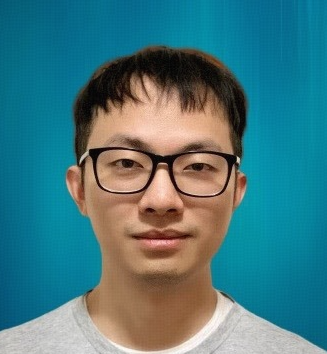 Dilin Wang合作论文数Meta Reality Labs8
 Zechun Liu合作论文数Reality Labs, Meta Inc7
 Bilge Soran合作论文数University of Washington7
 Balakrishnan Varadarajan合作论文数Meta6
 Saksham Suri合作论文数Department of Computer Science, University of Maryland;Meta4
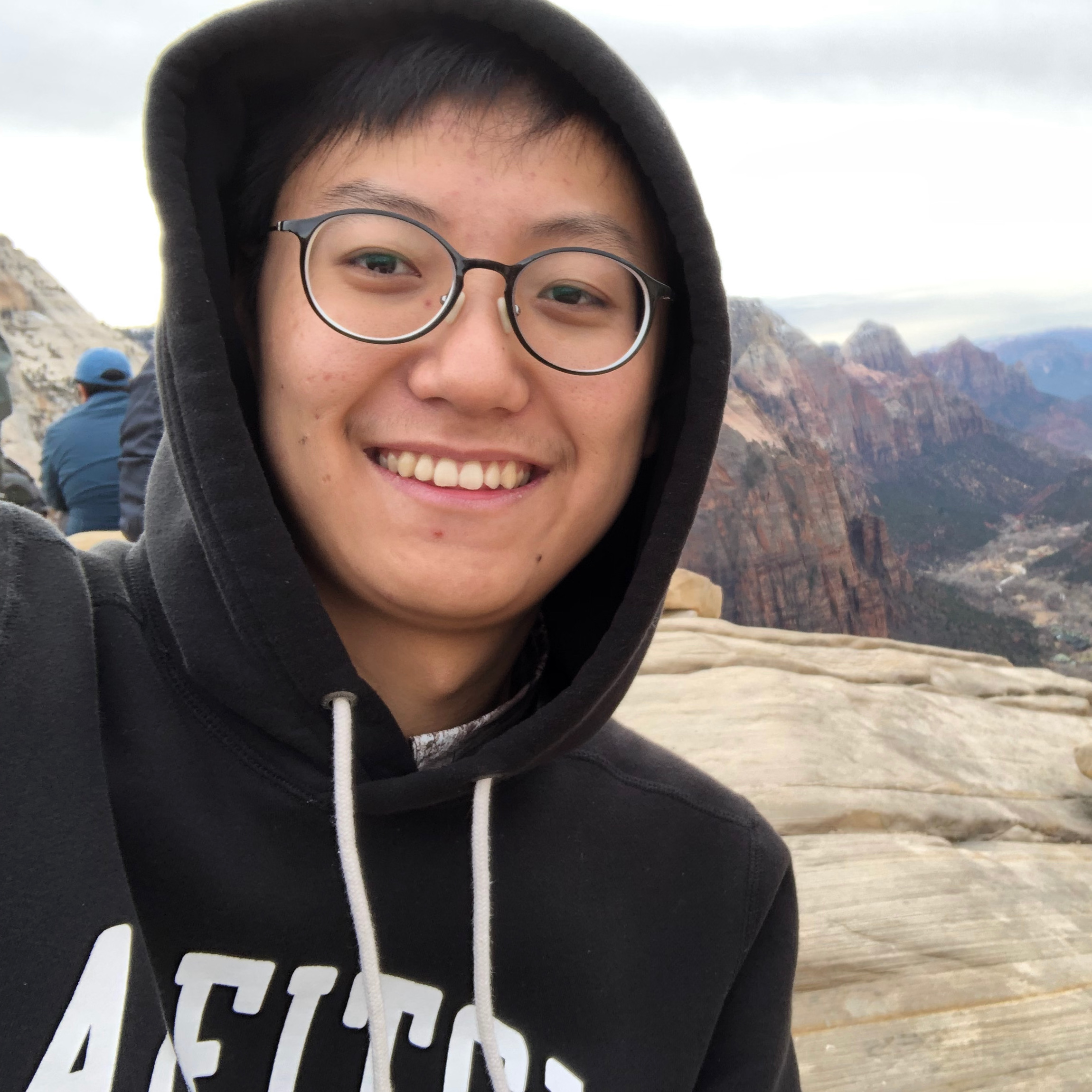 Chong Zhou (周冲)合作论文数Meta Reality Labs4
 Changsheng Zhao合作论文数Meta AI4
 Xiaoyu Xiang (向小雨)合作论文数4
 Forrest Iandola合作论文数Meta4
 Jun Chen (陈军)合作论文数Meta AI4
 Mingchen Zhuge (诸葛鸣晨)合作论文数King Abdullah University of Science and Technology;Meta3
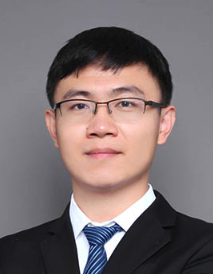 Meng Li (李萌)合作论文数Institute for Artificial Intelligence, Peking University;School of Integrated Circuits, Peking University3
 Fanyi Xiao合作论文数Meta AI3
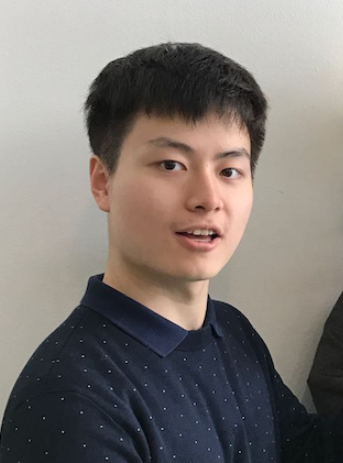 Bo Liu合作论文数Department of Computer Science, University of Texas at Austin3
 Qixing Huang合作论文数3
 Shujian Zhang (张树剑)合作论文数Institute of Chinese Medicine Literature and Culture, Shandong University of Chinese Medicine3
 Mohamed H. Elhoseiny合作论文数Visual Computing Center, King Abdullah University of Science and Technology3
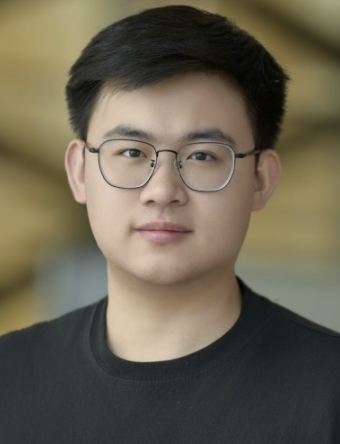 Shuming Liu合作论文数GenAI Center of Excellence, King Abdullah University of Science and Technology2
 Ernie Chang合作论文数Meta AI2Rakesh Ranjan合作论文数2
 Florian Bordes合作论文数2
 Igor Fedorov合作论文数Department of Chemistry, University of Southern California2
 Hu Xu合作论文数Facebook AI Research2
 Qi Qian合作论文数Tongyi Lab, Alibaba Group;Machine Intelligence Technology Lab, Alibaba Group2
 Yangyang Shi合作论文数Meta Reality Labs2
 Naveen Suda合作论文数Meta2
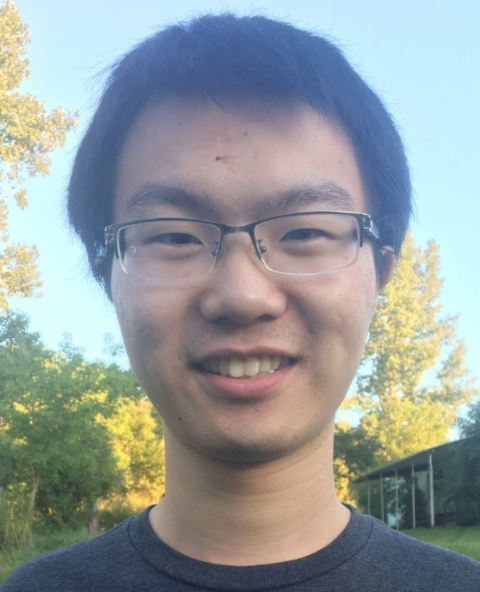 Zhuang Liu (刘壮)合作论文数Department of Computer Science, Princeton University2
 Peter Stone合作论文数Department of Computer Science, College of Natural Sciences, The University of Texas at Austin;Sony AI;Sony Research2Ramya Akula合作论文数1Rui Wang合作论文数1Yu-Ying Yeh合作论文数1Yuehao Wang合作论文数1Chen Liang合作论文数1Rachad Alao合作论文数1Wei-Ning Hsu合作论文数1Kate Plawiak合作论文数1Mahesh Pasupuleti合作论文数1Zacharie Delpierre Coudert合作论文数1Adithya Sagar合作论文数1Lizhang Chen合作论文数1




