A major shortcoming of the recently standardized graph query languages GQL and SQL/PGQ is their lack of compositionality. Given the importance of these languages in querying knowledge graphs, we address this shortcoming and propose both theoretical solutions and a path to adding them to the new standards. The highlight of the non-compositionality problem is that while both GQL and SQL/PGQ can express graph reachability and all first-order queries, they fall short of the problems in NLOGSPACE. In view of the completeness of reachability for NLOGSPACE under first-order reductions, this is extremely counterintuitive. The issue is well recognized by the standards committee that has been searching for language extensions to fill the gaps at the level of some specific inexpressible queries. We address the issue in a systematic way and propose a language that fills expressivity gaps by allowing full compositionality between graph patterns and relational queries. It does so by using two key components: a cleaned up definition of regular path queries with variables and data value comparisons, and a fully compositional graph-to-graph language #Datalog with complete support for constructing new graph elements from nodes, edges, lists of nodes and edges, and even entire paths. We show that the resulting language addresses the issues facing the standards committee, and propose a concrete addition to GQL and SQL/PGQ that incorporates its main features.
From the moment of their inception, languages for relational data have been described as sublanguages embedded in a host programming language. Rel is a new relational language that goes beyond this paradigm, with features that allow for programming in the large, making it possible to fully describe end to end application semantics. With the new approach we can model the semantics of entire enterprise applications relationally, which helps significantly reduce architecture complexity and avoid the well-known impedance mismatch problem. This paradigm shift is enabled by 50 years of database research, making it possible to revisit the sublanguage/host language paradigm, starting from the fundamental principles. We present a gentle introduction to Rel and the principles behind its design philosophy.
SQL is the database community's success story in terms of language design. The key reason for its success is its declarativeness: it gives rise to optimizability, reducing the programmer's burden significantly. However, given the evolving complexity of problems to solve with query languages, our community needs to re-think some of the fundamental early query language design decisions. Our experience in having worked on the design of Rel (a language for end-to-end relational programming) tells us that it is possible to design, implement, and successfully deploy a language based on fully normalized relations. Such relations avoid what Codd called corrupted relations and what we commonly refer to as bags, and the 'harmful' 'billion dollar mistake' that we know as nulls. In the SQL world, it is accepted that bags and nulls are tolerated as an unavoidable evil. We argue that the evil is completely avoidable: reasons offered for justifying bags and nulls evaporate at a closer examination. In addition to debunking them, we also describe opportunities offered by a null-free language with set semantics.
Computing certain answers is the standard approach when data or knowledge is incomplete. This very natural concept rooted in logical validity suffers from a severe weakness: its generally intractable computational complexity. Consequently, significant effort has been made to find tractable cases, often at the expense of severe restrictions. Here we explore a different approach, relaxing not the classes of allowed queries but the very strict notion of certainty. Our starting point is that replacing certainty with asymptotic probability 1 overcomes intractability for large classes of queries. This theoretical observation was previously made for relational queries under a simple probabilistic model of uniform distribution and an infinite domain of equally likely values; these are hardly the realities of querying data. We therefore ask whether this phenomenon is robust enough to extend to other, realistic distributions, to be applicable to other data models, and to help with practical query answering. We answer all of these positively. After extending tractability via naïve evaluation to many distributions, we extend the approach to graph data, and then experimentally show that for relational and graph queries from standard TPC and LDBC benchmarks, convergence to high probability query answers is fast and practical.
Cypher has so far been the most commonly used query language for property graphs, and served as the foundation of the recently standardized graph query language GQL. In designing the features of GQL, the standards committee addressed the perceived limitations of Cypher. One such limitation is the inability of Cypher, as originally designed, to express all regular path queries (RPQs). Despite this claim having been stated many times as a folklore result, we could not find any proof of it. In this note we formalize the core of Cypher's pattern matching and formally prove that indeed it falls short of all RPQs, justifying the inclusion of new pattern matching features in GQL.
The workhorse of property graph query languages such as Cypher and GQL is pattern matching. The result of pattern matching is a collection of paths and mappings of variables to graph elements. To increase expressiveness of post-processing of pattern matching results, languages such as Cypher introduce the capability of creating lists of nodes and edges from matched paths, and provide users with standard list processing tools such as reduce. We show that on the one hand, this makes it possible to capture useful classes of queries that pattern matching alone cannot do. On the other hand, we show that this opens backdoor to very high and unexpected expressiveness. In particular one can very easily express several classical NP-hard problems by simple queries that use reduce. This level of expressiveness appears to be beyond what query optimizers can handle, and indeed this is confirmed by an experimental evaluation, showing that such queries time out already on very small graphs. We conclude our analysis with a suggestion on the use of list processing in queries that while retaining its usefulness, avoids the above pitfalls and prevents highly intractable queries.
From the moment of their inception, languages for relational data have been described as sublanguages embedded in a host programming language. Rel is a new relational language whose key design goal is to go beyond this paradigm with features that allow for programming in the large, making it possible to fully describe end to end application semantics. With the new approach we can model the semantics of entire enterprise applications relationally, which helps significantly reduce architecture complexity and avoid the well-known impedance mismatch problem. This paradigm shift is enabled by 50 years of database research, making it possible to revisit the sublanguage/host language paradigm, starting from the fundamental principles. We present the main features of Rel: those that give it the power to express traditional query language operations and those that are designed to grow the language and allow programming in the large.
Recently developed query languages for property graphs - GQL and SQL/PGQ - have now been standardized, and their theoretical models have been introduced and analyzed. These models however, do not yet have enough flexibility when it comes to process data stored as properties within property graphs; in particular they have limited ability to deal with various data types and operations on them. In a fully expressive query language, we should be able to perform meaningful computations on numerical and string data, among others. This includes queries that quantify over elements not explicitly present in the database. In this paper, we take a first step toward formalizing such expressive query languages and developing mathematical models that support them. Our approach is inspired by work on constraint databases, which permitted query evaluation for declarative languages that can reason about infinite domains and operations on them. We extend this approach to recently produced formal models of property graph query languages and analyze the gain in expressive power. This lays the foundation for further exploration and refinement of expressive query mechanisms for property graphs.
We need to rethink how users understand and develop queries. The growing diversity of users, the increasing complexity of query languages and data architectures - now aided by tools like LLMs - are challenging the traditional view of a highly-trained user writing queries in a controlled environment. Query formulation has become a more exploratory endeavor that needs to be researched and supported: an iterative cycle of designing, debugging, and maintaining queries. To ground this vision, we present an empirical analysis of query logs from the Wikidata Query Service, revealing common patterns of iterative query modification. Based on these findings, we propose a concrete research program with hypotheses, user studies, and research questions for query languages, engines, and interfaces. Our contributions include a curated query session dataset, a classification of exploratory-query patterns, and a roadmap for building system-level support for exploratory querying.
Real-life query languages feature external predicates such as user-defined functions or built-in arithmetic and string operations. These predicates are often infinite, potentially leading to unsafe or non-computable queries. To overcome this, traditional languages such as SQL, put significant syntactic restrictions on the use of external predicates. These restrictions have been relaxed in a number of modern query languages, each doing it in their own way. Our goal therefore is to provide a theoretical basis for querying with external predicates. To this end, we formalize queries with external predicates based on the notion of access patterns. We develop a suitable evaluation model, based on Turing machines with oracles, and tailor the classical notion of query safety to it. Since query safety is undecidable in general, we can only produce sufficient conditions for guaranteeing safety. We do so by developing an inference system to derive safety and computability for relational algebra, first-order logic, as well as for a language that combines them both.
SQL/PGQ and GQL are very recent international standards for querying property graphs: SQL/PGQ specifies how to query relational representations of property graphs in SQL, while GQL is a standalone language for graph databases. The rapid industrial development of these standards left the academic community trailing in its wake. While digests of the languages have appeared, we do not yet have concise foundational models like relational algebra and calculus for relational databases that enable the formal study of languages, including their expressiveness and limitations. At the same time, work on the next versions of the standards has already begun, to address the perceived limitations of their first versions. Motivated by this, we initiate a formal study of SQL/PGQ and GQL, concentrating on their concise formal model and expressiveness. For the former, we define simple core languages-Core PGQ and Core GQL-that capture the essence of the new standards, are amenable to theoretical analysis, and clarify the difference between PGQ's bottom up evaluation versus GQL's linear, or pipelined approach. Equipped with these models, we both confirm the necessity to extend the language to fill in the expressiveness gaps and identify the source of these deficiencies. We complement our theoretical analysis with an experimental study, demonstrating that existing workarounds in full GQL and PGQ are impractical, further underscoring the necessity to correct deficiencies in language design.
To answer database queries over incomplete data, the gold standard is finding certain answers: those that are true regardless of how incomplete data is interpreted. Such answers can be found efficiently for conjunctive queries and their unions, even in the presence of constraints. With negation added, the problem becomes intractable however. We concentrate on the complexity of certain answers under constraints and on effficiently answering queries outside the usual classes of (unions) of conjunctive queries by means of rewriting as Datalog and first-order queries. We first notice that there are three different ways in which query answering can be cast as a decision problem. We complete the existing picture and provide precise complexity bounds on all versions of the decision problem, for certain and best answers. We then study a well-behaved class of queries that extends unions of conjunctive queries with a mild form of negation. We show that for them, certain answers can be expressed in Datalog with negation, even in the presence of functional dependencies, thus making them tractable in data complexity. We show that in general, Datalog cannot be replaced by first-order logic, but without constraints such a rewriting can be done in first order.
Graph data management is instrumental for several use cases such as recommendation, root cause analysis, financial fraud detection, and enterprise knowledge representation. Efficiently supporting these use cases yields a number of unique requirements, including the need for a concise query language and graph-aware query optimization techniques. The goal of the Linked Data Benchmark Council (LDBC) is to design a set of standard benchmarks that capture representative categories of graph data management problems, making the performance of systems comparable and facilitating competition among vendors. LDBC also conducts research on graph schemas and graph query languages. This paper introduces the LDBC organization and its work over the last decade.
Property graphs have reached a high level of maturity, witnessed by multiple robust graph database systems as well as the ongoing ISO standardization effort aiming at creating a new standard Graph Query Language (GQL). Yet, despite documented demand, schema support is limited both in existing systems and in the first version of the GQL Standard. It is anticipated that the second version of the GQL Standard will include a rich DDL. Aiming to inspire the development of GQL and enhance the capabilities of graph database systems, we propose PG-Schema, a simple yet powerful formalism for specifying property graph schemas. It features PG-Types with flexible type definitions supporting multi-inheritance, as well as expressive constraints based on the recently proposed PG-Keys formalism. We provide the formal syntax and semantics of PG-Schema, which meet principled design requirements grounded in contemporary property graph management scenarios, and offer a detailed comparison of its features with those of existing schema languages and graph database systems.
The development of practical query languages for graph databases runs well ahead of the underlying theory. The ISO committee in charge of database query languages is currently developing a new standard called Graph Query Language (GQL) as well as an extension of the SQL Standard for querying property graphs represented by a relational schema, called SQL/PGQ. The main component of both is the pattern matching facility, which is shared by the two standards. In many aspects, it goes well beyond RPQs, CRPQs, and similar queries on which the research community has focused for years. Our main contribution is to distill the lengthy standard specification into a simple Graph Pattern Calculus (GPC) that reflects all the key pattern matching features of GQL and SQL/PGQ, and at the same time lends itself to rigorous theoretical investigation. We describe the syntax and semantics of GPC, along with the typing rules that ensure its expressions are well-defined, and state some basic properties of the language. With this paper we provide the community a tool to embark on a study of query languages that will soon be widely adopted by industry.
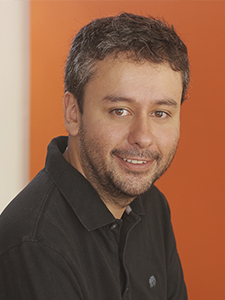 Marcelo Arenas合作论文数Department of Computer Science, School of engineering, Pontificia Universidad Católica de Chile;Institute for Mathematical and Computational Engineering, Pontificia Universidad Católica de Chile51
 Pablo Barceló合作论文数Institute of Mathematical and Computational Engineering, Pontificia Universidad Catolica de Chile;School of Engineering, Pontificia Universidad Catolica de Chile;Department of Computer Science, University of Chile50
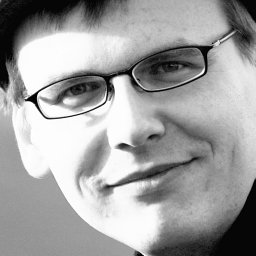 Filip Murlak合作论文数University of Warsaw44
 Paolo Guagliardo合作论文数School of Informatics, University of Edinburgh;Laboratory for Foundations of Computer Science, University of Edinburgh25
 Wim Martens合作论文数Universität Bayreuth19
 Limsoon Wong (黄任祥)合作论文数Department of Computer Science, School of Computing, National University of Singapore19
 Amelie Gheerbrant合作论文数University of Edinburgh15
 Domagoj Vrgoč合作论文数PUC Chile14
 Cristina Sirangelo合作论文数Institut de Recherche en Informatique Fondamentale, Université Paris Cité13
 Christian S. Jensen合作论文数Department of Computer Science, Aalborg University13
 Michael Benedikt合作论文数Department of Computer Science, University of Oxford12
 Nicole Schweikardt合作论文数Humboldt Universität zu Berlin12
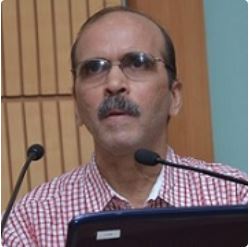 Krithi Ramamritham合作论文数Sai University12
 Marco Console合作论文数Dipartimento di Ingegneria Informatica, Automatica e Gestionale, Sapienza Università di Roma12Philippe Cudré-Mauroux合作论文数11Peter P. Chen合作论文数11Greg Flurry合作论文数11Ethan Zhang合作论文数11R. A. Amsler合作论文数11Constantine Stephanidis合作论文数11Jari Veijalainen合作论文数11Janette Wong合作论文数11Hans Hinterberger合作论文数11Lawrence Gerstley合作论文数11Amnon Shabo (Shvo)合作论文数11Yi Zhang合作论文数11Mor Peleg合作论文数11Michael Weiner合作论文数11Donghui Zhang合作论文数11
 Robert B. Allen合作论文数Landcare Research11
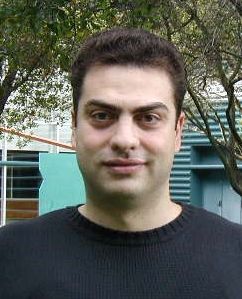 Alkis Simitsis合作论文数Athena Research and Innovation Center11
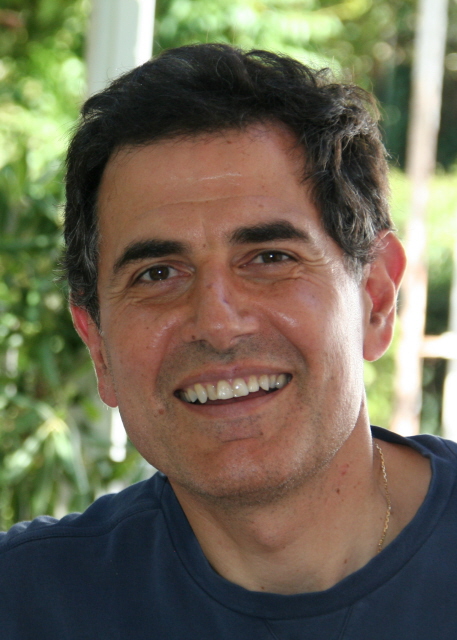 Vassilis J. Tsotras合作论文数Department of Computer Science and Engineering, Bourns College of Engineering, University of California, Riverside;Data Science Center, University of California, Riverside11Laurent Bienvenu合作论文数11
 Mikael Berndtsson合作论文数University of Skövde11
 Ippokratis Pandis合作论文数Amazon Web Services11
 Richard Thomas Snodgrass合作论文数Department of Computer Science, College of Science, University of Arizona11
 Ophir Frieder合作论文数Department of Computer Science, Georgetown University;Aurora Forge;Invaryant, Inc.11
 Thomas Eiter合作论文数Institute of Logic and Computation, Fakultät für Informatik, Technischen Universität Wien11
 Panos Vassiliadis合作论文数Department of Computer Science and Engineering, University of Ioannina11
 Alan J. Demers合作论文数Department of Computer Science, Cornell University11
 Zhi-Hua Zhou (周志华)合作论文数School of Artificial Intelligence, Nanjing University11
 Marc Shapiro合作论文数Inria;Computer Science Laboratory, Sorbonne Université11
 Il-Yeol Song合作论文数College of Computing & Informatics, Drexel University11
 Segev Wasserkrug合作论文数Faculty of Data and Decision Sciences, Technion, Israel Institute of Technology;IBM Research11
 Mirek Riedewald合作论文数Khoury College of Computer Sciences, Northeastern University11
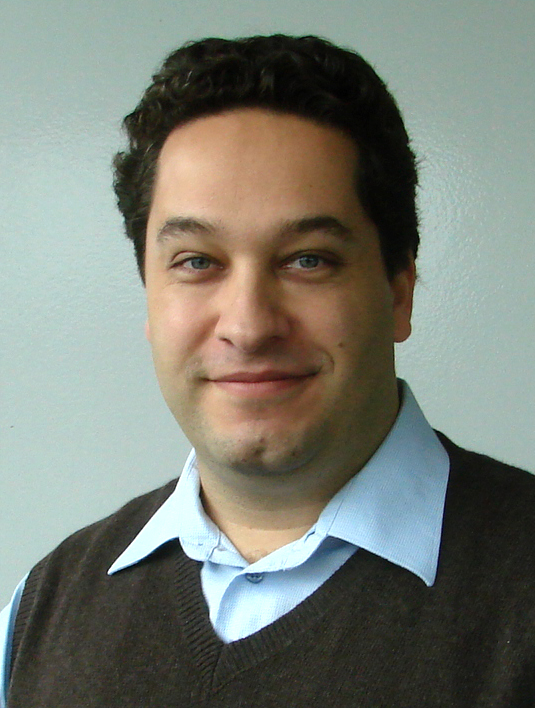 Nikos Hardavellas合作论文数Department of Electrical and Computer Engineering, McCormick School of Engineering and Applied Science, Northwestern University;Department of Computer Science, McCormick School of Engineering and Applied Science, Northwestern University11Steven M. Beitzel合作论文数Telcordia Technologies11Annmarie Ericsson合作论文数11Guy Sharon合作论文数11