Elucidating the selective forces shaping the diversity of vertebrate brains continues to be a major area of inquiry, particularly as it relates to cognition. Historically brain evolution was interpreted through the lens of relative brain size; however, recent evidence has challenged this approach. Investigating neuroanatomy at a finer scale, such as neuron number, can provide new insights into the forces shaping brain evolution in the context of information processing capacity. Ecological factors, such as the complexity of a species' habitat, place demands on cognition that could shape neuroanatomy. In this study, we investigate the relationship between neuron number and habitat complexity in three brain regions across six closely related anole species from Puerto Rico. After controlling for brain mass, we found that the number of neurons increased with habitat complexity across species in the telencephalon and 'rest of the brain,' but not in the cerebellum. Our results demonstrate that habitat complexity has shaped neuroanatomy in the Puerto Rican anole radiation and provide further evidence of the role of habitat complexity in vertebrate brain evolution.
Animals vary between individuals in their ability to learn and some sources of this variation can be the learning process and the individual’s personality type. We investigated the relationship between learning and the bold-shy behavioral type by comparing performance of bold and shy zebrafish in conditioned place preference (CPP) and 2-choice tasks. Bold zebrafish learned significantly faster than the shy fish but there were no differences in their final performance in the CPP. When tested in the 2-choice task, we found no clear evidence of learning, however bold fish made more initial choices than shy fish. Overall, our study suggests that bold zebrafish tend to be faster learners when compared to shy zebrafish. The lack of differences in the final change in behavior suggests that learning differences may be due to how the animals initially interact with stimuli because of differences in neophobia.
Animals differ in their ability to learn. One potential factor contributing to learning differences is personality types. We investigated the relationship between learning and the bold-shy continuum by comparing performance of bold and shy zebrafish in conditioned place preference (CPP) and 2 choice tasks. Bold fish learned significantly faster than the shy fish but there were no differences in their final performance. When tested in the 2 choice task, we found no clear evidence of learning, however bold fish made more initial choices than shy fish. Overall,our study suggests that bold fish tend to be faster learners when compared to shy fish. The lack of differences in the final change in behavior suggests that the learning difference is due to neophobic tendencies and resulting initial interactions with the learning stimulus.### Competing Interest StatementThe authors have declared no competing interest.
Studies of vertebrate brain evolution have mainly focused on measures of brain size, particularly relative mass and its allometric scaling across lineages, commonly with the goal of identifying the substrates that underly differences in cognition. However, recent studies on birds and mammals have demonstrated that brain size is an imperfect proxy for neuronal parameters that underly function, such as the number of neurons that make up a given brain region. Here we present estimates of neuron numbers and density in two species of lizard, Anolis cristatellus and A. evermanni, representing the first such data from squamate species, and explore its implications for differences in cognitive performance and vertebrate brain evolution. The isotropic fractionator protocol outlined in this article is optimized for the unique challenges that arise when using this technique with lineages having nucleated erythrocytes and relatively small brains. The number and density of neurons and other cells we find in Anolis for the telencephalon, cerebellum, and the rest of the brain (ROB) follow similar patterns as published data from other vertebrate species. Anolis cristatellus and A. evermanni exhibited differences in their performance in a motor task frequently used to evaluate behavioral flexibility, which was not mirrored by differences in the number, density, or proportion of neurons in either the cerebellum, telencephalon, or ROB. However, the brain of A. evermanni had a significantly higher number of nonneurons across the whole brain, which could contribute to the observed differences in problem solving between A. cristatellus and A. evermanni. Although limited to two species, our findings suggest that neuron number and density in lizard brains scale similarly to endothermic vertebrates in contrast to the differences observed in brain to body mass relationships. Data from a wider range of species are necessary before we can fully understand vertebrate brain evolution at the neuronal level.
Abstract. A population freed from a constraining interspecific interaction (e.g., competition or predation) may experience niche shifts and expansions. This phenomenon, termed ecological release, is an eco-evolutionary process driven by individual behaviors and interindividual interactions. However, empirical studies of these interactions seldom observe them directly, instead inferring process from pattern. Here, we set up experimental conditions for ecological release of the lizard Anolis carolinensis (green anole) from constraining interactions with its congener, Anolis sagrei (brown anole), by constituting populations of lizards on small islands. We monitored individual and population habitat use along three niche axes (perch height, perch diameter, and lateral movement between perches) on one experimental (one-species) and one control (two-species) island, for three time periods: 1) preremoval, when both islands had both species; 2) postremoval, shortly after A. sagrei were cleared from the experimental island; and 3) delayed postremoval, 7 months later, when long-lived lizards were joined by a second generation born in the intervening months. We found that green anole perch height decreased on the one-species island and increased on the two-species island. These shifts did not occur during postremoval but were evident by delayed postremoval, when both generations on the one-species island were perching nearly 130 cm lower than their counterparts on the two-species island. We also documented correlated changes in perch diameter at both the individual and population level but no changes in the extent of individuals' lateral movement. Lastly, changes in population-level niche width (i.e., perch height and diameter variances) occurred without detectable changes in niche overlap among individuals. Our results demonstrate that that the dynamics of ecological release in nature need not be inferred, because experiments can observe them directly in individuals, across generations, and along multiple niche axes.
Animals are particularly vulnerable during sleep, yet studies addressing sleeping behavior are rare among reptiles. Although the behavior of Anolis lizards has been widely documented, only a handful of studies have described sleeping behavior in this group. Very few of those studies focus on the cryptic twig anoles, an ecomorph characterized by extreme morphology and unique behavior among Anolis. Here we report data on the ethoecology of sleep in the Puerto Rican twig anole, Anolis occultus, including sleeping position and the selection of sleeping sites. We found that A. occultus uses narrow perches with an average diameter of 0.24 cm at an average height of 3.7 m. We observed A. occultus sleeping most often on twigs horizontally with its snout at the distal end of the perch with its tail curled around the perch. We also found no evidence of sleeping site fidelity in A. occultus. Our observations are congruent with previous reports, and provide further evidence for the possibility of convergence in sleeping behavior among anoles belonging to the twig ecomorph. We discuss our findings in the context of sleeping behavior across lizards and suggest that the ethoecology of sleep in A. occultus and lizards in general has been shaped by selection to reduce the likelihood of predation.
Despite evidence that organisms are more likely to exhibit their full range of cognitive abilities under conditions found in nature, studies evaluating cognition under such conditions remain rare, particularly in vertebrate species. Here, we conducted an experiment to evaluate problem-solving and motor self-regulation in free-living arboreal lizards, Anolis sagrei, under natural conditions. We presented lizards with a novel detour problem which challenged individuals to circumvent a transparent barrier in order to obtain a food reward. Individuals varied in their ability to solve the detour problem. Furthermore, those that solved the problem were able to improve their performance across trials by modifying the natural response of attempting to strike the reward through the transparent barrier, providing evidence of motor self-regulation. Solving the problem required individuals to modify their typical foraging behavior, as approaching the prey in a single burst of movement that culminated with an attack was an unsuccessful strategy. Contrary to expectations, our findings provide evidence of motor self-regulation in a visually oriented, sit-and-wait predator under natural conditions, suggesting motor self-regulation is not limited by foraging strategy. Our results also underscore the need to evaluate the cognitive abilities of free-living organisms in the wild, particularly for taxa that perform poorly under laboratory conditions. Significance statement Studies of animal cognition have a long history in animal behavior, which, in vertebrate species, has been dominated by experiments conducted under controlled laboratory conditions. Here, we showed that experiments can be taken "outside the box," from the laboratory into natural conditions, and by doing so overcome some of the obstacles that have hindered our ability to study cognition in species unlikely to remain motivated when removed from the wild. We implemented a modified version of the cylinder task, which provided the stimuli needed for a visually oriented, sit-and-wait foraging lizard to participate in the experiments. Individuals of Anolis sagrei learned to solve the task by modifying what was previously described as a stereotyped prey capture behavior. In addition, individuals decreased the number of times they attempted to strike the prey through the transparent barrier. These findings provide further evidence of behavioral flexibility in anoles and new evidence of motor self-regulation. The latter demonstrates the need to extend our current understanding of potential forces favoring the evolution of cognition beyond those that have been proposed in birds and mammals. More generally, our findings demonstrate the importance of using experimental paradigms that are rooted in an understanding of the natural history of the species of interest.
The total solar eclipse of 21 August 2017 traversed 5000 km from coast to coast of North America. In its 90-min span, sunlight dropped by three orders of magnitude and temperature by 10-15 degrees C. To investigate impacts of these changes on bee (Hymenoptera: Apoidea) pollinators, we monitored their flights acoustically in natural habitats of Pacific Coast, Rocky Mountain, and Midwest regions. Temperature changes during the eclipse had little impact on bee activity. Most of the explained variation (R-2) in buzzing rate was attributable to changes in light intensity. Bees ceased flying during complete darkness at totality, but flight activity was unaffected by dim light in partial phases before and after totality. Flights of bees during partial phases of the eclipse lasted longer than flights made under full sun, showing that behavioral plasticity matched bee flight properties to changes in light intensity during the eclipse. Efforts of citizen scientists, including hundreds of school children, contributed to the scope and educational impact of this study.
Current models indicate that an organism’s sensitivity to risk may be heavily influenced by the trade-off between current and future reproduction. Individuals that have fewer future reproductive opportunities are expected to show more risky behavior as they have less to lose if captured by a predator (the asset protection principle). In this study, we examined the effects of age and physical condition on risk taking behavior during sexual signaling in the gray treefrog (Hyla versicolor) to test the prediction that older and poor condition males will take greater risks than their younger or higher-condition counterparts. In accordance with these predictions, we found that males in low physical condition resumed signaling activity more rapidly following a simulated predator attack than their higher-condition counterparts, although this effect was only apparent in one of two study years. Further, males that resumed calling early did not offset their risk of detection by predators via reduced calling effort. Contrary to our predictions, we did not find age to be a significant predictor of risk taking in male signaling behavior. We conclude with a discussion of possible explanations for the discrepancy observed between years and highlight the potential reproductive consequences of variation in risk taking behavior.
 Manuel Leal合作论文数Department of Biology, Duke University;Department of Biology, Duke University7
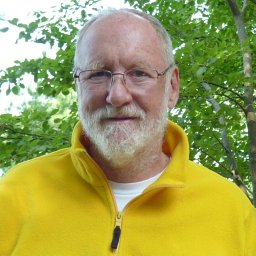 Thomas Getty合作论文数Department of Integrative Biology, Michigan State University2
 Ryan Y Wong合作论文数Department of Neurobiology and Behavior;Cornell University;Department of Neurobiology and Behavior, Cornell University2
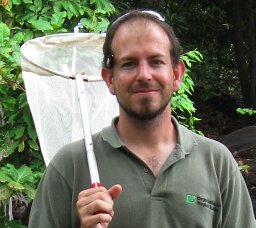 Eben Gering合作论文数2Austin Lynn合作论文数1
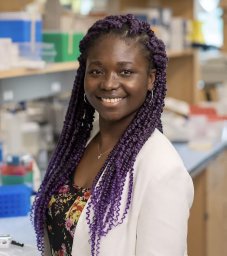 Emilia Asante合作论文数1
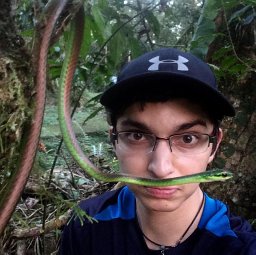 Christian A. Perez-Martinez合作论文数Museum Comparat Zool, Harvard Univ1Samuel Holden合作论文数1Zachary Miller合作论文数1
 Michael Kuczynski合作论文数1
 Ambika Kamath合作论文数Miller Institute for Basic Research in Science and Department of Environmental Science, Policy and Management, University of California Berkeley;email: .;Miller Institute for Basic Research in Science and Department of Environmental Science, Policy and Management, University of California Berkeley1David Heise合作论文数1
 Candace Galen合作论文数Division of Biological Sciences, College of Arts and Science, University of Missouri1Powell Brian J合作论文数1
 Jonathan B. Losos合作论文数Department of Biology, College of Arts & Sciences, Washington University in St. Louis1Susan R. Kephart合作论文数1
 Nicholas C. Herrmann合作论文数Department of Ecology;Brown University;Department of Ecology, Brown University1




