Challenge 2 of the UN Ocean Decade focuses on protecting and restoring marine ecosystems and biodiversity as a fundamental requirement to achieve sustainable development. Addressing this challenge requires reliable and timely information on biodiversity and ecosystems. To achieve this, academic, government, and private groups should engage in a process of co-design that aims to facilitate decision-making at the local and national level, and agree on common and interoperable practices for the collection and curation of biology and ecosystem information. Implementing the flow of data to enable the management of human activities and sustainable development will require the sharing of capacity. An all-hands-on-deck effort will help us ensure a better future for ourselves. A positive step would be to identify the minimum essential ocean variables that can serve multiple relevant regional and international frameworks and to link and harmonize the required data and information flow (i.e., for frameworks including the Convention on Biological Diversity Kunming-Montreal Global Biodiversity Framework, the United Nations Framework Convention on Climate Change Paris Agreement, the Biodiversity Beyond National Jurisdiction Agreement, the International Seabed Authority, the Convention on the Conservation of Antarctic Marine Living Resources, the Intergovernmental Science-Policy Platform on Biodiversity and Ecosystem Services, and deep and national ocean fisheries policies). A key strategy is to support and build on existing local and national networks for biodiversity observation. With this information, local communities and nations can better understand and manage how they use marine life and also report on progress toward Sustainable Development Goals.
Indigenous knowledge systems and non-Indigenous academic science are recognized as important components of the evidence base that Indigenous leaders can use to manage marine protected areas (MPAs). Nevertheless, the use of both Indigenous and academic knowledge in marine management is still evolving. Indigenous academics, i.e. people of Indigenous heritage with advanced academic training, are increasingly acting as the agents to integrate Indigenous knowledge, academic approaches, and marine management. While attention in the literature has been paid to knowledge sharing between Indigenous knowledge holders and academic researchers, far less has been written about peer-to-peer knowledge sharing between Indigenous academics working in marine science and management. Here, we describe the frontline details of a workshop focused on the sharing of Indigenous knowledge and academic science by Indigenous academics. The workshop, held in Taiwan, brought together Indigenous academics and community leaders from across the Austronesian region. The central technical challenge was facilitating effective cross-cultural knowledge exchange between diverse Indigenous communities and Indigenous academics and researchers. The workshop employed several technical approaches that likely have broad application beyond Indigenous peer-to-peer knowledge sharing. We used a co-designed planning process that prioritized Indigenous protocols over common academic formats. This involved remote meetings and iterative agenda revisions to address cultural sensitivities and ensure collaborative input from all participating Indigenous groups (Amis and Polynesian). The workshop deliberately moved away from panel presentations to utilize culturally resonant activities like ceremonies, gift-giving, and circle discussions in a longhouse; this helped to create a foundation of trust and respect, essential for authentic knowledge sharing. We undertook an active listening approach in which our most senior and most junior participants were charged with making sense of the proceedings and creating the post-workshop analysis of the meeting's outcomes. We found that four key elements were important to the success of our knowledge exchange: build relationships, raise awareness about Indigenous academic science, engage in active listening, and allow for enough time.
Coastal nature-based solutions (NbS) are increasingly recognized for their multiple benefits to socio-ecological systems, including climate mitigation and adaptation (e.g. conservation, restoration and sustainable management of coastal ecosystems for climate). National climate plans, such as the Nationally Determined Contributions (NDCs) developed under the Paris Agreement, include coastal NbS as a practical and effective action to help countries achieve their climate and biodiversity targets. However, the absence of a standardized NDC structure and the lack of guidance about how NbS should be included in NDCs can hinder access to external funding for developing countries and prevent transparent reporting on progress at the international level. In this context, our aim is to understand how coastal NbS are currently included in NDCs by evaluating their alignment with the IUCN Global Standard for NbS. Our analysis focuses on the description of coastal NbS in the NDCs of Pacific Small Island Developing States (PSIDS), as they are among the most vulnerable countries to the impacts of climate change. Overall, we find that, for the 22 coastal NbS examined in the NDCs of PSIDS, the degree of alignment with the eight criteria of the IUCN Global Standard is insufficient or partial, with slightly better alignment with the standard in revised NDCs than in original NDCs. We discuss opportunities provided by the standardization of the description of coastal NbS in NDCs, in terms of access to funding and stock taking to monitor the effectiveness of implementation and progress towards long-term goals. We also discuss the relevance of using the IUCN Global Standard for reporting on NbS in NDCs for PSIDS.
The Mediterranean fin whale (Balaenoptera physalus) subpopulation is under threat from collisions with ships. Given the international dimension of the issue, the French, Italian, Monegasque and Spanish governments have proposed a Particularly Sensitive Sea Area (PSSA), i.e., a management zone of the International Maritime Organization (IMO), in which mandatory and voluntary protective measures can be implemented. Defining the risk and its impact at the subpopulation level is required to improve the chances of an IMO acceptance for such a proposal. While previous research partially succeeded in defining the collision risk, its impact on the subpopulation has not been thoroughly evaluated, especially at the spatial scale of the envisioned PSSA. Our study uses the carcass recovery approach to estimate the number of deadly collisions within the proposed PSSA. We then assess the probability that this number exceeds three management rules: Potential Biological Removal (PBR), Alert Reference Point (ARP) and Critical Reference Point (CRP). These management rules describe thresholds beyond which (a) the incidental mortality may prevent the recovery of the population within 100 years (PBR), (b) there is a cause for concern about incidental mortality (ARP), and (c) there is a critical need to lower the incidental mortality (CRP). We conclude that mortality from collisions alone is in excess of PBR. Taking into account confirmed and suspected collisions in strandings in calculations, the collision mortality exceeds ARP; this threshold being considered unacceptable by some international organisations. Additionally, there is almost a 35% chance that the mortality due to ship strikes exceeds the CRP, likely resulting in a population decline. The probability of anthropogenic mortality exceeding CRP is 60% if we include the fishery-related mortality in stranding (i.e., taking into account the total incidental mortality from bycatch and ship strikes). The PSSA proposal could use our approach to estimate the impact of collisions and assess the effectiveness of implemented protective measures. However, it is important to highlight that the IMO process for establishing a PSSA is lengthy, and our findings show that immediate action is required, as there is a high probability that the ship strike and fishery mortality is beyond the critical threshold fixed by the Agreement on the Conservation of Cetaceans of the Black Sea, Mediterranean Sea and contiguous Atlantic area (ACCOBAMS).
The United Nations Decade of Ocean Science for Sustainable Development requires that all of the Actions it endorses have concrete plans to involve stakeholders in the co-creation of ocean science. As a result, we have a unique opportunity to test different approaches to stakeholder engagement to see what works and what does not. Here, we feature short essays in the “Food for Thought” series in which leaders from Decade-endorsed Actions describe how they plan to incorporate stakeholders in the co-design, co-production, and co-delivery of ocean science and how they will measure whether these approaches were successful. We also invited submissions to the journal’s “Stories from the Front Lines” series, in which authors were asked to share unvarnished accounts of the lessons learned from previous efforts to co-design ocean science. We hope that these initial articles will be the beginning of an ongoing series in which new Decade Actions will also document their plans to implement, monitor, and measure the success or failure of these approaches.
Collisions between ships and whales can pose a significant threat to the survival of some whale populations. The lack of robust and holistic assessments of the consequences of mitigation solutions often leads to poor compliance from the shipping industry. To overcome this, several papers support a regulatory approach to the management of whale-ship collisions through the International Maritime Organization (IMO), the UN agency responsible for maritime affairs. According to the IMO risk assessment approach, in order to compare the costs of implementing mitigation solutions and their benefits, there is a need for a well-defined risk evaluation criterion. To define such a criterion for whales, we have used an ecological-economic framework based on existence values and conservation objectives. As an illustration, we have applied our framework to the Mediterranean fin whale (Balaenoptera physalus) population and determined the cost of averting a whale fatality as a proxy for the societal benefits. More precisely, we have estimated the 'Cost of averting a Mediterranean fin whale fatality' of 562,462 (in 2017 US dollars); this corresponds to 637,790 USD when converted to 2021 US dollars. The societal benefits of solutions that reduce the risk to whales could therefore be weighed against the costs of shipping companies to implement such measures. This could lead to assessments that are more transparent and the introduction of mandatory measures to reduce ship strikes.
The rapid loss of intraspecific variation is a hidden biodiversity crisis. Intraspecific variation, which includes the genomic and phenotypic diversity found within and among populations, is threatened by local extinctions, abundance declines, and anthropogenic selection. However, biodiversity assessments often fail to highlight this loss of diversity within species. We review the literature on how intraspecific variation supports critical ecological functions and nature’s contributions to people (NCP). Results show that the main categories of NCP (material, non-material, and regulating) are supported by intraspecific variation. We highlight new strategies that are needed to further explore these connections and to make explicit the value of intraspecific variation for NCP. These strategies will require collaboration with local and Indigenous groups who possess critical knowledge on the relationships between intraspecific variation and ecosystem function. New genomic methods provide a promising set of tools to uncover hidden variation. Urgent action is needed to document, conserve, and restore the intraspecific variation that supports nature and people. Thus, we propose that the maintenance and restoration of intraspecific variation should be raised to a major global conservation objective.
Whale-ship collisions represent a threat to some whale population survival. The shipping industry rarely adopts solutions to reduce the risk of collisions. This lack of compliance is partly due to the fact that previous work has failed to assess the economic and logistic constraints these solutions put on the shipping industry. Our work explored for the first time the logistical considerations affecting the adoption of whale-ship collision avoidance approaches by shipping companies. We used a choice experiment approach to assess the shipping industry's preferences for mitigation solutions, by questioning ship crews. Amongst other things, our results demonstrated a preference for avoiding a high-density whale area instead of reducing speed in it, and a requirement for upstream information to plan the journey depending on these areas. Our findings could be used as guidelines for the implementation of mitigation solutions depending on situational characteristics (e.g., travel distance, area's size) and provide insights for policy-making to reduce the risk of whale-ship collisions.
The ocean is our planet's largest life-support system.It stabilizes climate; stores carbon; produces oxygen; nurtures biodiversity; directly supports human well-being through food, mineral, and energy resources; and provides cultural and recreational services.The value of the ocean economy speaks to its importance: The Organization for Economic Cooperation and Development (OECD) estimates that by 2030, $3 trillion USD will be generated annually from ocean sectors such as transportation, fishing, tourism, and energy (1).Unsustainable resource extraction, pollution, climate change, and habitat destruction are on the rise and affectingAlthough improved ocean management and conservation have helped to reduce threats and restore some key ecosystems, the basic benefits that people receive from a healthy ocean are in overall decline.
Collisions between ships and whales raise environmental, safety, and economic concerns. The management of whale-ship collisions, however, lacks a holistic approach, unlike the management of other types of wildlife-vehicle collisions, which have been more standardized for several years now. In particular, safety and economic factors are routinely omitted in the assessment of proposed mitigation solutions to ship strikes, possibly leading to under-compliance and a lack of acceptance from the stakeholders. In this study, we estimate the probability of ship damage due to a whale-ship collision. While the probability of damage is low, the costs could be important, suggesting that property damages are significant enough to be taken into consideration when assessing solutions. Lessons learned from other types of wildlife-vehicle collisions suggest that the whale-ship collision should be managed as wildlife-aircraft collisions. For several years, the International Civil Aviation Organization (ICAO) manages collisions between aircrafts and wildlife at the international level. We advocate that its United Nations counterpart, namely the International Maritime Organization (IMO), get more involved in the whale-ship collision management. Further research is needed to more precisely quantify the costs incurred to ships from damages caused by whale-ship collisions.
The Centre for the Fourth Industrial Revolution - Ocean, an affiliate of the World Economic Forum, is partnering with the Ocean Data Platform to pilot Fourth Industrial Revolution (4IR) solutions to ocean problems. The Ocean Data Platform (ODP) is a new data infrastructure to pilot and scale data-oriented solutions to help chart a sustainable blue economy.
The health of coastal human communities and marine ecosystems are at risk from a host of anthropogenic stressors, in particular, climate change. Because ecological health and human well-being are inextricably connected, effective and positive responses to current risks require multidisciplinary solutions. Yet, the complexity of coupled social–ecological systems has left many potential solutions unidentified or insufficiently explored. The urgent need to achieve positive social and ecological outcomes across local and global scales necessitates rapid and targeted multidisciplinary research to identify solutions that have the greatest chance of promoting benefits for both people and nature. To address these challenges, we conducted a forecasting exercise with a diverse, multidisciplinary team to identify priority research questions needed to promote sustainable and just marine social–ecological systems now and into the future, within the context of climate change and population growth. In contrast to the traditional reactive cycle of science and management, we aimed to generate questions that focus on what we need to know, before we need to know it. Participants were presented with the question, “If we were managing oceans in 2050 and looking back, what research, primary or synthetic, would wish we had invested in today?” We first identified major social and ecological events over the past 60 years that shaped current human relationships with coasts and oceans. We then used a modified Delphi approach to identify nine priority research areas and 46 questions focused on increasing sustainability and well-being in marine social–ecological systems. The research areas we identified include relationships between ecological and human health, access to resources, equity, governance, economics, resilience, and technology. Most questions require increased collaboration across traditionally distinct disciplines and sectors for successful study and implementation. By identifying these questions, we hope to facilitate the discourse, research, and policies needed to rapidly promote healthy marine ecosystems and the human communities that depend upon them.
Climate change is expected to dramatically alter the distribution of many marine megafauna, impacting the people and economies that depend upon them. We build on the recent literature by developing a framework to describe the effects these changes will have on marine megafauna. With the goal to assist policymakers and grass roots organizers, we identify three illustrative pathways by which climate change drives these range shifts: (1) effects on habitat and shelter, (2) impacts on reproduction and disease, and (3) changing distribution of sources of food. We examine non-climate factors that may constrain or enable megafauna to adapt, creating winners and losers both for the species and the people dependent upon them. Finally, we comment on what management strategies exist at international and local scales that could help mitigate these impacts of climate change so that we, as a global community, can ensure that marine megafauna and people can best co-exist in a changing world.
The Intergovernmental Panel on Climate Change's (IPCC) special report on global warming of 1.5 degrees Celsius (degrees C) makes clear that most scenarios (90%) that hold warming to 1.5 degrees C by 2100 include an overshoot, or a period in which the temperature increase exceeds 1.5 degrees C before declining to the end-of-century 1.5 degrees C goal (IPCC 2018). An overshoot is also possible for 2 degrees C scenarios, given the lack of ambition in existing mitigation commitments. Current conservation policy and planning does not adequately account for the high likelihood of a temperature overshoot in a 1.5 degrees C scenario, but the impacts of an overshoot on conservation may be large. Efforts to avoid an overshoot must be increased through more ambitious mitigation commitments and a greater focus on peak warming rather than end-of-century outcomes. Simultaneously, conservation planning should account for such impacts by anticipating more dynamic systems that carry greater uncertainties and potentially irreversible changes that may persist even as temperatures peak and decline.
The Caribbean and Western Atlantic region hosts one of the world’s most diverse geopolitical regions and a unique marine biota distinct from tropical seas in the Pacific and Indian Oceans. While this region varies in human population density, GDP and wealth, coral reefs, and their associated ecosystem services, are central to people’s livelihoods. Unfortunately, the region’s reefs have experienced extensive degradation over the last several decades. This degradation has been attributed to a combination of disease, overfishing, and multiple pressures from other human activities. Furthermore, the Caribbean region has experienced rapid ocean warming and acidification as a result of climate change that will continue and accelerate throughout the 21st century. It is evident that these changes will pose increasing threats to Caribbean reefs unless imminent actions are taken at the local, regional and global scale. Active management is required to sustain Caribbean reefs and increase their resilience to recover from acute stress events. Here, we propose local and regional solutions to halt and reverse Caribbean coral reef degradation under ongoing ocean warming and acidification. Because the Caribbean has already experienced high coral reef degradation, we suggest that this region may be suitable for more aggressive interventions that might not be suitable for other regions. Solutions with direct ecological benefits highlighted here build on existing knowledge of factors that can contribute to reef restoration and increased resilience in the Caribbean: (1) management of water quality, (2) reduction of unsustainable fishing practices, (3) application of ecological engineering, and (4) implementing marine spatial planning. Complementary socioeconomic and governance solutions include: (1) increasing communication and leveraging resources through the establishment of a regional reef secretariat, (2) incorporating reef health and sustainability goals into the blue economy plans for the region, and (3) initiating a reef labeling program to incentivize corporate partnerships for reef restoration and protection to sustain overall reef health in the region.
To account for progress towards conservation targets, monitoring systems should capture not only information on biodiversity but also knowledge on the dynamics of ecological processes and the related effects on human well-being. Protected areas represent complex social-ecological systems with strong human-nature interactions. They are able to provide relevant information about how global and local scale drivers (e.g., climate change, land use change) impact biodiversity and ecosystem services. Here we develop a framework that uses an ecosystem-focused approach to support managers in identifying essential variables in an integrated and scalable approach. We advocate that this approach can complement current essential variable developments, by allowing conservation managers to draw on system-level knowledge and theory of biodiversity and ecosystems to identify locally important variables that meet the local or sub-global needs for conservation data. This requires the development of system narratives and causal diagrams that pinpoints the social-ecological variables that represent the state and drivers of the different components, and their relationships. We describe a scalable framework that builds on system based narratives to describe all system components, the models used to represent them and the data needed. Considering the global distribution of protected areas, with an investment in standards, transparency, and on active data mobilisation strategies for essential variables, these have the potential to be the backbone of global biodiversity monitoring, benefiting countries, biodiversity observation networks and the global biodiversity community.
 R. Quentin Grafton合作论文数Crawford School of Public Policy, Australian National University13
 Harry Nelson合作论文数Department of Forest Resources Management, Faculty of Forestry, The University of British Columbia12
 Cindy Van Dover合作论文数Nicholas School of the Environment, Duke University;Division of Marine Science and Conservation, Duke University6
 Jeff A. Ardron合作论文数6
 Maxime Sebe合作论文数Univ Brest, Ifremer, CNRS, UMR 6308, AMURE, IUEM, 29280, Plouzané, France5
 Adrien Comte合作论文数Ecole des Ponts ParisTech, Université de Paris-Saclay4
 Brian Murray合作论文数Sanford School of Public Policy, Duke University4
 Ove Hoegh-Guldberg合作论文数School of Biological Sciences, The University of Queensland;ARC Centre for Excellence for Reef Studies;University of Copenhagen4Ryan K. Vaughn合作论文数4craig mohn合作论文数3
 Tara Hooper合作论文数3
 Michael W. Hanemann合作论文数Department of Agricultural and Resources Economics, College of Natural Resources, University of California Berkeley3
 Lisa Levin合作论文数Integrative Oceanography Division, Scripps Institution of Oceanography, University of California, San Diego3
 Chris Langdon合作论文数Department of Marine Biology and Ecology, Rosenstiel School of Marine and Atmospheric Science, University of Miami3
 Roberto Danovaro合作论文数Dipartimento Scienze Vita e Ambiente, Università Politecnica delle Marche;National Biodiversity Future Centre, Polytechnic University of Marche3
 Remi Mongruel合作论文数UMR M101 AMURE, Technopole de Brest-Iroise3
 Nicola Beaumont合作论文数Plymouth Marine Laboratory3
 Michael W. Beck合作论文数Institute of Marine Sciences, University of California3
 Evangelia Drakou合作论文数Commiss European Communities, Inst Environm & Sustainabil3Gordon David合作论文数3
 James Aronson合作论文数Center for Conservation and Sustainable Development, Missouri Botanical Garden;Ecohealth Network;ASSET Research3
 Alex Rogers合作论文数Department of Computer Science, University of Oxford;St. Anne’s College, University of Oxford3Brent Sohngen合作论文数Ohio State University3
 Edward Barbier合作论文数Department of Economics, Colorado State University;School of Global Environmental Sustainability, Colorado State University3Rebecca Shaw合作论文数3
 Luke Brander合作论文数Institute for Environmental Studies, Faculty of Science, Vrije Universiteit Amsterdam;Institute for Physical Geography and Landscape Ecology, Leibniz University Hannover;Brander Environmental Economics3
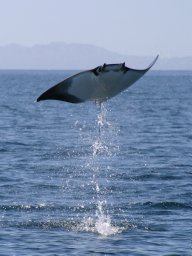 Sophie Arnaud-Haond合作论文数ifremer3
 Christos A. Kontovas合作论文数Laboratory for Maritime Transport;National Technical University of Athens;Laboratory for Maritime Transport, National Technical University of Athens3
 Howard Browman合作论文数Ecosystem Acoustics Group, Austevoll Research Station, Havforskningsinstituttet3
 Ariana Sutton-Grier合作论文数USGS;Earth System Science Interdisciplinary Center;UMD3Dwight K. Gledhill合作论文数3
 Kristina Gjerde合作论文数Institute of Zoology,3
 Susan Grose合作论文数3
 Telmo Morato合作论文数Departamento de Oceanografia e Pescas;Universidade dos Açores;Departamento de Oceanografia e Pescas, Universidade dos Açores3
 Sarah R Cooley合作论文数Ocean Conservancy3
 Ward Appeltans合作论文数Flanders Marine Institute (VLIZ),, InnovOcean Site3
 Harold Levrel合作论文数2Lauretta Burke合作论文数2Lisa Suatoni合作论文数2Anne Kaup合作论文数2Jessica Ritter合作论文数2Mahe Charles合作论文数French Agency for Marine Protected Areas2
 Tibor Vegh合作论文数Nicholas Institute for Environmental Policy Solutions, Duke University2Carolyn Doherty合作论文数2
 Nichola A. Clark合作论文数Australian Natl Ctr Ocean Resources & Secur, Univ Wollongong2
 Sophie Gourguet合作论文数IUEM, University of Brest2
 Pelletier Dominique合作论文数Inst Francais Rech Pourl Exploitat Mer IFREMER, Un Halieut Grand Ouest2
 Jay Pearlman合作论文数2MacKenzie Jason B合作论文数2




