This paper proposes a novel Adaptive Decentralized Quasi-Newton (AdaDQN) method for solving smooth nonconvex optimization problems over undirected networks. While standard decentralized algorithms with multiple fixed local updates typically admit a convergence stepsize inversely proportional to the number of local updates, we show that this scaling is worst-case tight for the typical unscaled fixed-local-update scheme. We revisit a class of gradient-tracking methods with this scheme from a surrogate-based perspective and establish a Robust Inexact Algorithm (RIA) framework. Inspired by this framework, AdaDQN integrates a safeguarded consensus-aware termination criterion, a standard event-triggered communication protocol, and a scalable memoryless BFGS update. We establish an 𝒪(1/T) best-iterate rate for first-order stationarity. For a squared stationarity tolerance δ, the guaranteed gradient complexity of the fixed scheme is 𝒪(nK_g/δ), whereas AdaDQN attains 𝒪(n/δ+nαε̃^-2), independent of the maximum local-update budget (K_g). Numerical experiments demonstrate that AdaDQN achieves a superior computation-communication tradeoff, outperforming state-of-the-art decentralized methods across various performance metrics.
In this paper, we study the decentralized optimization problem of minimizing a finite sum of continuously differentiable and possibly nonconvex functions over a fixed-connected undirected network. We propose a unified decentralized nonconvex algorithmic framework that includes many existing state-of-the-art gradient tracking and quasi-Newton algorithms. A general framework for the convergence analysis of our unified algorithm is presented under both nonconvex and the Kurdyka-Łojasiewicz condition settings. In particular, some new quasi-Newton algorithms under this framework are proposed. Our numerical results show that these newly developed algorithms are very efficient compared with other state-of-the-art algorithms for solving decentralized nonconvex nonlinear optimization.
This paper proposes a new decentralized conjugate gradient (NDCG) method and a decentralized memoryless BFGS (DMBFGS) method for the nonconvex and strongly convex decentralized optimization problem, respectively, of minimizing a finite sum of continuously differentiable functions over a fixed-connected undirected network. Gradient tracking techniques are applied in these two methods to enhance their convergence properties and the numerical stability. In particular, we show global convergence of NDCG with constant stepsize for general nonconvex smooth decentralized optimization. Our new DMBFGS method uses a scaled memoryless BFGS technique and only requires gradient information to approximate second-order information of the component functions in the objective. We also establish global convergence and linear convergence rate of DMBFGS with constant stepsize for strongly convex smooth decentralized optimization. Our numerical results show that NDCG and DMBFGS are very efficient in terms of both iteration and communication cost compared with other state-of-the-art methods for solving smooth decentralized optimization.
This paper introduces a novel conjugate gradient method that exploits the m-th order Taylor expansion of the objective function and cubic Hermite interpolation conditions. We derive a set of modified secant equations with enhanced accuracy in approximating the Hessian matrix of the objective function. Additionally, we develop a modified Wolfe line search to address the limitations of the conventional constraint imposed on modified secant equations while ensuring the fulfillment of the curvature condition. Consequently, an improved spectral conjugate gradient algorithm is proposed based on the modified secant equation and Wolfe line search. Under standard assumptions, the algorithm is proven to be globally convergent for minimizing general nonconvex functions. Numerical results are provided to demonstrate the effectiveness of this new proposed algorithm.
This paper considers the decentralized optimization problem of minimizing a finite sum of strongly convex and twice continuously differentiable functions over a fixed-connected undirected network. A fully decentralized primal-dual method(DPDM) and its generalization(GDPDM), which allows for multiple primal steps per iteration, are proposed. In our methods, both primal and dual updates use second-order information obtained by quasi-Newton techniques which only involve matrix-vector multiplication. Specifically, the primal update applies a Jacobi relaxation step using the BFGS approximation for both computation and communication efficiency. The dual update employs a new second-order correction step. We show that the decentralized local primal updating direction on each node asymptotically approaches the centralized quasi-Newton direction. Under proper choice of parameters, GDPDM including DPDM has global linear convergence for solving strongly convex decentralized optimization problems. Our numerical results show both GDPDM and DPDM are very efficient compared with other state-of-the-art methods for solving decentralized optimization.
This paper considers the decentralized optimization problem of minimizing a finite sum of continuously differentiable functions over a fixed-connected undirected network. Summarizing the lack of previously developed decentralized conjugate gradient methods, we propose new decentralized conjugate gradient (NDCG) and memoryless BFGS (DMBFGS) methods for nonconvex and strongly convex problems, respectively. Firstly, to the best of our knowledge, NDCG is the first decentralized conjugate gradient method to be shown to have global convergence with constant stepsizes for general nonconvex optimization problems, which profits from our designed conjugate parameter and relies only on the same mild conditions as the centralized conjugate gradient method. Secondly, considering the conjugate gradient method as a special quasi-Newton method, we apply a scaled memoryless BFGS technique and develop the DMBFGS method that requires only vector-vector products to capture the curvature information of Hessian matrices. DMBFGS ensures quasi-Newton matrices have bounded eigenvalues without introducing any regularization term or damping method. Under proper choice of stepsizes, DMBFGS has global linear convergence for solving strongly convex decentralized optimization problems. Our numerical results show both NDCG and DMBFGS are very efficient respectively compared with other state-of-the-art methods for solving nonconvex and strongly convex decentralized optimization.
Data-driven algorithms based on deep neural networks (DNNs) for ship detection in synthetic aperture radar (SAR) images are restricted by limited training samples and complex background interference. Inspired by the sparsity and neighborhood relevance of ships in SAR images, a novel detection algorithm based on self-attention dictionary learning (SADL) is proposed in this letter, which only requires a few samples for training. A self-attention mechanism is injected to learn discriminative features between classes, which can extract inherent information from sequences adaptively. Particularly, a hybrid loss function is tailored for the representations of multiclasses targets using SADL, which consists of the reconstruction error, minimal intraclass error, maximum interclass error, and exclusiveness error. Further, a SADL-based ship detection method is proposed by building subdictionaries of the target and background, respectively. The gradient and intensity information in a fixed neighborhood are used to construct the feature dictionary to suppress complex background interference and provide effective prior knowledge. Experiments conducted on the large-scale SAR ship detection dataset (LS-SSDD-v1.0) demonstrate the effectiveness of the proposed method, which achieves an F1-score of 0.47 on 3000 test images with only three training images.
A graph G is strongly even cycle decomposable if for every subdivision G′ of G with an even number of edges, the edges of G′ can be partitioned into cycles of even length. Máčajová and Mazák asked whether the line graph of a simple 2-connected cubic graph is strongly even cycle decomposable. A result of Seymour implies that the line graph of every 2-connected planar cubic graph is strongly even cycle decomposable. In this paper, we prove that the line graphs of simple 3-connected cubic graphs embedded in the projective plane or in the torus are strongly even cycle decomposable.
In synthetic aperture radar (SAR) imaging, modulation of echo by target velocity necessitates more complex approaches for imaging moving targets. Concurrently, the scenes are generally mixed with moving and stationary targets. Achieving simultaneously separated imaging of moving and stationary targets represents a challenge in SAR imaging. In this letter, we proposed a novel separable iterative reweighted algorithm (SIRA), which can achieve separated imaging of moving and stationary targets. First, moving and stationary targets are both considered in the imaging model. Then, by separately applying sparse constraints to stationary and moving targets, the regularization problem is constructed to address the imaging of both moving and stationary targets. Finally, stationary targets are extracted by solving the Karush-Kuhn-Tucker (KKT) conditions of the problem, and moving targets are obtained through algorithm iteration. Experiments based on simulated data validate the effectiveness of the proposed method.
In this paper, we combine the $m$th-order Taylor expansion of the objective function with cubic Hermite interpolation conditions. Then, we derive a series of modified secant equations with higher accuracy in approximation of the Hessian matrix of the objective function. A modified Wolfe line search is also developed. It overcomes the weakness of the typical constraint which is imposed on modified secant equations and to keep the curvature condition met. Therefore, based on the modified secant equation and Wolfe line search, an improved spectral conjugate gradient algorithm is proposed. Under some mild assumptions, the algorithm is showed to be globally convergent for general nonconvex functions. Numerical results are also reported for verifying the effectiveness.
To address the shortcomings of the traditional firefly algorithm in global optimization seeking, such as low solution accuracy, unstable convergence and slow optimization speed, a new evolutionary model of firefly algorithm based on the improved Chebyshev chaos mapping is proposed. Firstly, the population distribution is initialised with the improved Chebyshev chaos mapping to improve the population diversity. Secondly, the non-linear dynamic adaptive inertia weights are introduced to regulate the balance between convergence speed and local optimality seeking ability. Then, the boundary variation strategy is introduced to solve the boundary crossing problem to avoid falling into local optimum and continue to improve the population diversity. Finally, simulation experiments are conducted under six benchmark test functions to compare with the traditional firefly algorithm. The experimental results show that the improved algorithm has higher solution accuracy and faster convergence speed.
Traditional graph-based multi-view learning methods usually assume that data are complete. Whereas several instances of some views may be missing, making the corresponding graphs incomplete and reducing the virtue of graph regularization. To mitigate the negative effect, a novel method, called incomplete multi-view learning via consensus graph completion (IMLCGC), is proposed in this paper, which completes the incomplete graphs based on the consensus among different views and then fuses the completed graphs into a common graph. Specifically, IMLCGC develops a learning framework for incomplete multi-view data, which contains three components, i.e., consensus low-dimensional representation, graph regularization, and consensus graph completion. Furthermore, a generalization error bound of the model is established based on Rademacher's complexity. It shows the theory that learning with incomplete multi-view data is difficult. Experimental results on six well-known datasets indicate that IMLCGC significantly outperforms the state-of-the-art methods.
It is well known that the stochastic optimization problem can be regarded as one of the most hard problems since, in most of the cases, the values of $f$ and its gradient are often not easily to be solved, or the $F(\cdot, \xi)$ is normally not given clearly and (or) the distribution function $P$ is equivocal. Then an effective optimization algorithm is successfully designed and used to solve this problem that is an interesting work. This paper designs stochastic bigger subspace algorithms for solving nonconvex stochastic optimization problems. A general framework for such algorithm is presented for convergence analysis, where the so-called the sufficient descent property, the trust region feature, and the global convergence of the stationary points are proved under the suitable conditions. In the worst-case, we will turn out that the complexity is competitive under a given accuracy parameter. We will proved that the $SFO$ -calls complexity of the presented algorithm with diminishing steplength is $O\left({\epsilon ^{-{\frac {1}{1-\beta }}}}\right)$ and the $SFO$ -calls complexity of the given algorithm with random constant steplength is $O(\epsilon ^{-2})$ respectively, where $\beta \in (0.5,1)$ and $\epsilon $ is accuracy and the needed conditions are weaker than the quasi-Newton methods and the normal conjugate gradient algorithms. The detail algorithm framework with variance reduction is also proposed for experiments and the nonconvex binary classification problem is done to demonstrate the performance of the given algorithm.
Converting persistent and renewable wave energy into electricity has been studied in recent years. This research develops a novel fully floating three-body direct-drive wave energy converter (DD-WEC) prepared for the research of the multi-body DD-WEC. Its prototype consists of three floating bodies, but both three bodies act as buoys to extract the wave energy, not just a body. And the relative motion of the buoys induces the voltage in Halbach array permanent magnet linear generators coils. Its feasibility is investigated theoretically by analyzing the dynamics of motion of the floating buoys. As a result, parametric design of the WEC is achieved. The load performance of the DD-WEC is investigated by using the Simulink, and it can be found that the relative displacements between buoys are different. Then, the electromagnetic power of the proposed WEC is much higher compared to a two-body DD-WEC by using numerical simulation Finally, the DD-WEC prototype is manufactured and tested in the wave tank. The results show that the WEC can produce the most electricity for the case with the wave period of 1.6 s, and the maximum voltage reaches 14.2 V, which is consistent with the simulation results. The results show that the proposed DD-WEC is well suited for wave energy conversion.
提取视频中的前景目标信息是视频处理领域非常重要的问题,考虑到现实生活中会出现监控摄像头不可避免地会出现晃动或偏移情况,造成监控视频短暂抖动,此时背景图像灰度和纹理信息都会受到较大的影响,从而给后期进一步分析前景信息带来了巨大的困难.为了兼顾纹理特征提取和噪声抑制两方面的要求,针对抖动视频的前景提取问题,提出了一种有效的融合小波变换和在线混合高斯模型的方案.首先运用仿射变换在线逐帧校准,接着利用小波变换对图像去噪,并建立自适应模型迭代上述过程,最后利用在线混合高斯模型提取前景.实验结果表明,与同类方法相比,该算法无论针对单目标还是多目标视频均可以有效去除抖动,得到较好的前景目标提取效果,具有较高的准确性和鲁棒性.
The method of sequential modification of the coefficients of the target function for transport-type problems is extended to the class of efficient shooting problems. At each step of the iterative process, problems with two constraints and one binding variable are solved. Degeneration due to non-uniqueness of the solution of the mentioned intermediate problems is considered. A procedure for removing degeneracy is given. The final algorithm constructs an exact solution to the original Boolean programming problem. The exponential growth of the computation time is experimentally established depending on the dimension of the original problem.
Multi-view dimensionality reduction is an importan subject in multi-view learning. Canonical correlation analysis and its various improved forms can effectively solve this problem. But most of these algorithms do not fully consider the discriminant information and view consistency information contained in the data itself simultaneously. To solve this problem, a new multi-view dimensionality reduction algorithm, consistent discriminant correlation analysis, is proposed in this paper. The algorithm integrates the class information and the consistency information between views into the dimension reduction process. By maximizing the within-class correlations and the consistency between views, and minimizing the between-class correlations simultaneously, it extracts the low-dimensional features that are more efficient to classification. Furthermore, a kernel consistent discriminant correlation analysis is proposed. The experimental results on several data sets demonstrate the effectiveness of the proposed methods.
In this paper, a general iterative thresholding algorithm (ITA) for solving L q -norm (0 <; q ≤ 1) regularization problem is proposed to achieve the synthetic aperture radar (SAR) image feature enhancement. Compared with the reconstructed images by matched filtering (MF) based method, the proposed method recovered images have lower sidelobes, reduced noise and clutter, which improves the image quality effectively. Experiments based on Gaofen-3 (GF-3) SAR complex image data are used to validate the proposed method.
As a renewable energy, ocean wave energy is exploited with infinite potential to solve the energy crisis. In this study, we develop a novel two-body direct-drive wave energy converter (DD-WEC) to surmount the problems associated with low power density, low direct-drive speed of the buoys, seawater corrosion and maintenance in the existing two-body WEC. Its prototype consists of two cylindrical buoys that float horizontally at sea level and the Halbach permanent magnet linear generator (HPMLG) that is employed in the power take-off (PTO) system. The energy is extracted from the relative motion between two buoys oscillating. Compared with the existing WEC, the proposed WEC has more vigorous motion between buoys, higher conversion efficiency and little extra underwater structure, due to the utilization of the horizontal buoys and the HPMLG. First, the motion equations of buoys are derived on the basis of linear wave theory. And depending on the motion equations, the structure of buoys and the HPMLG is designed. And we found that compared with the existing WEC, the proposed WEC has more vigorous motion between buoys in the seawater waves oscillation. Then, based on finite-element method (FEM), the performance of the HPMLG is evaluated, and it can generate 19% more power than the traditional permanent magnet linear generator (TPMLG) based on the same wave motion. Finally, the DD-WEC prototype is manufactured based on the designed parameter. The manufactured prototype is tested in the test platform and the wave tank. The measured output voltage is highly consistent with the observed variation trends in FEM simulation data. The results show that the proposed DD-WEC is well suited for wave energy conversion.
动态链接预测是网络数据挖掘领域的一个重要课题,主要原理是根据以往的网络结构预测未来的网络结构状态.目前,静态链接预测已得到充分研究,但对动态链接预测的研究却比较稀少.根据网络链接的结构特点,将矩阵补全方法引入动态链接预测问题中,进一步受核矩阵分解的启发,建立了核矩阵补全模型,将数据映射到高维空间中,使得链接中的非线性关系转化为线性关系,从而使得模型能够处理更复杂的网络结构.通过在三个公开网络数据集上进行实验,验证了矩阵补全优化方法和核方法在动态链接预测中的有效性和准确性.
 Hao Wu合作论文数7
 Songcan Chen (陈松灿)合作论文数College of Computer Science & Technology, Nanjing University of Aeronautics & Astronautics7
 Xiaohong Chen (陈晓红)合作论文数Nanjing University of Aeronautics and Astronautics6
 Hongchao Zhang合作论文数Department of Mathematics, Louisiana State University;Center for Computational & Technology, Louisiana State University5
 Hujun Yin合作论文数Department of Electrical and Electronic Engineering, The University of Manchester;The Alan Turing Institute;School of Artificial Intelligence, Xidian University4
 Qing Tian (田青)合作论文数School of Software, Nanjing University of Information Science & Technology3
 Hui Bi (毕辉)合作论文数College of Electronic and Information Engineering, Nanjing University of Aeronautics and Astronautics3
 Wenqiang Zhang合作论文数Unit 61920 of PLA, Unit 61920 of PLA3
 A.Alexandr P.Penrovich Tizik合作论文数3A. S. Esenkov合作论文数2
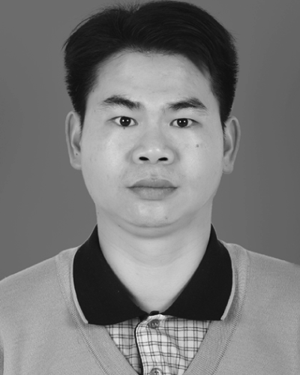 Jinchang Qin合作论文数2Enhao Zhang合作论文数2Chuan Liu合作论文数2Zhang Yuxiang (张宇翔)合作论文数2
 Jianlin Jiang (蒋建林)合作论文数College of Science, Nanjing University of Aeronautics and Astronautics2
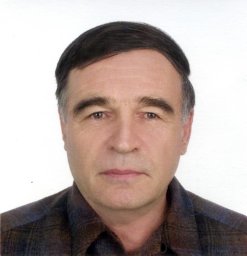 Vladimir Tsurkov合作论文数Dorodnicyn Computing Centre, Russian Academy of Sciences2
 Jin Yun Yuan合作论文数UFPR, Centro Politécnico2
 Joker Chen (陈仁文)合作论文数College of Aerospace Engineering, Nanjing University of Aeronautics and Astronautics2и и мороз合作论文数1Ruize Song合作论文数1Yang-Jian Qi合作论文数1
 A. P. Vinogradov合作论文数1Menglei Hu合作论文数1Qiongqiong Zhan合作论文数1O. V. Grinchuk合作论文数1Jianli Zhu合作论文数1
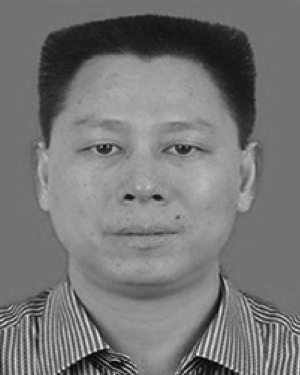 Qingyuan Yang合作论文数1
 Jiarui Deng合作论文数1Guangxin SONG (宋光鑫)合作论文数1Yang GU (顾扬)合作论文数1Yachen Shi合作论文数1Qian Zhao合作论文数1
 Meng Cao合作论文数School of Computer and Software, Nanjing University of Information Science and Technology, Nanjing, China1Xuli Wang合作论文数1
 Qian Guo合作论文数Fudan Univ, Key Lab Informat Sci Electromagnet Waves MoE, Shanghai 200433, Peoples R China1Yan Deng合作论文数1FAN Yun-zheng (范允征)合作论文数1Feng Li合作论文数1
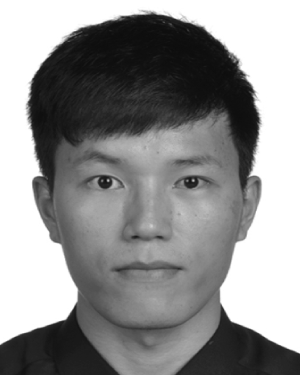 Yingjie Zhou合作论文数1
 Yong Li合作论文数Xinjiang Normal University(Xinjiang Normal University),Urumqi,China1Xiaogang Zhou合作论文数1Xiaoxing Zhu合作论文数1YaPing Yu (于亚平)合作论文数1
 Wenzhong Liu (刘文忠)合作论文数School of Mathematics, Nanjing University of Aeronautics and Astronautics1
 Jie Wen (文杰)合作论文数College of Mathematics, Nanjing University of Aeronautics and Astronautics1
 Hongyong Zhao (赵洪涌)合作论文数Nanjing University of Aeronautics and Astronautics1
 Yanfei Wang (王彦飞)合作论文数Center of Big Data Analysis and Intelligent Computing, Institute of Geology and Geophysics, Chinese Academy of Sciences;Key Laboratory of Petroleum Resource Research, Chinese Academy of Sciences1Han, B.L.合作论文数1Fei Luan合作论文数1




