This report describes Tail-Aware HiFloat4, our submission to the low-bit text-to-video generation quantization challenge. Our method adapts the public ViDiT-Q post-training quantization pipeline to Wan2.2 under the HiFloat4 numerical format. We quantize the main linear layers in both Wan2.2 transformer modules with W4A4 HiFloat4 fake quantization, keep numerically sensitive boundary modules in high precision, and introduce an activation-tail-aware percentile calibration module for channel-mask construction. Together with compact PTQ-state restoration, this design reduces the influence of rare calibration outliers while keeping the runtime HiFloat4 arithmetic and sampling pipeline unchanged.
Continuous Spatio-Temporal Video Super-Resolution (C-STVSR) aims to simultaneously enhance the spatial resolution and frame rate of videos by arbitrary scale factors, offering greater flexibility than fixed-scale methods that are constrained by predefined upsampling ratios. In recent years, methods based on Implicit Neural Representations (INR) have made significant progress in C-STVSR by learning continuous mappings from spatio-temporal coordinates to pixel values. However, these methods fundamentally rely on dense pixel-wise grid queries, causing computational cost to scale linearly with the number of interpolated frames and severely limiting inference efficiency. We propose GS-STVSR, an ultra-efficient C-STVSR framework based on 2D Gaussian Splatting (2D-GS) that drives the spatiotemporal evolution of Gaussian kernels through continuous motion modeling, bypassing dense grid queries entirely. We exploit the strong temporal stability of covariance parameters for lightweight intermediate fitting, design an optical flow-guided motion module to derive Gaussian position and color at arbitrary time steps, introduce a Covariance resampling alignment module to prevent covariance drift, and propose an adaptive offset window for large-scale motion. Extensive experiments on Vid4, GoPro, and Adobe240 show that GS-STVSR achieves state-of-the-art quality across all benchmarks. Moreover, its inference time remains nearly constant at conventional temporal scales (X2–X8) and delivers over X3 speedup at extreme scales X32, demonstrating strong practical applicability.
Arbitrary-scale super-resolution (ASSR) aims to reconstruct high-resolution (HR) images from low-resolution (LR) inputs with arbitrary upsampling factors using a single model, addressing the limitations of traditional SR methods constrained to fixed-scale factors (\textit{e.g.}, $\times$ 2). Recent advances leveraging implicit neural representation (INR) have achieved great progress by modeling coordinate-to-pixel mappings. However, the efficiency of these methods may suffer from repeated upsampling and decoding, while their reconstruction fidelity and quality are constrained by the intrinsic representational limitations of coordinate-based functions. To address these challenges, we propose a novel ContinuousSR framework with a Pixel-to-Gaussian paradigm, which explicitly reconstructs 2D continuous HR signals from LR images using Gaussian Splatting. This approach eliminates the need for time-consuming upsampling and decoding, enabling extremely fast ASSR. Once the Gaussian field is built in a single pass, ContinuousSR can perform arbitrary-scale rendering in just 1ms per scale. Our method introduces several key innovations. Through statistical analysis, we uncover the Deep Gaussian Prior (DGP) and propose DGP-Driven Covariance Weighting, which dynamically optimizes covariance via adaptive weighting. Additionally, we present Adaptive Position Drifting, which refines the positional distribution of the Gaussian space based on image content, further enhancing reconstruction quality. Extensive experiments on seven benchmarks demonstrate that our ContinuousSR delivers significant improvements in SR quality across all scales, with an impressive 19.5× speedup when continuously upsampling an image across forty scales.
Feedforward 3D Gaussian Splatting (3DGS) overcomes the limitations of optimization-based 3DGS by enabling fast and high-quality reconstruction without the need for per-scene optimization. However, existing feedforward approaches typically assume that input multi-view images are clean and high-quality. In real-world scenarios, images are often captured under challenging conditions such as noise, low light, or rain, resulting in inaccurate geometry and degraded 3D reconstruction. To address these challenges, we propose a general and efficient multi-view feature enhancement module, RobustGS, which substantially improves the robustness of feedforward 3DGS methods under various adverse imaging conditions, enabling high-quality 3D reconstruction. The RobustGS module can be seamlessly integrated into existing pretrained pipelines in a plug-and-play manner to enhance reconstruction robustness. Specifically, we introduce a novel component, Generalized Degradation Learner, designed to extract generic representations and distributions of multiple degradations from multi-view inputs, thereby enhancing degradation-awareness and improving the overall quality of 3D reconstruction. In addition, we propose a novel semantic-aware state-space model. It first leverages the extracted degradation representations to enhance corrupted inputs in the feature space. Then, it employs a semantic-aware strategy to aggregate semantically similar information across different views, enabling the extraction of fine-grained cross-view correspondences and further improving the quality of 3D representations. Extensive experiments demonstrate that our approach, when integrated into existing methods in a plug-and-play manner, consistently achieves state-of-the-art reconstruction quality across various types of degradations.
Multi-frame video enhancement tasks aim to improve the spatial and temporal resolution and quality of video sequences by leveraging temporal information from multiple frames, which are widely used in streaming video processing, surveillance, and generation. Although numerous Transformer-based enhancement methods have achieved impressive performance, their computational and memory demands hinder deployment on edge devices. Quantization offers a practical solution by reducing the bit-width of weights and activations to improve efficiency. However, directly applying existing quantization methods to video enhancement tasks often leads to significant performance degradation and loss of fine details. This stems from two limitations: (a) inability to allocate varying representational capacity across frames, which results in suboptimal dynamic range adaptation; (b) over-reliance on full-precision teachers, which limits the learning of low-bit student models. To tackle these challenges, we propose a novel quantization method for video enhancement: Progressive Multi-Frame Quantization for Video Enhancement (PMQ-VE). This framework features a coarse-to-fine two-stage process: Backtracking-based Multi-Frame Quantization (BMFQ) and Progressive Multi-Teacher Distillation (PMTD). BMFQ utilizes a percentile-based initialization and iterative search with pruning and backtracking for robust clipping bounds. PMTD employs a progressive distillation strategy with both full-precision and multiple high-bit (INT) teachers to enhance low-bit models' capacity and quality. Extensive experiments demonstrate that our method outperforms existing approaches, achieving state-of-the-art performance across multiple tasks and benchmarks. The code will be made publicly available.
Video Face Enhancement (VFE) seeks to reconstruct high-quality facial regions from degraded video sequences, a capability that underpins numerous applications including video conferencing, film restoration, and surveillance. Despite substantial progress in the field, current methods that primarily rely on video super-resolution and generative frameworks continue to face three fundamental challenges: (1) faithfully modeling intricate facial textures while preserving temporal consistency; (2) restricted model generalization due to the lack of high-quality face video training data; and (3) low efficiency caused by repeated denoising steps during inference. To address these challenges, we propose VividFace, a novel and efficient one-step diffusion framework for video face enhancement. Built upon the pretrained WANX video generation model, our method leverages powerful spatiotemporal priors through a single-step flow matching paradigm, enabling direct mapping from degraded inputs to high-quality outputs with significantly reduced inference time. To further boost efficiency, we propose a Joint Latent-Pixel Face-Focused Training strategy that employs stochastic switching between facial region optimization and global reconstruction, providing explicit supervision in both latent and pixel spaces through a progressive two-stage training process. Additionally, we introduce an MLLM-driven data curation pipeline for automated selection of high-quality video face datasets, enhancing model generalization. Extensive experiments demonstrate that VividFace achieves state-of-the-art results in perceptual quality, identity preservation, and temporal stability, while offering practical resources for the research community.
Existing image super-resolution (SR) techniques often fail to generalize effectively in complex real-world settings due to the significant divergence between training data and practical scenarios. To address this challenge, previous efforts have either manually simulated intricate physical-based degradations or utilized learning-based techniques, yet these approaches remain inadequate for producing large-scale, realistic, and diverse data simultaneously. In this paper, we introduce a novel Realistic Decoupled Data Generator (RealDGen), an unsupervised learning data generation framework designed for real-world super-resolution. We meticulously develop content and degradation extraction strategies, which are integrated into a novel content-degradation decoupled diffusion model to create realistic low-resolution images from unpaired real LR and HR images. Extensive experiments demonstrate that RealDGen excels in generating large-scale, high-quality paired data that mirrors real-world degradations, significantly advancing the performance of popular SR models on various real-world benchmarks.
Rainy images suffer from quality degradation due to the synergistic effect of rain streaks and accumulation. The rain streaks are anisotropic and show a specific directional arrangement, while the rain accumulation is isotropic and shows a consistent concentration distribution in local regions. This distribution difference makes unified representation learning for rain streaks and accumulation challenging, which may lead to structure distortion and contrast degradation in the deraining results. To address this problem, a central-surrounding mechanism inspired Synergistic Convolution (SC) is proposed to extract rain streaks and accumulation features simultaneously. Specifically, the SC consists of two parallel novel convolutions: Central-Surrounding Difference Convolution (CSD) and Central-Surrounding Addition Convolution (CSA). In CSD, the difference operation between central and surrounding pixels is injected into the feature extraction process of convolution to perceive the direction distribution of rain streaks. In CSA, the addition operation between central and surrounding pixels is injected into the feature extraction process of convolution to facilitate the modeling of rain accumulation properties. The SC can be used as a general unit to substitute Vanilla Convolution (VC) in current de-raining networks to boost performance. To reduce computational costs, CSA and CSD in SC are merged into a single VC kernel by our parameter equivalent transformation before inferencing. Evaluations of twelve de-raining methods on nine public datasets demonstrate that our proposed SC can comprehensively improve the performance of twelve de-raining networks under various rainy conditions without changing the original network structure or introducing extra computational costs. Even for the current SOTA methods, SC can further achieve SOTA++ performance. The source codes will be publicly available.
 Wenbo Li (李文博)合作论文数Huawei Technologies Ltd.1
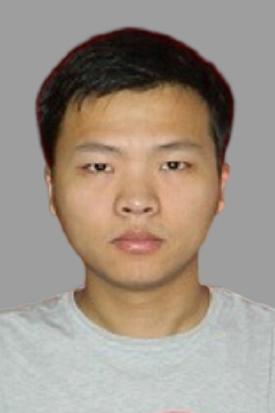 Yang Wang (王洋)合作论文数School of Information Engineering, Chang'an University1
 Jiaqi Xu合作论文数The Chinese University of Hong Kong1
 Jingjing Ren合作论文数School of Computer Science and Engineering, South China University of Technology;WeChat, Tencent Inc.1
 Zhengjun Zha (查正军)合作论文数Department of Automation, School of Information Science and Technology, University of Science and Technology of China;National Engineering Laboratory for Brain-Inspired Intelligence Technology and Application, University of Science and Technology of China1
 Yang Cao (曹洋)合作论文数Department of Automation, School of Information Science and Technology, University of Science and Technology of China1Renjing Pei (裴仁静)合作论文数Huawei Technologies Ltd.1




