Several studies have measured public attitudes (e.g., favor, disfavor) and behavioral intentions (e.g., intend to vote in support or opposition on ballot initiatives) toward marine reserves (MRs). The concept of authoritarianism can predict attitudes and intentions, but little research has investigated its role in natural resource management such as MRs. This article explored whether right-wing authoritarianism (RWA) and left-wing authoritarianism (LWA) are associated with attitudes and intentions toward MRs in Oregon (USA). Survey data from a random sample of residents (n = 824) showed those with at least some degree of RWA had significantly more negative attitudes and were less supportive of these MRs compared to those with no RWA. Respondents with at least some degree of LWA had more positive attitudes and were more supportive of these reserves compared to those with no LWA. Management and research implications are discussed.
Several studies have measured public attitudes (e.g., favor or disfavor) and behavioral intentions (e.g., intention to vote in support or opposition on a ballot initiative) toward marine reserves (MRs). However, almost all of these studies have been cross-sectional and conducted at single points in time, with few studies examining whether these attitudes and intentions are changing over time. This article examined changes over time in resident attitudes and intentions toward MRs in Oregon (USA). Data from surveys of residents in 2013, 2016, and 2021 from both longitudinal samples (i.e., different people over time; n = 1,950) and a panel sample (i.e., exactly the same people over time; n = 214) showed that across years, residents expressed favorable attitudes toward these MRs. Favorability was highest among those living closest to these reserves and also non-coastal residents of the most heavily populated regions of Oregon. Favorability increased significantly over time in each region for both the longitudinal and panel samples. More than two-thirds of residents across years and regions would also intend to vote in support of these reserves, with those in 2021 significantly more likely than those in earlier years to vote in support. Implications of these findings for both management and research are discussed.
Coastal communities face a myriad of social, economic, and ecological facets that affect their well-being and resilience capacity. For those places dependent on commercial fishing, resilience includes the processing sector of the seafood industry. Yet, there is a dearth of knowledge and understanding of the contribution of the seafood processing workforce to coastal community resilience. This study incorporates secondary data and collects new data through semi-structured interviews. The first set of interviews were collected with sector workers and leaders, and with coastal community leaders, in two Oregon counties. To supplement this data, interviews were conducted with knowledgeable sector contacts in New England and Norway. All interviews were conducted to contextualize perceptions of the seafood processing sector and resiliency within coastal communities. Analyses revealed three overarching themes related to the importance of the product, the work and workforce, and the seafood processing sector to the community. Results and discussion elaborate on the symbiotic connections between policy, management, and socio-cultural dependence of seafood processing to coastal community resilience.
A primary goal of the WASH sector is to facilitate transitions from open defecation to improved sanitation. Many residents of low-income countries desire improved sanitation but lack the resources to obtain or maintain access to toilets. For such persons, describing the goal as ‘behavior change’ implies a deficiency in mindset, failing to capture contextual factors affecting sanitation access. Furthermore, household circumstances affect movement both up and down the sanitation ladder, a phenomenon that the sector tends to overlook. This study, based on interviews with 308 former subscribers to Haitian container-based-sanitation service EkoLakay, tracks household sanitation access at four points in time: prior to subscribing, during the subscription period, immediately upon unsubscribing, and at the time of interview. We describe this movement through time as the ‘sanitation arc’. Prior to subscribing, households were more likely to practice open defecation or rely on non-household sanitation, and less likely to have private improved sanitation than the average urban Haitian. This distribution is reversed among former subscribers. Nearly half of former subscribers, however, could not afford continuous access to EkoLakay; 80% of involuntary terminations resulted in loss of access to private improved sanitation, and over one-third of these households reverted to open defecation.
Wildfire is an influential driver of social and ecological change that calls for adaptive governance on federal lands. We identify supporting and limiting elements of adaptive governance in the context of wildfire management on the Deschutes National Forest (DNF). We use key findings to propose actions and leverage points to increase the US Forest Service's ability to engage in adaptive governance. Our research suggests that key supporting elements of adaptive governance within the Forest Service are generally found at the local scale. These supportive elements can be tapped to shed national-scale rigidity traps that lock the Forest Service into actions that have had problematic outcomes. The governance framework we used could be helpful in other research that aims to explore supporting and limiting elements of adaptive governance and identify high leverage points for change.
This paper presents the use of tsunami evacuation drills within a coastal community in the Cascadia Subduction Zone (CSZ) to better understand evacuation behaviors and thus to improve tsunami evacuation preparedness and resilience. Evacuees’ spatial trajectory data were collected by Global Navigation Satellite System (GNSS) embedded in mobile devices. Based on the empirical trajectory data, probability functions were employed to model people’s walking speed during the evacuation drills. An Evacuation Hiking Function (EHF) was established to depict the speed–slope relationship and to inform evacuation modeling and planning. The regression analysis showed that evacuees’ speed was significantly negatively associated with slope, time spent during evacuation, rough terrain surface, walking at night, and distance to destination. We also demonstrated the impacts of milling time on mortality rate based on participants’ empirical evacuation behaviors and a state-of-the-art CSZ tsunami inundation model. Post-drill surveys revealed the importance of the drill as an educational and assessment tool. The results of this study can be used for public education, evacuation plan assessment, and evacuation simulation models. The drill procedures, designs, and the use of technology in data collection provide evidence-driven solutions to tsunami preparedness and inspire the use of drills in other types of natural disasters such as wildfires, hurricanes, volcanoes, and flooding.
Haiti is far from achieving the UN goal of sanitation access for all; 20% of the population has no sanitation access, and less than 0.1% of the country’s excreta is safely managed. Container-Based Sanitation (CBS) may be key to achieving timely and equitable sanitation coverage in Haiti’s cities. CBS can provide immediate sanitation access without preexisting infrastructure, and where permanent infrastructure is impractical. Investor caution and policy barriers, however, presently limit the growth of CBS solutions. Globally, most CBS services are provided by private organizations like EkoLakay, which provides a portable toilet and weekly excreta collection for a monthly fee. While the EkoLakay service is popular, attrition is high. This study examines the relationship between users and the service, and its role in improved sanitation accessibility. For this study, 633 active and former EkoLakay subscribers in Cap Haïtien were interviewed to reveal causes and implications of attrition. Households with active EkoLakay subscriptions are more likely than former subscribers to live in unauthorized informal residences and to lack energy or water infrastructure. A quarter of users unsubscribe voluntarily, after investing in permanent sanitation infrastructure. Over 30% of former users, however, reported unsubscribing due to economic challenges. Many involuntary terminations resulted in households losing access to private improved sanitation or reverting to open defecation, reducing progress toward global sustainability goals. Insights obtained contextualize the relationship between users and CBS services to inform public strategies for mitigating barriers to achieving universal safe sanitation.
Although there has been an increase in the research of social-ecological systems, there are still many gaps to understand the effects of change within coastal communities and ecosystems. The drivers of change include climate change, management regulations, demographic shifts, and market trends, and their intersectionality and, ultimately, impacts on commercial fishing communities are poorly understood. The research presented here explores connections between climate change and the increase in the average age of commercial fishermen, referred to as "graying of the fleet". Ultimately, these connections inform our overall objective: to understand how cumulative impacts from these two ongoing phenomena affect the resilience and adaptive capacity of the fishing community. Parsing out the connections may help managers or policy makers more accurately conceptualize future scenarios of community change and simultaneously enables the location of specific target areas for intervention or opportunity. Oral history semi-structured interviews with members of Oregon's fishing community were analyzed and recent climate change projections from the literature were synthesized to parameterize a set of possible scenarios regarding impacts on the fishing community. Results indicate that climate change will likely intensify both the stressors contributing to and the impacts of the graying of the fleet in Oregon. Analysis of the cumulative impacts from climate change and graying of the fleet reveal a greater impact on resilient and adaptive capacities of Oregon's fishing community than analysis of the drivers individually indicates. Therefore, an important implication from this research is the need to evaluate cumulative impacts within these coupled social-ecological systems. Relying on the responsive adaptability of fishing community members alone may not be sufficient, as their resilience and capacity to do so could be limited in the future.
Abstract This paper presents the use of tsunami evacuation drills within a coastal community in the Cascadia Subduction Zone (CSZ) to better understand evacuation behaviors and thus to improve tsunami evacuation preparedness and resilience. Evacuees' spatial trajectory data were collected by Global Navigation Satellite System (GNSS) embedded mobile devices. Based on the empirical trajectory data, probability functions were employed to model people's walking speed during the evacuation drills. An Evacuation Hiking Function (EHF) was established to depict the speed-slope relationship and to inform evacuation modeling and planning. The regression analysis showed that evacuees' speed was significantly negatively associated with slope, time spent during evacuation, rough terrain surface, walking at night, and distance to destination. We also demonstrated the impacts of milling time on mortality rate based on participants' empirical evacuation behavior and a state-of-the-art CSZ tsunami inundation model. Post-drill surveys revealed the importance of the drill as an educational and assessment tool. The results of this study can be used for public education, evacuation plan assessment, and evacuation simulation models. The drill procedures, organization, and the use of technology in data collection provide evidence-driven solutions to tsunami preparedness and inspire the use of drills in other types of natural disasters such as wildfires, hurricanes, volcanoes, and flooding.
This study examines public risk perceptions and behavioral intentions in the event of a Cascadia Subduction Zone (CSZ) earthquake and local tsunami on the Oregon Coast. A household survey was conducted in Seaside, Oregon, a small coastal community located within the impact radius of the CSZ. This research analyzes how situational variables of hazard proximity, past experience, preparedness, perception of location relative to a tsunami inundation zone, knowledge of tsunamis, and demographic variables, along with psychological constructs of risk perceptions and self-efficacy, influence intended evacuation behaviors. Results show that risk perception and self-efficacy have a positive significant influence on the intended behaviors of immediate evacuation. In addition, physical preparedness, tsunami-relevant knowledge and location perception serve as significant predictors of immediate evacuation intentions. Being female is positively associated with pre-evacuation behavioral intentions, encompassing checking social media, collecting documents, and contacting loved ones. The results contribute to the emerging body of literature examining human decision-making processes in extreme events.
Though a global issue, climate change adaptation necessitates local action. For many rural communities, challenges to available capital, infrastructure and knowledge systems need to be identified to adequately address climate change adaptability. In this study, social capital and information networks are examined as local adaptation strategies to mitigate specific risks and vulnerabilities to wildfire. We examine survey data collected from 683 owner-occupied rural central Oregon households, where localized climate change manifestations present risks to residents through increased wildfire occurrence and severity. Results indicate that social network ties to professionals knowledgeable on climate change and/or wildfires have no statistical impact on perceptions of climate change or associated local risks. Such social network ties are, however, mediated by a social capital measure of governmental trust for climate change. Results also indicate residents with higher perceptions of adaptation capacity to mobilize for collective action had greater concern for localized risks while residents with higher views of community solidarity had less concern. Clarifying these relationships adds to our understanding of social networks, community level social capital, and concerns for generalized climate change versus localized manifestations of risk as adaptation strategies for forested rural communities.
This study examines the link between political capital and climate change adaptation, and tests the relationship among political capital, social capital, and human capital. Political capital is studied through power distribution, voice, and connection in three rural villages in Java, Indonesia. This study finds that rural communities with a more distributed power structure are more likely to take the initiative to mobilize efforts by using their own resources to cope and adapt to climate change. Analysis with binary-logistic regression shows that social capital is a better predictor in the exercise of political capital than human capital. While the act of giving gifts to neighbors is associated with more community activism, receiving gifts from neighbors and membership in community groups tend to lower the activism.
This article examines public values and attitudes associated with the current marine reserves (MRs) in Oregon (United States), and how attitudes might change if these areas were to be designated as marine wilderness. Data were obtained from a representative survey of 530 residents of the most heavily populated region in Oregon. Twenty-one assigned values for Oregon's MRs were statistically grouped into three broader categories of values (environmental protection, emotional well-being, recreation) with respondents clearly preferring that these areas provide values fostering environmental protection over those providing for human emotional or recreational well-being. Respondents who considered environmental protection values to be important were likely to have more positive attitudes (e.g., like, good) about these MRs in general and also feel more positively about these areas if they were to be designated as marine wilderness in particular. Attitudes toward these MRs in general were also positively related to changes in specific attitudes with potential marine wilderness designation. Conversely, those who considered recreation values to be important were likely to have more negative attitudes about these MRs in general and the attitudes for these respondents would become even more negative if these areas were to be designated as marine wilderness.
Earthquakes along the Cascadia subduction zone would generate a local tsunami that could arrive at coastlines within minutes. Few studies provide empirical evidence to understand the potential behaviors of local residents during this emergency. To fill this knowledge gap, this study examines residents’ perceptions and intended evacuation behaviors in response to an earthquake and tsunami, utilizing a survey sent to households in Seaside, OR. The results show that the majority of respondents can correctly identify whether their house is inside or outside a tsunami inundation zone. Older respondents are more likely to identify this correctly regardless of any previous disaster evacuation experience or community tenure. The majority of respondents (69%) say they would evacuate in the event of a tsunami. Factors influencing this choice include age, motor ability, access to transportation, and trust in infrastructure resiliency or traffic conditions. While the City of Seaside actively promotes evacuation by foot, 38% of respondents still state they would use a motor vehicle to evacuate. Females and older respondents are more likely to evacuate by foot. Respondents with both higher confidence in their knowledge of disaster evacuation and higher income are more likely to indicate less time needed to evacuate than others. Generally, respondents are more likely to lead rather than follow during an evacuation, especially respondents who report being more prepared for an evacuation and who have a higher perceived risk. This study showcases a unique effort at empirically analyzing human tsunami evacuation lead or follow choice behavior.
A representative survey of 530 residents of the most heavily populated region in Oregon (USA) showed that most believed the concept and label of wilderness could apply to the ocean. Although a majority thought Oregon's marine reserves could be called wilderness, other areas of the ocean along Oregon's coast and elsewhere in the world were seen as more appropriate for marine wilderness. Respondents also thought wilderness was more applicable to land than the ocean. Over half would not change their attitudes or visitation associated with marine areas if they were designated as wilderness. For those who would be affected by this designation, most would change their attitudes in a positive direction and increase visitation. "Marine protected area," "marine reserve," "marine wilderness," and "wilderness" designations evoked different reactions among respondents with marine protected areas and reserves inferring regulations and limitations, and terrestrial and marine wildernesses eliciting notions of pristineness and purity.
This chapter synthesizes more than two decades of interdisciplinary scholarship by the coauthors related to fishing families and coastal communities. Amid the contemporary narrative of increasing coastal storms, erosion, and other physical hazards associated with climate and related coastal hazards facing coastal communities, we find myriad ways that Oregon fishing families and communities adapt to changes and continually demonstrate cultural and community resilience. Fishing families have exhibited their resilience through transformations in family roles, changes in the makeup of the fleet (graying), and never-ending management and resource shifts. This process of adapting to change has been a thread in our research, from one of our first collaborative projects, Adapting to Change: Fishing Businesses, Families, Communities, and Regions (1995) to our current project, The Old(er) Men of the Sea: Graying of the Fishing Industry and Its Impact on Local Community Resiliency. Our work illustrates an ever-present culture of adaptation that serves as the anchor of resilience in coastal Oregon.
This study investigates the role of Raskin, a rice subsidy policy for poor consumers, in supplementing the consumption of local staple foods and climate change resiliency. On-site surveys and inter...
Experts are predicting a major rupture of the Cascadia Subduction Zone (CSZ) sometime within the twenty-first century. When that happens, it will cause an offshore earthquake at a magnitude of 9.0+. After the tremors subside (about 5 min), a powerful tsunami will strike land. Oregon is known for its strong sense of community and grassroots-style initiatives. When the CSZ events occur, it will take that culture of resilience to cope with the disaster. When it comes to tsunamis, minutes matter. This chapter presents work by the coauthors related to tsunami evacuation and Oregon preparedness. An important dimension to mitigating the impact of coastal hazards is local ecological knowledge of land and seascapes. We describe the utility of agent-based modeling to assess likely tsunami scenarios and, through the participation of local community volunteers and coproduction of local ecological knowledge, use the information to inform community members and emergency planners on how to improve readiness strategies. The results of this research advance a culture of individual and community-level preparedness, thereby enhancing overall local community resilience.
Scholars and activists alike contend that extreme weather events may provide the best opportunity for raising public awareness and perhaps even instigating action related to climate change. We explore whether the September 2013 floods were associated with local climate change beliefs and actions after the event via an in-depth case study in Boulder County, CO. Based on analysis of local newspapers and policy documents, responses from an event-specific survey, and semi-structured interviews, we show that Boulder County residents readily connected the flooding event to climate change despite competing scientific claims about the link. Moreover, while the event did not necessarily alter existing climate change beliefs, it did create a greater sense of vulnerability to and increased awareness of the risks posed by climate change. In terms of climate change action after the event, residents and policymakers appeared to place a greater emphasis on adaptation to future extreme events, with a focus on building resilience through social capital. Yet, we also uncovered a complex relationship between social capital and resilience, particularly in terms of the impact of the event on already marginalized and vulnerable populations. This study adds to a growing body of research on climate change beliefs and actions in the wake of extreme weather events.
 Haizhong Wang合作论文数School of Civil and Construction Engineering, College of Engineering, Oregon State University7
 Mark D. Needham合作论文数Department of Forest Ecosystems and Society, Oregon State University7
 Alireza Mostafizi合作论文数Sch Civil & Construct Engn, Oregon State Univ5
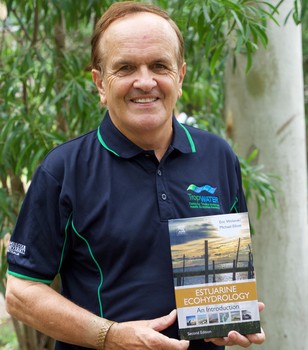 Eric Wolanski合作论文数Center for Tropical Water and Aquatic Ecosystem Research, James Cook University School of Science and Engineering5
 Edward Barbier合作论文数Department of Economics, Colorado State University;School of Global Environmental Sustainability, Colorado State University5
 Shankar Aswani Canela合作论文数Department of Anthropology;Program in Marine Science;University of California , Santa Barbara;Department of Anthropology, University of California , Santa Barbara5Elise F Granek合作论文数5
 Sally D. Hacker合作论文数Chemistry Department, Woods Hole Oceanographic Institution5
 Chris J. Kennedy合作论文数Dept. 3985, University of Wyoming5
 Flaxen Conway合作论文数5
 Steve Polasky合作论文数Department of Applied Economics, University of Minnesota;Department of Ecology, Evolution, and Behavior, University of Minnesota4
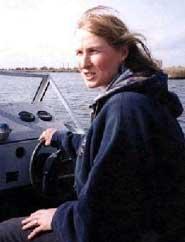 Denise Reed合作论文数Department of Earth & Environmental Sciences, University of New Orleans4
 Brian Reed Silliman合作论文数Nicholas School of the Environment, Duke University4Gerardo M. E. Perillo合作论文数4David Bael合作论文数4
 Jurgenne H. Primavera合作论文数Aquaculture Department, Southeast Asian Fisheries Development Center4
 David M. Stoms合作论文数Institute for Computational Earth System Science;University of California , Santa Barbara;Institute for Computational Earth System Science, University of California , Santa Barbara4
 Daniel T. Cox合作论文数Wave Research Laboratory;Oregon State University;Wave Research Laboratory, Oregon State University4
 Carrie V Kappel合作论文数National Center for Ecological Analysis & Synthesis, University of California, Santa Barbara4
 Evamaria W Koch合作论文数Horn Point Laboratory, Center for Environmental Science, University of Maryland4Dan Cox合作论文数3Jennifer R. Johnston合作论文数3Daniel Tillias合作论文数2Jessica Laporte合作论文数2Thomas C. Swearingen合作论文数2Erica Lloyd合作论文数2
 Derric Jacobs合作论文数Portland State University2
 Froggi Vanriper合作论文数Coll Earth Ocean & Atmospher Sci, Oregon State Univ2
 Alexandra Buylova合作论文数2
 Sasha Kramer合作论文数2
 Arini Wahyu Utami合作论文数Dept Agr Socioecon, Univ Gadjah Mada2
 Elizabeth E. Perry合作论文数Michigan State Univ2
 Kory Russel合作论文数2
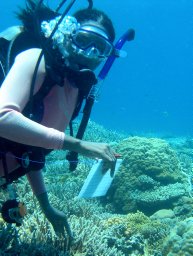 Nyawira a Muthiga合作论文数Kenya Wildlife Service2John D. Bailey合作论文数1GJO FLETCHER合作论文数1william v dantonio合作论文数1Emily Platt合作论文数1
 Cadell Chand合作论文数1SL Davis合作论文数1Brianna Haugen合作论文数1deanna caracciolo合作论文数1
 Suzanne M. Russell合作论文数1
 Robert Gresswell合作论文数Northern Rocky Mountain Science Center, US Geological Survey;Department of Ecology, Montana State University1Shangjia Dong合作论文数1
 Bruce Shindler合作论文数Department of Forest Ecosystems & Society, College of Forestry, Oregon State University1
 Hyoungsu Park合作论文数Department of Civil and Environmental Engineering, University of Hawaii at Mānoa1
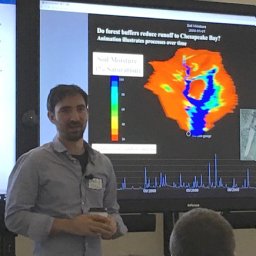 Chad Zanocco合作论文数Sch Publ Policy Corvallis, Oregon State Univ1
 Chen Chen合作论文数CRCV | Center for Research in Computer Vision
University of Central Florida1
Chen Chen合作论文数CRCV | Center for Research in Computer Vision
University of Central Florida1




