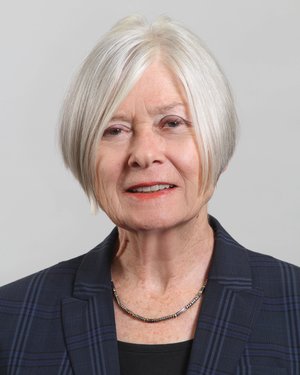
Addiction (A): Tell me about your background—your childhood, where you grew up—how did you get your start in life? Lorraine Midanik (LM): I was born in Toronto, and my family moved to California when I was 5 years old. I grew up in a Jewish, working-class neighbourhood in Los Angeles in the mid-1950s. My mother graduated from high school, and my father dropped out of school in the 8th grade. I know both of them wanted their children to have more opportunities than they did. I had a very happy childhood living in a safe neighbourhood where I had a lot of freedom. I loved school and did well there. I went through public elementary school, junior high and high school, and then went to the University of California at Los Angeles (UCLA), which was my local university. My parents really did not have any strong feelings one way or the other on whether I should go to college; it was my own decision, but they were supportive. I chose to major in social welfare, which was a combination of sociology and psychology. When I graduated I really did not know what I wanted to do, so I took a job as a welfare eligibility worker for Los Angeles County. At that time they were hiring only eligibility workers, not social workers. I lasted in that job about 3 months and then I ran back to school, where I have always felt the most comfortable. I loved school, and I still do. This time, I enrolled in a master’s programme in rehabilitation counselling at California State University, Los Angeles. This was a clinical programme that focused on vocational assessment and referrals for people with disabilities. In this programme, I became friends with another student who told me confidentially that he was a recovering alcoholic. That had no meaning to me at all at the time. Alcohol was not very important in my life; I really never thought much about it, and did not know people who drank a lot. However, I was intrigued by my friend’s ‘confession’, so I did two internships in alcohol agencies. I became fascinated early on by how important alcohol was for these people and how their alcohol abuse often ruined their lives and those of their families. As a result I stayed in the alcohol field, and after graduating I was hired at Long Beach Memorial Hospital where they had just opened up an alcohol unit (both in-patient and out-patient); I was the first master’strained counsellor they hired in that unit.
AIMS This study compares current 12-month drinkers who do not report drinking in the last 30 days with current drinkers who drank in the last 30 days and assesses possible misclassification errors from use of a 30-day consumption measure. DESIGN Data are from the 2005 US National Alcohol Survey (n = 6919), a national household probability survey. SETTING Telephone interviews were used to measure alcohol use and alcohol-related problems. PARTICIPANTS This study compared 1300 current drinkers who did not drink in the last 30 days with 2956 current drinkers who drank in the last 30 days. MEASUREMENTS Volume was measured by quantity/frequency scales (12-month and 30-day) and a graduated frequency scale (12-month). Both groups were compared by demographic, alcohol volume, days of five or more drinks, social consequences and dependence measures. FINDINGS Results indicate a significantly lower prevalence rate of current drinking for 30-day measures-47.3% (45.8%, 48.8%) versus 67.3% (66.0%, 68.7%) with 12-month measures. Further, 385 non-30-day drinkers reported 12-month drinking frequencies of once a month or more often, suggesting possible inconsistent reporting of their alcohol use. When this group of 'inconsistent' respondents is compared with the 915 non-30-day current drinkers who reported less than monthly drinking, they reported significantly higher yearly volume, days of five or more drinks, mean social consequences and proportion reporting alcohol dependence. CONCLUSIONS In population surveys assessing alcohol use, asking about the previous 12 months rather than the past 30 days provides higher estimates of current use, including more days of heavy episodic use.
Objective: Graduated Frequencies (GF) alcohol consumption measures efficiently summarize drinking pattern and permit volume calculations, both vital for epidemiology and policy studies. However, few studies have assessed accuracy of standard algorithms. We conducted sensitivity and simulation exercises to gain insight into potential effects of calibrating the measure to improve assessment of volume. Method: We used drinking diaries (n=99) followed by a summary GF scale to recalibrate multi-level F and Q constants associated with volume summations. A separate protocol analysis asked respondents (n=58) how many drinks they usually had within each GF range. Third, the Year 2000 National Alcohol Survey (N10) includes a novel technique for improving recall of maximum drinks/day using contextual cues, developed to correct volume/pattern estimates. Proportions of drinking in contexts where hypothetically larger pours of wine and liquor (home, parties and “street” drinking), plus beverage potency (malt liquor beer and spirits), were used to estimate impacts of drink size and strength on volume and consumption distributions. Results: Diary results showed that the mean quantity of a GF quantity range is typically below that range’s midpoint. In a sensitivity result based on preliminary N10 national telephone data (n = 2,447 drinkers) this bias was largely offset by underestimation of GF mid-level frequencies, yielding little volume change (increases and decreases of less than 5%, depending on assumptions). The protocol analysis confirmed the quantity adjustment. In the N10 sample of drinkers, repeating the GF with contextual cues elicited a higher maximum in 15% drinkers; 9% had a large volume increase (+83%) but change was small (+3.5%) averaged over all drinkers. Lastly, pour-size/strength simulations in the same national data showed that such adjustments promise the greatest aggregate effect on population estimates. Various plausible assumptions yielded up to a 37% overall increase in mean volume. Conclusions: Results imply that GF algorithms are robust to typical recall distortions; conversely, size and type of a subjective “drink” (dose) produce the dominating measurement biases sufficient to account for much of the “dark matter”, the amount undercovered by standard self-report survey measures. Improving survey measurement is critical for making sound, evidence-based policy recommendations.
INTRODUCTION AND AIMS Interactive voice response (IVR), a computer-based interviewing technique, can be used within a computer-assisted telephone interview (CATI) survey to increase privacy and the accuracy of reports of sensitive attitudes and behaviours. Previous research using the 2005 National Alcohol Survey indicated no overall significant differences between IVR and CATI responses to alcohol-related problems and alcohol dependence. To determine if this result holds for demographic subgroups that could respond differently to modes of data collection, this study compares the prevalence rates of lifetime and last-year alcohol-related problems by gender, ethnicity, age and income subgroups obtained by IVR versus continuous CATI interviewing. DESIGN AND METHODS As part of the 2005 National Alcohol Survey, subsamples of English-speaking respondents were randomly assigned to an IVR group that received an embedded IVR module on alcohol-related problems (n = 450 lifetime drinkers) and a control group that were asked identical alcohol-related problem items using continuous CATI (n = 432 lifetime drinkers). RESULTS Overall, there were few significant associations. Among lifetime drinkers, higher rates of legal problems were found for white and higher income respondents in the IVR group. For last-year drinkers, a higher percentage of indicators of alcohol dependence was found for Hispanic respondents and women respondents in the CATI group. DISCUSSION AND CONCLUSION Data on alcohol problems collected by CATI provide largely comparable results to those from an embedded IVR module. Thus, incorporation of IVR technology in a CATI interview does not appear strongly indicated even for several key subgroups.
Background: National population data on risk of alcohol-related injury or driving while intoxicated (DWI) are scarce. Objective: The association of alcohol-related injury and perceived DWI (PDWI) with both volume and pattern of consumption are examined in a merged sample of respondents from the 2000 and 2005 National Alcohol Surveys using risk function analysis. Methods: Self-reported consumption patterns on 8,736 respondents who consumed at least one drink in the last 12 months were assessed as the average daily volume and frequency of consuming 5 or more (5+), 8 or more (8+), and 12 or more (12+) drinks in a day. Risks were defined using CHAID segmentation analysis implemented with SPSS Answer Tree. Results: For alcohol-related injury (n = 110), those most at risk drank at lower volumes with some high maximum occasions, or at higher volumes, where high maximum occasions had little added effect. Risk was highest for those reporting more than 6 drinks per day (9.7%). For PDWI (n = 696), those most at risk drank at higher volumes and with a greater number of high maximum occasions. Risk was highest for those reporting more than 6 drinks per day andmore than one 8+ occasion during the last year (39%). Conclusions: Overall risk appears to increase with increasing volume, but at a given volume level, risk also increases with frequency of high maximum occasions. These data lend relatively weak support for previous findings suggesting that less frequent drinkers who only occasionally consume larger quantities may be at greater risk, and any alcohol consumption appears to carry some risk of these harms.
This study examined patterns of smoked substances (cigarettes and marijuana) among heterosexuals, gays, lesbians, and bisexuals based on data from the 2000 National Alcohol Survey, a population-based telephone survey of adults in the United States. We also examined the effect of bar patronage and sensation seeking/impulsivity (SSImp) on tobacco and marijuana use. Sexual orientation was defined as lesbian or gay self-identified, bisexual self-identified, heterosexual self-identified with same-sex partners in the past 5 years, and exclusively heterosexual (heterosexual self-identified, reporting no same-sex partners). Findings indicate that bisexual women and heterosexual women reporting same-sex partners had higher rates of cigarette smoking than exclusively heterosexual women. Bisexual women, lesbians, and heterosexual women with same-sex partners also used marijuana at significantly higher rates than exclusively heterosexual women. Marijuana use was significantly greater and tobacco use was elevated among gay men compared with heterosexual men. SSImp was associated with greater use of both of these substances across nearly all groups. Bar patronage and SSImp did not buffer the relationship between sexual identity and smoking either cigarettes or marijuana. These findings suggest that marijuana and tobacco use differ by sexual identity, particularly among women, and underscore the importance of developing prevention and treatment services that are appropriate for sexual minorities.
Binge drinking is a substantial and growing health problem. Community norms about drinking and drunkenness may influence individual drinking problems. Using data from the New York Social Environment Study (n = 4,000) conducted in 2005, the authors examined the relation between aspects of the neighborhood drinking culture and individual alcohol use. They applied methods to address social stratification and social selection, both of which are challenges to interpreting neighborhood research. In adjusted models, permissive neighborhood drinking norms were associated with moderate drinking (odds ratio (OR) = 1.28, 95% confidence interval (CI): 1.05, 1.55) but not binge drinking; however, social network and individual drinking norms accounted for this association. By contrast, permissive neighborhood drunkenness norms were associated with more moderate drinking (OR = 1.20, 95% CI: 1.03, 1.39) and binge drinking (OR = 1.92, 95% CI: 1.44, 2.56); the binge drinking association remained after adjustment for social network and individual drunkenness norms (OR = 1.58, 95% CI: 1.20, 2.08). Drunkenness norms were more strongly associated with binge drinking for women than for men (p(interaction) = 0.006). Propensity distributions and adjustment for drinking history suggested that social stratification and social selection, respectively, were not plausible explanations for the observed results. Analyses that consider social and structural factors that shape harmful drinking may inform efforts targeting the problematic aspects of alcohol consumption.
OBJECTIVE:Interactive voice response (IVR), a computer-based interviewing technique in which respondents interact directly with a computerized system, can increase a sense of privacy and potentially a willingness to report putatively sensitive attitudes and behaviors more accurately. The purpose of this study was to compare the prevalence rates obtained by IVR with computer-assisted telephone interviewing (CATI) for alcohol-related problems, physical and sexual abuse, and sexual orientation.METHOD:As part of the data collection effort for the 2005 National Alcohol Survey, subsamples of respondents were randomly assigned to three groups: two IVR groups, each receiving an IVR module on either alcohol-related problems (n = 562) or on physical/sexual abuse and sexual orientation (n = 563), and control groups that did not receive IVR (n = 559).RESULTS:Analyses indicate no significant differences between IVR and the control groups on alcohol-related problems. A significantly higher proportion of reports of homosexual and bisexual sexual identity was found in the IVR group for respondents 40 years and older. The IVR group also reported higher rates of condom use for respondents 18-39 years old.CONCLUSIONS:These findings suggest that alcohol-related problems may no longer be considered sensitive items in the general adult population. However, reports of nonheterosexual sexual orientation identity remain sensitive for older respondents. Embedding IVR within a telephone interview may provide an effective way of helping assure valid responses to sensitive item content.
In this paper, the sponsor of HR 1348 should have been given as Rep. Patrick Joseph Kennedy (D-Rhode Island) and the co-sponsor as John Sullivan (R-Oklahoma). The third sentence in the last paragraph of the editorial should be NIAAA (not NIAA).
Aims The focus of this paper is on psychometric issues related to the measurement of alcohol problems. Methods Taking a broad perspective, this paper first examines several issues around the use of instruments to provide diagnostic categories in surveys, including dimensionality, severity and alcohol consumption. Secondly, a discussion of some of the political issues surrounding measurement of alcohol problems is presented, including some of the conflicts that arise when the psychometric properties of commonly used instruments are questioned. Finally, newer statistical techniques that can be applied to scale development in the alcohol field are examined, including non-linear multivariate analyses and confirmatory/hypothesis-based methods. Results and conclusions Continued scholarly discussion needs to be encouraged around these psychometric issues so that instrument development and maintenance in the addiction sciences becomes an ongoing academic pursuit as we strive to measure alcohol problems in the best way possible.
 Thomas K. Greenfield合作论文数Alcohol Research Group, Public Health Institute;Department of Psychiatry, University of California, San Francisco21
 Ma Armstrong合作论文数6Tam Tammy W合作论文数6
 Laurie A. Drabble合作论文数6
 Robin Room合作论文数Centre for Alcohol Policy Research, La Trobe University;Centre for Social Research on Alcohol & Drugs, Stockholm University6Jason Bond合作论文数5K SOGHIKIAN合作论文数5Al Klatsky合作论文数4John D. Rogers合作论文数Alcohol Research Group, Public Health Institute4Trocki Karen F合作论文数4Raul Caetano合作论文数4Cheryl J. Cherpitel合作论文数4
 Ye Yu (于烨)合作论文数Schoolof Basic Medical Sciences and Clinical Pharmacy, China Pharmaceutical University4William C. Kerr合作论文数Alcohol Research Group, Emeryville, Calif4oj skog合作论文数3e osterberg合作论文数3Norström Thor合作论文数3Stall R D合作论文数3Hines A M合作论文数3
 Harold D. Holder合作论文数Prevention Research Center, Pacific Institute for Research and Evaluation3
 Christine Ann Godfrey合作论文数Department of Health Sciences, University of York3
 Thomas F Babor合作论文数Department of Public Health Sciences, School of Medicine, University of Connecticut3
 Norman A Giesbrecht合作论文数3
 Sally Casswell合作论文数World Health Organisation Collaborating Centre, Massey University;Whariki Research Centre, Massey University3Roberta Ferrence合作论文数Centre for Addiction and Mental Health, Toronto, Canada3G.Michael Crosby合作论文数3Jussi Simpura合作论文数3K. Trocki合作论文数2leslie sue lieberman合作论文数2k makela合作论文数2Jay Paul合作论文数2Griffith Edwards合作论文数2
 Andrew Scharlach合作论文数School of Social Welfare, University of California, Berkeley2Anders Romelsjo合作论文数2Laura J. Ransom合作论文数2Paul H. Lemmens合作论文数2T. S. Naimi合作论文数1klaus makela合作论文数1Donald C. Barrett合作论文数1Veronica Gonzales Osejo合作论文数1IS Tekawa合作论文数1Paul H. H. M. Lemmens合作论文数1louis j ransom合作论文数1
 Jennifer Ahern合作论文数School of Public Health, University of California, Berkeley1Romelsjö Anders合作论文数1
 Alan Hubbard合作论文数Division of Biostatistics, School of Public Health, University of California, Berkeley1Polen M R合作论文数1Sell Randall L合作论文数Dept Community Hlth & Prevent, Drexel Univ1
 Rachael Korcha合作论文数1




