Limiting global warming to well below 2 °C requires that countries and subnational regions align their net-zero targets with coherent carbon budgets. While the fair division of the global carbon budget across nations is well studied, we develop a distributive justice framework for allocating a national carbon budget among subnational regions. Grounded in individuals' equal claims to well-being benefits from emissions-generating activities, our framework distinguishes between consumption- and production-based emissions budgets. For consumption-based emissions, we propose a qualified equal-per-capita allocation that accounts for regional basic needs, historical responsibility, and benefits from past emissions. For production-based emissions, we introduce the Equal Transition Opportunity Production-Based Allocation (ETOPA) mechanism, which accounts for heterogeneous regional economic structures and transition risks. Applying our framework to the European Union, we quantify subnational distributions of production- and consumption-based emissions budgets and reflect on their potential to inform political processes and guide equitable carbon-neutral transformations.
This paper discusses how legitimate expectations should be treated during transitional processes. It examines whether the state may frustrate those expectations which, although legitimate at time T1, are no longer legitimate at time T2 due to changed circumstances. It also discusses the conditions under which those whose expectations may be frustrated during transitional processes should receive compensation. First, we argue that legitimate expectations reflect a legitimate interest in receiving the benefits of the basic structure of society. We then distinguish between legitimate expectations that are protected by rights and those that are not. We argue that while the former type of legitimate expectation may be justifiably frustrated when doing so is necessary to achieve a more just society, the range of cases in which it is permissible to frustrate the latter type of expectation is broader. Finally, we argue that when someone is committed to a particular life plan based on an expectation that was legitimate at T1 but is no longer legitimate at T2 because of changed circumstances, the value of personal autonomy gives rise to a meta-expectation that people will be given some time to adjust their life plans to new circumstances. We also argue that the frustration of expectations that are no longer legitimate during transitions may still require compensation after the change in circumstances, if the agent responsible for creating the expectation frustrates it and the expectation holder has done nothing wrong in relying on it.
What is 'loss'? When, and why, does it matter? Analytic-philosophical consideration of loss has been overshadowed by the neighbouring concept of harm. But the two are distinct, and the distinction matters. We argue that the best conception of loss captures a wide range of diminutions, of any magnitude, in the feature-set of an entity, whereas the best conception of harm captures only significant diminutions in wellbeing of humans (and other living beings with moral status). In the space between the two concepts lies an under-theorised concept we call harmless loss, which does important conceptual work in cases of trivial wellbeing loss, losses to non-wellbeing goods, and losses to non-human agents. Our conceptual scheme motivates principles of reasoning according to which decision-makers should take account of harms and ignore harmless losses, except where they have special duties to avoid losses. These principles advance debates about climate change 'loss and damage' and the 'just transition' to a low-carbon economy.
We introduce Physically Enhanced Gaussian Splatting Simulation System (PEGASUS) for 6DoF object pose dataset generation, a versatile dataset generator based on 3D Gaussian Splatting. Environment and object representations can be easily obtained using commodity cameras to reconstruct with Gaussian Splatting. PEGASUS allows the composition of new scenes by merging the respective underlying Gaussian Splatting point cloud of an environment with one or multiple objects. Leveraging a physics engine enables the simulation of natural object placement within a scene through interaction between meshes extracted for the objects and the environment. Consequently, an extensive amount of new scenes - static or dynamic - can be created by combining different environments and objects. By rendering scenes from various perspectives, diverse data points such as RGB images, depth maps, semantic masks, and 6DoF object poses can be extracted. Our study demonstrates that training on data generated by PEGASUS enables pose estimation networks to successfully transfer from synthetic data to real-world data. Moreover, we introduce the Ramen dataset, comprising 30 Japanese cup noodle items. This dataset includes spherical scans that capture images from both the object hemisphere and the Gaussian Splatting reconstruction, making them compatible with PEGASUS.
This article examines the relationship between Jeremy Waldron's supersession thesis and compensation. Recently, Waldron has argued that claims for material compensation for the original injustice cannot be superseded. He limits supersession to issues of restitution. Waldron's supersession thesis is frequently cited by opponents of claims based on historical injustice, so his view of compensation warrants close examination. In our article, we explain the details of Waldron's 'simple model' of compensation, offer an internal critique of it, and try to sympathetically reconstruct it. We contend that a crucial claim about this model does not work; his model would result in many more backward-looking compensatory claims than he realizes. Waldron's allowing for material compensation claims from historical injustice is in tension with, or incompatible with, his long-expressed view that the spirit of the supersession thesis is that justice should be forward-looking and look to present-day costs. We have argued elsewhere that the abstract possibility that restitution claims may be superseded due to changing circumstances (what we call the 'supersession thesis proper') is separable from the question of whether justice has a forward-looking or backward-looking orientation. We argue here that Waldron's model of compensation can best be made sense of through our distinction of 'full supersession' and 'partial supersession.' This allows us to show that Waldron's model relies on a more strongly backward-looking orientation than he seems to endorse in his earlier works on restitution and his most recent article discussing compensation. We conclude by offering external criticisms of Waldron's model of compensation.
We introduce FruitNeRF, a unified novel fruit counting framework that leverages state-of-the-art view synthesis methods to count any fruit type directly in 3D. Our framework takes an unordered set of posed images captured by a monocular camera and segments fruit in each image. To make our system independent of the fruit type, we employ a foundation model that generates binary segmentation masks for any fruit. Utilizing both modalities, RGB and semantic, we train a semantic neural radiance field. Through uniform volume sampling of the implicit Fruit Field, we obtain fruit-only point clouds. By applying cascaded clustering on the extracted point cloud, our approach achieves precise fruit count.The use of neural radiance fields provides significant advantages over conventional methods such as object tracking or optical flow, as the counting itself is lifted into 3D. Our method prevents double counting fruit and avoids counting irrelevant fruit.We evaluate our methodology using both real-world and synthetic datasets. The real-world dataset consists of three apple trees with manually counted ground truths, a benchmark apple dataset with one row and ground truth fruit location, while the synthetic dataset comprises various fruit types including apple, plum, lemon, pear, peach, and mango.Additionally, we assess the performance of fruit counting using the foundation model compared to a U-Net.
In plant phenotyping, accurate trait extraction from 3D point clouds of trees is still an open problem. For automatic modeling and trait extraction of tree organs such as blossoms and fruits, the semantically segmented point cloud of a tree and the tree skeleton are necessary. Therefore, we present CherryPicker, an automatic pipeline that reconstructs photo-metric point clouds of trees, performs semantic segmentation and extracts their topological structure in form of a skeleton. Our system combines several state-of-the-art algorithms to enable automatic processing for further usage in 3D-plant phenotyping applications. Within this pipeline, we present a method to automatically estimate the scale factor of a monocular reconstruction to overcome scale ambiguity and obtain metrically correct point clouds. Furthermore, we propose a semantic skeletonization algorithm build up on Laplacian-based contraction. We also show by weighting different tree organs semantically, our approach can effectively remove artifacts induced by occlusion and structural size variations. CherryPicker obtains high-quality topology reconstructions of cherry trees with precise details.
Die Studie untersucht die Rolle der Kirchen in der jüngeren Phase der europäischen Einigung. Den Ausgangspunkt bilden die Verfassungs-, Finanz- und Migrationskrisen im 21. Jahrhundert. Unter dem Eindruck dieser Krisen brachten die Kirchen ihre Haltung zu Europa deutlicher als zuvor zum Ausdruck. In neun Fallstudien werden Katholizismus, Protestantismus und Orthodoxie im kontextuellen Verhältnis zur EU untersucht. Die Studie plädiert für eine europäisierte Variante eines öffentlichen Christentums. Leitbegriffe dafür bietet der konziliare Prozess mit der geprägten Begriffstrias »Frieden, Gerechtigkeit und Bewahrung der Schöpfung«. Sie markieren die Relevanz eines öffentlichen Christentums für das gegenwärtige Europa.
We present CherrySet, a comprehensive dataset comprising observations of three cherry trees throughout an entire vegetation period. This publication is part of the For5G: Digital Twin project, where we aim to develop an end-to-end pipeline for the creation of digital twins in horticulture, from data acquisition up to end-user applications. For this purpose, we have developed a methodology for precise scanning and capturing of high-resolution image data of trees using UAV technology. Now we are releasing the dataset and preliminary findings of the 2023 season to encourage fellow researchers to leverage the data for their own research and contribute to the scientific community. CherrySet encompasses a collection of 2D images covering three sweet cherry trees at 12 distinct time points, spanning from dormancy in March through blooming and growth until harvest in July 2023. In addition to the image data, CherrySet offers manually recorded ground truth information obtained from reference branches throughout the growing season, which includes comprehensive bud, blossoms and fruit counts during all vegetation phases, as well as the total number of cherries gathered at harvest. The combination of visual and ground truth trait data allows insights into intra-seasonal analysis of tree and fruit development, providing valuable data for conventional or AI based follow-up research. We are committed to refining our image acquisition pipeline and intend to provide corresponding data for these trees throughout the 2024 season. This expansion will open up opportunities for inter-seasonal research.
No AccessJustice in Time.. A Future-Oriented Rationale for Returning the Padrão from Germany to NamibiaLukas H. MeyerLukas H. MeyerSearch for more papers by this authorhttps://doi.org/10.7788/9783412527839.237SectionsPDF/EPUB ToolsAdd to favoritesDownload CitationsTrack Citations ShareShare onFacebookTwitterLinkedInRedditEmail About Previous chapter Next chapter FiguresReferencesRelatedDetails Download book cover 1st editionISBN: 978-3-412-52781-5 eISBN: 978-3-412-52783-9HistoryPublished online:June 2023 KeywordsLooted ArtProvenance ResearchColonial HeritageColonial CollectionsColonial Cultural ObjectsHumboldt-ForumArt TheftPDF download
Climate change increases the frequency and intensity of certain kinds of natural hazard events in alpine areas. This interdisciplinary study addresses the hypothetical possibility of relocating the residents of three alpine areas in Austria: the Solk valleys, the Johnsbach valley, and the St. Lorenzen/Schwarzenbach valleys. Our particular focus is on these residents' expectations about such relocations. We find that (1) many residents expect that in the next decades the state will provide them with a level of natural hazards protection, aid, and relief that allows them to continue to live in these valleys; (2) this expectation receives some legal protection but only when it is associated with fundamental rights; and (3) the expectation is morally significant, i.e., it ought to be considered in assessing the moral rightness or justness of relocation policies. These results suggest legal changes and likely extend to many other (Austrian) alpine areas as well.
This article proposes that debates over historical injustice and Jeremy Waldron's supersession thesis are helpfully framed by distinguishing between (a) the abstract supersession thesis proper, (b) the temporal orientation of justice, (c) various conceptions of supersession, and (d) arguments against using supersession discourse. This introduction and contributors to this volume advance the debate by discussing Waldron's later, less examined writings on supersession of sovereignty, group identity, and treaties, as well as public dimensions of supersession and critiques drawn from settler colonial theory and Indigenous perspectives, among others. We discuss the contributions by Gordon Christie, Burke Hendrix, Julio Montero, Esme Murdock, Seunghyun Song, Jeff Spinner-Halev, and Santiago Truccone-Borgogno, and Jeremy Waldron's reply.
Digital field recordings are central to most precision agriculture systems since they can replicate the physical environment and thus monitor the state of an entire field or individual plants. Using different sensors, such as cameras and radar, data can be collected from various domains. Through the combination of radio wave propagation and visible light phenomena, it is possible to enhance, e.g., the optical condition of a fruit with internal parameters such as the water content. This paper proposes a method to correct sensor errors to perform data fusion. As an example, we observe a watermelon with camera and radar sensors and present a system architecture for the visualization of both sensors. For this purpose, we constructed a handheld platform on which both sensors are mounted. In our report, the radar is analyzed in terms of systematic and stochastic errors to formulate an angle-dependent mapping function for error correction. It is successfully shown that camera and radar data are correctly assigned with a watermelon used as a target object, demonstrated by a 3D reconstruction. The proposed system shows promising results for sensor overlay, but radar data remain challenging to interpret.
In implementing the European Green Deal to align with the Paris Agreement, the EU has raised its climate ambition and in 2022 is negotiating the distribution of increased mitigation effort among Member States. Such partitioning of targets among subsidiary entities is becoming a major challenge for implementation of climate policies around the globe. We contrast the 2021 European Commission proposal - an allocation based on a singular country attribute - with transparent and reproducible methods based on three ethical principles. We go beyond traditional effort-sharing literature and explore allocations representing an aggregated least regret compromise between different EU country perspectives on a fair allocation. While the 2021 proposal represents a nuanced compromise for many countries, for others a further redistribution could be considered equitable. Whereas we apply our approach within the setting of the EU negotiations, the framework can easily be adapted to inform debates worldwide on sharing mitigation effort among subsidiary entities.
This chapter addresses a theory of intergenerational justice that is referred to as needs-based sufficientarianism. According to needs-based sufficientarianism, the present generation ought to enable future generations to meet their basic needs—for example, their needs for drinkable water, food, and healthcare. The authors’ aim is to explain and defend this theory in a programmatic way. First, they introduce what they regard as the most plausible variant of needs-based sufficientarianism. Then, they argue that this variant is superior to several alternative ways of thinking about intergenerational justice. In particular, they defend basic needs as the currency of intergenerational justice and sufficiency as its principle. Their arguments for these claims do not purport to be fully comprehensive nor fully conclusive. Yet, the authors hope that they suffice to show that needs-based sufficientarianism is a major contender, with significant pro tanto advantages over other views.
 Pranay Sanklecha合作论文数10
 Karl W. Steininger合作论文数University of Graz;Department of Economics;Department of Economics, University of Graz7Andreas Gilson合作论文数6
 Marc Stamminger合作论文数Department of Computer Science, Friedrich-Alexander-Universität Erlangen-Nürnberg6
 Dominic Roser合作论文数6
 Keith Williges合作论文数International Institute for Applied Systems Analysis4
 Axel Gosseries合作论文数Université catholique de Louvain4
 Harald Stelzer合作论文数Karl-Franzens-Universtität Graz4franz uhrmann合作论文数3
 Timothy Waligore合作论文数3Oliver Scholz合作论文数3
 Ivo Wallimann-Helmer合作论文数3
 Thomas Polzler合作论文数Graz Univ3
 Thomas Schinko合作论文数Wegener Center for Climate and Global Change, University of Graz3Florian Maczek合作论文数2Christian Lininger合作论文数2Kian Mintzwoo合作论文数University Center for Human Values, Princeton University2
 Stefan Nabernegg合作论文数2
 Thomas Pogge合作论文数Department of Philosophy, Yale University/Centre for Professional Ethics of the University of Central Lancashire2
 Olivia Serdeczny合作论文数2
 Scholz Oliver合作论文数2
 Ute Schmid合作论文数Faculty Information Systems and Applied Computer Science, University of Bamberg2
 Matt Matravers合作论文数School of Politics, Economics and Philosophy, University of York2
 Gottfried Kirchengast合作论文数Institute for Geophysics;University of Graz;Institute for Geophysics, University of Graz2
 Alexa Zellentin合作论文数Keble College;University of Oxford;Keble College, University of Oxford2luke tomlinson合作论文数1Saibeen Sultana合作论文数1Soenke Kreft合作论文数1Kevin Urama合作论文数1
 Barbara Reiter合作论文数1Florian Ortner合作论文数1
 Colin McQuistan合作论文数1Adam Kalisz合作论文数1Asha Sitati合作论文数1Zinta Zommers合作论文数1Florentina Simlinger合作论文数1
 Jonas Gedschold合作论文数1Dan Farber合作论文数1
 Yusuke Yoshiyasu合作论文数National Institute of Advanced Industrial Science and Technology1
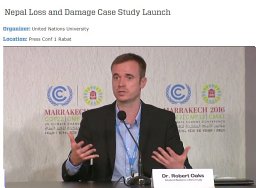 Robert Oakes合作论文数United Nations Univ Inst Environm & Human Secur1Daniel Petz合作论文数1
 Tim Erich Wegner合作论文数1
 Matthias Damert合作论文数Chair Sustainabil Management & Environm Accountin, Tech Univ Dresden1
 Sajeev Erangu Purath Mohankumar合作论文数1
 Finn Laurien合作论文数International Institute for Applied Systems Analysis (IIASA), Laxenburg, Austria1
 Mia Landauer合作论文数Int Inst Appl Syst Anal1
 Floris Erich合作论文数Ind CPS Res Ctr, Natl Inst Adv Ind Sci & Technol1
 Alison Heslin合作论文数Columbia University1Judy Lawrence合作论文数1




