This report draws on two interconnected studies examining the contribution of Collaborative Online International Learning (COIL) to career-relevant learning, intercultural competence, and global professional readiness within higher education. The first and larger study was conducted within the iKudu project, co-funded by the Erasmus+ programme of the European Union , involving 10 universities across South Africa and Europe. Between 2019 and 2024, more than 3,000 students participated in 65 COIL exchanges across multiple disciplinary and institutional contexts. The iKudu project explored how COIL could contribute to internationalised and decolonised curriculum practices through digitally mediated collaboration and knowledge pluralisation within the broader context of curriculum transformation and comprehensive internationalisation. The second and smaller follow-on study, COILing Careers through iKudu, extended this work by examining how participation in COIL contributed to students’ transversal skill development for employability, further study, and active citizenship. In this context, ‘Careers’ refers to employment and /or study opportunities undertaken during a person's life and with opportunities for progress. Transversal skills refer to capabilities applicable across diverse professional and social contexts, including communication, collaboration, organisation, adaptability, and reflexivity. The study adopted a two-stage multi-method design. Stage 1 analysed open-ended survey responses from 93 students who participated in iKudu COIL exchanges across partner institutions. Stage 2 utilised Story Circles methodology to deepen and contextualise these findings through participant-led narrative reflection. The analysis examined not only how students experienced COIL across different institutional and disciplinary settings, but also how learning developed through interaction, collaboration, reflection, and engagement across difference. The findings indicate that COIL contributes not only to intercultural awareness, but also to communication, coordination, reflexivity, ethical collaboration, language development, and forms of professional readiness associated with globally networked and digitally mediated work environments. At the same time, the study demonstrates that these outcomes vary across contexts and disciplines and are shaped by factors such as task design, modes of collaboration, facilitation, and opportunities for participation. The report contributes to current debates by examining the mechanisms through which COIL learning develops whilst positioning COIL not only as an internationalisation activity, but also as a site of career-relevant and reflective global learning.
With the global rise in online learning (OL), ensuring the quality of online learning material (OLM) is essential. While many quality guiding documents (QGDs) promote standards in OL, they often focus on infrastructure and support, overlooking the pedagogical and visual design of learning materials. This study addresses that gap by analysing twelve QGDs from different educational contexts, including Southern Africa, to distil key pedagogical and visual presentation principles for OLM design and development. Drawing on Merrill's and Margaryan's First Principles of Instruction and Mayer's Multimedia Principles, the study integrates these foundations within the Design and Development phases of the ADDIE model. The analysis identified collaboration and learner autonomy as the most emphasised pedagogical principles, and multimodality and personalisation as the leading visual design principles. These findings inform the creation of a Pedagogical and Visual Presentation (PVP) framework - a practical tool to guide instructional designers in improving and assuring OLM quality across diverse higher education settings. This research contributes to a theory-informed understanding of quality in online learning design, with particular relevance to underrepresented contexts, including those in the Global South.
In this paper, we share interim insights that emerged from Female Voices in the Third Space: Equality, Diversity and Inclusion in South-North Collaborative Online International Learning (COIL), a project co-funded by the British Academy/Leverhulme Trust. Drawing on data generated through interviews conducted with female participants across universities in four different continents, we reviewed the relevance and appropriateness of named values and capitals we previously presented in a model of South-North COIL. Using a three-phase hybrid concept analysis methodology (theory, fieldwork and analysis), we discuss how student female voices have articulated attributes of their engagement in COIL to further explicate the relevance of the values and capitals identified and emerging. Our analysis pushes beyond normative and universal conceptualisations of learning spaces in HE in relation to the potential of COIL as a postdigital Third Space as (1) connected (providing inclusive and adaptive environments in which learning can take place), (2) embodied (shaped by the physical and virtual (inter)actions of individuals and groups), (3) relational (as realised through meaningful (inter)relationships that foster mattering, belonging, wellbeing, and community, amidst different cultures and contexts), and (4) (socio)material (as mutually shaped by technology and contexts which are mediated by educators and learners).
War and displacement have sadly become recurrent themes in our global moment. From Ukraine to Gaza, from the Sahel to Sudan, and from Afghanistan to the Horn of Africa, the conflict has devastated communities. Attacks on towns and cities have destroyed infrastructure, including schools, forcing teaching staff and learners to flee, often across international borders. Worst still, schools and universities become targets of violence and destruction in itself. This leaves entire educational systems dismantled, confirming the UN and UNICEF’s stance that a child’s right to education cannot be safeguarded in conflict zones without education itself being protected. (2021; 2025)
In this qualitative article, we argue that marginalized spaces in historically disadvantaged school settings, such as in the case of a marginalized group of people, an out-group in the South African society, can become counter-spaces of comfort and nurturance. Spaces in historically disadvantaged communities are usually perceived in the dominant discourse as locations of deficiencies. We use Critical Race Theory and Latina/Latino Critical Theory framework (CRT and LatCrit) to contest dominant ideologies; especially the historically disadvantaged who often display human agency and transformational resistance. In addition, through the framework of Edupreneurial leadership theory we set out to explore how school practices incorporate cultural forms of knowledge, balancing the external and internal functions of the school to realize a conducive environment for effective school development. Fifteen participants were chosen through purposeful sampling and snowballing from five different schools in the Western Cape province of South Africa. Semi-structured interviews were used to generate data from different sets of participants; then analyzed where various themes crystallized responding to the research questions. The findings foreground the way in which historically disadvantaged learners' home lives, community initiatives and particular school practices lead strategies of resistance to challenge oppressive structures.
In this article, we examine the potential of collaborative online international learning as a borderland third space for global citizenship education. Border thinking is used as a mode of critical questioning and reflection of ways of relating to the world, of feeling, acting, living and inhabiting the world that emanates from plural knowledges disrupting modernity and repositioning alternative knowledge traditions. After discussing the central concepts of collaborative online international learning and global citizenship education, and unpacking border thinking and third space as a lens, we provide four illustrative autoethnographic vignettes from which we then discuss collaborative online international learning and global citizenship education critically. We conclude that by bringing together students to engage in a collaborative learning task that they would be unable to complete on their own, participants have a personal and collective opportunity to appreciate each other’s microsocial realities better. We argue that the potential for becoming in the collective borderlands of collaborative online international learning can deepen students’ learning and understanding of global citizenship education as inclusive, decolonising, Indigenising, critical and transformative. However, collaborative online international learning for global citizenship education should not be deployed uncritically as an online pedagogy, assuming inclusivity. Rather, it can be a core component of holistic learning practice, if it is deliberately used as a borderland third space where valuable learning through reflection and openness to discomfort advances a global mindset.
We are 14 women situated in different higher education spaces across the globe, our microsocial realities continuously connected like networked nodes. Working as women educationalists/leaders/researchers/teachers, our becoming is informed by our transdisciplinary and border crossing inquiry and experiences of journeying in and out of each other's lives. In this chapter we draw on theory and hybridised methods, intuitively embracing the notion of "flourishing against the normative", each appreciating and valuing our individual contribution to our work-study-life experiences. We consciously acquaint ourselves with the human and more-than-human relations extending from the network nodes linking our own microsocial realities to that of others. In re-examining and sharing our worlds and our various avenues of scholarship and theoretical understandings, we have engaged in artistic processes and creative openings which emerged to consider and express our entanglements. Importantly, and with use of poetic inquiry, we convey and explore how engaging with arts-based approaches, including creating found-poems and I-poems from words, ideas, and experiences that were shared, has/is serving to inform ways of knowing and learning about the self and others, and in how, being nourished through our collective efforts, we are strengthened, again.
This book focuses on distance education research, a dire need in the field, especially in Africa and other developing contexts. 'Distance education' in this book has been used as an umbrella term for any form of education in which there is a separation between the teacher and the learner, which necessitates the use of media. The authors from a range of African countries and international experts who have had a stint of their career in developing contexts, borrowing from their wealth of experience, discuss research trends in distance education in their milieu, identifying the gaps and how this mode of delivery can be strengthened. By so doing, their passion for quality which has been a major area of concern in the field was brought to the fore. They have reiterated the fact that it is possible to enhance quality in this mode of delivery by not only conducting research but also applying its findings to theory, practice, and policy. The book is the second of two volumes.
Scholars from three universities in three different parts of the world – North America, Africa, and Eurasia – across differentcultures, disciplines, and contexts, collaborated with the objective of advancing transversal skills and intercultural competences through immersing their students in international virtual teamwork. Students and lecturers represented the Appalachian State University (United States of America), University of the Free State (South Africa), and Novgorod State University (Russia). In this article, we share our lessons learned from the challenges we faced in the hopes of deepening understanding in higher education concerning what can be accomplished through remote learning across continents and cultures. This work allowed us to be ahead of the collapse of traditional teaching on campuses caused by the COVID-19 pandemic, as we had prior experience of online pedagogies reaching across international borders, cultures, timezones, and languages. Even during hard lockdown, when travelling abroad was impossible, our students experienced internationalised curricula, interacted with international scholars and staff, and were able to continue with the programme as planned. We began this work more than five years prior to the pandemic; therefore, these efforts led to successfully switching to online learning in other courses. We began with engaging staff members as well as students in ongoing, project-based collaboration across cultures from these institutions. This required the use of synchronous and asynchronous digital platforms, which would enable staff members and students to work collaboratively for six to eight weeks to create realistic projects. Staff members began to compile the collaborative co-creating courses that would be taught together, thus combining and adapting various pedagogical approaches. We then shared the responsibility for co-facilitating each course, despite different philosophies of teaching and learning. The result was a balanced blend of pedagogies, allowing students to collaborate successfully with students from the other universities. Students overcame a number of challenges: (a) cultural differences; (b) infrastructure for technology platforms; (c) time zones; (d) languages; (e) age and generational differences; (f) unfamiliarity with various pedagogies; (g) interaction with other cultures and settings; and (h) stereotypes fuelled by popular media. We share our journey and the strategies that addressed these challenges, including the use of technology and results from this continued collaboration.
This paper examines digital inclusion and equity in international higher education with particular focus on Global South-North Collaborative Online International Learning (COIL). Practice examples, bringing together students and academics in Brazil, South Africa, and the UK, are used to consider how COIL is being integrated into higher education curricula to interrupt western hegemony and open up spaces in which "otherwise" ways of knowing, being, relating and expressing can thrive. We consider COIL as a Third Space within which academics can help facilitate the different intellectual, emotional, and socio-cultural positionings of Global South-North students and reflect on how meaning-making and engagement can be transformed as a result of this dialogue. We also recognize how the digital environment as a Third Space can be experienced as inaccessible and troublesome and make suggestions on how South-North digitalization practices can be designed to address access and inclusion needs of students and academics.
While the academic and professional discourse on the quality of distance education programmes offered by higher education institutions has been ongoing, in the wake of the COVID-19 pandemic it has gained more prominence, with emergency remote learning translating into purposeful blended and online programme delivery. Due to challenges such as inequality with regard to access to devices and space, lack of affordable and stable internet connection, and unreliable electrical grid, in the Global South in particular, asynchronous programme offering with no face-to-face interaction is likely to become more common, as it would provide a flexible model. This is thus an opportune time to reconsider what it means to offer quality programmes without any real-time interaction. Numerous efforts have been made to establish standards as a means to assure and promote the quality of distance programmes. Such standards would typically cover the entire quality spectrum of a distance programme, often neglecting the instructional design of online learning material component. Up to date, only one set of global instructional design standards have been published to guide instructional designers before, during and after the design of online learning material, namely Instructional Design Standards for Distance Learning (Association for Educational Communications and Technology; 2017). Yet in this paper, we argue that these standards were developed in the context of the Global North, and also prior to the rapid move to online learning, and thus possibly did not take current and contextual factors enough into account. Using a decolonial lens, we deconstruct the notion of quality with regard to online learning material design, towards appropriate standards, and to contribute to Southern Theory.
The aim of this chapter is to investigate the potential of the disruption brought about by the COVID-19 pandemic to break the stagnation in the field of comparative and international education, detected on many fronts of the field by various scholars in the field. The chapter commences with a survey of the historical evolution of the field of comparative and international education, showing how the field has historically come to be defined by contextually induced discourse. At the same time, the historically trodden furrows have resulted in the field becoming trapped by historical forces, resulting in some stagnation in the field. It is argued that impediments to progress in the field of comparative and international education are the severance from practice, the “black box” syndrome of paying more attention to the societal context than to education, the tenacious attachment to the nation-state as the sole geographic level of analysis, the lack of an autochthonous theory, persistent Northern hegemony, and the regression of space and infrastructure at universities. Thereafter, the outbreak of the COVID-19 pandemic and the impact thereof on education are discussed. In conclusion, the potential of the disruption brought about by the pandemic for the revisitation of comparative and international education is assessed.
Workplace bullying within the school context includes a multitude of role players because teachers may be targeted by their colleagues, principals, the members of the management and administrative staff of their school, parents and learners. They may, however, also be guilty of bullying learners placed under their care. This chapter reviews research on workplace bullying in schools, highlighting the preferred research methods, research focus and the under-theorizing of the research. The chapter exposes the influence of different relations, for example, teacher–principal and teacher–learner, on what may be perceived to be workplace bullying in schools. The antecedents of workplace bullying in schools, as well as the negative effects of bullying on the victims and schools as an organization, are underscored. Suggestions on how to address the negative workplace behaviours in schools are offered. Recommendations for future research are made.
In November 2019, scholars and practitioners from ten higher education institutions celebrated the launch of the iKudu project. This project, co-funded by Erasmus+[1], focuses on capacity development for curriculum transformation through internationalisation and development of Collaborative Online International Learning (COIL) virtual exchange. Detailed plans for 2020 were discussed including a series of site visits and face-to-face training. However, the realities of the COVID-19 pandemic disrupted the plans in ways that could not have been foreseen and new ways of thinking and doing came to the fore. Writing from an insider perspective as project partners, in this paper we draw from appreciative inquiry, using a metaphor of a mosaic as our identity, to first provide the background on the iKudu project before sharing the impact of the pandemic on the project’s adapted approach. We then discuss how alongside the focus of iKudu in the delivery of an internationalised and transformed curriculum using COIL, we have, by our very approach as project partners, adopted the principles of COIL exchange. A positive impact of the pandemic was that COIL offered a consciousness raising activity, which we suggest could be used more broadly in order to help academics think about international research practice partnerships, and, as in our situation, how internationalised and decolonised curriculum practices might be approached. [1] KA2 Erasmus+ Cooperation for innovation and the exchange of good practices (capacity building in the field of Higher Education)
This paper argues that the arrival of the COVID-19 pandemic created a space to reconceptualise education and rethink priorities. Although no one will deny the devastating impact of the pandemic, humans have been able to continue with various projects, including the global education project, largely made possible through unprecedented technology advancement, as well as the uptake of technologies that advanced pre-COVID-19. In many ways, the clear distinction between human and technological (being non-human) practices has blurred to a point where the mere nature of human projects such as the global education project has become post-human. While different schools of thought on the nature of “post-human” exist, we use it to refer to what we are becoming together, a comprehension and awareness of the connectedness between humans and their natural and technological environment and the ethical concerns that come with it. COVID-19 provides an opportunity to reconsider the connectedness, complexities and dynamics of the world, and what we (humans, nature, Earth, technology) are becoming. Based on a literature survey and critical refection on the state of the global education expansion project at the time of the onset of the COVID-19 pandemic, we suggest the following changes to the ways quantity, quality and equality in education are conceptualised. The employment of technology should be added in the conceptualisation of input quality. Flexibility, support and connectedness should be built into the process quality equation. Most importantly, ecology should also be added as a product of education, and not merely a contextual influence in education.
Perspectives in Education (PiE) is is a fully open access journal, which means that all articles are freely available on the internet immediately upon publication. PiE is also a professional, peer-reviewed journal that encourages the submission of previously unpublished articles on contemporary educational issues. As a journal that represents a variety of cross-disciplinary interests, both theoretical and practical, it seeks to stimulate debate on a wide range of topics. PiE invites manuscripts employing innovative qualitative and quantitative methods and approaches including (but not limited to), ethnographic observation and interviewing, grounded theory, life history, case study, curriculum analysis and critique, policy studies, ethno-methodology, social and educational critique, phenomenology, deconstruction, and genealogy. Debates on epistemology, methodology or ethics, from a range of perspectives including post-positivism, interpretivism, constructivism, critical theory, feminism and post-modernism are also invited. PiE seeks to stimulate important dialogue and intellectual exchange on education and democratic transition with respect to schools, colleges, non-governmental organisations, universities and universities of technology in South Africa and beyond.
This Afrikaans book, which stems from the first author, Johann Burger’s, doctoral study, makes an excellent contribution to original research nationally and internationally. The book is divided into seven distinct chapters with Chapter 1 orienting the reader to the book and study itself while Chapter 7 rounds off the book and study with conclusions and recommendations.
The aim of this article is to interpret the outbreak of the COVID-19 pandemic within the frame of the global higher education revolution. One of the striking elements of the contemporary world since 1990 is a global higher education revolution. While the most prominent feature of this revolution is massification, it is a multifaceted revolution, involving all aspects of higher education, including the curriculum, methods of teaching and learning, the academic profession, funding, relations between higher education and government and management. This article first outlines the societal drivers of this revolution, being demographic shifts, increasing affluence, the rise of knowledge economies, the neo-liberal economic revolution, the information and communication technology (ICT) revolution, the rise of multicultural societies, democratisation, individualisation and the rise of the creed of human rights and next key features of the revolution will be surveyed. The revolution is then critically evaluated by interrogating and using as yardstick the unique, indispensable mission of higher education in society. The changes that the pandemic are forcing in the higher education sector is then assessed against the potential of the disruption brought by the COVID-19 pandemic to redress or strengthen the discontents of this global higher education revolution.
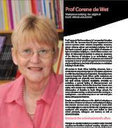 Corene De Wet合作论文数Department of Comparative Education;University of the Free State;Department of Comparative Education, University of the Free State18
 Katherine Wimpenny合作论文数5
 Kevin Teise合作论文数3
 Charl Wolhuter合作论文数North-West University3
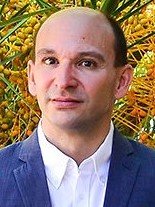 Cornelius Hagenmeier合作论文数Univ Free State2
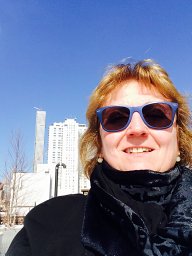 Marina Orsini-Jones合作论文数Coventry University2Adre Le Roux合作论文数2
 Erika Kruger合作论文数2
 Kyria Finardi合作论文数2
 Maria Madiope合作论文数1Charste Wolhuter合作论文数1Tony Mays合作论文数1
 Jos Beelen合作论文数1
 Santosh Panda合作论文数1Annelie Ferreira合作论文数1Ernst L. P. Stals合作论文数1
 Sello Martin Mohlaloka合作论文数1Lieve Leroy合作论文数1Ntlantla Sebele合作论文数1
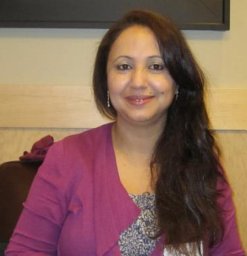 Meriem Sahli合作论文数1
 Alun DeWinter合作论文数1
 Florence Kisirkoi合作论文数1a e ferreira合作论文数1
 Mariëtte Reyneke合作论文数University of the Free State1
 Desiree Pearl Larey合作论文数School of Education Studies, University of the Free State1
 Peter Mugo Gathara合作论文数Dept Educ Foundat, Kenyatta Univ1
 Lize-Mari Mitchell合作论文数University of Limpopo1
 Michael N. Nkwenti合作论文数1
 Tebello Tlali合作论文数Dept Educ Fdn, Natl Univ Lesotho1
 Marguerite Muller合作论文数Kings Coll London1
 Barbara Howard合作论文数1Mark Dawson合作论文数School of Economics, London1




