ABSTRACT Objectives: The aim of this study was to assess strengths and challenges experienced by HIV/STD providers in providing care during the response to Hurricane Sandy (Sandy) in New York State, and their recommendations for future preparedness. Methods: A mixed methods approach, including a focus group (n = 3), interviews (n = 3), and survey (n = 31) of HIV/STD providers, was used. Key words identified by means of open coding methodology from collected data were organized into strengths, challenges, and recommendations and then grouped into federal and study-associated preparedness capabilities. Results: Key words were organized into 81 strengths (38.8%), 73 challenges (34.9%), and 55 recommendations (26.3%). Services most interrupted during Sandy were related to HIV/STD outreach and education. While providers reported challenges with external agency communication, the ability to still connect clients to needed resources was reported as a strength. Strengthening partnerships with federal, state, and local agencies was among the major recommendations made by these providers. Conclusions: This study presents unique information about challenges experienced by HIV/STD providers in providing services during a natural disaster and the use of national public health emergency preparedness capabilities to address and overcome those challenges. Lessons learned and recommendations regarding inter-agency communications emerged as an important priority during a natural disaster to minimize or reduce service interruption.
Salmonella is a public health concern, for which a complex interplay between host, agent, and environment exists. An improved understanding of causal processes can be used to better gauge the causes and trajectory of Salmonella in a changing environment. This would be useful in determining the impact of climate change on the New York State (NYS) environment, the effect of climate change on Salmonella in NYS, factors contributing to Salmonella vulnerability in humans, and aspects of climate change and Salmonella which necessitate further research. A systematic review was conducted to study associations between Salmonella and the environment. Using the search criteria, a total of 91 relevant articles were identified from four electronic databases. Key information was abstracted, organized, and synthesized to identify causal processes and linkages between climate change, the environment of NYS, and Salmonella-related outcomes, as well as risk factors to characterize Salmonella vulnerabilities. Three inter-related domains were identified for consideration and application to epidemiological research to confirm and extrapolate disease patterns using climate change scenarios: improved quantification of causal relationships, inclusion of factors linked to sectors not immediately associated with the exposure and outcome, and increased capacity to validate models in diverse settings.
OBJECTIVE:Services provided by the Special Supplemental Nutrition Program for Women, Infants, and Children (WIC) were interrupted in 2012 when Superstorm Sandy struck New York State (NYS). The present study evaluates the impact on WIC providers.DESIGN:A focus group, telephone interviews and anonymous online survey were conducted. Qualitative data were analysed by coding transcribed text into key words and identifying major and minor themes for strengths, challenges and recommendations using national public health preparedness capabilities. Survey responses were analysed quantitatively; reported challenges were classified by preparedness capability.SETTING:The focus group was held at a 2014 regional WIC meeting. Interviews and a survey were conducted via telephone in 2014 and online in 2015, respectively.SUBJECTS:WIC staff representing New York City and three NYS counties.RESULTS:In the focus group (n 12) and interviews (n 6), 'emergency operations coordination' was the most cited capability as a strength, 'environmental health protection' (against environmental hazards) as a challenge and 'flexibility' (on rules and procedures) as a recommendation. In the survey (n 24), the capability 'information sharing' was most often cited as a challenge. Most staff (66·6 %) reported their programmes were at least somewhat prepared for future weather-related disasters. Only 16·7 % indicated having practiced a work-related emergency response plan since Sandy. Staff who practiced an emergency response plan were more likely to indicate they were prepared (P < 0·05).CONCLUSIONS:The study identified WIC programme areas requiring preparedness improvements. The research methodology can be utilized to assess the continuity of other public health services during disasters.
OBJECTIVE:This study collected and summarized feedback from staff at the New York State (NYS) Office of Emergency Management (OEM) and three county OEMs within NYS to understand lessons learned from the 2012 Superstorm Sandy.DESIGN:Cross-sectional qualitative and quantitative analysis.SUBJECTS, PARTICIPANTS:One staff person from each identified critical role from the state and county OEMs who were still employed in the roles identified.INTERVENTIONS:In-person interviews in 2014 followed by an anonymous survey in 2015 examined the response strengths, challenges, and recommendations using federally and study-defined Public Health Preparedness Capabilities. Quantitative analysis of staff survey ratings was used to summarize perceptions of interagency collaboration, communication effectiveness, and differences by staff position.RESULTS:Response rates were 78 percent for interviews (n = 7) and 45 percent for surveys (n = 36). In interviews, "emergency operations coordination" was cited most frequently (48 percent), specifically for successful interagency coordination. "Emergency operations coordination" was also cited most among challenges (45 percent), with emphasis on problems with uniformity of software systems across agencies. Survey responses indicated that "volunteer management" (50 percent) and the "safety and health of responders" (40 percent) were frequently reported as challenges. Additionally, 38 percent of OEM staff reported that situation reports submitted by health departments need improvement. Recommendations from OEM staff included "emergency operations coordination" (36 percent) such as sharing of resources and "training" (16 percent) including hospital evacuation training.CONCLUSIONS:Analysis of OEM staff feedback identified specific challenges, and concrete recommendations were made to improve response going forward.
AbstractObjectiveThe aim of this study was to conduct interviews with public health staff who responded to Hurricane Sandy and to analyze their feedback to assess response strengths and challenges and recommend improvements for future disaster preparedness and response.MethodsQualitative analysis was conducted of information from individual confidential interviews with 35 staff from 3 local health departments in New York State (NYS) impacted by Hurricane Sandy and the NYS Department of Health. Staff were asked about their experiences during Hurricane Sandy and their recommendations for improvements. Open coding was used to analyze interview transcripts for reoccurring themes, which were labeled as strengths, challenges, or recommendations and then categorized into public health preparedness capabilities.ResultsThe most commonly cited strengths, challenges, and recommendations related to the Hurricane Sandy public health response in NYS were within the emergency operations coordination preparedness capability, which includes the abilities of health department staff to partner among government agencies, coordinate with emergency operation centers, conduct routine conference calls with partners, and manage resources.ConclusionsHealth departments should ensure that emergency planning includes protocols to coordinate backup staffing, delineation of services that can be halted during disasters, clear guidelines to coordinate resources across agencies, and training for transitioning into unfamiliar disaster response roles. (Disaster Med Public Health Preparedness. 2016;10:443–453)
AbstractObjectiveAnalyzing Hurricane Sandy emergency reports to assess the New York State (NYS) public health system response will help inform and improve future disaster preparedness and response.MethodsQualitative analysis of NYS Department of Health (NYSDOH) and Nassau and Suffolk County local health department (LHD) emergency reports was conducted. Three after-action reports and 48 situation reports were reviewed, grouped by key words and sorted into 16 Public Health Preparedness Capabilities. Within each capability, key words were labeled as strengths, challenges, or recommendations.ResultsThe NYSDOH capability most cited as a strength was successful emergency operations coordination, eg, interagency conference calls (27.4% of 1681 strengths). The most cited challenge was environmental health protection, eg, mold and oil spills (28% of 706 challenges). The LHD capability most cited both as a strength (46.7% of 30 strengths) and as a challenge (32.5% of 123 challenges) was emergency operations coordination. Strengths were exemplified by sharing local resources and challenges by insufficient memorandums of understanding for coordination.ConclusionsPost-disaster emergency reports should be systematically reviewed to highlight both successes and areas for improvement. Future studies should prioritize collecting feedback from a wider spectrum of public health and service provider staff for planning of preparedness and response activities. (Disaster Med Public Health Preparedness. 2015;10:308–313)
CONTEXTPublic health climate change adaptation planning is an urgent priority requiring stakeholder feedback. The 10 Essential Public Health Services can be applied to adaptation activities.OBJECTIVETo develop a state health department climate and health adaptation plan as informed by stakeholder feedback.DESIGNWith Centers for Disease Control and Prevention (CDC) funding, the New York State Department of Health (NYSDOH) implemented a 2010-2013 climate and health planning process, including 7 surveys on perceptions and adaptation priorities.PARTICIPANTSNew York State Department of Health program managers participated in initial (n = 41, denominator unknown) and follow-up (72.2%) needs assessments. Surveillance system information was collected from 98.1% of surveillance system managers. For adaptation prioritization surveys, participants included 75.4% of NYSDOH leaders; 60.3% of local health departments (LHDs); and 53.7% of other stakeholders representing environmental, governmental, health, community, policy, academic, and business organizations. Interviews were also completed with 38.9% of other stakeholders.RESULTSIn 2011 surveys, 34.1% of state health program directors believed that climate change would impact their program priorities. However, 84.6% of state health surveillance system managers provided ideas for using databases for climate and health monitoring/surveillance. In 2012 surveys, 46.5% of state health leaders agreed they had sufficient information about climate and health compared to 17.1% of LHDs (P = .0046) and 40.9% of other stakeholders (nonsignificant difference). Significantly fewer (P < .0001) LHDs (22.9%) were incorporating or considering incorporating climate and health into planning compared to state health leaders (55.8%) and other stakeholders (68.2%). Stakeholder groups agreed on the 4 highest priority adaptation categories including core public health activities such as surveillance, coordination/collaboration, education, and policy development.CONCLUSIONSFeedback from diverse stakeholders was utilized by NYSDOH to develop its Climate and Health Strategic Map in 2013. The CDC Building Resilience Against Climate Effects (BRACE) framework and funding provides a collaborative model for state climate and health adaptation planning.
The New York State Department of Health (DOH) has a long history of biomedical research, public health policy and program development, peer-reviewed scholarship, and teaching. Its evolution as an academic health department advanced significantly when the University at Albany and DOH formed the School of Public Health Sciences in 1985 to further develop these functions while formally training the next generation of public health workers. The School, renamed in 1990 as the School of Public Health (SPH), was initially located within the DOH with its staff as the founding faculty. The curriculum was heavily influenced by public health practice imperatives. The SPH has evolved to have an independent campus and full-time academic faculty, but the DOH remains closely linked. The relationship is governed by a memorandum of understanding that commits both partners to provide substantial and continuing resources to the SPH. The SPH brings value to the DOH's mission to improve the health of the state's citizens by providing an academic focus to problems faced in health department practice settings. The opportunity to teach and be involved in an academic environment increases the DOH's ability to recruit, retain, and improve the skill level of its professional and scientific staff and thereby improve its ability to assess health problems and to design and evaluate public health programs. The SPH also provides training and support to county health departments and nongovernment organizations, which further the DOH's mission, through continuing education programs and an online MPH degree program. International exchanges including those with China, Vietnam, and the Republic of Georgia have enriched the academic environment. Challenges include maintaining sufficient full-time faculty members, the need for the SPH to take on broader public health issues than those applicable to New York, and the shrinkage of the DOH's workforce and departure of many senior scientists who served as faculty.
The New York State Department of Health (DOH) has a long history of biomedical research, public health policy and program development, peer-reviewed scholarship, and teaching. Its evolution as an academic health department advanced significantly when the University at Albany and DOH formed the School of Public Health Sciences in 1985 to further develop these functions while formally training the next generation of public health workers. The School, renamed in 1990 as the School of Public Health (SPH), was initially located within the DOH with its staff as the founding faculty. The curriculum was heavily influenced by public health practice imperatives. The SPH has evolved to have an independent campus and full-time academic faculty, but the DOH remains closely linked. The relationship is governed by a memorandum of understanding that commits both partners to provide substantial and continuing resources to the SPH. The SPH brings value to the DOH's mission to improve the health of the state's citizens by providing an academic focus to problems faced in health department practice settings. The opportunity to teach and be involved in an academic environment increases the DOH's ability to recruit, retain, and improve the skill level of its professional and scientific staff and thereby improve its ability to assess health problems and to design and evaluate public health programs. The SPH also provides training and support to county health departments and nongovernment organizations, which further the DOH's mission, through continuing education programs and an online MPH degree program. International exchanges including those with China, Vietnam, and the Republic of Georgia have enriched the academic environment. Challenges include maintaining sufficient full-time faculty members, the need for the SPH to take on broader public health issues than those applicable to New York, and the shrinkage of the DOH's workforce and departure of many senior scientists who served as faculty.
The Institute of Medicine has released key reports that address issues of public health, training, and collaboration.1–3 During the past two decades, efforts have been made to bridge the gap between academic and public health practice, including grants from the Centers for Disease Control and Prevention (CDC) through the Association of Schools and Programs of Public Health (ASPPH).4 ASPPH has issued reports on demonstrating excellence using the practice-based model for teaching,5 service,6 and research.7 ASPPH continues to assist schools of public health (SPHs) through its ASPPH Practice Council and the Academic Public Health Practice Committee, which comprises deans of SPHs. Academic/health department partnerships have been used to facilitate public health preparedness,8–11 chronic disease epidemiology,12 and response to outbreaks.13,14 One important area for such partnerships is the establishment of field-based internships.5 Surveys of SPHs and state health agencies in the 1990s provided a broad summary of such partnerships at that time.15,16 A health department such as the New York State Department of Health (NYSDOH) that has a formal affiliation with an academic institution is referred to as an academic health department (AHD).17 The University at Albany School of Public Health (UA-SPH) was created in 1985 by a memorandum of understanding (MOU) between NYSDOH and UA. Faculty members were initially primarily NYSDOH staff. Over time, fulltime UA-funded staff were hired. The partnership was partially supported through ASPPH grants. This model was described in the ASPPH “Strong Schools, Strong Partners” report.18 More details on the history of the MOU and the UA-SPH/NYSDOH AHD partnership have been detailed elsewhere.19 NYSDOH does not require its staff to apply for UA-SPH faculty status, and all staff work with UA-SPH is voluntary. The MOU does not specify the type, schedule, or level of effort for NYSDOH faculty contributions. However, UA-SPH and the individual academic departments have guidelines that apply to faculty applications and renewals. The MOU states that NYSDOH staff cannot receive a salary or bonuses for their UA-SPH affiliations. The academic contributions of a state health department to an SPH have not been previously described in detail. As part of the UA-SPH 25th anniversary celebration, the NYSDOH Science and SPH Initiative pilot-tested methods for 2009 to enumerate NYSDOH staff member contributions to the UA-SPH.
Background: Public health is committed to evidence-based practice, yet there has been minimal discussion of how to apply an evidence-based practice framework to climate change adaptation.Objectives: Our goal was to review the literature on evidence-based public health (EBPH), to determine whether it can be applied to climate change adaptation, and to consider how emphasizing evidence-based practice may influence research and practice decisions related to public health adaptation to climate change.Methods: We conducted a substantive review of EBPH, identified a consensus EBPH framework, and modified it to support an EBPH approach to climate change adaptation. We applied the framework to an example and considered implications for stakeholders.Discussion: A modified EBPH framework can accommodate the wide range of exposures, outcomes, and modes of inquiry associated with climate change adaptation and the variety of settings in which adaptation activities will be pursued. Several factors currently limit application of the framework, including a lack of higher-level evidence of intervention efficacy and a lack of guidelines for reporting climate change health impact projections. To enhance the evidence base, there must be increased attention to designing, evaluating, and reporting adaptation interventions; standardized health impact projection reporting; and increased attention to knowledge translation. This approach has implications for funders, researchers, journal editors, practitioners, and policy makers.Conclusions: The current approach to EBPH can, with modifications, support climate change adaptation activities, but there is little evidence regarding interventions and knowledge translation, and guidelines for projecting health impacts are lacking. Realizing the goal of an evidence-based approach will require systematic, coordinated efforts among various stakeholders.Citation: Hess JJ, Eidson M, Tlumak JE, Raab KK, Luber G. 2014. An evidence-based public health approach to climate change adaptation. Environ Health Perspect 122:1177–1186; http://dx.doi.org/10.1289/ehp.1307396
The New York State Department of Health (NYSDOH) collected information about hospitalized patients with Guillain-Barré syndrome (GBS) during October 2009–May 2010, statewide (excluding New York City), to examine a possible relationship with influenza A(H1N1)pdm09 vaccination. NYSDOH established a Clinical Network of neurologists and 150 hospital neurology units. Hospital discharge data from the Statewide Planning and Research Cooperative System (SPARCS) were used to evaluate completeness of reporting from the Clinical Network. A total of 140 confirmed or probable GBS cases were identified: 81 (58%) from both systems, 10 (7%) from Clinical Network only, and 49 (35%) from SPARCS-only. Capture–recapture methods estimated that 6 cases might have been missed by both systems. Clinical Network median reporting time was 12 days versus 131 days for SPARCS. In public health emergencies in New York State, a Clinical Network may provide timely data, but in our study such data were less complete than traditional hospital discharge data.
OBJECTIVE:Rabies postexposure prophylaxis is an important secondary prevention step but is unnecessary if the exposing animal is not rabid. Effective rabies-related animal control (RRAC) requirements enforced by animal control officers (ACO) are an alternative step to reduce the number of rabies exposures and postexposure prophylaxes. The purpose of this study was to describe the variability of requirements for RRAC by statutes and regulations across the United States.METHODS:Current state laws and regulations pertaining to rabies and animal control were reviewed and assessed for 3 primary RRAC activities related to obtaining animals that have potentially exposed humans to rabies, that have been potentially exposed to rabies, or that show signs of rabies. Animal control infrastructure was assessed on the basis of the requirement for, and authority granted to, ACOs for conducting these RRAC activities. State Public Health Veterinarians, State Veterinarians with the Departments of Agriculture, and/or State Epidemiologists were contacted for verification and assistance with interpretation of laws and regulations.RESULTS:Twenty-three states and the District of Columbia authorize specific actions related to all 3 RRAC activities. Twenty-four states have laws and regulations that do not clearly address at least 1 of the RRAC activities or limit the authority to domestic animals. Three states have laws or regulations that address RRAC nonspecifically or leave the requirements to localities. Eleven states mandate the placement of ACOs with authority over domestic and wild animals, 7 states require ACOs for control of domestic animals only, and 32 states and the District of Columbia have no statewide requirements for ACOs.DISCUSSION:Only 9 states have legal requirements for ACOs with authority over wild and domestic animals and RRAC that addresses all 3 primary RRAC activities. Consequently, RRAC requirements may represent an incompletely tapped rabies prevention mechanism.
Anecdotal evidence suggests that rabid foxes are more likely to attack humans than are other rabid terrestrial animals. To examine this issue, we analyzed rabies surveillance data (1999-2007) maintained by the New York State Department of Health. Compared to rabid raccoons (Procyon lotor), foxes infected with raccoon variant rabies were more likely to bite during a human exposure incident (P<0.01). Additionally, rabid gray foxes (Urocyon cinereoargenteus) were significantly more likely to bite a human than were rabid red foxes (Vulpes vulpes; P<0.01). Animal control personnel and others who handle wildlife should be educated about the increased risk of bite exposure when dealing with potentially rabid foxes.
To the Editor: The New York State Department of Health (NYSDOH) assessed the effect of terrestrial rabies on human postexposure prophylaxis (PEP) during the first 10-year period of computerized reporting (1993–2002) (1). We assessed the effect of bat rabies during the same period, when guidelines for PEP were changing (2). NYSDOH developed local health department and public education programs to reduce bat encounters, increase testing of bats involved in encounters, and improve reporting of bat encounters (3). Use of PEP for all New York counties was included in the study; PEP in New York, New York, and from other states was excluded. Analyses of reasonable probability exposures, age, and sex were conducted for 1998–2002. Population data from 2000 (www.factfinder.census.gov) were used to calculate rates. Epi Info (Centers for Disease Control and Prevention, Atlanta, GA, USA) and SAS (SAS Institute, Cary, NC, USA) were used for χ2 statistical analyses. We considered p values <0.05 significant. During 1993–2002, a total of 6,320 bat-associated rabies exposure incidents and 11,365 PEPs were reported (Table). Incidents increased 7-fold, and use of PEP increased 9-fold. More than three quarters of all incidents were reported in June, July, and August. The number of persons who received PEP per incident ranged from 1 to 40, with an increase in mean from 1.3 to 1.8. Table Bat-associated rabies exposure incidents, PEP, and bats received for testing, New York, USA, 1993–2002* Nonbite exposures (scratch, direct and indirect contact with saliva, reasonable probability of exposure, and other unspecified exposures) accounted for 88% of PEP, with a significant increasing trend. During 1998–2002, “reasonable probability” and “bat in the bedroom” accounted for 79% and 53% of bat-associated PEP, respectively. Rabies-positive bats accounted for 7% of PEP, with a significant decreasing trend. Untested bats accounted for 89% of the increase in PEP. Three quarters of PEP was administered for nonbite exposures to untested bats. Of 8,244 PEPs since 1998, a total of 4,384 (53.2%) were for female patients, for whom the age-adjusted rate was 15.6 PEPs per 100,000 persons per year, compared with 14.3 for male patients (p = 0.0003). Persons 15 years of age. More persons 15 years of age (76%) (p = 0.001). During the study period, a total of 8,649 bats were received for rabies testing with concerns reported at the time of submission about the possibility of human contact, although further epidemiologic review would not classify them all as exposure incidents (Table). The number of bats submitted increased almost 4-fold. Similar to the seasonal pattern of exposure incidents, three quarters of bats were received for testing during June through August, with most (40%) received during August. Three percent of submitted bats were rabies positive, 89% were rabies negative, and 7% were unsatisfactory for testing. There was a significant decreasing trend in the proportion of tested bats that were rabid. Bats for which nonbite contacts were reported accounted for 86% of those received for testing and 93% of the increase in bats received. There was a significant increasing trend in the proportion of bats reported with nonbite contacts. For bats not tested, encounters resulted in an average of 1.8 PEP per incident, at an estimated cost for biologics of $10.9 million based on an average of $1,136 per PEP (4). Capturing and testing the 7,729 rabies-negative bats precluded the need for ≈14,000 PEP at an estimated savings for biologics of $15.8 million. Encounters with bats are fairly common in New York State. Eidson et al. reported that one-third of survey respondents reported a bat in their house, including 10% who had seen a bat in their bedroom (3). Less than 20% knew a bat found indoors should not be released until rabies exposure is ruled out. Similar rabies patterns have been reported from other states and Canada. In Massachusetts the number of bats submitted for rabies testing increased substantially during 1985–2009 (5). South Carolina reported an increase in administration of bat-associated PEP during the same period as this study (6). The seasonal pattern of bat encounters in New York was similar to those reported in Colorado (7), Minnesota (8), and Quebec, Canada (9), reflecting the pattern of bat hibernation and reproduction (10). As in New York, “bat in bedroom” was the most common exposure in Minnesota and 1 of the more frequent exposures in Colorado and Quebec. In conclusion, during PEP guideline revision, which expanded the recommendation for PEP beyond persons with known bite exposures, numbers of bats submitted for testing, reported exposure incidents, and instances of PEP administration increased significantly in New York. Although the cause of the increases cannot be definitively determined, the increases were consistent with changes in guidelines and public education. With 89% of bats confirmed as rabies negative that were submitted because of possible human contact, improving bat capture and testing should be considered as a strategy for excluding rabies exposures and thus reducing the number of PEPs administered.
ABSTRACTObjective: Because most bioterrorist disease agents are zoonotic, veterinarians are important partners in preparedness. New York State is a prime port of entry and has a network of health and emergency management agencies for response. However, knowledge and participation by veterinarians has not yet been assessed.Methods: A 25-question survey was mailed out to approximately half (1832) of the veterinarians licensed in New York State. Participants were asked about past emergency preparedness training, likelihood of participating in future training, preferred training topics, and their relationship with their local health department (LHD).Results: Completed questionnaires were received from 529 veterinarians (29%). Most (83%) reported that they were likely to participate in emergency preparedness training, but in the past 2 years, only 14% received training in zoonotic disease outbreaks and 12% in emergency preparedness. Only 21% reported having a relationship with their LHD, but 48% were interested in having one. Lack of time was the biggest obstacle to involvement with the LHD (40%). Most (69%) of those responding to the survey said they would participate in training once per year or more often.Conclusions: Inducements, such as earning continuing education credits, or the development of active networks of preparedness organizations, state and local health departments, and veterinary schools are needed to deliver emergency preparedness training and information efficiently to veterinarians.(Disaster Med Public Health Preparedness. 2010;4:300-305)
During 1993–2002, cats accounted for 2.7% of rabid terrestrial animals in New York but for one third of human exposure incidents and treatments. Nonbite exposures and animals of undetermined rabies status accounted for 54% and 56%, respectively, of persons receiving rabies treatments.
Background: West Nile virus (WNV) is currently the leading cause of arboviral-associated encephalitis in the U.S., and can lead to long-term neurologic sequelae. Improvements in dead bird specimen processing time, including the availability of rapid field laboratory tests, allows reassessment of the effectiveness of using WNV-positive birds in forecasting human WNV disease.Methods: Using New York State integrated WNV surveillance data from transmissions seasons in 2001-2003, this study determined which factors associated with WNV-positive dead birds are most closely associated with human disease. The study also addressed the 'delay' period between the distribution of the dead bird variable and the distribution of the human cases. In the last step, the study assessed the relative risk of contracting WNV disease for people who lived in counties with a 'signal' value of the predictor variable versus people who lived in counties with no 'signal' value of the predictor variable.Results: The variable based on WNV-positive dead birds [(Positive/Tested)*(Population/Area)] was identified as the optimum variable for predicting WNV human disease at a county level. The delay period between distribution of the variable and human cases was determined to be approximately two weeks. For all 3 years combined, the risk of becoming a WNV case for people who lived in 'exposed' counties (those with levels of the positive dead bird variable above the signal value) was about 2 times higher than the risk for people who lived in 'unexposed' counties, but risk varied by year.Conclusion: This analysis develops a new variable based on WNV-positive dead birds, [(Positive/Tested)*(Population/Area)] to be assessed in future real-time studies for forecasting the number of human cases in a county. A delay period of approximately two weeks between increases in this variable and the human case onset was identified. Several threshold 'signal' values were assessed and found effective at indicating human case risk, although specific thresholds are likely to vary by region and surveillance system differences.
 Ivan Gotham合作论文数11
 Birkhead Guthrie S合作论文数Off Publ Hlth, New York State Dept Hlth10
 Laura D. Kramer合作论文数The RNA Institute, Department of Biomedical Sciences, College of Integrated Health Sciences, State University of New York at Albany;Arbovirus Laboratory, Wadsworth Center, New York State Department of Health10
 Daniel Zeng (曾大军)合作论文数Institute of Automation, Chinese Academy of Sciences;University of Chinese Academy of Sciences9
 Hsinchun Chen合作论文数Management Information Systems Department, Eller College of Management, The University of Arizona;College of Management, National Taiwan University9
 Cecil Lynch合作论文数UC Davis9
 Catherine A. Larson合作论文数8Smith P合作论文数7
 Chunju Tseng合作论文数7Michael Ascher合作论文数7Sorhage F合作论文数6Asante Shipp Hilts合作论文数6Dale L. Morse合作论文数6W. Edmund Farrar合作论文数6Trang Nguyen合作论文数5Charles Trimarchi合作论文数5Stephanie Mack合作论文数5B Wallace合作论文数5
 Paweł Stefanoff合作论文数Dept Zoonot Food & Waterborne Infect, Norwegian Inst Publ Hlth5Zielinski A合作论文数5Antonia C. Novello合作论文数5Bryan Cherry合作论文数5Eddy A. Bresnitz合作论文数5CM SEWELL合作论文数4Kate Schmit合作论文数4B. Cherry合作论文数4
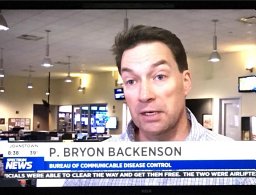 Backenson P Bryon合作论文数Bureau of Communicable Diseases Control, New York State Department of Health4Stobierski M G合作论文数4Andreadis Theodore G合作论文数4
 Richard Nelson合作论文数The Center on Capitalism and Society, Columbia University in the City of New York4
 Glen D Johnson合作论文数CACI Products Company4
 Sergio Recuenco合作论文数Bureau of Communicable Diseases Control, New York State Department of Health;School of Public Health, University at Albany-SUNY;School of Public Health, University at Albany-SUNY4
 Julian F Miller合作论文数Department of Electronic Engineering, University of York4Dennis J. White合作论文数4Marcelle Layton合作论文数4
 James Hadler合作论文数Department of Epidemiology of Microbial Diseases, Yale School of Public Health4Wayne J. Crans合作论文数4Kulasekera V合作论文数3Poshni I合作论文数3Yunshu Li合作论文数3Stone Ward B合作论文数3Johnston W B合作论文数3
 Martin Kulldorff合作论文数Harvard Medical School, Harvard University;Brownstone Institute;Academy for Science and Freedom3Matthew L. Cartter合作论文数3David Leroy Morse合作论文数3Ward B. Stone合作论文数3
 Robert J Rudd合作论文数3
 Rosalie Trevejo合作论文数3




