A bstract A search for the exclusive decays of the Higgs and Z bosons to a ϕ or ρ meson and a photon is performed with a pp collision data sample corresponding to an integrated luminosity of up to 35 . 6 fb −1 collected at $$ \sqrt{s}=13 $$ s = 13 TeV with the ATLAS detector at the CERN Large Hadron Collider. These decays have been suggested as a probe of the Higgs boson couplings to light quarks. No significant excess of events is observed above the background, as expected from the Standard Model. Upper limits at 95% confidence level were obtained on the branching fractions of the Higgs boson decays to ϕ γ and ρ γ of 4 . 8 × 10 −4 and 8 . 8 × 10 −4 , respectively. The corresponding 95% confidence level upper limits for the Z boson decays are 0 . 9 × 10 −6 and 25 × 10 −6 for ϕ γ and ρ γ, respectively.
This change does not have any impact on the measured helicity fractions, but it changes the obtained limits on the anomalous couplings.
This paper reports searches for heavy resonances decaying into ZZ or ZW using data from proton-proton collisions at a centre-of-mass energy of √(s)=13 TeV. The data, corresponding to an integrated luminosity of 36.1 fb −1 , were recorded with the ATLAS detector in 2015 and 2016 at the Large Hadron Collider. The searches are performed in final states in which one Z boson decays into either a pair of light charged leptons (electrons and muons) or a pair of neutrinos, and the associated W boson or the other Z boson decays hadronically. No evidence of the production of heavy resonances is observed. Upper bounds on the production cross sections of heavy resonances times their decay branching ratios to ZZ or ZW are derived in the mass range 300-5000GeV within the context of Standard Model extensions with additional Higgs bosons, a heavy vector triplet or warped extra dimensions. Production through gluon-gluon fusion, Drell-Yan or vector-boson fusion are considered, depending on the assumed model.
Abstract A search for supersymmetry involving the pair production of gluinos decaying via third-generation squarks into the lightest neutralino $$ \left({\tilde{\chi}}_1^0\right) $$ χ ˜ 1 0 is reported. It uses LHC proton-proton collision data at a centre-of-mass energy $$ \sqrt{s}=13 $$ s = 13 TeV with an integrated luminosity of 36.1 fb−1 collected with the ATLAS detector in 2015 and 2016. The search is performed in events containing large missing transverse momentum and several energetic jets, at least three of which must be identified as originating from b-quarks. To increase the sensitivity, the sample is divided into subsamples based on the presence or absence of electrons or muons. No excess is found above the predicted background. For $$ {\tilde{\chi}}_1^0 $$ χ ˜ 1 0 masses below approximately 300 GeV, gluino masses of less than 1.97 (1.92) TeV are excluded at 95% confidence level in simplified models involving the pair production of gluinos that decay via top (bottom) squarks. An interpretation of the limits in terms of the branching ratios of the gluinos into third-generation squarks is also provided. These results improve upon the exclusion limits obtained with the 3.2 fb−1 of data collected in 2015.
This paper presents a search for direct electroweak gaugino or gluino pair production with a chargino nearly mass-degenerate with a stable neutralino. It is based on an integrated luminosity of 36.1 $\mathrm{fb}^{-1}$ of $pp$ collisions at $\sqrt{s} = 13$ TeV collected by the ATLAS experiment at the LHC. The final state of interest is a disappearing track accompanied by at least one jet with high transverse momentum from initial-state radiation or by four jets from the gluino decay chain. The use of short track segments reconstructed from the innermost tracking layers significantly improves the sensitivity to short chargino lifetimes. The results are found to be consistent with Standard Model predictions. Exclusion limits are set at 95% confidence level on the mass of charginos and gluinos for different chargino lifetimes. For a pure wino with a lifetime of about 0.2 ns, chargino masses up to 460 GeV are excluded. For the strong production channel, gluino masses up to 1.65 TeV are excluded assuming a chargino mass of 460 GeV and lifetime of 0.2 ns.
The (x, y) position reconstruction method used in the analysis of the complete exposure of the Large Underground Xenon (LUX) experiment is presented. The algorithm is based on a statistical test that makes use of an iterative method to recover the photomultiplier tube (PMT) light response directly from the calibration data. The light response functions make use of a two dimensional functional form to account for the photons reflected on the inner walls of the detector. To increase the resolution for small pulses, a photon counting technique was employed to describe the response of the PMTs. The reconstruction was assessed with calibration data including 83mKr (releasing a total energy of 41.5 keV) and 3H (beta(-) with Q = 18.6 keV) decays, and a deuterium-deuterium (D-D) neutron beam (2.45 MeV). Within the detector's fiducial volume, the reconstruction has achieved an (x, y) position uncertainty of sigma = 0.82 cm and sigma = 0.17 cm for events of only 200 and 4,000 detected electroluminescence photons respectively. Such signals are associated with electron recoils of energies similar to 0.25 keV and similar to 10 keV, respectively. The reconstructed position of the smallest events with a single electron emitted from the liquid surface (22 detected photons) has a horizontal (x, y) uncertainty of 2.13 cm.
Abstract Inclusive jet and dijet cross-sections are measured in proton-proton collisions at a centre-of-mass energy of 13 TeV. The measurement uses a dataset with an integrated luminosity of 3.2 fb−1 recorded in 2015 with the ATLAS detector at the Large Hadron Collider. Jets are identified using the anti-k t algorithm with a radius parameter value of R = 0.4. The inclusive jet cross-sections are measured double-differentially as a function of the jet transverse momentum, covering the range from 100 GeV to 3.5 TeV, and the absolute jet rapidity up to |y| = 3. The double-differential dijet production cross-sections are presented as a function of the dijet mass, covering the range from 300 GeV to 9 TeV, and the half absolute rapidity separation between the two leading jets within |y| < 3, y ∗, up to y ∗ = 3. Next-to-leading-order, and next-to-next-to-leading-order for the inclusive jet measurement, perturbative QCD calculations corrected for non-perturbative and electroweak effects are compared to the measured cross-sections.
AbstractAn angular analysis of the decayBd0 → K∗μ+μ−is presented, based on proton-proton collision data recorded by the ATLAS experiment at the LHC. The study is using 20.3 fb−1of integrated luminosity collected during 2012 at centre-of-mass energy of$$ \sqrt{s}=8 $$s=8TeV. Measurements of theK*longitudinal polarisation fraction and a set of angular parameters obtained for this decay are presented. The results are compatible with the Standard Model predictions.
A search for pair production of the supersymmetric partners of the Higgs boson (higgsinos ˜H) in gauge-mediated scenarios is reported. Each higgsino is assumed to decay to a Higgs boson and a gravitino. Two complementary analyses, targeting high- and low-mass signals, are performed to maximize sensitivity. The two analyses utilize LHC pp collision data at a center-of-mass energy √s=13 TeV, the former with an integrated luminosity of 36.1 fb−1 and the latter with 24.3 fb−1, collected with the ATLAS detector in 2015 and 2016. The search is performed in events containing missing transverse momentum and several energetic jets, at least three of which must be identified as b-quark jets. No significant excess is found above the predicted background. Limits on the cross section are set as a function of the mass of the ˜H in simplified models assuming production via mass-degenerate higgsinos decaying to a Higgs boson and a gravitino. Higgsinos with masses between 130 and 230 GeV and between 290 and 880 GeV are excluded at the 95% confidence level. Interpretations of the limits in terms of the branching ratio of the higgsino to a Z boson or a Higgs boson are also presented, and a 45% branching ratio to a Higgs boson is excluded for m˜H≈400 GeV.
A bstract A measurement of b -hadron pair production is presented, based on a data set corresponding to an integrated luminosity of 11.4 fb −1 of proton-proton collisions recorded at $$ \sqrt{s}=8 $$ s = 8 TeV with the ATLAS detector at the LHC. Events are selected in which a b -hadron is reconstructed in a decay channel containing J/ψ → μμ , and a second b -hadron is reconstructed in a decay channel containing a muon. Results are presented in a fiducial volume defined by kinematic requirements on three muons based on those used in the analysis. The fiducial cross section is measured to be 17.7 ± 0.1(stat.) ± 2.0(syst.) nb. A number of normalised differential cross sections are also measured, and compared to predictions from the P ythia 8, H erwig ++, M ad G raph 5_ a MC@NLO+P ythia 8 and S herpa event generators, providing new constraints on heavy flavour production.
This work presents an analysis of monoenergetic electronic recoil peaks in the dark-matter-search and calibration data from the first underground science run of the Large Underground Xenon (LUX) detector. Liquid xenon charge and light yields for electronic recoil energies between 5.2 and 661.7 keV are measured, as well as the energy resolution for the LUX detector at those same energies. Additionally, there is an interpretation of existing measurements and descriptions of electron-ion recombination fluctuations in liquid xenon as limiting cases of a more general liquid xenon re- combination fluctuation model. Measurements of the standard deviation of these fluctuations at monoenergetic electronic recoil peaks exhibit a linear dependence on the number of ions for energy deposits up to 661.7 keV, consistent with previous LUX measurements between 2-16 keV with ^3H. We highlight similarities in liquid xenon recombination for electronic and nuclear recoils with a comparison of recombination fluctuations measured with low-energy calibration data.
The top-quark mass is measured in the all-hadronic top-antitop quark decay channel using proton-proton collisions at a centre-of-mass energy of √(s)=8 TeV with the ATLAS detector at the CERN Large Hadron Collider. The data set used in the analysis corresponds to an integrated luminosity of 20 . 2 fb −1 . The large multi-jet background is modelled using a data-driven method. The top-quark mass is obtained from template fits to the ratio of the three-jet to the dijet mass. The three-jet mass is obtained from the three jets assigned to the top quark decay. From these three jets the dijet mass is obtained using the two jets assigned to the W boson decay. The top-quark mass is measured to be 173 . 72 ± 0 . 55 (stat . ) ± 1 . 01 (syst . ) GeV.
bstract To probe the W tb vertex structure, top-quark and W -boson polarisation observables are measured from t -channel single-top-quark events produced in proton-proton collisions at a centre-of-mass energy of 8 TeV. The dataset corresponds to an integrated luminosity of 20.2 fb −1 , recorded with the ATLAS detector at the LHC. Selected events contain one isolated electron or muon, large missing transverse momentum and exactly two jets, with one of them identified as likely to contain a b -hadron. Stringent selection requirements are applied to discriminate t -channel single-top-quark events from background. The polarisation observables are extracted from asymmetries in angular distributions measured with respect to spin quantisation axes appropriately chosen for the top quark and the W boson. The asymmetry measurements are performed at parton level by correcting the observed angular distributions for detector effects and hadronisation after subtracting the background contributions. The measured top-quark and W -boson polarisation values are in agreement with the Standard Model predictions. Limits on the imaginary part of the anomalous coupling g R are also set from model-independent measurements.
The DUSEL Project has produced the Preliminary Design of the Deep Underground Science and Engineering Laboratory (DUSEL) at the rehabilitated former Homestake mine in South Dakota. The Facility design calls for, on the surface, two new buildings - one a visitor and education center, the other an experiment assembly hall - and multiple repurposed existing buildings. To support underground research activities, the design includes two laboratory modules and additional spaces at a level 4,850 feet underground for physics, biology, engineering, and Earth science experiments. On the same level, the design includes a Department of Energy-shepherded Large Cavity supporting the Long Baseline Neutrino Experiment. At the 7,400-feet level, the design incorporates one laboratory module and additional spaces for physics and Earth science efforts. With input from some 25 science and engineering collaborations, the Project has designed critical experimental space and infrastructure needs, including space for a suite of multidisciplinary experiments in a laboratory whose projected life span is at least 30 years. From these experiments, a critical suite of experiments is outlined, whose construction will be funded along with the facility. The Facility design permits expansion and evolution, as may be driven by future science requirements, and enables participation by other agencies. The design leverages South Dakota's substantial investment in facility infrastructure, risk retirement, and operation of its Sanford Laboratory at Homestake. The Project is planning education and outreach programs, and has initiated efforts to establish regional partnerships with underserved populations - regional American Indian and rural populations.
bstract We present charged-particle distributions sensitive to the underlying event, measured by the ATLAS detector in proton-proton collisions at a centre-of-mass energy of 13 TeV, in low-luminosity Large Hadron Collider fills corresponding to an integrated luminosity of 1.6 nb −1 . The distributions were constructed using charged particles with absolute pseudorapidity less than 2.5 and with transverse momentum greater than 500 MeV, in events with at least one such charged particle with transverse momentum above 1 GeV. These distributions characterise the angular distribution of energy and particle flows with respect to the charged particle with highest transverse momentum, as a function of both that momentum and of charged-particle multiplicity. The results have been corrected for detector effects and are compared to the predictions of various Monte Carlo event generators, experimentally establishing the level of underlying-event activity at LHC Run 2 energies and providing inputs for the development of event generator modelling. The current models in use for UE modelling typically describe this data to 5% accuracy, compared with data uncertainties of less than 1%.
A search for pair production of a scalar partner of the top quark in events with four or more jets plus missing transverse momentum is presented. An analysis of 36.1 fb −1 of √(s)=13 TeV proton-proton collisions collected using the ATLAS detector at the LHC yields no significant excess over the expected Standard Model background. To interpret the results a simplified supersymmetric model is used where the top squark is assumed to decay via t̃_1→t^(∗)_1^0 and t̃_1→ b_1^±→ bW^(∗)_1^0 , where χ 1 0 (χ 1 ± ) denotes the lightest neutralino (chargino). Exclusion limits are placed in terms of the top-squark and neutralino masses. Assuming a branching ratio of 100
 K. K. Gan合作论文数Department of Physics, College of Arts and Sciences, The Ohio State University60
 K. Einsweiler合作论文数56
 Alessandra Ciocio合作论文数Physics Division, Lawrence Berkeley National Laboratory;CERN56G. Gagliardi合作论文数53
 Giovanni Darbo合作论文数Istituto Nazionale di Fisica Nucleare, Sezione di Genova51Patrick L. Skubic合作论文数50
 Joseph M. Izen合作论文数Department of Physics, School of Natural Sciences and Mathematics, The University of Texas at Dallas50W. Dabrowski合作论文数49
 Tord Ekelof合作论文数Department of Physics and Astronomy, Uppsala University49D. Barberis合作论文数48
 Bob Kowalewski合作论文数Victoria Subatomic Physics & Accelerator Research Centre, Department of Physics and Astronomy, Faculty of Science, University of Victoria48C. Blocker合作论文数48D. Calvet合作论文数48
 Jan Godlewski合作论文数Institute of Nuclear, Physics Polish Academy of Sciences;Faculty of Applied Physics and Mathematics, Gdansk University of Technology48Ian C. Brock合作论文数48
 Richard Bates合作论文数School of Physics and Astronomy, University of Glasgow47C. Gemme合作论文数47D. Ta合作论文数47D. G. Charlton合作论文数47Didier Ferrere合作论文数Département De Physique Nucléaire Et Corpusculaire, Faculty of Science, Université de Genève47
 Emmanouil Dris合作论文数Department of Physics, School of Applied Mathematical and Physical Sciences, National Technical University of Athens47
 Phil Allport合作论文数School of Physics and Astronomy, University of Birmingham47
 Zdenek Dolezal合作论文数Institute of Particle and Nuclear Physics, Faculty of Mathematics and Physics, Charles University47M. Caprini合作论文数Mobile Agent , Java47Irinel Caprini合作论文数Natl Inst Phys & Nucl Engn, R-077125 Bucharest, Romania47
 Szymon Gadomski合作论文数Département d'Astronomie, Université de Genève;Department of Particle Physics, University of Geneva46M. Fraternali合作论文数46M. Fincke-Keeler合作论文数46
 Alexander A. Grillo合作论文数Santa Cruz Institute for Particle Physics, University of California Santa Cruz46
 Nicoletta Garelli合作论文数Tufts University46
 James E. Pilcher合作论文数Department of Physics, The University of Chicago46B. Giacobbe合作论文数46
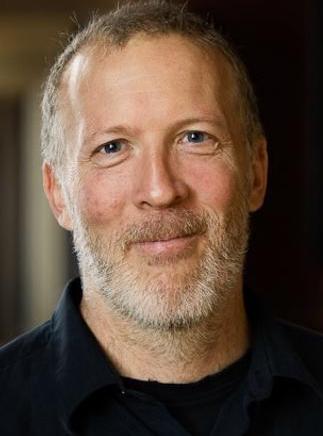 Arnaud Ferrari合作论文数Department of Physics and Astronomy, Uppsala University;CERN46M. Curatolo合作论文数46
 Douglas M. Gingrich合作论文数Department of Physics, Faculty of Science, University of Alberta46
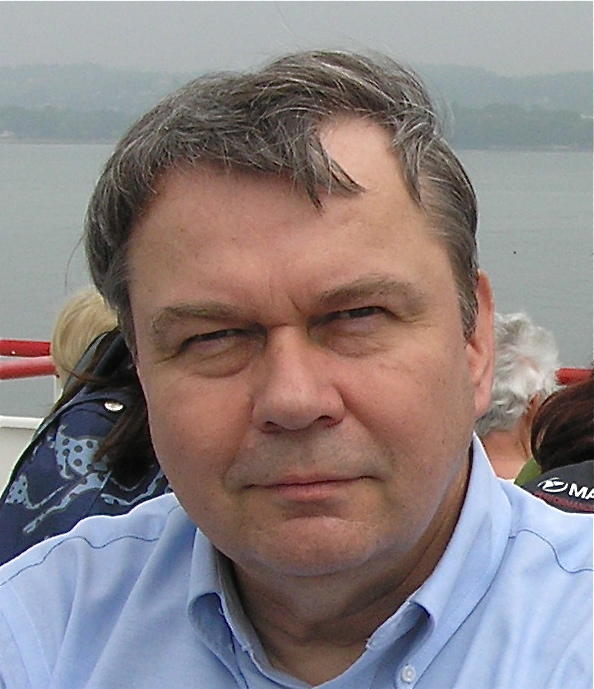 Gerald Eigen合作论文数Department of Physics and Technology, University of Bergen46
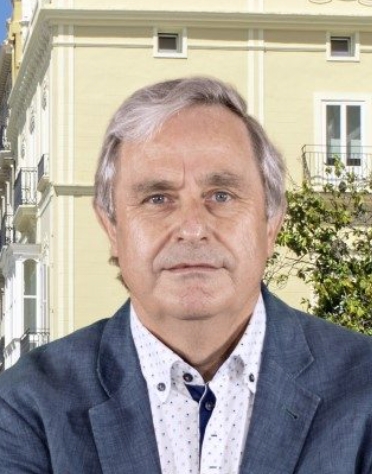 Juan Fuster合作论文数Institute of Corpuscular Physics46S. Falciano合作论文数46
 Elliott Cheu合作论文数College of Science, University of Arizona46
 Steven Errede合作论文数Department of Physics, The Grainger College of Engineering, University of Illinois Urbana-Champaign46
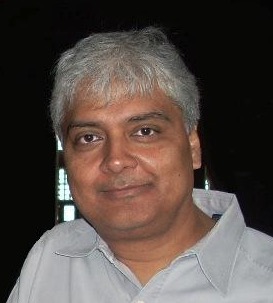 Kaushik De合作论文数Department of Physics, College of Science, Univeristy of Texas at Arlington46Alexander P. Cheplakov合作论文数Joint Institute for Nuclear Research45U. Bratzler合作论文数45S. Chouridou合作论文数45H. Bilokon合作论文数45
 Danilo Giugni合作论文数European Organization for Nuclear Research45
 Dimitris Fassouliotis合作论文数Department of Physics, National and Kapodistrian University of Athens45P. Fassnacht合作论文数45
 Mogens Dam合作论文数Niels Bohr Institute, University of Copenhagen45




