Artificial intelligence has transformed the perspective of medical imaging, leading to a genuine technological revolution in modern computer-assisted healthcare systems. However, ubiquitously featured deep learning (DL) systems require access to a considerable amount of data, facilitating proper knowledge extraction and generalization. Access to such extensive resources may be hindered due to the time and effort required to convey ethical agreements, set up and carry the acquisition procedures through, and manage the datasets adequately with a particular emphasis on proper anonymization. One of the pivotal challenges in the DL field is data integration from various sources acquired using different hardware vendors, diverse acquisition protocols, experimental setups, and even inter-operator variabilities. In this paper, we review the federated learning (FL) concept that fosters the integration of large-scale heterogeneous datasets from multiple institutions in training DL models. In contrast to a centralized approach, the decentralized FL procedure promotes training DL models while preserving data privacy at each institution involved. We formulate the FL principle and comprehensively review general and specialized medical imaging aggregation and learning algorithms, enabling the generation of a globally generalized model. We meticulously go through the challenges in constructing FL-based systems, such as data and model heterogeneities across the institutions, resilience to potential attacks on data privacy, and the variability in computational and communication resources among the entangled sites that might induce efficiency issues of the entire system. Finally, we explore the up-to-date open frameworks for rapid FL-based algorithm prototyping, comprehensively present real-world implementations of FL systems and shed light on future directions in this intensively growing field.
Predicting the clinical outcomes in patients with antineutrophil cytoplasmic antibody (ANCA)-associated vasculitis (AAV) remains a challenge and early identification of patients who are at risk of severe disease course is crucial. To address this, we applied machine learning (ML) and federated learning (FL) techniques to the POLVAS dataset – the largest multicenter clinical database of vasculitis cases in Poland and one of the largest AAV datasets in Europe. Our goal was to predict the key outcomes: increased risk of death and the need for renal replacement therapy (RRT), an independent risk factor of death. We also analysed the significance of individual input features for the predictive capabilities of our models. Furthermore, we compared the performance of centralized model with FL models, which allow for data privacy preservation – a key factor given the highly sensitive medical data involved. We achieved a prediction performance of 0.86 AUC for RRT prediction, and 0.81 AUC for death prediction using a centralized approach and 0.86 weighted mean AUC for RRT prediction and 0.80 for death prediction with the FL approach. The presented results show that FL can effectively predict the risk of RRT and mortality in AAV patients, addressing privacy concerns without compromising the accuracy.
The application of serverless computing for alignment of RNA-sequences can improve many existing bioinformatics workflows by reducing operational costs and execution times. This work analyzes the applicability of serverless services for running the STAR aligner, which is known for its accuracy and large memory requirement. This presents a challenge, as serverless services were designed for light and short tasks. Nevertheless, we successfully deploy a STAR-based pipeline on AWS ECS service, propose multiple optimizations, and perform experiment with 17 TBs of data. Results are compared against standard virtual machine (VM) based solution showing that serverless is a valid alternative for small-scale batch processing. However, in large-scale where efficiency matters the most, VMs are still recommended.
Deep learning (DL)-based image synthesis has recently gained enormous interest in medical imaging, allowing for generating multi-contrast data and therefore, the recovery of missing samples from interrupted or artefact-distorted acquisitions. However, the accuracy of DL models heavily relies on the representativeness of the training datasets naturally characterized by their distributions, experimental setups or preprocessing schemes. These complicate generalizing DL models across multi-site heterogeneous datasets while maintaining the confidentiality of the data. One of the possible solutions is to employ federated learning (FL), which enables the collaborative training of a DL model in a decentralized manner, demanding the involved sites to share only the characteristics of the models without transferring their sensitive medical data. The paper presents a DL-based magnetic resonance (MR) data translation in a FL way. We introduce a new aggregation strategy called FedBAdam that couples two methods with complementary strengths by incorporating momentum in the aggregation scheme and skipping the batch normalization layers. The work comprehensively validates 11 FL-based strategies for an image-to-image multi-contrast MR translation, considering healthy and tumorous brain scans from five different institutions. Our study has revealed that the FedBAdam achieves superior results in terms of mean squared error and structural similarity index compared with standard FL-based aggregation techniques, such as FedAvg or FedProx, and is on par with or superior to personalised methods, while exhibiting more stable convergence in a multi-site, multi-vendor, heterogeneous environment. The FedBAdam has prevented the overfitting of the model and gradually reached the optimal model parameters, exhibiting no oscillations.
White matter alterations are increasingly implicated in neurological diseases and their progression. Diffusion-weighted magnetic resonance imaging (DW-MRI) has been included in many international-scale studies to identify alterations in white matter microstructure and connectivity. Yet, quantitative investigation of DW-MRI data is hindered by a lack of consistency due to variations in acquisition protocols, sites, and scanners. Specifically, there is a need to harmonize the preprocessing of DW-MRI datasets to ensure that compatible and reproducible quantitative metrics are derived from each site, including (1) bundle-wise microstructure measures, (2) features of white matter fiber bundles, and (3) connectomics measures. In the MICCAI CDMRI 2023 QuantConn challenge, participants are provided raw data from the same individuals taken with two different acquisition protocols on a single 4 tesla scanner in the same scanning session and asked to preprocess the data in order to minimize acquisition differences while retaining biological variation. Here, we outline the testing framework, provide baseline pre-harmonized results, and discuss the learning implications of this challenge.
Paper presents and evaluates various mechanisms for remote access to memory in distributed systems based on two distinct HPC clusters. We are comparing solutions based on the shared storage and MPI (over Infiniband and Slingshot) to the local memory access. This paper also mentions medical use-cases that would mostly benefit from the described solution. We have found out that results for remote access esp. backed by MPI are similar to local memory access.
Deep learning (DL) has been increasingly applied in medical imaging, however, it requires large amounts of data, which raises many challenges related to data privacy, storage, and transfer. Federated learning (FL) is a training paradigm that overcomes these issues, though its effectiveness may be reduced when dealing with non-independent and identically distributed (non-IID) data. This study simulates non-IID conditions by applying different MRI intensity normalization techniques to separate data subsets, reflecting a common cause of heterogeneity. These subsets are then used for training and testing models for brain tumor segmentation. The findings provide insights into the influence of the MRI intensity normalization methods on segmentation models, both training and inference. Notably, the FL methods demonstrated resilience to inconsistently normalized data across clients, achieving the 3D Dice score of 92%, which is comparable to a centralized model (trained using all data). These results indicate that FL is a solution to effectively train high-performing models without violating data privacy, a crucial concern in medical applications. The code is available at: https://github.com/SanoScience/fl-varying-normalization.
Software engineers and cloud architects often lack the biological domain expertise needed to effectively optimize bioinformatics tools, while domain scientists may lack the computational expertise to design scalable, high-throughput processing systems. In this work, we investigate how large language models (LLMs) can bridge this gap by enhancing the development workflow for bioinformatics applications. We present a human-in-the-loop workflow that integrates LLM-assisted design and optimization. Finally, we assess its effectiveness by comparing the LLM-generated solutions against state-of-the-art architectures and optimizations used in the Transcriptomics Atlas pipeline.
In this work, we explore the Transcriptomics Atlas pipeline adapted for cost-efficient and high-throughput computing in the cloud. We propose a scalable, cloud-native architecture designed for running a resource-intensive aligner – STAR – and processing hundreds of terabytes of RNA-sequencing data. We implement optimization techniques that significantly reduce cost and execution time. The impact of particular optimizations is measured in medium-scale experiments followed by a large-scale experiment that leverages all of them and validates the design. Early stopping optimization allows us to reduce the total alignment time by 23
This study explores the task of data reconstruction from machine learning models via inverse estimation and Bayesian inference, with the goal of recovering the original dataset solely based on the trained model. We introduce a novel theoretical framework that investigates the factors affecting the data reconstruction quality. Specifically, we derive expressions that quantify how variations in key variables influence the divergence between true and estimated posteriors by examining the concurrent behavior of their partial derivatives with respect to independent variables. This derivative-based approach establishes theoretical correlations between the variables, demonstrating that the fidelity of the recovered data is governed by two primary factors: (1) the accuracy of the assumed prior, and (2) the accuracy of the machine learning model. Empirical results across multiple benchmark datasets and machine learning algorithms corroborate these theoretical predictions, reinforcing the validity and robustness of our theoretical framework. Practically, our data reconstruction method enables the creation of synthetic models that closely replicate the performance of the original models. This work contributes to advancing the theoretical understanding and practical techniques for data reconstruction and model introspection within the context of machine learning.
White matter alterations are increasingly implicated in neurological diseases and their progression. International-scale studies use diffusion-weighted magnetic resonance imaging (DW-MRI) to qualitatively identify changes in white matter microstructure and connectivity. Yet, quantitative analysis of DW-MRI data is hindered by inconsistencies stemming from varying acquisition protocols. Specifically, there is a pressing need to harmonize the preprocessing of DW-MRI datasets to ensure the derivation of robust quantitative diffusion metrics across acquisitions. In the MICCAI-CDMRI 2023 QuantConn challenge, participants were provided raw data from the same individuals collected on the same scanner but with two different acquisitions and tasked with preprocessing the DW-MRI to minimize acquisition differences while retaining biological variation. Harmonized submissions are evaluated on the reproducibility and comparability of cross-acquisition bundle-wise microstructure measures, bundle shape features, and connectomics. The key innovations of the QuantConn challenge are that (1) we assess bundles and tractography in the context of harmonization for the first time, (2) we assess connectomics in the context of harmonization for the first time, and (3) we have 10x additional subjects over prior harmonization challenge, MUSHAC and 100x over SuperMUDI. We find that bundle surface area, fractional anisotropy, connectome assortativity, betweenness centrality, edge count, modularity, nodal strength, and participation coefficient measures are most biased by acquisition and that machine learning voxel-wise correction, RISH mapping, and NeSH methods effectively reduce these biases. In addition, microstructure measures AD, MD, RD, bundle length, connectome density, efficiency, and path length are least biased by these acquisition differences. A machine learning approach that learned voxel-wise cross-acquisition relationships was the most effective at harmonizing connectomic, microstructure, and macrostructure features, but requires the same subject be scanned at each site co-registered. NeSH, a spatial and angular resampling method, was also effective and has generalizable framework not reliant co-registration. Our code is available at https://github.com/nancynewlin-masi/QuantConn/.
We propose a scalable, cloud-native architecture designed for Transcriptomics Atlas Pipeline, using a resource-intensive STAR aligner and processing tens or hundreds of terabytes of RNA-seq data. We implement the pipeline using AWS cloud services, introduce performance optimizations and perform experimental evaluation in the cloud. Our optimization techniques result in computational savings thanks to the “early stopping” approach, selection of right-sized resources, and using newer version of Ensembl genome.
The baroreflex is one of the most important control mechanisms in the human cardiovascular system. This work utilises a closed-loop in silico model of baroreflex regulation, coupled to pulsatile mechanical models with (i) one heart chamber and 36-parameters and (ii) four chambers and 51 parameters. We perform the first global sensitivity analysis of these closed-loop systems which considers both cardiovascular and baroreflex parameters, and compare the models with their respective unregulated equivalents. Results show the reduced influence of regulated parameters compared to unregulated equivalents and that, in the physiological resting state, model outputs (pressures, heart rate, cardiac output etc.) are most sensitive to parasympathetic arc parameters. This work provides insight into the effects of regulation and model input parameter influence on clinical metrics, and constitutes a first step to understanding the role of regulation in models for personalised healthcare.
The effectiveness of digital treatments can be measured by requiring patients to self-report their state through applications, however, it can be overwhelming and causes disengagement. We conduct a study to explore the impact of gamification on self-reporting. Our approach involves the creation of a system to assess cognitive load (CL) through the analysis of photoplethysmography (PPG) signals. The data from 11 participants is utilized to train a machine learning model to detect CL. Subsequently, we create two versions of surveys: a gamified and a traditional one. We estimate the CL experienced by other participants (13) while completing surveys. We find that CL detector performance can be enhanced via pre-training on stress detection tasks. For 10 out of 13 participants, a personalized CL detector can achieve an F1 score above 0.7. We find no difference between the gamified and non-gamified surveys in terms of CL but participants prefer the gamified version.
The primary objective of LIT-FED-SEARCH software is to develop a user-friendly solution tailored to researchers and scientists. This solution aims to enhance their impact by facilitating the analysis of data from modern, extensive datasets like PubMed and Clinical Trials, alongside real-world evidence. The central concept we offer is a Federated Search Workflow Engine, which has been designed and maintained to accommodate various infrastructure configurations for the convenience of users. In line with this approach, potential users have the flexibility to configure their own computing environment and a set of interesting data repositories, based on their specific requirements and capabilities. This customization can significantly reduce the time and resources invested in research. LIT-FED-SEARCH is constructed with the support of OpenSearch full-text search engine as its heart. This paper offers an overview of the system’s architecture, capabilities, and potential applications in the field of biomedical research.
Using a minimal but sufficient closed-loop encapsulation and the theoretical framework of classical control, we implement and test the mathematical model of the baroregulation due to Mauro Ursino [24]. We present and compare data from a local relative sensitivity analysis and an input parameter orthogonality analysis from a regulated and then an equivalent unregulated cardiovascular model with a single ventricle and “CRC” Windkessel representation of the systemic circulation. We conclude: (i) a basic model of the closed-loop control is intrinsically stable; (ii) regulation generally (but not completely) suppresses the sensitivity of output responses on mechanical input parameters; (iii) with the sole exception of the regulation set-point, the mechanical input parameters are more influential on system outputs than the regulation input parameters. This work is the initial step for further analysis of more complex and computationally expensive models of the cardiovascular system, with baroreflex control, with possible applications in space-flight medicine or research on exercise intolerance.
: To monitor patients’ well-being and evaluate the efficacy of digital health intervention, patients are required to regularly respond to standardised surveys. Responding to a large number of questionnaires is effortful and may discourage mHealth app users from engaging with the intervention. Gamification might reduce the burden of self-reporting. However, researchers have adopted various approaches to the personalisation of gamification design: ranking of game elements by the user, Hexad Gamification User Types classification (G) and selection of preferred design mockups (MU) . In this paper we report on a small population study involving 54 healthy participants aged 17 to 60, and investigate if these alternative approaches lead to the same design choices. We find that different evaluation approaches lead to different choices of gamification elements. We suggest to use game element ranking in combination with mockup selection. Hexad player classification might be less useful in the context of mHealth applications design.
The annual Workshop on Workflows in Support of Large-Scale Science (WORKS) is a premier venue for the scientific workflow community to present the latest advances in research and development on the many facets of scientific workflows throughout their life-cycle. The Lightning Talks at WORKS focus on describing a novel tool, scientific workflow, or concept, which are work-in-progress and address emerging technologies and frameworks to foster discussion in the community. This paper summarizes the lightning talks at the 2023 edition of WORKS, covering five topics: leveraging large language models to build and execute workflows; developing a common workflow scheduler interface; scaling uncertainty workflow applications on exascale computing systems; evaluating a transcriptomics workflow for cloud vs. HPC systems; and best practices in migrating legacy workflows to workflow management systems.
Acting upon clinical patient data, acquired in the pathway of percutaneous intervention, we deploy hierarchical, multi-stage, data-handling protocols and interacting low- and high-order mathematical models (chamber elastance, state-space system and CFD models), to establish and then validate a framework to quantify the burden of ischaemia. Our core tool is a compartmental, zero-dimensional model of the coupled circulation with four heart chambers, systemic and pulmonary circulations and an optimally adapted windkessel model of the coronary arteries that reflects the diastolic dominance of coronary flow. We guide the parallel development of protocols and models by appealing to foundational physiological principles of cardiac energetics and a parameterisation (stenotic Bernoulli resistance and micro-vascular resistance) of patients’ coronary flow. We validate our process first with results which substantiate our protocols and, second, we demonstrate good correspondence between model operation and patient data. We conclude that our core model is capable of representing (patho)physiological states and discuss how it can potentially be deployed, on clinical data, to provide a quantitative assessment of the impact, on the individual, of coronary artery disease.
The Cloud-native model, established to enhance the Twelve-Factor patterns, is an approach to developing and deploying applications according to DevOps concepts, Continuous Integration/Continuous Delivery, containers, and microservices. The notion of observability can help us cope with the complexity of such applications. We present a Systematic Mapping Study (SMS) in the observability of Cloud-native applications. We have chosen 56 studies published between 2018 and 2022. The selected studies were thoroughly analyzed, compared, and classified according to the chosen comparative criteria. The presented SMS assesses engineering approaches, maturity, and efficiency of observability by deliberating around four research questions: 1) What provides the motivations for equipping Cloud-native applications with observability capabilities? 2) Which research areas are addressed in the related literature? 3) How are observability approaches implemented? 4) What are the future trends in the Cloud-native applications observability research?
 Marian Bubak合作论文数Institute of Computer Science and ACC Cyfronet AGH University of Science and Technology47
 Frigyes Nemes合作论文数Eszterhazy Karoly University36
 Nicola Minafra合作论文数Dipartimento Interateneo di Fisica di Bari, INFN Sezione di Bari36
 Walter Snoeys合作论文数University of Wuppertal;D-42097 Wuppertal;University of Wuppertal35
 G. Latino合作论文数INFN Sezione di Firenze, Università di Firenze34
 Mate Csanad合作论文数Faculty of Natural Sciences, Eötvös Loránd University;Department of Atomic Physics, Eötvös Loránd University34
 Nicola Turini合作论文数Dipartimento di Scienze Fisiche, della Terra e dell'Ambiente, Università degli Studi di Siena;CERN34
 Francisco Garcia合作论文数34E. Bossini合作论文数INFN and Dipartimento di Fisica, Università di Pisa34
 C. Lindsey合作论文数University of Kansas32
 Christophe Royon合作论文数Department of Physics and Astronomy, University of Kansas32E. Tcherniaev合作论文数32J. Baechler合作论文数30E. Robutti合作论文数30Leszek Grzanka合作论文数CERN30Mario Deile合作论文数29Kenneth Österberg合作论文数29F. Ferro合作论文数29
 Marco Bozzo合作论文数29Jaromir Kaspar合作论文数Department of Physics, University of Washington29T. Novak合作论文数28s giani合作论文数27T. Isidori合作论文数27C. Baldenegro Barrera合作论文数26A Scribano合作论文数26
 Gueorgui Antchev合作论文数26V. Avati合作论文数25D. Matos Figueiredo合作论文数25Vladimir N. Ivanchenko合作论文数25D. Pedrini合作论文数24
 Victoria Greene合作论文数Department of Physics and Astronomy, Vanderbilt University24Escalante Del Valle A合作论文数24
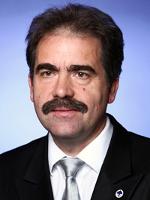 Tamás Csörgő合作论文数MATE Institute of Technology, Károly Róbert Campus24
 Meenakshi Narain合作论文数Brown University24
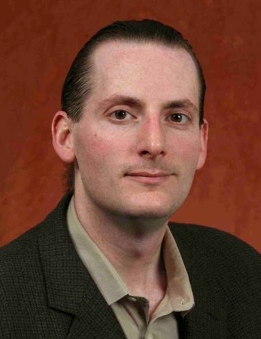 Andrew Askew合作论文数Department of Physics, College of Arts and Sciences, Florida State University23
 Mikko Voutilainen合作论文数23Tomas Linden合作论文数Helsinki Institute of Physics, Faculty of Science, University of Helsinki23Pascal Paganini合作论文数Laboratoire Leprince-Ringuet, École Polytechnique23P Kalbhor合作论文数23
 Ulrich Heintz合作论文数Department of Physics, Brown University23K Lipka合作论文数23
 Luigi Calligaris合作论文数Universidade Estadual Paulista Júlio de Mesquita Filho23
 Fotios Ptochos合作论文数Department of Physics, University of Cyprus23
 Peicho Petkov合作论文数Department of Atomic Physics, Faculty of Physics, University of Sofia23
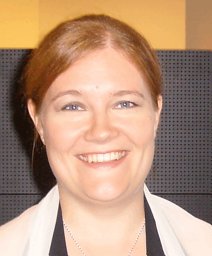 Panja Luukka合作论文数Department of Physics, School of Engineering Science, Lappeenranta-Lahti University of Technology23
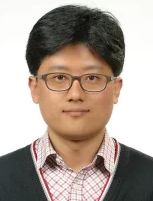 Junghwan Goh合作论文数Department of Physics, College of Science, Kyung Hee University23
 Andre Sznajder合作论文数Instituto de Fisica, Departamento de Física Nuclear e Altas Energias, Universidade do Estado do Rio de Janeiro23
 Luiz Mundim合作论文数Instituto de Física Armando Dias Tavares, Universidade do Estado do Rio de Janeiro;Departamento de Física Nuclear e Altas Energias, Universidade do Estado do Rio de Janeiro23




