BACKGROUND:Endoscopic retrograde cholangiopancreatography (ERCP) quality measures are critical to define standards of care and guide improvement strategies. AIMS:This study aimed to determine risk-adjusted outcomes following ERCP for malignant biliary obstruction(MBO). METHODS:Using an intention-to-treat approach, we analyzed data from a multicenter database including 23 Italian hospitals (2017-2022). Inter-center heterogeneity was assessed with I² statistic. To account for case-mix confounding, multivariable mixed-effects models estimated risk-adjusted outcomes. RESULTS:Clinical and procedural characteristics showed considerable heterogeneity across centers (I²>75%). In the intention-to-treat cohort (n = 3148), the risk-adjusted technical success rate was 91.3%; the intraclass correlation coefficient (ICC) was 11.6%, suggesting that 11.6% of the outcome variance resides at the hospital level. In the per-successful-procedure cohort (n = 2665), the risk-adjusted technical success rate was 91.3% (ICC 22.7%). Post-ERCP pancreatitis occurred in 5.4% (ICC 12.9%), additional ERCPs were required in 23.7% (ICC 4.1%), and 30-day mortality was 4.2%. Treatment in high-volume hospitals (>350ERCPs/year) was associated with lower mortality(p = 0.001). CONCLUSIONS:Most variability in ERCP outcomes across hospitals reflects differences in patient selection and technical strategies. After risk adjustment, outcomes were similar across centers, supporting consistent quality of care. This study provides exploratory, risk-adjusted benchmarks derived from real-world practice for ERCP in MBO and supports their use for quality monitoring and referral planning.
Background and study aims:Distal malignant biliary strictures (dMBSs) are a common indication for endoscopic retrograde cholangiopancreatography (ERCP). The present study aimed to evaluate adherence of Italian endoscopic centers to European Society of Gastrointestinal Endoscopy (ESGE) guidelines on management of dMBS. Patients and methods:This prospective cohort, observational, multicenter study was promoted by the Italian Society of Digestive Endoscopy. All consecutive patients with dMBS were included in the registry. Clinical and technical data were recorded. Clinical follow-up was performed at 7 and 30 days, and then every 3 months. Adherence to the eight ESGE recommendations (defined as full-, intermediate- and poor-adherence if > 85%, ≥ 65% to ≤85%, and < 65%, respectively) was considered the primary outcome. Results:Seventeen Italian endoscopy centers were included. Between January 2020 and January 2022, 827 patients were included. Full adherence to the guidelines was reported for post-ERCP acute pancreatitis prophylaxis, retreatments, and preoperative biliary drainage. Intermediate adherence was reported for type of stent used in palliative drainage (85% SEMS and 15% plastic stents). Poor adherence was reported for type of stent used in preoperative drainage (56% self-expandable metal stents [SEMSs]), availability of pathological diagnosis in case of U-SEMS placement (45% of U-SEMSs placed without pathologically diagnosis), antibiotic prophylaxis (70.6%), and sphincterotomy (88%). Conclusions:Adherence to ESGE guidelines needs to be improved in specific areas, including excessive use of plastic stents, use of U-SEMS without pathological diagnosis, and routine performance of sphincterotomy and use of antibiotic prophylaxis. (ClinicalTrials.gov ID: NCT05761496).
Sleep duration has been proposed to influence the risk of colorectal cancer (CRC). An involvement of inflammation, metabolic disorders, and gut permeability has been suggested. We investigated the relationship between sleep duration and CRC risk and examined whether sleep duration was associated with selected inflammatory and metabolic markers, and markers of gut permeability and bacterial translocation from the intestine to bloodstream. We used data from an Italian case-control study including 212 subjects (71 CRC cases and 141 tumor-free subjects). Sleep habits were collected through a questionnaire, including information on the average hours of sleep per night. We measured serum C-reactive protein (CRP) and glycemia by the ILab System, lipopolysaccharide-binding protein and zonulin by ELISA kit, and blood bacterial 16S rRNA gene copies by quantitative PCR and sequencing. We derived the odds ratios (OR) and corresponding 95% confidence intervals (CI) of CRC according to sleep duration from multiple logistic regression models. There was a positive association between long sleep duration and CRC risk, OR, 3.36 (95% CI, 1.08-10.53) for ≥ 9 compared to 7-8 h. For ≤ 6 h, the OR was 1.62 (95% CI, 0.84-3.29). BMI, circulating levels of CRP and glycemia, and a species of Streptococcus appeared to be higher in subjects reporting ≥9 vs. 7-8 h of sleep. Our data show a positive relationship between long sleep on CRC risk and suggest possible insights on inflammation, metabolic disorders, and possibly gut barrier dysfunction explaining this association.
BACKGROUND:Ampullary neuroendocrine tumors (NETs) are extremely rare, representing 0.3%-1% of gastrointestinal NETs and less than 2% of periampullary cancers. Due to their rarity, there is limited data on their natural history, management, and outcomes. Current European Neuroendocrine Tumor Society guidelines (2023) recommend pancreaticoduodenectomy (PD) as the standard treatment. However, this approach is invasive and associated with high morbidity and mortality. Emerging evidence suggests that endoscopic papillectomy (EP) could be a viable alternative in selected cases. This retrospective multicenter study aimed to evaluate the feasibility and outcomes of endoscopic resection for ampullary NETs. METHODS:This retrospective case series included 14 patients who underwent EP for ampullary NETs between 2011 and 2022 across three Italian tertiary centers. Pre-procedural evaluation was performed following European Society of Gastrointestinal Endoscopy guidelines. Endoscopic papillectomy was performed under monitored sedation, using standard snares for en bloc resection. Follow-up endoscopy was conducted at a median of 3 months. Primary outcomes included complete resection (R0) and recurrence rates; secondary outcomes focused on adverse events. RESULTS:Fourteen patients (median age: 62.5 years; 50% male) were included. Median tumor size was 18 mm. In 12 out of 14 cases, ampullary NETs were diagnosed only after endoscopic resection. Post-resection histology identified 8 G1 NETs (Ki-67 1%) and 6 G2 NETs (Ki-67 5%). Complete resection was achieved in 11 cases (78.6%). Among 3 incomplete resections, 2 were managed surgically, while 1 was followed up without recurrence. Residual disease was detected in 3 patients: 2 were managed endoscopically, and 1 required surgery. No recurrences occurred during a median follow-up of 14.5 months. Adverse events occurred in 42.9% of patients, including 5 cases of bleeding and 1 case of mild pancreatitis, all resolved without major sequelae. Median hospital stay was 2.5 days. CONCLUSIONS:Our findings suggest that EP offers a promising alternative to surgery in selected patients with ampullary NETs. Endoscopic resection was associated with high rates of R0 and favorable short-term outcomes, with effective endoscopic management of residual disease and procedure-related adverse events. Consistent post-procedural surveillance remains essential to detect residual or recurrent disease. Larger prospective studies are warranted to refine patient selection criteria, optimize protocols, and establish the long-term efficacy.
Interventional endoscopic ultrasound (EUS) has become a cornerstone in the management of malignant pancreatobiliary diseases, offering minimally invasive alternatives to traditional surgical approaches. More recently, accumulating evidence supports its expanding role in the treatment of benign pancreatobiliary conditions, including acute cholecystitis and pancreatitis, benign gastric outlet obstruction, and scenarios involving altered gastrointestinal anatomy. This narrative review provides an overview of key EUS-guided drainage techniques utilizing lumen-apposing metal stents (LAMSs) in benign settings. It focuses on procedures such as EUS-guided gallbladder drainage, drainage of abdominal collections, EUS-directed transgastric ERCP (EDGE), and EUS-gastroenterostomy. These interventions have demonstrated high technical and clinical success rates, favorable safety profiles, and expanding indications, particularly among patients who are poor surgical candidates. This review highlights evolving techniques, clinical outcomes, and the impact of device innovations on procedural efficacy and safety.
 Guido Costamagna合作论文数Digestive Endoscopy Unit, Catholic University of the Sacred Heart208
 Andrea Tringali合作论文数171Forti Edoardo合作论文数151
 Lorenzo Dioscoridi合作论文数Department of Surgery and Translational Medicine, University of Florence147Marcello Cintolo合作论文数127
 Giulia Bonato合作论文数Digest & Intervent Endoscopy Unit, ASST Grande Osped Metropolitano Niguarda94Vincenzo Perri合作论文数92F. Pugliese合作论文数66
 Francesco Pugliese合作论文数63
 Cristiano Spada合作论文数49P. Familiari合作论文数37
 Armando Gabbrielli合作论文数Department of Surgery, Catholic University of “Sacro Cuore35
 Alberto Tringali合作论文数33
 Pietro Familiari合作论文数32
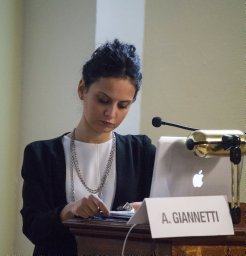 A. Giannetti合作论文数Digest & Intervent Endoscopy Unit, ASST Niguarda28
 Ivo Boskoski合作论文数25Raffaele Manta合作论文数Gastroenterology and Endoscopy Units, Nuovo Ospedale Civile S.Agostino Estense22R. Manta合作论文数21M. Pandolfi合作论文数21
 Rita Conigliaro合作论文数21M. Bravo合作论文数20Roberto Penagini合作论文数19
 Luciano Petruzziello合作论文数Digestive Endoscopy Unit, Catholic University19A. Palermo合作论文数17
 Mutaz Massad合作论文数Digest Endoscopy Unit, ASST Niguarda17
 Alessandro Fugazza合作论文数Medicine Unit, Ospedale Maggiore di Lodi, Lodi, Italy.17
 Federico Iacopini合作论文数16Alberto Larghi合作论文数15Francesca Foschia合作论文数15
 Alessio Giuseppe Morganti合作论文数Department of Medical and Surgical Sciences, Università di Bologna15
 Paolo Giorgio Arcidiacono合作论文数Vita-Salute San Raffaele University;IRCCS Ospedale San Raffaele15Maurizio Vecchi合作论文数15
 Michele Marchese合作论文数15
 Andrea Anderloni合作论文数14F Crucitti合作论文数14Carlo Fabbri合作论文数Bellaria-Maggiore Hospital14
 Alessandro Italia合作论文数14
 Helga Bertani合作论文数14M. Sica合作论文数13
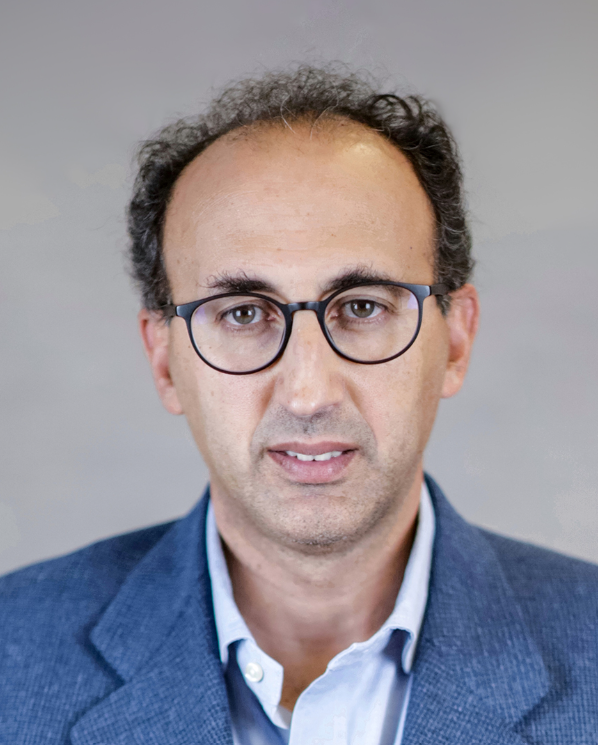 Cesare Hassan合作论文数Humanitas University13A. Repici合作论文数12
 Alessandro Repici合作论文数12M. Marchese合作论文数11R. Rosa合作论文数11
 Giuseppe Galloro合作论文数11
 Cristoferi Laura合作论文数11
 Vincenzo Valentini合作论文数11




