The Internet Architecture has become too complex that it is impossible to consider only a monolithic configuration, the perception in how people understand future networks rely in data exchange more than infrastructure connected and how an individual platform or/and sensor networks are immerse and supporting our daily living conditions. The Internet as a global network needs to evolve incorporating current demands for federating AI-powered solutions and adding more processing capacity. In this paper, we introduce the technical requirements and the specification of the Secure Federated reference implementation for the Identity and Access Management system based on the Self Sovereign Identity paradigm (FAAID) System. The idea behind FAAID specifications is to provide Self Sovereign Identity capabilities, based on Distributed Identity and Verifiable Credentials concepts, maintaining the most used authentication and authorization flows and standards in this moment, to facilitate the integration of stakeholders' applications and incentivize future networks wide adoption.
The Internet as a network for global communications and exchange of information has continuously changed its architecture, mainly as result of the continuous demands for more privacy and security alike processing capacity at the edge of the network (i.e. smart connected devices). In this paper, a vision about the origins of the Data Continuum, its evolution towards becoming the enabler of data exchange and semantic interoperability and how it has promoted the growth of cross-domain integrated data services is presented. This is a paper describing the transition from data collection to data marketplaces in the context of the Future Networks evolution and how the data continuum its considered not only an enhancing network technique but a new technology method, where Data and Information & Communications Technology in the form of new services can evolve rapidly.
Due to its multivariate and multipurpose use and reuse, data’s worth is dramatically increasing, leading to an era characterized by the generation of data marketplaces towards accessing, selling, sharing, and trading data and data assets. However, most market vendors still follow a centralized monolithic cloud model for controlling most of the market for data services. Also, this strategy is incompatible with European objectives for cloud computing and the data economy, lacking data sovereignty and cross-cloud interoperability principles. Towards these limitations, the FAME project is introduced as a joint effort in the fields of data management, data technologies, data economy, and digital finance to develop, deploy and launch to the global market a unique, trustworthy, energy efficient, and secure federated data marketplace for Embedded Finance (EmFi). This marketplace is envisioned to alleviate the proclaimed limitations of centralized cloud data marketplaces towards demonstrating the full potential of the data economy. Security, interoperability, decentralized and regulatory compliant data exchange, data assets’ trading and pricing, as well as integration of trusted and energy efficient analytics are among the core functionalities of FAME, which aims to act as a single-entry point data marketplace for the EmFi domain. FAME will be evaluated upon different real-world use cases covering the financial industry, building a vibrant community of EmFi stakeholders around the envisioned marketplace.
The increasing importance of audio-based healthcare diagnostics, particularly in chronic respiratory problems, has prompted the development of novel approaches for disease classification using the full spectrum analysis of cough sounds. This paper presents an innovative study exploring the potential of employing supervised and semi-supervised learning methodologies for disease categorization based on cough audio samples. Specifically, this study focuses on scenarios characterized by a shortage of annotated data related to chronic diseases. The objectives of our study involved the utilization of standard machine learning algorithms for direct classification based on embeddings, as well as the integration of Graph Neural Networks (GNNs) on the KNN graph. Preliminary results indicate that GNN models consistently outperformed traditional classifiers. For instance, with just 1 % of the data, GAT and GCN achieved AUC PR values of 0.84 and 0.87, respectively, surpassing all traditional methods. The superiority mentioned above was sustained even when the data fraction was augmented to 3% and 5%. The usefulness of graph neural networks (GNNs) was further supported by comprehensive performance measures, wherein the graph convolutional network (GCN) exhibited exceptional preci-sion and PR (precision-recall). In summary, the AudioVecDiagnosis framework presents a promising opportunity for further investigation in audio-based healthcare diagnostics. It provides an optimum approach for situations with a limited availability of labeled data.
This publication presents research findings and scientific work that advance the development and progression of smart city and community measurement methodology. The term 'smart,' as used in the phrase 'smart cities,' is defined here as the efficient use of digital technologies to provide prioritized services and benefits to meet community goals. Without reliable measurement methods for 'smart,' there is a gap in the ability to answer questions such as 'how smart is my smart city plan,' or 'how can my community strategy be made smarter?' This report addresses this gap by introducing a measurement framework for assessing the direct and indirect benefits of smart city technologies. The Holistic KPI (H-KPI) Framework builds on conventional Key Performance Indicators (KPI) methods and accounts for unique characteristics such as varying districts and neighborhoods, differences in population and economic scale, the reuse of previously deployed technologies, and other factors relevant to a city or community. The Framework provides the basis for developing measuring methods and tools that allow for integration, adaptability, and extensibility at three interacting levels of analysis i.e. technologies, infrastructure services, and community benefits. The H-KPI method provides a structured representation of smart city/community information flows that supports system visualization, serves as the basis for quantitative metrics for measuring 'smart,' and enables computational methods for systems design, analysis, operations, and assurance. The five core metrics of the method are: alignment of KPIs with community priorities across districts and neighborhoods; investment alignment with community priorities; investment efficiency; information flow density; and quality of infrastructure services and community benefits. Applications of the H-KPI approach include strategic planning, systems design and assurance, and operations management.
Data is currently perceived as one of the most valuable resources by the industry. In this context, data marketplaces have emerged for facilitating data trading in a coordinated manner. To facilitate open, fair, and transparent trades, it is necessary to ensure trust, both among the different participants and stakeholders, and trust in the sense of confidence to the ecosystem. Thanks to the emergent blockchain technologies, there are new decentralized data marketplaces that provide this confidence in a decentralized manner with new disruptive services such as automated conflict resolution, non repudiation and auditable accounting. In this paper, we present a decentralized data marketplace called i3-market that implements these services. We also describe a service called free data sampling that allows a consumer and a provider to securely agree on a portion of a dataset that can be checked by the consumer before committing the purchase. Finally, the paper discusses how to integrate the free sampling service in the i3-market ecosystem.
This publication presents research findings and scientific work that advance the development and progression of smart city and community measurement methodology. The term 'smart,' as used in the phrase 'smart cities,' is defined here as the efficient use of digital technologies to provide prioritized services and benefits to meet community goals. Without reliable measurement methods for 'smart,' there is a gap in the ability to answer questions such as 'how smart is my smart city plan,' or 'how can my community strategy be made smarter?' This report addresses this gap by introducing a measurement framework for assessing the direct and indirect benefits of smart city technologies. The Holistic KPI (H-KPI) Framework builds on conventional Key Performance Indicators (KPI) methods and accounts for unique characteristics such as varying districts and neighborhoods, differences in population and economic scale, the reuse of previously deployed technologies, and other factors relevant to a city or community. The Framework provides the basis for developing measuring methods and tools that allow for integration, adaptability, and extensibility at three interacting levels of analysis i.e. technologies, infrastructure services, and community benefits. The H-KPI method provides a structured representation of smart city/community information flows that supports system visualization, serves as the basis for quantitative metrics for measuring 'smart,' and enables computational methods for systems design, analysis, operations, and assurance. The five core metrics of the method are: alignment of KPIs with community priorities across districts and neighborhoods; investment alignment with community priorities; investment efficiency; information flow density; and quality of infrastructure services and community benefits. Applications of the H-KPI approach include strategic planning, systems design and assurance, and operations management.
 Achille Zappa合作论文数17
 Amelie Gyrard合作论文数Trialog;Department of Computer Science and Engineering, Wright State University16
 John Soldatos合作论文数University of Glasgow;ICT & Business Consulting;Athens Information Technology16
 Pedro Maló合作论文数15
 Manfred Hauswirth合作论文数Fraunhofer Institute for Open Communication Systems;Open Distributed Systems, Technical University Berlin;German National Internet Institute11
 Márcio Mateus合作论文数10
 Lan Wu合作论文数8
 Danh Le Phuoc合作论文数Faculty IV, Technical University of Berlin;Fraunhofer FOKUS8
 Hoan Nguyen Mau Quoc合作论文数8
 J. Fernando Arevalo合作论文数Department of Otolaryngology-Head and Neck Surgery, School of Medicine, Johns Hopkins University7
 Elias Z. Tragos合作论文数NTUA, National Technical University of Athens7Aqeel H. Kazmi合作论文数7
 Philippe Cousin合作论文数6
 Nikos Kefalakis合作论文数Athens Information Technology6
 Mauricio Maia合作论文数Departamento de Oftalmologia, Escola Paulista de Medicina, Universidade Federal de São Paulo;Instituto Paulista de Estudos e Pesquisas em Oftalmologia;Escola Paulista de Medicina;Allergan Brasil;Kemin;Bayer;Bausch and Lomb;Centro Tecnologico Nacional;Hospital de Olhos Oeste Paulista;Instituto Braqsileiro de Combate a Cegueira;Instituto Israelita de Ensino e Pesquisa Albert Einstein6
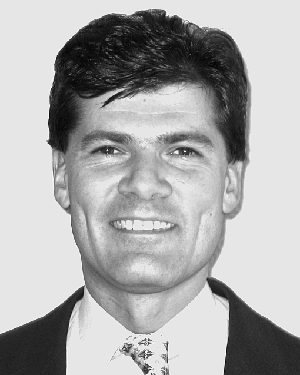 Ovidiu Vermesan合作论文数6Rodriguez Francisco J合作论文数5
 María H. Berrocal合作论文数Drs. Berrocal & Associates5
 Ivana Podnar合作论文数EPFL;Distributed Information Systems Laboratory ;School of Computer and Communication Sciences 5
 Jose Antonio Roca合作论文数5
 Micheal O Foghlu合作论文数Telecommunications Software and Systems Group, Waterford Institute of Technology5
 Roy Bahr合作论文数4
 Basim Mahbooba合作论文数Data Sci Inst, Natl Univ Ireland Galway4
 Mohan Timilsina合作论文数National University of Ireland Galway4
 Roberto Gallego-Pinazo合作论文数Clinica Oftalvist;Oftalmoacademy;Universidad Europea;IMED Hospitales4Arturo A. Alezzandrini合作论文数4
 Payam Barnaghi合作论文数Department of Brain Sciences, Faculty of Medicine, Imperial College London;UK Dementia Research Institute4Paul A. Clemons合作论文数Broad Institute of Harvard and MIT4
 Cassio V. S. Prazeres合作论文数Departamento de Ciências da Computação, Universidade de São Paulo4
 Marta S Figueroa合作论文数4
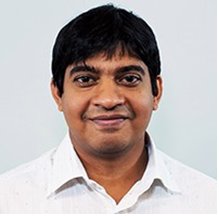 Pankesh Patel合作论文数INRIA Paris-Rocquencourt4
 Sven Van Der Meer合作论文数NM Lab, L.M. Ericsson4
 John Breslin合作论文数College of Engineering and Informatics, University of Galway;VistaMilk SFI Research Centre;TechInnovate;Insight Centre for Data Analytics4Stephanie Norton合作论文数3Ernesto Troiano合作论文数3Felipe Roca合作论文数3Hyman A. Carrinski合作论文数3Sergio Rojas合作论文数3
 Harald Sundmaeker合作论文数3
 Jay Kumar Chhablani合作论文数LV Prasad Eye Inst, Hyderabad, Telangana, India3
 Hugo Quiroz-Mercado合作论文数3
 Bodycombe Nicole E合作论文数Center for the Science of Therapeutics, Broad Institute of Harvard and MIT3
 Edward Curry合作论文数Insight SFI Centre for Data Analytics3Tolliday Nicola J合作论文数3
 Jeremy Muhlich合作论文数Department of Systems Biology, Harvard Medical School3Chico Giovanna合作论文数3
 Thanasis Korakis合作论文数Polytechnic Institute of NYU3
 Stuart L. Schreiber合作论文数Department of Chemistry and Chemical Biology, Faculty of Arts and Sciences, Harvard University;Broad Institute3
 Michael Boniface合作论文数School of Electronics and Computer Science, Faculty of Engineering and Physical Sciences, University of Southampton3




