As GenAI technologies become more pervasive in higher education (HE), scholars call for guidance on AI governance. To meet this need, a Delphi technique and collective writing was used in gathering expert perspectives from across 22 countries/locations and six continents. This resulted in the development of a HE GenAI policy/guidelines framework with eight core areas: (1) academic integrity, (2) ethical use and responsible use, (3) privacy and protection, (4) equitable access, (5) GenAI literacy, (6) integration strategy, (7) human oversight and accountability, and (8) institutional support and infrastructure. In addition, a six-part framework was developed to ensure that policies remain current and relevant: (1) creating a dedicated GenAI Committee, (2) conducting regularly scheduled policy reviews, (3) providing ongoing professional development and support, (4) communicating with all stakeholders, (5) evaluating the effectiveness and impact of GenAI, and 6) monitoring external developments. By providing a robust, eight-part framework for policy and guidelines, alongside a six-part mechanism for continued review, this study offers faculty, students, administrators, educational leaders, policymakers, and funders a responsible, adaptable, and consensus-driven blueprint for navigating the integration of GenAI in HE, ensuring that technological innovation serves pedagogical excellence.
Advocates of AI in Education (AIEd) assert that the current generation of technologies, collectively dubbed artificial intelligence, including generative artificial intelligence (GenAI), promise results that can transform our conceptions of what education looks like. Therefore, it is imperative to investigate how educators perceive GenAI and its potential use and future impact on education. Adopting the methodology of collective writing as an inquiry, this study reports on the participating educators’ perceived grey areas (i.e. issues that are unclear and/or controversial) and recommendations on future research. The grey areas reported cover decision-making on the use of GenAI, AI ethics, appropriate levels of use of GenAI in education, impact on learning and teaching, policy, data, GenAI outputs, humans in the loop and public–private partnerships. Recommended directions for future research include learning and teaching, ethical and legal implications, ownership/authorship, funding, technology, research support, AI metaphor and types of research. Each theme or subtheme is presented in the form of a statement, followed by a justification. These findings serve as a call to action to encourage a continuing debate around GenAI and to engage more educators in research. The paper concludes that unless we can ask the right questions now, we may find that, in the pursuit of greater efficiency, we have lost the very essence of what it means to educate and learn.
In the post-digital era where digital technologies are fully embedded in daily life, education must adapt to the rapid infusion of artificial intelligence (AI). This article explores a systems approach to AI integration in education, emphasizing both opportunities - such as personalized learning, administrative support, and innovative pedagogies - and challenges, including integrity, bias, and data security. It proposes an embedded systems perspective, recognizing the interdependence of institutional components and the need for holistic, strategic innovation. By adopting a systems-thinking approach, education can evolve to maximize AI's benefits while ensuring a human-centered, ethical, and inclusive learning environment.
This manifesto critically examines the unfolding integration of Generative AI (GenAI), chatbots, and algorithms into higher education, using a collective and thoughtful approach to navigate the future of teaching and learning. GenAI, while celebrated for its potential to personalize learning, enhance efficiency, and expand educational accessibility, is far from a neutral tool. Algorithms now shape human interaction, communication, and content creation, raising profound questions about human agency and biases and values embedded in their designs. As GenAI continues to evolve, we face critical challenges in maintaining human oversight, safeguarding equity, and facilitating meaningful, authentic learning experiences. This manifesto emphasizes that GenAI is not ideologically and culturally neutral. Instead, it reflects worldviews that can reinforce existing biases and marginalize diverse voices. Furthermore, as the use of GenAI reshapes education, it risks eroding essential human elements—creativity, critical thinking, and empathy—and could displace meaningful human interactions with algorithmic solutions. This manifesto calls for robust, evidence-based research and conscious decision-making to ensure that GenAI enhances, rather than diminishes, human agency and ethical responsibility in education.
Abstract This chapter describes how a statistical information technique, known as Markov Chains, can be employed to generate texts. We introduce concepts like probabilistic distribution, patterns, and generalization. We provide an example that illustrates how this technique works. Employing the short story ‘The Devoted Friend’, by Oscar Wilde, we show how it is possible to generate novel sentences using statistical methods. The chapter continues with some comments about the novel A Noise Such as a Man Might Make written by a computer program using Markov Chains. This program employs data extracted from two novels: The Old Man and the Sea by Ernest Hemingway, published in 1952, and The Road by Cormac McCarthy, published in 2006. We finish with some thoughts about the use of statistical information techniques for text generation.
Abstract This chapter provides a detailed example that illustrates how a computer program can employ the narrative structures defined in Chapter 4 to produce a narrative. Throughout the chapter we explain how the narrative structures are instantiated and how each of the sentences that make up the story arises. We also explain how the use of routines to manipulate text are useful for producing a better-quality output. Then we describe the main characteristics of TALE-SPIN, one of the most well-known story-generators. For instance, we explain that the system represents characters’ goals to meet physical needs, to move around the story-world, to persuade other characters to act in certain ways, and to communicate information. We end with some reflections about the scope and limitations of narrative generation based on problem-solving.
Abstract This chapter highlights the relevant role of narratives for the development of our cognitive and social skills. Then, it discusses how computer models can contribute to the understanding of narrative generation. Next, we explain why we wrote a book about automatic narrative generation. We discuss that it is hard to find material designed for readers with no background in computer science but who, nevertheless, are interested in understanding the core processes underlying these systems. We refer to this phenomenon as the AI knowledge gap. We also discuss the dissemination of misinformation related to automatic storytelling. Finally, we describe the core features of this book and how it is organized.
This paper explores educational interactions involving humans and artificial intelligences not as sequences of prompts and responses, but as a social process of conversation and exploration. In this conception, learners continually converse with AI language models within a dynamic computational medium of internet tools and resources. Learning happens when this distributed system sets goals, builds meaning from data, consolidates understanding, reconciles differences, and transfers knowledge to new domains. Building social generative AI for education will require development of powerful AI systems that can converse with each other as well as humans, construct external representations such as knowledge maps, access and contribute to internet resources, and act as teachers, learners, guides and mentors. This raises fundamental problems of ethics. Such systems should be aware of their limitations, their responsibility to learners and the integrity of the internet, and their respect for human teachers and experts. We need to consider how to design and constrain social generative AI for education.
Abstract This chapter introduces the concept of the template, describes its components, points out how we use templates in our everyday lives, and explains how they can be employed to produce narratives. Next, we present the notion of digital templates. Because templates require data and computers are good at getting and processing large amounts of data, we explain how to employ digital technology to fill in templates automatically. We provide examples that illustrate how to use this technique, for example to generate automatic sport news articles. Finally, the chapter describes diverse methods for generating more flexible templates, such as contextual templates, and thus to produce more appealing texts, emphasizing the relevance of data analysis.
Abstract In this final chapter, we recapitulate the core features of the systems we have studied and draw some general conclusions that provide an overview of the field. We start by summarizing the five techniques studied in this book: templates, problem-solving, planning, engagement and reflection, and statistical methods. We explain how systems can be grouped into different categories, such as audience versus theory. Finally, we reflect on some of the implications for society from the development of automatic narrative generator systems and provide examples, such as how these systems might support intercultural diversity through storytelling, or the role of AI in education.
Abstract This chapter discusses how problem-solving techniques are employed for the automatic generation of narratives. In this approach, characters’ goals (e.g. actors deciphering puzzles to discover a treasure, heroes trying to help people in problems) drive the development of the tale. These goals are broken into easier tasks. In this way, a collection of relatively simple challenges produces complex scenarios that result in interesting narratives. We introduce the main concepts behind problem-solving: goal-structure, character-structure, action-structure, preconditions, post conditions, goal’s plan, backwards reasoning. Next, we provide an example that illustrates the central mechanisms that this type of storyteller employs to generate narratives. Finally, we discuss the core features of a narrative generation system based on problem-solving.
Abstract In the 1980s and 1890s, a typical neural network comprised hundreds of elements organized in layers. Nowadays, deep neural networks (DNN) interconnect millions of those artificial neurons. This chapter introduces DNNs. Its objective is to discuss the basic concepts behind DNNs, such as parallel distributed system, training, learning, and transformers, as well as to illustrate how these concepts are used to generate texts. We describe how to design a narrative generator employing this approach. The chapter ends with a summary of some automatic storytellers based on DNNs like GPT-3, some thoughts about the neural-symbolic systems, and a reflection on this approach to narrative generation.
Abstract For years, the brain has been an inspiration for the creation of artificial intelligent systems. In this chapter, we start our study of neural networks by considering the performance of a single artificial neuron. We introduce essential concepts, such as weight, activation function, training, and learning. We describe the main features of a neuron and provide an example that illustrates how it works. For instance, we show how a single neuron is able to detect statistical regularities in a dataset and how those regularities can be employed to correctly classify data that the system has never seen before. We end the chapter describing the main limitation of individual neurons and how such a limitation has been overcome.
This chapter describes the cognitive and processual similarities between creative writing and designing. We have chosen to investigate this intersection as one way to address the expansion in the boundaries of design thinking. Evidence of this intersection is drawn from a book on the cognitive aspects of creative writing and an interview with the author. The chapter identifies four sets of similarities between creative writing and design: approach; cognitive structures and processes; tools and methods; and social processes. Based on our analysis, we find a reason to assert that writing is a form of design and that writers are ipso facto designers. Since the human faculty of language is the foundation for creative writing, and language is thus far considered the paragon of cognitive skills, we conclude that the proliferation of design thinking across disciplines should be expected. If writing is designing, then all forms of communication modes (mathematics, language, symbology) are all forms of design itself.
Abstract Continuing with the analysis of Chapter 12, here we explore how the knowledge generated in other fields, specifically narratology and studies on human daydreaming, shape the design of CURVESHIP and DAYDREAMER, two programs for narrative generation. We also consider SLANT, a system that integrates the core features of three narrative generators. We provide useful information to understand better the motivations behind the systems, how the generation process works in each case, and the type of outputs they produce. We end with some reflections about how computers offer endless ways to approach the study of narrative generation.
Abstract In this chapter we continue our study of planning techniques. We describe how a storyteller gains knowledge from its own outputs or from examples provided by the user employing a technique known as case-based reasoning (CBR). A storyteller based on CBR needs to include methods for storing and retrieving useful episodes, routines for adapting those episodes to novel situations as well as mechanisms that make sure that the coherence of the tales is preserved. We explain how narrative elements like suspense or flashback can be implemented as part of the author’s goals. Next, we review MINSTREL a well-known storyteller that illustrates all the concepts we studied about planning. The main contribution of this program is its representation of the creative process. When MINSTREL cannot find events in memory to instantiate a theme, a set of heuristics called Transform Recall Adapt Methods (TRAMS) are employed to create novel scenes. We finish with some thoughts about the scope and limitations of planning to narrative generation.
Abstract This chapter introduces a four-step methodology for developing a narrative generator based on problem-solving: (1) Choose a main problem that a character must solve; this is known as the driving goal. (2) Develop the story’s outline where the driving goal is the core motivation. (3) Using the outline as a reference, build a goal-oriented plot graph (GOP-graph). (4) Employ the goal-oriented plot graph as a guideline to define the characteristics of the story-world and the attributes of the data structures. Our methodology starts with a very general idea, which is refined little by little, until we can specify the data structures to be used in the program. We introduce the concept of nested goals and explain the use of rules when defining goals.
John Clark was inventor of the Eureka machine to generate hexameter Latin verse. He labored for 13 years from 1832 to implement the device that could compose at random over 26 million different lines of well-formed verse. This article proposes that Clark should be regarded as an early cognitive scientist. Clark described his machine as an illustration of a theory of “kaleidoscopic evolution” whereby the Latin verse is “conceived in the mind of the machine” then mechanically produced and displayed. We describe the background to automated generation of verse, the design and mechanics of Eureka, its reception in London in 1845 and its place in the history of language generation by machine. The article interprets Clark's theory of kaleidoscopic evolution in terms of modern cognitive science. It suggests that Clark has not been given the recognition he deserves as a pioneer of computational creativity.
Abstract Collaborative writing has been greatly stimulated by digital technologies, particularly by word processors that have made it easy for co-authors to exchange and edit texts and also led to the development of many experimental tools for collaborative, synchronous writing. When the world wide web was established, the arrival of wikis was hailed with great enthusiasm as an opportunity for joint knowledge creation and publishing. Later, cloud-based computer systems provided another powerful access to collaborative text production. The breakthrough for synchronous collaborative writing was the release of Google Docs in 2006, a browser-based word processor offering full rights to up to a hundred users for synchronous access to a virtual writing space. Next to its easy accessibility, it was the free offer of Google Docs that opened this new chapter of writing technology to a broader audience. When Microsoft and Apple followed with their own online versions, collaborative writing became an established standard of text production. In this chapter, we trace back what collaboration through writing means and then look at the new opportunities and affordances of collaborative writing software. Finally, we briefly recount the impact of early technologies before we settle on the current generation of collaborative writing tools.
 Giasemi Vavoula合作论文数School of Museum Studies, University of Leicester38
 Eileen Scanlon合作论文数Institute of Educational Technology, The Open University35
 Rafael Perez Y. Perez合作论文数25
 Stamatina Anastopoulou合作论文数National and Kapodistrian University of Athens20
 Rebecca Ferguson合作论文数The Open University18
 Christothea Herodotou合作论文数16
 d teather合作论文数16
 Chris Baber合作论文数School of Computer Science, University of Birmingham16Mark Gaved合作论文数Knowledge Media Institute16Peter Lonsdale合作论文数15
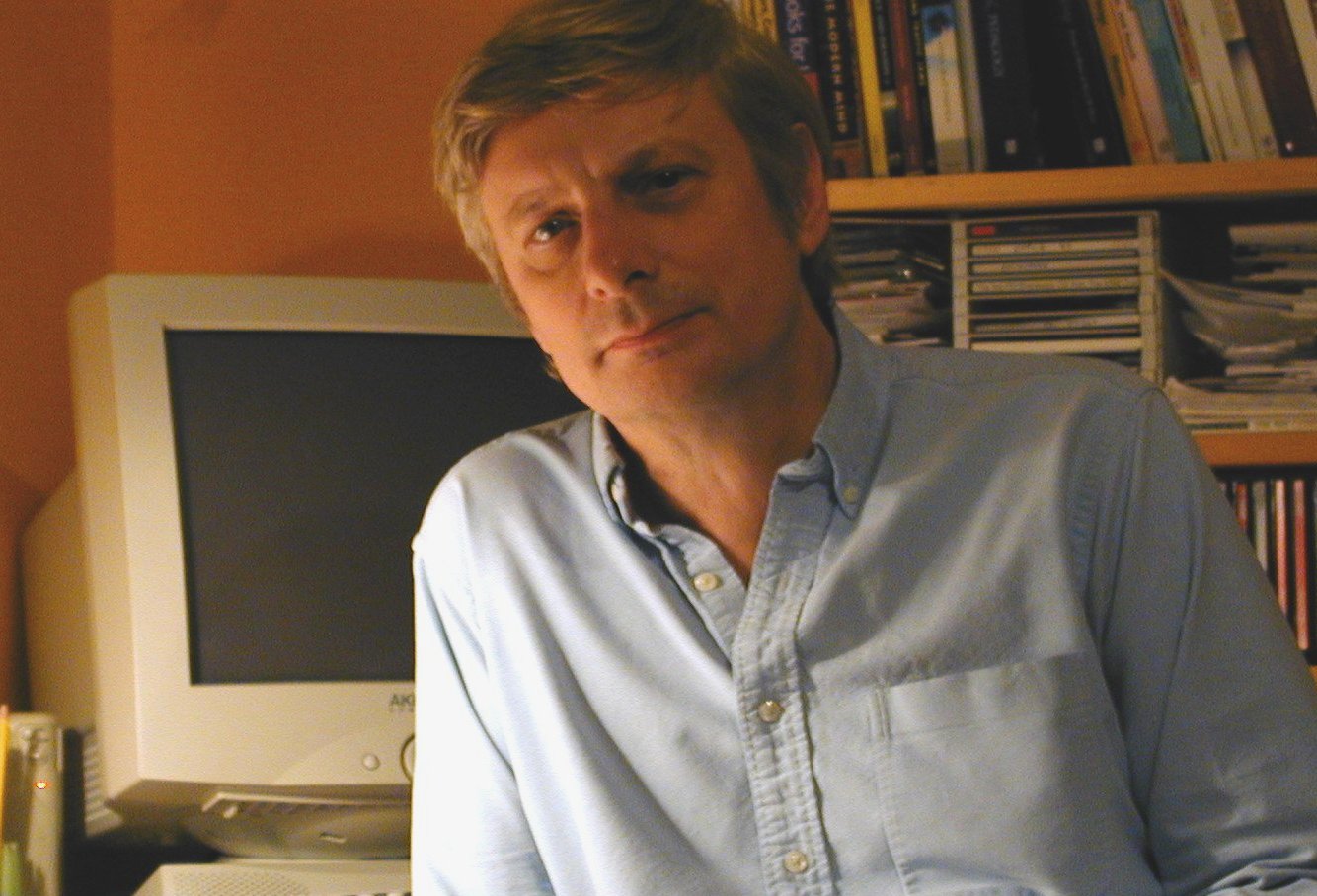 Charles Crook合作论文数Department of Education, University of Nottingham15
 Maria Aristeidou合作论文数14
 Agnes Kukulska Hulme合作论文数Learning Technology and Communication, Institute of Educational Technology14
 Marcelo Milrad合作论文数Växjö University13
 Denise Whitelock合作论文数Institute of Educational Technology, The Open University13
 Benedict du Boulay合作论文数Department of Informatics, School of Engineering and Informatics, University of Sussex13
 Shaaron Ainsworth合作论文数School of Education, University of Nottingham;Learning Sciences Research Institute12
 Elizabeth FitzGerald合作论文数Physical Therapy Department, Children's Memorial Hospital12
 Peter Brusilovsky合作论文数Department of Informatics and Networked Systems, School of Computing and Information, University of Pittsburgh;Personalized Adaptive Web Systems Lab, University of Pittsburgh;Human-Computer Interaction Institute, School of Computer Science, Carnegie Mellon University11Rebecca Graber合作论文数10
 Gary Priestnall合作论文数School of Geography, Faculty of Social Sciences, The University of Nottingham10
 Patrick McAndrew合作论文数The Open University10
 Bart Rienties合作论文数Maastricht University10
 Paul Douglas Rudman合作论文数Educational Technology Research Group;School of Engineering;University of Birmingham10
 Claire O'Malley合作论文数School of Psychology, University of Nottingham9B. Teather合作论文数9Tony Chan合作论文数8
 Marcus Specht合作论文数Department of Software Technology, Faculty of Electrical Engineering, Mathematics and Computer Science, Delft University of Technology8
 Josie Taylor合作论文数The Open University8
 Inmaculada Arnedillo-Sanchez合作论文数Trinity College Dublin8Nathan Jeffery合作论文数8
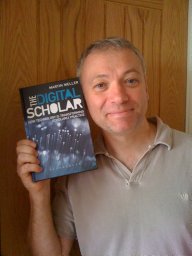 Martin Weller合作论文数Institute of Educational Technology;Open University;Institute of Educational Technology, Open University8
 Michael Wright合作论文数Dept Comp Sci, Univ Bath7
 Colin Harrison合作论文数University of Nottingham Nottingham7
 Dan Corlett合作论文数7
 Laura Naismith合作论文数Faculty of Education, McGill University7Kit Logan合作论文数7
 Chris Greenhalgh合作论文数School of Computer Science, University of Nottingham6
 Barbara Wasson合作论文数InterMedia & Dept. of Information Science, University of Bergen6
 Paul Mulholland合作论文数The Open University6Briony Teather合作论文数6
 Russell Beale合作论文数School of Computer Science, College of Engineering and Physical Sciences, University of Birmingham6Gemma Polmear合作论文数6
 Jeremy Roschelle合作论文数Digital Promise6
 Christian Glahn合作论文数Open University of the Netherlands6P. Lonsdale合作论文数5Julia Meek合作论文数5
 Tony Fisher合作论文数School of Education, Faculty of Social Sciences, The University of Nottingham5
 Chee-Kit Looi (呂賜杰)合作论文数Department of Curriculum and Instruction, Faculty of Education and Human Development, The Education University of Hong Kong;National Institute of Education, Nanyang Technological University5




