Conventional thermosets combine strength with irreversibility, but their lack of recyclability drives the urgent search for dynamic, bio-based alternatives. Here, a molecularly engineered polyglycidyl ether resin was deliberately designed and synthesized from castor oil via epoxidation, ring-opening transamidation, and glycidylation, yielding a highly functional and reactive epoxy precursor. This resin was subsequently crosslinked with aromatic 2,2′-dithiobenzoic acid (DBA) and aliphatic 3,3′-dithiopropionic acid (DPA) to generate dynamic epoxy vitrimer networks. Comprehensive structural, thermal, mechanical, and rheological analyses demonstrated that the curing agent chemistry decisively governed vitrimer properties. The DBA-cured vitrimer exhibited high tensile strength and superior gel content, albeit with brittle behavior. In contrast, the DPA-cured vitrimer displayed remarkable ductility and rapid stress relaxation due to its flexible aliphatic crosslinks, though at the expense of lower strength. Both vitrimers showed high mechanical recyclability via hot-pressing, partial chemical degradability under reductive conditions, and effective reprocessability with retention of mechanical integrity after multiple cycles. These findings establish castor oil-derived epoxy vitrimers as promising candidates for reprocessable, degradable, and high-performance thermosets, with tunable properties tailored by molecular design and curing agent structure.
The development of recyclable and sustainable polyurethanes is crucial to addressing the growing demand for high-performance materials with reduced environmental impact. Herein, we report the synthesis of castor oil-derived bio-based polyurethane (bPU) vitrimers incorporating dynamic covalent bonds through the introduction of imine and/or disulfide-containing crosslinkers. Four vitrimer formulations were systematically investigated to evaluate the role of dual dynamic bonds on thermal, mechanical, and reprocessing properties. The resulting networks exhibited high gel content and strong solvent resistance, with high tensile strengths. Dynamic mechanical analysis revealed that imine-containing samples showed superior stress relaxation, enabling efficient network rearrangement. In contrast, disulfide incorporation improved dimensional stability and thermal resistance, while dual-crosslinked bPU-T-V exhibited balanced performance. All vitrimers demonstrated excellent chemical degradability in acidic environments, enabling potential closed-loop recycling, and bPU-T-V displayed pronounced shape memory behavior. The resulting materials demonstrate a robust and versatile platform for renewable, reprocessable thermosets suitable for advanced coatings, adhesives, and composite applications, supporting the transition toward circular and environmentally responsible polymer systems.
A series of small molecule urethane methacrylates were synthesized and used as reactive diluents for UV-curable polyester powder coatings. A UV-curable polyester oligomer was prepared and formulated with the reactive diluents and a photoinitiator package. Kinetics studies were carried out using photo-differential scanning calorimetry (photo-DSC). The influence that the reactive diluent concentration, UV-light intensity, temperature, and atmosphere had on the reaction kinetics was investigated. Crosslinked samples that were analyzed via DSC showed that the glass transition temperature correlated well with the extent of conversion. In general, lower curing temperatures (i.e., ≤ 80°C) significantly reduced the conversion and polymerization rate. However, the use of a mono-functional reactive diluent facilitated much higher conversions than the UV-curable polyester control, even at just 5 wt% loading level. These findings suggest that reactive diluents can be used to improve the low temperature cure capability of UV-curable polyester powder coatings.
A urethane methacrylate with a tert-butyl terminal group, 2-((tert butylcarbamoyl)oxy) ethyl methacrylate (tBEM), was synthesized and incorporated into a series of homogeneous and core-shell model acrylate latexes. Unlike urethane methacrylates with linear or cyclic alkyl terminal groups, the tert-butyl group seems to preclude urethane formation, other than a direct approach of reacting tert-butyl isocyanate with 2-hydroxethyl methacrylate (HEMA) was employed. The effect of tBEM content on latex performance was investigated using minimum film formation temperature (MFFT) tester, differential scanning calorimetry (DSC), dynamic mechanical analysis (DMA), tensile tests and Fourier transform infrared spectroscopy (FTIR). Increasing the loading level of tBEM led to an increase in film stiffness and tensile strength.
ABSTRACT A series of UV‐curable polyesters containing triptycene segments were synthesized via the melt polycondensation of 1,4‐cyclohexanedicarboxylic acid, triptycene‐1,4‐hydroquinone‐bis(2‐hydroxyethyl) ether, and various comonomer diols including 1,6‐hexanediol, neopentyl glycol, and 1,4‐cyclohexanedimethanol. The polyesters were characterized by 1 H nuclear magnetic resonance spectroscopy, Fourier‐transform infrared spectroscopy, gel‐permeation chromatography, and differential scanning calorimetry. Thin films were prepared by solvent casting and were cured via exposure to UV‐light at elevated temperature. The crosslinked films were subsequently analyzed by differential scanning calorimetry, dynamic mechanical analysis, Soxhlet extractions, and tensile tests. Most of the samples that contained a high concentration of the triptycene monomer resulted in brittle materials with relatively high moduli and tensile strengths, but poor extensibilities. However, the 1,6‐hexanediol/1,4‐cyclohexanedicarboxylic acid polyester with 30 mol% of triptycene‐1,4‐hydroquinone‐bis(2‐hydroxyethyl) ether exhibited a T g above room temperature, a relatively high modulus (~1.1 GPa) and tensile strength (~25 MPa), and ductility (144% elongation‐at‐break). These unique properties were attributed to the triptycene monomer, which is capable of threading polymer chains through its V‐shaped cavities to reinforce the polymer network. When these polyesters were formulated into UV‐curable coatings, the coatings displayed excellent impact resistance and substrate adhesion.
A urethane methacrylate (UMA) with a cyclohexyl terminal group, 2-((cyclohexylcarbamoyl)oxy)ethyl methacrylate (CEM), were incorporated in a series of homogeneous and two-phase acrylic latexes. All synthetic latexes were prepared by semi-batch emulsion polymerization. The effect of CEM content on latex performance was investigated. The latexes and corresponding films were characterized using minimum film formation temperature (MFFT) tester, differential scanning calorimetry (DSC), dynamic mechanical analysis (DMA), tensile tests and Fourier transform infrared spectroscopy (FTIR). The increasing CEM content led to the improvement in performances including Young's modulus and hydrogen bonding strength. In addition, another series of homogeneous acrylic latexes that contained increasing content of UMA with a methyl terminal group, 2-((methylcarbamoyl)oxy)ethyl methacrylate (MEM), was also included to investigate the effect of terminal group bulkiness. The bulkiness of the terminal group appeared to lead to a more substantial increase in Young's modulus compared to hydrogen bonding.
Thermosets and composites sourced from environmentally benign natural sources are in huge demand. In that context, norbornylized linseed oil was used as the key sustainable polymer precursor for thermosets and glass fiber reinforced hybrid biocomposites via three different curing techniques. At first, norbornylized linseed oil was copolymerized by dicyclopentadiene whereas its epoxides were cured via latent cationic initiator, and copolymerization with disulfide containing acid moieties. Further, biomass sorghum fillers were incorporated into the epoxides to fabricate stronger, cheaper, light weight and more sustainable products. The activation energies and crosslink efficiency of the thermosets were calculated first. To evaluate the commercial significance of the products fabricated, synthetic bisphenol-A based epoxides and commercial standards of epoxidized linseed oil-based thermosets and composites were analyzed side by side. Finally, natural flax fiber reinforced composites were also fabricated to make green composites. The thermo-mechanical properties of the composites were investigated using universal testing machine and thermogravimetric analysis. Steric hindrance and ring strain energies seem to have tangible role in the curing process whereas the presence of ring structures increased the crosslink density and mechanical strength. Fine tunability of composite properties by the selection of a specific curing technique was demonstrated by virtue of different curing mechanisms. While outperforming commercial linseed oil epoxides, the norbornylized linseed epoxides-natural fiber composites exhibited comparable performance properties to synthetic bisphenol-A epoxy-glass fiber composites. Therefore, such biocomposites can be viable replacements of harmful bisphenol-A epoxides in the composite industry, especially in the non-structural automotive composite parts.
Reprocessable and recyclable thermosets were produced from the epoxidized norbornene seed oils (soybean oil and linseed oil). The epoxides were copolymerized using disulfide -based aromatic carboxylic acid to mold thermosets and composites. Both the neat and reprocessed thermosets were characterized for cross-linking efficiency by dynamic mechanical analysis (DMA), Soxhlet extraction, and swelling tests; for thermal stability by thermogravimetric analysis (TGA); and for Tg by differential scanning calorimetry (DSC). Mechanical properties of the thermosets were also investigated. Further, carbonized biomass sorghum fillers were added into the system to assess their effect on the final properties. Increased bio-based content, cost, and weight savings were introduced into the system by virtue of biomass filler addition. Lastly, glass-fiber-reinforced composites were molded, and their mechanical and thermal properties were evaluated using an impact tester and a universal testing machine (UTM) and by DMA and TGA, respectively. It was noticed that higher seed oil functionalization resulted in higher the reactivity and final performance properties like cross-linking density, thermal stability, and tensile modulus. Nonfilled epoxy systems in comparison to the sorghum-filled thermosets and composites showed enhanced thermomechanical properties. Chemical recycling and reprocessing abilities of these highly bio-based materials were also investigated. The research thus demonstrates the systems' possible use in environmentally friendly, sustainable, and lightweight composites.
Tire and road wear particles (TRWP) are becoming an important research question with potential risks on ecological system. A comprehensive understanding of their detection and quantification in soils are challenged by the inherent technological inconsistencies, lack of well-set standardized methods, and generalized protocols. Reference tire cryogrinds were subjected to abiotic weathering. Next, the total environmental availability from parent elastomers and the release of additives from tire tread compounds were evaluated using mass concen-tration factors obtained from abiotic weathered tire cryogrinds. Headspace Gas chromatography-mass spec-troscopy (HS-GC-MS) was employed as a nontargeted, suspect screening analysis technique to identify the tire related intermediates. Benzothiazole, 1,2-dihydro-2,2,4-trimethylquinoline (TMQ), aniline, phenol and benzoic acid were detected as tire tetrahydrofuran leachates. Total environmental availability of TMQ and benzothiazole were in the range of 1.7 x 10⁻³ and 0.11, respectively. Benzene and benzoic acid derivatives were identified as marker compounds for environmental samples. A TRWP content evaluation was made possible by quantifying marker concentrations and reference tire cryogrind formulation. TRWP content in the size range of 1-5 mm was between 800 and 1300 mu g/g and 1200-3100 mu g/g TRWP in Ohio and Kansas soil. For TRWP less than 1 mm, 0.15-2.1 wt% content was observed in Kansas and Ohio samples and were seemingly dependent on the locations and the traffic. This simple, widely applicable quantification method for TRWP analysis provides a database of tire degradation and TRWP intermediates. The TRWP content research is critical for further TRWP research development in terrestrial environment.
As replacements for bisphenol-A, new bio-based and reactive epoxy-amine coatings have been investigated in this study. Bio-based precursor, epoxy-functionalized tung oil (ETO) was synthesized using glycidyl methacrylate (GMA) and tung oil via a Diels–Alder reaction according to our previous work. The new ETO-diamine-cured systems were prepared with the equivalent molar ratio at room temperature. ETO was cured with acyclic aliphatic (Jeffamine D400) and cyclic aliphatic (Epicure 3300) amines, at four temperatures ranging from 25 to 150°C. The coatings were then compared in terms of their thermal and mechanical properties. The cured coatings were analyzed by IR, thermogravimetric analysis (TGA), and gel content tests. TGA analysis showed that the epoxide-diamine polymers demonstrated thermal stability up to 170°C. The mechanical properties of the films were investigated by pendulum hardness, pencil hardness, cross-hatch adhesion, pull-off adhesion, impact resistance, reverse resistance, and chemical resistance testing. While all the cured systems exhibited good pencil hardness, cross-hatch adhesion, impact resistance, and reverse resistance properties, the epoxide-acyclic diamine system demonstrated greater pendulum hardness and notable pull-off adhesion at 150°C. The research demonstrates the potential for greener and more reactive tung oil-based epoxide coatings with enhanced properties.
Four types of UV-(meth)acrylate curable alkyds were synthesized and formulated with two tri(meth)acrylate reactive diluents. Thermal, mechanical, and coating properties, including gloss, adhesion, hardness, impact resistance, and chemical resistance, were evaluated. In general, methacrylate-based UV-curable alkyd has higher modulus and toughness, whereas acrylate-based UV-curable alkyd has better flexibility and adhesion. In all four UV-curable alkyd resin systems, increasing reactive diluent content will enhance properties like tensile strength and modulus, hardness, and chemical resistance. However, there is a decrease in properties such as elongation at break, adhesion, and impact resistance. Among four UV-curable alkyd resin, acrylated medium linseed oil alkyd exhibited the best overall performance than other systems in terms of hardness, flexibility, and adhesion. Particularly, acrylated medium linseed oil alkyd formulations with 20–30 wt
The fracture toughness of two alkoxysilane modified bis-phenol-A (BPA) epoxides were compared at three different temperatures. Organosilanes were utilized to synthesize the modified epoxides; 3-aminopropyl triethoxysilane reacted with the telechelic oxirane (aminosilane functionalized epoxide, ASE); and 3-(triethoxysilyl) propyl isocyanate reacted with the secondary hydroxyl group of the repeat unit (isocyanatesilane functionalized epoxide, ISE). Pre-hydrolyzed and condensed tetraethyl orthosilicate (TEOS oligomers) and TiO2 were added to modified epoxides along with an amine hardener. The films were evaluated using DSC, TGA, tensile, and fracture toughness. During film formation, there were two competing chemical pathways: one based on in situ inorganic reactions of silanes and silicates, and the other based on organic reaction of amine crosslinker with epoxide groups. The aminosilane modified epoxides (ASE) indicated higher compatibility with TEOS oligomers or TEOS oligomers/TiO2 than the isocyanate-silane modified epoxides as smaller agglomerates observed with AFM and SEM images. Theses interactions made ASE tougher, as there was an improvement in the fracture toughness, tensile modulus, and impact strength. This study found that the toughness varied at different temperatures (-50, 20, and 60 degrees C).
A mixture of amidoamine and polysulfide crosslinkers were used to toughen a BPA-epoxide primer. Viscoelastic properties, fracture toughness, impact resistance, adhesion strength, corrosion properties were investigated. Fracture toughness study was conducted at ambient and low temperatures to approximate an aircraft at altitude. At ambient temperature, the amidoamine was sufficiently flexible due to ethylene oxide soft segments. However, at low temperature, the addition of polysulfide showed improved fracture toughness. The SEM of fractured surface revealed that fracture toughness improvement at low temperature is due to the both cavitation and shear yielding of polysulfide domains and epoxide matrix which dissipate energy and increase the toughness.
Four maleated soybean oil (SBO) derivatives were synthesized and used as bio-based reactive diluents (RDs) for alkyd coating systems. The RDs were prepared in a two-step fashion: (a) Maleation of SBO with maleic anhydride (MA) via an ene reaction followed by (b) a nucleophilic acyl substitution of the grafted succinic anhydride with allyl- or methacrylate-functional molecules. The structures were characterized using H-1 NMR, C-13 NMR, C-13-H-1 heteronuclear single quantum coherence NMR, C-13-H-1 heteronuclear multiple bond correlation NMR spectroscopy, FT-IR (ATR) spectroscopy, and MALDI-ToF-MS. The 2D NMR spectroscopy techniques helped confirm that MA was successfully grafted onto SBO. FT-IR spectroscopy identified new absorption bands at 1780 and 1850 cm(-1), following the maleation reaction, corresponding to the anhydride functionality. Alkyd coating formulations were prepared with either 0, 10, 20, or 30 wt% of the different RDs. Brookfield viscosity measurements were conducted on the formulations to measure the efficiency of the SBO-based RDs. At 20 wt% loading level, the RDs typically reduced the viscosity of the base alkyd resin by 50%-60%. Coatings tests and gel content measurements were also conducted in order to understand the effects that these RDs had on the performance of the alkyd coatings.
Thermosetting cycloaliphatic powder coatings that exhibit good weatherability, corrosion resistance, and mechanical properties have been desired for some time. Unfortunately, most cycloaliphatic resins have glass transition temperatures (T(g)s) that are too low for powder coating applications. In this study, a series of ultraviolet (UV)-curable, cycloaliphatic polyesters was synthesized from 3,9-bis(1,1-dimethyl-2-hydroxyethyl)-2,4,8,10-tetraoxaspiro[5.5]undecane (spiroglycol), 1,4-cyclohexanedimethanol, and 1,4-cyclohexanedicarboxylic acid. The oligomers were characterized by H-1 nuclear magnetic resonance spectroscopy, Fourier-transform infrared spectroscopy, gel-permeation chromatography, and differential scanning calorimetry. The T-g value, the tensile strength, and the modulus of the crosslinked polyesters systematically increased with the spiroglycol (SPG) loading level. Dynamic mechanical analysis experiments highlighted structure-property relationships and showed evidence of secondary relaxations at around -44 degrees C. These beta-relaxations were attributed to conformational transitions of the cycloaliphatic rings. The oligomers that contained 30 and 45 mol % SPG had T(g)s that were suitable for powder coating applications. As such, they were formulated into UV-curable powder coatings. Coated test panels were evaluated in a salt spray chamber (ASTM B117) and a QUV weatherometer. The impact resistance, adhesion, and pencil hardness properties of the coatings were also evaluated. When compared to conventional (aromatic-based) controls, the cycloaliphatic powder coatings exhibited comparable weatherability, corrosion resistance, and T(g)s along with superior impact resistance, substrate adhesion, and resistance to yellowing. These findings suggest that the cycloaliphatic powder coatings would be good alternatives to aromatic-based systems that are used in exterior durable clear coat applications.
A series of branched, UV-curable polyester oligomers were synthesized from neopentyl glycol, terephthalic acid, and variable amounts of trimellitic anhydride (TMA). 1H NMR spectroscopy and MALDI-ToF-MS confirmed that TMA was successfully incorporated into the oligomeric backbone. Differential scanning calorimetry experiments and zero-shear viscosity measurements were conducted to probe the thermal and rheological properties of the branched polyester resins. The Tg and the zero-shear melt viscosity were affected by the extent of branching as well as the functionality of the end group. UV-cured thin films were subsequently prepared and characterized via differential scanning calorimetry, thermal gravimetric analysis, dynamic mechanical analysis, tensile tests, and Soxhlet extractions. In general, the crosslink density of the films increased with the extent of branching. Linear and lightly branched samples (i.e., 2.5 and 5.0 mol % TMA) had higher % elongations at break, while the more highly branched samples (i.e., 7.5 mol % TMA) had higher Young's moduli and tensile strengths. However, further increases in the extent of branching (i.e., 10.0 mol % TMA) negatively affected the mechanical properties of the film due to poor crosslinked network development. The insights from this study highlight the importance of optimizing the extent of branching for UV-curable polyester coating resins.
As replacements for BPA, new bio-based epoxy-amine coatings and their nanocomposite coating derivatives including graphenes, carbon nanotubes (CNTs) and fullerenes were prepared for the first time, and their thermal and mechanical properties have been compared. A Diels Alder reaction was employed to prepare epoxy-functionalized tung oil (ETO). As a curing process, a primary diamine hardener (Jeffamine D2000) was used at four different temperatures ranging from 25 degrees C to 150 degrees C. Epoxide-amine nanocomposites were prepared with a 1:1 epoxy: amine molar ratio and additive of carbon nanoparticles (graphenes, carbon nanotubes (CNTs) and fullerenes). The cured coatings were analyzed by IR, DSC, TGA, and gel-content tests. Thermal stability of new coatings is observed up to 430 degrees C according to TGA analysis and these cured films displayed two glass transition points (Tgs) by DSC. While, of the three nano-composite incorporated systems, the graphene systems gave the maximum Tg in both phases, and the CNT-system exhibited a higher Ts and lowest weight loss with residues ranging up to 60% at 800 degrees C. The determination of the mechanical properties of the cured coatings was accomplished by pendulum hardness, pencil hardness, pull-off adhesion, cross-hatch adhesion, impact and reverse impact resistance tests. All the cured coatings have good mechanical properties in terms of hardness, cross-hatch adhesion and impact resistance. Generally, epoxide-amine nanocomposite coatings displayed better thermal and mechanical properties in comparison to epoxide-amine coatings.
The abundance of microplastics found in the environment is a major cause of concern. Tire tread particles containing additives such as curing accelerators and antioxidants, can be a major source of elastomer pollution in the environment. Such tire particles combined with road pavement particles are referred to as tire and road wear particles, TRWP. The environmental availability from parent elastomers and the release of additives in the process of abiotic degradation were evaluated using freeze-thaw, wet-dry and accelerated UV-weathering experiments. Acceleration factor determination tests were conducted to correlate UV-exposure to the natural aging in the environment. Freeze-thaw testing showed many additives such as diphenyl guanidine (DPG), benzothiazole sulfenamide (BTS) and para-phenylene diamine (6 PPD) as tetrahydrofuran leachates and BTS transformation products. Further, UV exposure equivalent to 1.5 yr., 3 yr. and 5 yr. aging resulted in the formation a combination of ketones and carboxylic acids for styrene butadiene rubber (SBR), natural rubber (NR), and butadiene rubber-based tire cryogrinds. Attenuated total reflectance- Fourier- transform infrared spectroscopy (ATR-FTIR) was used to detect the degradation of the elastomers on UV-exposure while gas chromatography-mass spectroscopy (GC-MS) was used as a nontargeted, suspect screening analysis technique. The degradation intermediates and leachates identified using GC-MS represents useful data for the life cycle analysis of the functional polymers and additives and their possibility of environmental release.
Thermosets and composites were fabricated from the epoxides of norbornane seed oils (linseed oil, soybean oil, high-oleic soybean oil, and non-modified seed oils). The epoxides were cured using a cationic initiator to mold thermosets. Thermosets were characterized for their curing behavior and T-g by dynamic scanning calorimetry, crosslinking efficiency by Soxhlet extraction, and thermal stability by thermogravimetric analysis (TGA). Steric hindrance of the norbornylized seed oils had a perturbing effect on the extent of epoxidation. However, the higher ring strain energy of the norbornene moieties played a key role in epoxide curing, resulting in higher T-g thermosets with higher crosslinking efficiency. To the epoxide system with the highest optimum balance of T-g, crosslinking efficiency, and thermal stability, lignocellulosic sorghum-derived biomass fillers were added. The addition of biomass fillers increased the bio-based content and reduced the cost and weight of the composites. Further, torrefied and carbonized sorghum filler variants were used to study the effect of the extent of thermal treatment on curing and on the final thermoset properties. Fillers were characterized by TGA, IR, elemental analysis, and solid-state NMR. Glass fiber-reinforced composites were molded using the optimum formulation. The mechanical and thermal properties of the novel hybrid biocomposites were investigated using universal testing machine (UTM), impact tester, and TGA. Both the sorghum-filled thermosets and composites showed enhanced thermomechanical property as compared to the non-filled epoxy systems. Carbonized sorghum filler composites exhibited the highest mechanical properties and thermal stability. Elemental differences and biomass precursor differences such as the cellulose, hemicellulose, and lignin content were found to play a critical role toward the composite properties. The SEM images showed good interfacial adhesion between the polymer matrix, fillers, and fiber phase in the biomass-filled composites. Thus, the fabricated composites demonstrate the potential for being used as sustainable, greener, and lightweight composites.
Two non-isocyanate polyurethanes (NIPUs) were used as reactive diluents for an alkyd to obtain eco-friendly new UV-curable alkyd-polyurethane coatings. A linseed-based alkyd resin was prepared and formulated with the reactive diluents (NIPUs) and free radical photoinitiator, and then UV-cured. NMRs were used to characterize the alkyd and NIPUs and glass transition temperature (T-g) of cured alkyd-polyurethanes were evaluated by using DSC. Further, spectroscopy and thermal stability of the coatings were evaluated by using ATR-IR spectroscopy and thermogravimetric analysis (TGA), respectively. Moreover, coating properties such as pencil hardness, cross-cut adhesion, pull-off adhesion, impact resistance, and reverse impact resistance were also evaluated. It was found that crosslink density, pencil hardness, adhesion, and T-g were dependent and proportional to the amount of the NIPUs (reactive diluents) showing significant improvement in mechanical and thermal properties compared to the linseed-based alkyd resin.
 Jomin Thomas合作论文数Sch Polymer Sci & Polymer Engn, Univ Akron12
 Ruby Chakraborty合作论文数11
 Coleen Pugh合作论文数Department of Chemistry, Wichita State University;Graduate School, Wichita State University10
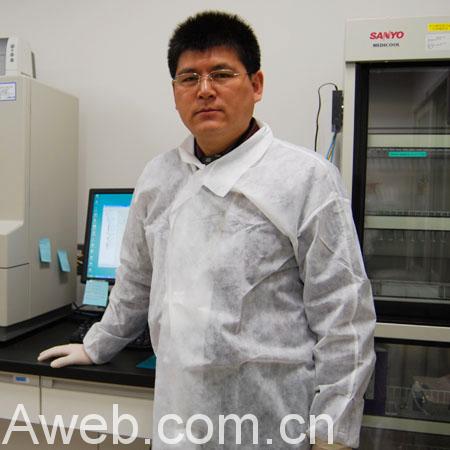 Xiaofeng Ren (任晓峰)合作论文数东北农业大学动物医学学院9Shokouhi Mehr Hamideh合作论文数8Brittany Pellegrene合作论文数7Lei Meng合作论文数7David Dworak合作论文数7Zhou Ying He合作论文数7Irina J. Zvonkina合作论文数6Theodore J. Hammer合作论文数6Pattarasai Tangvijitsakul合作论文数6serkan bas合作论文数6
 Martin Ocepek合作论文数Helios TBLUS Doo6
 Bryan D. Vogt合作论文数Department of Materials Science and Engineering, College of Earth and Mineral Sciences, The Pennsylvania State University;Department of Chemical Engineering, College of Engineering, The Pennsylvania State University6
 Homero Castaneda合作论文数Research and Development Electrochemistry, Vivendi Co.-US Filter6
 Avraam I. Isayev合作论文数Institute of Polymer Engineering, The University of Akron6Jamie Dziczkowski合作论文数6Kosin Wutticharoenwong合作论文数6Anisa Cobaj合作论文数Sch Polymer Sci & Polymer Engn, Univ Akron5
 Jiaxi Li合作论文数5xiaojiang wang合作论文数5Kent R Miller合作论文数5Shaobing Wu (吴绍兵)合作论文数5
 Ali Javadi合作论文数Faculty of Chemistry, Tarbiat Moallem University5Tongzhai Gao合作论文数5Ahmet Nebioglu合作论文数5Qianhe Wang合作论文数4hua gu合作论文数4
 Yongan Hu合作论文数4Ryan R. Salata合作论文数4Rh Pater合作论文数4Bhaway Sarang M合作论文数Department of Polymer Engineering, University of Akron4Liang Zhou合作论文数4Jinping Wu合作论文数4Aida E. Garcia Valdez合作论文数4Ilknur Babahan合作论文数4
 Ricardo Acosta合作论文数Centro de Investigation en Química Aplicada, Departamento de Aditivos para Polimeros, Bolvd. Enrique Reyna Hermosillo No. 140, Saltillo, Coahuila, C.P. 25 100, Mexico4Ganghua Teng合作论文数4
 Elif Alyamac合作论文数Department of Polymer Engineering, The University of Akron4Ramiro Guerrero-Santos合作论文数3Minjung Joo合作论文数3Priyanka P. Nalawade合作论文数3
 Joseph Nwosu合作论文数3
 Masoud Sobani合作论文数Department of Polymer Engineering, University of AkronAkronOH3
 Ying Yi (易英)合作论文数Wuhan University of Technology3Lydia Berlanga Duarte合作论文数3
 Nicole S Zacharia合作论文数Department of Chemical Engineering and Institute for Soldier Nanotechnologies, Massachusetts Institute of Technology3
 Teresa J. Cutright合作论文数Department of Civil Engineering, The University of Akron3




