Richard Hills was a pioneering, world-leading millimetre astronomer. As fresh graduate students, he and Michael Janssen built the world’s first millimetre interferometer. His research was characterized by the full range of experimental, observational and theoretical activities as the telescopes became more powerful and the scientific opportunities broadened out. The highlights of his contributions include his key roles as project scientist for the James Clerk Maxwell Telescope in Hawaii, still the world’s largest single dish for submillimetre astronomy, and for the ALMA millimetre/submillimetre array in Chile. His career spanned the evolution of millimetre astronomy from the ‘Wild West’ of the 1960s to the sophisticated aperture synthesis ALMA array which is revolutionizing our understanding of star and planet formation and the astrophysics of the distant Universe of galaxies.
To make quantitative comparisons between the theories of galaxy formation described in Chap. 13 and the observed distribution of galaxies, we need to make assumptions about the spectrum of the fluctuations from which galaxies and larger scale structures formed. The natural way of describing the distribution of galaxies on the large scale is in terms of correlation functions and their associated power spectra. The objective is to relate these properties of the distribution of galaxies at the present day to the spectrum of initial fluctuations which must have been present in the very early Universe. Let us first review the properties of the correlation function of galaxies at the present day, extending our introduction of Sect. 2.2.
The standard world models which are used as the framework for astrophysical cosmology and for studying the problems of galaxy formation are based upon Einstein’s General Theory of Relativity. General Relativity is a beautiful theory but it requires a thorough understanding of tensor calculus in four-dimensional non-Euclidean spaces to appreciate Einstein’s epoch-making achievement. Since this is beyond the scope of the present text, Sects. 6.1 to 6.5 are intended to provide some flavour of the full theory and to introduce some key ideas which will be needed later. In Sect. 6.6, the current status of General Relativity is surveyed and it is shown that it is the best relativistic theory of gravity we possess. If you are happy to accept General Relativity at its face value, you may advance to Chap. 7.
Einstein realised that, in General Relativity, he had discovered a theory which enabled fully self-consistent models for the Universe as a whole to be constructed. The standard models contain three essential ingredients: • The cosmological principle, which, combined with the observations that the Universe is isotropic, homogeneous and uniformly expanding on a large scale, leads to the Robertson—Walker metric (5.36); • Weyl’s postulate, according to which the world lines of particles meet at a singular point in the finite or infinite past. This means that there is a unique world line passing through every point in space-time. The fluid moves along streamlines in the universal expansion and so behaves like a perfect fluid for which the energy—momentum tensor is given by the T a ß of (6.30); • General Relativity, which enables us to relate the energy—momentum tensor to the geometrical properties of space-time through (6.43) or (6.44).
Let us recall the reasons for taking dark matter, and in particular non-baryonic dark matter, very seriously in the context of galaxy formation.
We now have to set the scene for our attack on the major problems of astrophysical cosmology — how do we account for the origin and evolution of the galaxies and the large-scale structure of our Universe? This is one of the most exciting areas of modern cosmology. The first thing we have to do is to work out the thermal history of the matter and radiation content of the standard Big Bang picture. In this and the succeeding Chap. 10, we will develop many concepts which are essential for understanding the problems of galaxy formation. Let us first consider the dynamics of radiation-dominated universes.
Antony (Tony) Hewish was a pioneer radio astronomer who will always be remembered as the leader of the team in 1967 that discovered the pulsars, which proved to be rapidly rotating, magnetized neutron stars. The discovery resulted from Tony's programme of systematic all-sky surveys to detect the scintillation, or flickering, of small angular diameter radio sources due to electron density fluctuations in the solar wind flowing out from the Sun. The large low-frequency 4.5-acre array was designed by Tony to find radio quasars, which often display radio scintillations, to estimate the angular sizes of the sources and to study the physics of the interplanetary medium. In the course of commissioning the telescope, his research student, Jocelyn Bell (Jocelyn Bell Burnell, FRS 2003), noted a strange 100% scintillating source unlike anything seen before. Tony and the team soon established that this source was a pulsating radio source, Jocelyn first observing the pulsations with period 1.33 s in November 1967. The discovery paved the way for the rapid development of high energy astrophysics and an appreciation that general relativity plays a key role in the stability of neutron stars. Tony's contributions spanned a very wide range of pioneering studies in the new discipline of radio astronomy, including telescope and electronic design, cosmological studies of distant radio sources and the physics of the ionospheric, interplanetary and interstellar plasmas. He was awarded the 1974 Nobel Prize in physics for ‘his decisive role in the discovery of pulsars’.
One of the reasons why the standard Big Bang picture is taken so seriously is its remarkable success in accounting for the observed abundances of the light elements by primordial nucleosynthesis which took place during the first 10 minutes of our Universe. The results of this analysis are crucial for a number of aspects of galaxy formation. In particular, primordial nucleosynthesis provides one of the most important constraints upon the density parameter in the form of baryons Ω B and this is a key part of our story. In the process of developing these results, we need to study in somewhat more detail the rôle of neutrinos in the early Universe, how they change the dynamics of the expanding Universe and how they decouple from the electrons and positrons. Y p p The neutrinos provide an example of the decoupling processes which may be important for other unknown types of weakly interacting particle. We will find a qualitatively similar example when we study possible forms of the dark matter.
Evidence for strong evolutionary changes in the properties of extragalactic objects with cosmic epoch was first found in the 1950s and 1960s as a result of surveys of radio sources and quasars. An excess of faint sources was found in radio source and quasar surveys, as compared with the expectations of uniform world models. The inference was that there were many more of these classes of object at early cosmic epochs as compared with their number at the present epoch. During the 1980s, as the first deep counts of galaxies became available, a large excess of blue galaxies at faint apparent magnitudes was discovered. These studies culminated in the remarkable observations of the Hubble Deep Field in 1998 and the Hubble Ultra-Deep Field in 2004 by the Hubble Space Telescope.
You have accessMoreSectionsView PDF ToolsAdd to favoritesDownload CitationsTrack Citations ShareShare onFacebookTwitterLinked InRedditEmail Cite this article Longair Malcolm 2022Her Majesty Queen Elizabeth II. 21 April 1926—8 September 2022Biogr. Mems Fell. R. Soc.731–2http://doi.org/10.1098/rsbm.2022.0034SectionYou have accessDedicationHer Majesty Queen Elizabeth II. 21 April 1926—8 September 2022 Malcolm Longair Malcolm Longair Google Scholar Find this author on PubMed Search for more papers by this author Malcolm Longair Malcolm Longair Google Scholar Find this author on PubMed Search for more papers by this author Published:05 October 2022https://doi.org/10.1098/rsbm.2022.0034A TRIBUTEImage copyright: Godfrey Argent Studio.Paying tribute to Her Majesty The Queen, the President of the Royal Society, Sir Adrian Smith said, ‘The Royal Society is deeply saddened by the passing of Her Majesty The Queen. Over her six decades as our Patron, she has seen great scientific progress, with many British scientists contributing to breakthroughs. It was a particular honour for the Society to have Her Majesty participate in our 300th Anniversary celebrations and attend the Convocation of Fellows marking the 350th Anniversary of the Society in 2010. Her contribution will be greatly missed.’Her Majesty The Queen was the Royal Society's Patron for over 60 years, signing the Charter Book in 1957. She participated in the 300th Anniversary celebrations in 1960 at the Albert Hall and in the Convocation of Fellows that marked its 350th Anniversary in 2010 at the Royal Festival Hall. She opened the new premises at Carlton House Terrace in 1967 and launched the scheme of China Royal Fellowships in 1986 to promote scientific exchange.During her lifetime, the face of science and its contributions to society changed out of all recognition. Many of the pioneers of the new sciences were honoured in the New Years and Queen's Birthday Honours lists, these honours regularly being conferred by the Queen herself.Among the Society's most prestigious awards are the Royal Medals, founded by His Majesty King George IV in 1825. Between 1826 and 1964 two medals were awarded each year. In 1965 a third medal, celebrating the applied sciences, was introduced on behalf of Her Majesty The Queen.The Queen's outstanding record of service to all aspects of society was exemplary, setting a model of dignity and humanity which was an inspiration to us all. Next Article VIEW FULL TEXT DOWNLOAD PDF FiguresRelatedReferencesDetails This IssueDecember 2022Volume 73 Article InformationDOI:https://doi.org/10.1098/rsbm.2022.0034Published by:Royal SocietyPrint ISSN:0080-4606Online ISSN:1748-8494History: Published online05/10/2022Published in print01/12/2022 License:© 2022 The Author(s)Published by the Royal Society Citations and impact Subjectsbiographical history
Associations of galaxies range from pairs and small groups of galaxies, through the giant clusters containing thousands of galaxies, to the vast structures on scales much greater than clusters, the vast ‘walls’ which surround the large voids seen in Fig. 2.5. Very few galaxies can be considered to be truly isolated. Rich clusters of galaxies are of particular interest because they are the largest gravitationally bound systems we know of in the Universe. In addition, hot intergalactic gas has been detected in rich clusters of galaxies, both through its bremsstrahlung X—ray emission and through the decrements which it causes in the Cosmic Microwave Background Radiation due to Compton scattering of the background photons by the electrons in the hot ionised gas. Clusters, therefore, provide laboratories for studying many aspects of galactic evolution within a well-defined astrophysical environment. Interactions of galaxies with each other and with the intergalactic medium in the cluster can be studied, as well as the distribution and nature of the dark matter, which dominates their dynamics. These are key topics for the physics of galaxy formation.
James Croll was a pioneer in studies of the impact of the slowly changing orbital dynamics of the Earth on climate change. His book Climate and Time in their Geological Relations (1875) was far ahead of its time in seeking correlations between climate change, the occurrence of ice ages and perturbations to the Earth's orbit about the Sun. The astronomical cycles he discovered are now called 'Milankovitch Cycles' after the Serbian scientist whose research was first published in the Handbuch der Klimatologie in 1930. The celestial mechanical and astronomical background to Croll's research is the focus of this essay. The development of the understanding of the impact of perturbations of the elliptical planetary orbits by other bodies in the solar system paralleled new mathematical techniques, many of which were developed in association with celestial mechanical problems. The central contributions of many of the major mathematicians of the late 18th and 19th Centuries, including Euler, Lagrange, Laplace and Le Verrier, are highlighted. Although Croll's contributions faded from view for several generations, his pioneering insights have now been demonstrated to have been basically correct.
You have accessMoreSectionsView PDF ToolsAdd to favoritesDownload CitationsTrack Citations ShareShare onFacebookTwitterLinked InRedditEmail Cite this article Longair Malcolm 2021His Royal Highness Prince Philip, the Duke of Edinburgh. 10 June 1921 — 9 April 2021Biogr. Mems Fell. R. Soc.719–10http://doi.org/10.1098/rsbm.2021.0032SectionYou have accessObituaryHis Royal Highness Prince Philip, the Duke of Edinburgh. 10 June 1921 — 9 April 2021 Malcolm Longair Malcolm Longair Google Scholar Find this author on PubMed Search for more papers by this author Malcolm Longair Malcolm Longair Google Scholar Find this author on PubMed Published:06 October 2021https://doi.org/10.1098/rsbm.2021.0032According to the statutes of the Royal Society: 'Honorary Fellowship is intended for those who have given distinguished service to the cause of science, or who have brought great benefits to science, but who do not have the scientific achievements of the kind required of those who could be elected as Fellows.' Of those who have been awarded Honorary Fellowship, few are more deserving than Prince Philip, HRH the Duke of Edinburgh.In the year of his election in 1951 (figure 1) he was president of the British Association for the Advancement of Science, and he pursued his wide-ranging interests in science and engineering through his long life. He was particularly supportive of the applied sciences and engineering, recognizing the need to ensure that the engineering sciences were accorded the esteem that was commonly given in the UK to the 'pure sciences'. His influence was important in the foundation in June 1976 of the UK's National Academy of Engineering, which later became the Royal Academy of Engineering, with premises now next door to the Royal Society. He became the first Senior Fellow and remained actively engaged with the Academy until his death. Figure 1. Prince Philip in his office at Buckingham Palace in 1951, the year of his election as an Honorary Fellow of the Royal Society under Statute 12 arrangements. (Image: PA Images /Alamy Stock Photo.)Download figureOpen in new tabDownload PowerPointWhile his heart was in technology and engineering, he gave a significant part of his busy schedule to the Royal Society. He was a strong supporter of the 1956–8 International Geophysical Year, and came along to wave off the Magga Dan carrying the Society's contribution to what became the Halley Research Station in Antarctica. He was an active patron of a fundraising campaign called Project Science in the 1990s. He was present at major ceremonial and other events at the Society, including a large dinner during Paul Nurse's presidency of the Society.The Duke was particularly interested in the major issues affecting the viability of life on our planet. He espoused the causes of sustainability, the preservation of the diversity of species in our global ecology and the potentially disastrous effects of climate change and global warming. This was much more than an amateur enthusiasm—he took these topics very seriously with a characteristic directness and no-nonsense approach that was wholly compelling. He was the first UK president of the World Wildlife Fund from 1961 to 1982, and international president from 1981 to 1996. He was also president of the Zoological Society of London for two decades and was appointed an honorary fellow in 1977.For the encouragement and betterment of young people, from which we have all benefited, the Duke of Edinburgh's award scheme had a major and lasting impact. The programme, operating in more than 140 countries, encouraged young people to volunteer for community service and stretch themselves through teamwork and outdoor activities. More than 4 million teenagers have participated. The Duke continued to present gold awards to the highest achievers into his nineties.This brief note of appreciation scarcely scratches the surface of the myriad of organizations and institutions he supported. Together, these are a lasting legacy of a truly distinguished and greatly appreciated national figurehead. Previous ArticleNext Article FiguresRelatedReferencesDetails This IssueDecember 2021Volume 71 Article InformationDOI:https://doi.org/10.1098/rsbm.2021.0032Published by:Royal SocietyPrint ISSN:0080-4606Online ISSN:1748-8494History: Published online06/10/2021 License:© 2021 The Author(s)Published by the Royal Society. All rights reserved. Citations and impact PDF Download Subjectsbiographical history
Ernest Rutherford carried out his post-graduate research in the Cavendish Laboratory as one of the first generation of graduate students from outside Cambridge to study for a higher degree by research. His first experiments in radioactivity were carried out in the period 1896-1898. He returned to Cambridge as Cavendish Professor in 1919, following a remarkable period of discovery in nuclear physics at McGill University in Canada and at Manchester University. He was appointed Cavendish Professor in succession to J.J. Thomson and Director of the Cavendish Laboratory during these 'golden years' of nuclear physics until his sudden death in 1937. His achievements and those of his numerous colleagues, students and collaborators during these tumultuous years are described, much of their work under Rutherford's personal direction. These included the transmutation of nuclei by alpha-particle impact with Chadwick, the discovery of the neutron by Chadwick and the splitting of the atom by Cockcroft and Walton. At the same time, others were sowing the seeds for the remarkable expansion of physics research in the post-War era.
Radioastronomer who won share of Nobel for role in discovering pulsars. Radioastronomer who won share of Nobel for role in discovering pulsars.
You have accessMoreSectionsView PDF ToolsAdd to favoritesDownload CitationsTrack Citations ShareShare onFacebookTwitterLinked InRedditEmail Cite this article Longair Malcolm 2021Editorial: Biographical Memoirs, Volume 70Biogr. Mems Fell. R. Soc.701–8http://doi.org/10.1098/rsbm.2021.0001SectionYou have accessEditorialEditorial: Biographical Memoirs, Volume 70 Malcolm Longair Malcolm Longair Google Scholar Find this author on PubMed Search for more papers by this author Malcolm Longair Malcolm Longair Google Scholar Find this author on PubMed Search for more papers by this author Published:01 April 2021https://doi.org/10.1098/rsbm.2021.0001WelcomeVolume 70 of Biographical Memoirs contains a very rich menu of remarkable personalities and the science they pursued. By chance fluctuations, this edition has a preponderance of chemists and physicists, but the fields represented span a huge range of disciplines from agriculture to the fundamentals of quantum field theory. The 23 Memoirs include two Foreign Members (Luca Cavalli-Sforza and Henry Taube) and three Nobel Prize winners (Sir James Black, Sir Charles Kuo and Sir Peter Mansfield). The roll-call includes three other distinguished knights of the realm (Sir Tom Kibble, Sir Philip Randle and Sir Rex Richards).Nobel ReflectionsThe Memoirs of the three Nobel Prize winners listed above make it clear why they deserved these honours - the authors of these Memoirs describe clearly the routes to their discoveries, inventions and innovations. The Nobel Committee often has very difficult judgements to make and we acknowledge that the process is carried out in good faith and in as unbiassed a fashion as the best selection committees can achieve. Nonetheless, there are omissions which are sometimes a bit of a surprise. Perhaps the best-known case is that of Fred Hoyle whose discovery of the triple-alpha resonance in the formation of helium out of four protons and who predicted its energy precisely were the keys to the understanding the formation of the chemical elements and the source of energy of our Sun. It could have happened so easily since only two Nobel prizes were awarded for ‘…theoretical studies of the physical processes of importance to the structure and evolution of the stars’ to Subrahmanyan Chandrasekhar and William Fowler in 1983, when three prizes in Physics were allowed. Hoyle's maverick streak was well known to his many colleagues and admirers, but no one can gainsay the brilliance of his insights, which came as a surprise and revelation to the nuclear physicists.These reflections were inspired by two of the Memoirs in this volume. Perhaps the more poignant is that of Tom Kibble. The last paragraph of the Memoir brings out clearly the dilemma facing the Nobel Committee. Three groups were involved in the theory of the symmetry breaking which resulted in the prediction of what came to be known as the Higgs boson: Brout and Englert at the Université Libre de Bruxelles, Higgs at Edinburgh and Guralnik, Hagen & Kibble at Imperial College London. Brout died in 2011. The 2013 Nobel Prize in Physics was awarded to Englert and Higgs. It was a surprise that Kibble was not honoured. As Steven Weinberg wrote on the occasion of Kibble's 80th birthday, ‘Tom Kibble showed us why light is massless’. The Memoir concludes with the words: ‘Indeed Higgs said that Kibble should have shared the 2013 Nobel Prize awarded to Englert and himself “because of what he wrote in 1967”. Kibble himself maintained a dignified modesty throughout in keeping with the honesty and integrity for which he was justly famous.’The other case is that of John Ward, one of the pioneers of quantum field theory. As his remarkable Memoir makes clear, Ward was a brilliant loner who was recognized as a theorist of exceptional ability. His great discovery was what became known as the Ward identities which played a central role in the construction of quantum field theory. Freeman Dyson, who died recently and was another whose theoretical discoveries were undoubtedly at Nobel Prize level, commented that ‘Ward and I had an approximately equal share in the evolution of QED into its modern shape’. But Ward was not the easiest of characters. He passed up opportunities to settle into a distinguished academic setting, for example, by turning down the offer of a senior academic post in Oxford University, instead taking up an essentially teaching role at McQuarrie University in Australia. This was followed by a period at Aldermaston where he helped unravel the Ulam-Teller design for the hydrogen bomb. He received little recognition for this work, resulting an unhappy exchange with Prime Minister Margaret Thatcher about the lack of recognition of his work. To quote from the Memoir, ‘John Ward ended up an embittered man. … he became obsessed with the lack of recognition of his achievements. At the end of his life he was a tragic figure, isolated by his own querulous complaints.’These cases bring home to me how important the Biographical Memoirs are in recognizing the real importance and quality of those celebrated. With our aim of concentrating on the originality of their scientific discoveries and contributions and how they came about, the authors of the Memoirs provide a lasting authoritative assessment some of the greatest minds who were Fellows of the Society. These thoughts reinforce my conviction of how important the Memoirs are in recording the scientific achievements of the Fellowship and how much we owe to the authors of the Memoirs for their unstinted efforts.Biographical Memoirs volume 70There are 23 memoirs in this, the first 2021 volume of Biographical Memoirs. The following notes are intended to act as a guide to the different disciplines represented, with brief summaries of the achievements of the Fellows, largely taken from the memoirs’ summaries. These, and previous volumes, can be freely accessed on the Royal Society's website.AgricultureDuncan Greenwood's early studies on soil aeration revolutionized thinking about the mechanisms by which oxygen influences the activity of microorganisms and the metabolism of organic substances in structured soil. Later he studied the nutritional requirements of vegetable crops at a time when the horticultural industry was starting to introduce inorganic fertilizers. He developed a novel static model of N, P and K response producing the first scientifically based inorganic fertilizer recommendations for 23 different vegetable crops.ChemistryCecil Bawn was a physical chemist with particular expertise in chemical kinetics. He was one of the pioneers of polymer chemistry and established and led a strong and diverse group of polymer scientists at the University of Liverpool. Nationally, he made outstanding service contributions to physical chemistry and polymer chemistry.Richard Chambers was one of the most creative and distinguished organofluorine chemists of his generation. He synthesized a range of perfluorinated heteroaromatic systems and established their chemistry and associated reaction mechanisms. New ranges of stable, observable perfluorinated carbanions, alkenes and dienes were synthesized and their fundamental chemistry established. His research into the use of elemental fluorine gas established fluorine as a viable reagent for organic synthesis.Malcolm Green's infectious passion for science and his imaginative approach led him in many diverse directions. Although his signature field was organometallic chemistry, he made important contributions in nanomaterials and heterogeneous catalysis. He pioneered several new and imaginative methods for interpreting and understanding chemical bonding and reactivity, such as the Covalent Bond Classification scheme with Parkin, and, with Mingos and Davies, the rules for predicting the regiochemistry of nucleophilic attack on organometallics.Basil Lythgoe collaborated with Alexander Todd on the structural elucidation and total synthesis of the natural nucleosides, and was noted for his investigation of the structure of the natural substance macrozamin. In 1953 he moved to the chair of organic chemistry at the University of Leeds where he worked on the structure of the alkaloid taxine 1 and calciferol, amongst other natural substances.Jake MacMillan was a pioneer in the field of bioorganic chemistry, practising what we now call synthetic biology 40 years before the term was coined. His multidisciplinary approach to tackling major problems at the chemistry–biology interface was influenced by his early research working in the famed Butterfield (later Akers) Laboratory set up by ICI. There, he isolated and elucidated the structure of the important antifungal agent griseofulvin, before initiating his life-long interest in the gibberellins. He became the world authority on the chemistry, biosynthesis and biology of the gibberellins.Henry Taube became the world's premier mechanistic inorganic chemist through a lifetime of increasingly broad and significant experiments and discoveries. He focused on the chemistry of transition metal complexes, laying out the details of what he called ‘inner sphere electron transfer’. He went on to compile a broad range of findings, leading to the elevation of inorganic chemistry to a major field of study.Genetics, Molecular and Developmental BiologyLuca Cavalli-Sforza dominated the field of human population genetics in the second half of the twentieth century. He pioneered both genetical demography and the construction of the genetical evolutionary tree of man, initially from gene-frequency data and ultimately from tracing the paths of descent of individual DNA sequences. He conducted expeditions to study the Pygmies of the African rainforest and the spread of agriculture in Europe, demonstrating the similarity between its wave of advance and the contours of population gene frequency. He noted the correspondence between the descent tree of languages and the human evolutionary tree and brought an informed and rational approach to the problems of human diversity.Gordon Dixon developed the technique of starch gel electrophoresis with Oliver Smithies and made important discoveries on the structure of human haptoglobins. He subsequently contributed to the determination of the structure and active sites and mechanisms of action of trypsin and chymotrypsin and made seminal discoveries related to understanding the structure of the protein hormone insulin. He is best known for his later studies on the regulation of protamine genes and chromatin transitions in spermatogenesis and is often considered to be the father of the protamine molecular biology underlying this gene.Anne Warner applied physiological techniques to developmental biology, elucidating the mechanisms of cell interaction and communication that pattern the early embryo. She contributed crucial discoveries in the fields of muscle physiology, cellular differentiation and gap junction communication. She was the first to show that embryonic development and patterning required gap junctions, and that the restriction of junctional communication between cells played a key role in tissue differentiation.Immunology, Physiology and PharmacologyEdward Boyse was a master of the field of cell surface immunogenetics which relied heavily on the use of his congenic mouse strains, and on his improved methods for reliable serology. He founded the new discipline of odourtype genetics, revealing how immunohaplotypes were involved in assortative mating and related behaviours, thus promoting heterozygosity. He pioneered the field of cord-blood cryopreservation and transplantation, conducting the first laboratory studies in mice and assembling the clinical team that performed the first human cord-blood transplant.James Black was a pharmacologist who was awarded the 1988 Nobel Prize in Physiology or Medicine for his drug invention method, which was to build molecules around the structure of a natural chemical activator of a pathway involved in the aetiology of a disease. This produced two extremely useful drug categories, beta-blockers and histamine H2-antagonists, with huge impact on the previously intractable diseases of angina, hypertension and stomach ulcers.Philip Randle was one of the world's foremost researchers into mammalian metabolism. He provided a series of brilliant insights into the fundamental mechanisms that determine the selection of metabolic fuels by muscle and other tissues. Many of his findings were concerned with the role of insulin including the control of its secretion from the β-cells in the pancreatic islets of Langerhans and with the regulation of glucose oxidation through changes in the activity of pyruvate dehydrogenase. The ideas generated by his investigations have had a direct bearing on the understanding of diabetes.Physics, Engineering and AstronomyPhilip Burke made major contributions to the development of theoretical and computational atomic and molecular physics in the second half of the 20th century. He developed and used the R-matrix method in the study of the interaction between atoms and molecules and their ions, as well as with light and electrons. He established a number of Computational Collaborative Projects, providing a forum for scientists working in specific scientific disciplines to meet periodically to discuss current issues and how the ever-advancing cutting-edge of high-end computing could begin to address previously intractable problems.Charles Kao was the pioneer who in 1966 suggested using glass fibre waveguide as a means of carrying laser-light over long distances for telecommunications. Within a few years, in a brilliant set of spectrophotometric experiments, Kao demonstrated that pure silicon dioxide materials exist that have the required very low attenuation. Kao was awarded the 2009 Nobel Prize in Physics for his ‘groundbreaking achievements concerning the transmission of light in fibres for optical communication’.Tom Kibble was an internationally-renowned theoretical physicist whose contributions to theoretical physics range from the theory of elementary particles to modern early-universe cosmology. One of Kibble's most important contributions was his study of the symmetry-breaking mechanism whereby the force-carrying vector particles can acquire a mass, accompanied by the appearance of a massive scalar boson. This idea lies at the heart of the Standard Model and all modern unified theories of fundamental particles. It was vindicated in 2012 by the discovery of the Higgs boson at CERN.Devendra Lal was an Indian nuclear physicist who used tracks in nuclear emulsions to study cosmic ray particles and their interactions. His career revolved principally around multiple aspects of cosmic rays, employing theory and experiment to examine their flux, chemical composition and energy spectrum both at present and in the past through studies of particle tracks in the minerals of meteorites and lunar samples. He played a major role in developing approaches for the use of terrestrial cosmic ray produced isotopes as dating tools and tracers for a wide range of earth science processes, from biological cycles in the ocean, to landscape evolution, and ice ablation in the Antarctic.Peter Mansfield developed the underpinning methodology for nuclear magnetic resonance (NMR) imaging. In the early 1970s, nuclear magnetic resonance was an analytical tool, ubiquitous in chemistry departments. There was no hint that it could be developed into a diagnostic imaging technique that would reveal internal anatomy in unprecedented detail. The first MRI scans were slow, and he was driven to speed them up, making physiological and later functional brain imaging studies possible. In 2003, he shared the Nobel Prize for Physiology or Medicine in recognition of his achievement.Leon Mestel was best known for his wide-ranging work on cosmic magnetism, but he also worked on an equally wide range of non-magnetic problems in astrophysics, from star and galaxy formation to white dwarf cooling. His life's work culminated in the publication of two editions of a magisterial monograph on stellar magnetism. He collaborated widely, influenced many researchers and was in great demand as a conference speaker.Rex Richards was renowned for his research in the field of nuclear magnetic resonance (NMR). In the late 1940s, when NMR was in the domain of physicists, he foresaw that the technique might play an important role in chemistry. His highly successful research career combined the design and development of new NMR spectrometers with novel applications, initially in chemistry and subsequently in the biological sciences. He also had highly impressive administrative skills, as recognised through successive appointments at the University of Oxford as Head of the Physical Chemistry Department, then Warden of Merton College, and finally Vice-Chancellor.John Ward made important contributions quantum electrodynamics and electroweak theory. An early proponent of gauge theories in quantum field theory, he used these to demonstrate that the renormalisation of those theories removed apparent infinities in calculations. He showed that gauge invariance implies the equality of two seemingly different renormalised quantities in QED, a relationship now known as the Ward Identity which remains a fundamental tool of particle physics. In 1955 he joined the UK Atomic Weapons Research Establishment to head the Green Granite section of the theoretical group, tasked with rederiving the thermonuclear weapon concepts developed by Ulam and Teller in the United States.ZoologyCharles Ellington developed novel methodologies for the kinematic analysis of freely hovering insects. He identified five new non-steady-state mechanisms for lift generation and was the first to develop a vortex theory for flapping flight. Building a closed-circuit wind tunnel connected with a sensitive oxygen analyser, he studied how the aerodynamics and metabolic power input of bumblebees vary with flight speed. Outstanding among later research was the discovery that hawkmoths, and by implication many other insects, gain high levels of lift by generating a vortex above the leading edge, stabilised by spiralling out along the span.Ralph Lainson was a distinguished protozoologist and a parasitologist of many abilities. He was a ‘traditional protozoologist’, who aimed to understand how parasites were transmitted and related to each other. Although many of the organisms he discovered were associated with a disease, he openly admitted that his ultimate interest would always be the parasite. His research methods were simple, but he would readily embrace a new technology if it helped solved a problem.AcknowledgementsFirst, let me repeat our gratitude to the authors of the Memoirs for their outstanding work in writing biographies of lasting value, particularly during this extremely difficult year for everyone. These authoritative Memoirs are full of interest and pleasure for the insight they provide into the lives and works of a number of outstanding scientists. We are grateful to the United States National Academy of Sciences (NAS) for allowing us to re-publish their Memoir of Henry Taube. I am also personally indebted to the Editorial and Production teams at the Royal Society, whose names and roles are listed on the title page. Their outstanding efforts have enabled us to continue the enhanced rate of publication of the Memoirs while maintaining the excellence of their content and high production values. It is a pleasure to acknowledge the efforts of the Editorial Board who have been very helpful indeed in supporting the increased activity by suggesting Memoir writers, helping with refereeing and keeping a sharp eye on all aspects of the evolution of Biographical Memoirs. On a more sombre note, we were very sad to learn of the recent death of Sir John Meurig Thomas, who has been a much-valued member of the Editorial Board since 2016 and was a staunch enthusiast for Biographical Memoirs.Author profileMalcolm LongairMalcolm Longair CBE FRS FRSE is Jacksonian Professor Emeritus of Natural Philosophy and Director of Development, Cavendish Laboratory, University of Cambridge. He was appointed the ninth Astronomer Royal of Scotland in 1980, as well as Regius Professor of Astronomy, University of Edinburgh, and the director of the Royal Observatory, Edinburgh. He was head of the Cavendish Laboratory from 1997 to 2005. He has served on and chaired many international committees, boards and panels, working with both NASA and the European Space Agency (ESA). His main research interests are in high energy astrophysics, astrophysical cosmology and the history of physics and astrophysics. The third edition of his book ‘Theoretical Concepts in Physics’ was published in Spring 2020. He has continued to enhance the online digital archive of historic photographs illustrating the history of the Cavendish Laboratory. He is also preparing for the move of the Cavendish Collection of Historical Scientific Instruments to the new Cavendish Laboratory in 2022.Footnotes© 2014 The Author(s) Published by the Royal Society. All rights reserved. Next Article FiguresRelatedReferencesDetails This IssueJune 2021Volume 70 Article InformationDOI:https://doi.org/10.1098/rsbm.2021.0001Published by:Royal SocietyPrint ISSN:0080-4606Online ISSN:1748-8494History: Published online01/04/2021Published in print01/06/2021 License:© 2014 The Author(s) Published by the Royal Society. All rights reserved. Citations and impact Subjectstwentieth century sciencebiographical history
Margaret Burbidge was one of the great observational astronomers of the twentieth century. She had a natural aptitude for instrumentation, observation and the interpretation of spectroscopic data, coupled with an instinct for making optimum use of the observing facilities to which she gained access. Following her rigorous training in observational astrophysics and managing the University of London Observatory, she and Geoff Burbidge (FRS 1968), whom she married in 1948, led a peripatetic life for the following decade or more. During this time they made their most important pioneering contribution to astrophysics through their collaboration with Willy Fowler and Fred Hoyle (FRS 1957) on the origin of the chemical elements. Their famous and comprehensive B2FH paper of 1957 described the numerous nuclear processes that led to the synthesis of the heavy elements in stars, with element abundance values supported by decisive observational evidence. They went on to the University of Chicago/Yerkes, making pioneering observations of the kinematics of galaxies. In 1962, they both became tenured professors at the University of California at San Diego, their base for the rest of their careers. There, they were at the heart of the exciting early years of unravelling the properties of quasars, writing the first monograph on these objects in 1967. After an unhappy brief episode as the first woman director of the Royal Greenwich Observatory in the UK, Margaret returned to San Diego, where she played a major role in the construction and exploitation of the faint object spectrograph of the Hubble Space Telescope, specializing in the study of the absorption line spectra of quasars. Most of her early papers were co-authored with Geoff, who supported her in every way throughout their happy marriage. In her understated way, she became a role model for women astronomers, breaking down the conscious and unconscious bias against women she encountered throughout her career. Margaret led by example and made every effort to support future generations of women astronomers.
Antony Hewish (1924–2021) Pioneer radio astronomer and leader of the team of researchers who identified the first pulsar, remembered by Malcolm Longair. Antony (Tony) Hewish went up to Cambridge University in 1942 to read natural sciences. After his second year, however, he was sent for war service at the Telecommunications Research Establishment, Malvern, where Martin Ryle was head of the radar counter-measures group. Tony worked on devices to jam the radar systems of hostile night-fighters. Returning to Cambridge in 1946, he completed his physics degree and then joined the newly founded radio astronomy group led by Ryle at the Cavendish Laboratory. Tony specialized in the phenomenon of radio scintillation, the twinkling of radio sources caused by plasma irregularities along the line of sight to the source. In 1951–52, he worked out in detail the theory of radio source scintillation (Hewish 1952) and in 1964 the phenomenon was observed in compact radio sources (Hewish et al. 1964). These sources included the recently discovered quasars, among the most extreme examples of active galactic nuclei.
 Andrew Blain合作论文数Astrophysics Division, School of Physics and Astronomy, University of Leicester7
 Philip N. Best合作论文数Institute for Astronomy, School of Physics & Astronomy, The University of Edinburgh6
 Mauro D'Onofrio合作论文数6
 H. J. A. Rottgering合作论文数5
 Simone Zaggia合作论文数5
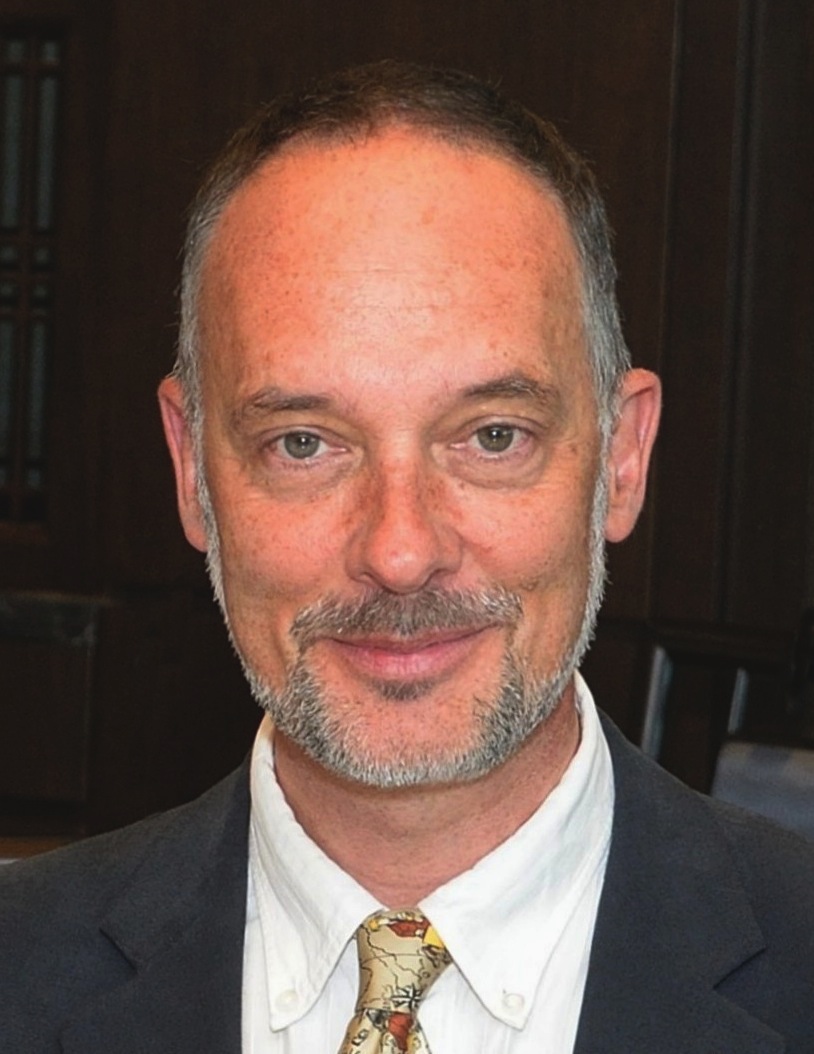 John Peacock合作论文数Institute for Astronomy, University of Edinburgh5Roberto Rampazzo合作论文数5
 Jack W. Sulentic合作论文数4
 Rob Ivison合作论文数European Southern Observatory;University of Edinburgh;Macquarie University;Dublin Institute for Advanced Studies4
 Simon Lilly合作论文数Department of Physics, ETH Zurich4JM RILEY合作论文数3
 Andy Lawrence合作论文数Institute for Astronomy, School of Physics and Astronomy, University of Edinburgh3
 Giuseppina (Pepi) Fabbiano合作论文数Smithsonian Astrophysical Observatory;Harvard-Smithsonian Center for Astrophysics3
 Cesare Chiosi合作论文数Dipartimento di Fisica e Astronomia, Università degli Studi di Padova3
 Martin Rees合作论文数Trinity College, University of Cambridge3
 Matteucci Maria Francesca合作论文数Department of Physics, Universita Degli Studi di Trieste3
 Daniela Calzetti合作论文数Department of Astronomy, College of Natural Sciences, University of Massachusetts Amherst3
 Stephen Serjeant合作论文数Centre for Astrophysics and Planetary Science;School of Physical Sciences;University of Kent;School of Physical Sciences, University of Kent3
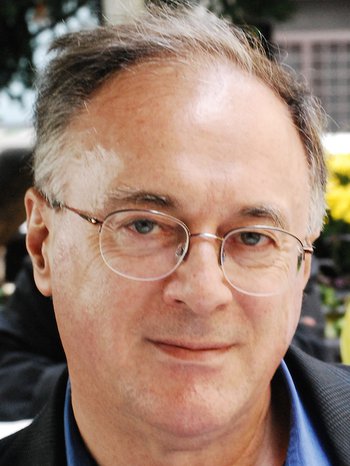 George Djorgovski合作论文数Center for Data Driven Discovery, California Institute of Technology;The Division of Physics, Mathematics and Astronomy, California Institute of Technology3
 Paola Marziani合作论文数Osservatorio Astronomico di Padova3
 James Dunlop合作论文数Institute for Astronomy, School of Physics and Astronomy, University of Edinburgh3
 Timothy J. Pearson合作论文数Department of Astronomy, California Institute of Technology3
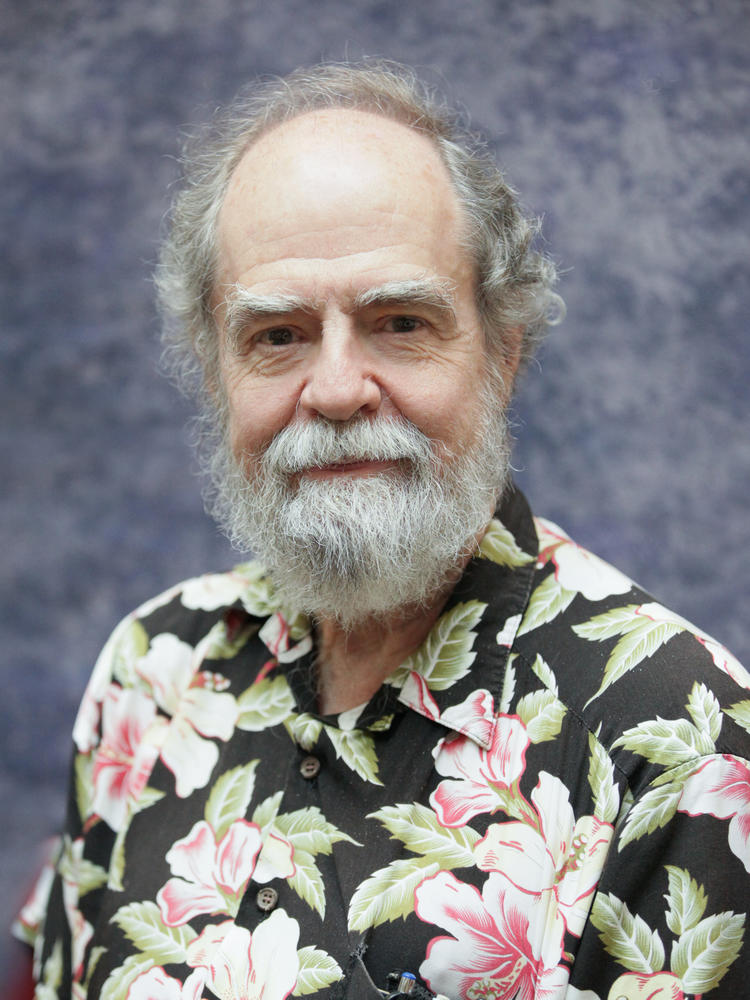 James Gunn合作论文数Department of Astrophysical Sciences, Princeton University3
 Andreas Efstathiou合作论文数Department of Computer Science and Engineering, School of Sciences, European University Cyprus3
 Francoise Combes合作论文数Collège de France3
 Michael Rowan-Robinson合作论文数Department of Physics, Faculty of Natural Sciences, Imperial College London;Space Laboratory, Imperial College London3G. V. Coyne合作论文数2Pa Wayman合作论文数2
 Alvio Renzini合作论文数National Institute of Astrophysics, Astronomical Observatory of Padova2RA LAING合作论文数2Pippa Goldschmidt合作论文数2Alex May合作论文数2Ja Westphal合作论文数2MAC Perryman合作论文数2JV WALL合作论文数2David Moss合作论文数2
 Luciana Bianchi合作论文数Department of Physics & Astronomy, Krieger School of Arts & Sciences, Johns Hopkins University2
 R. Brent Tully合作论文数Institute for Astronomy, University of Hawaiʻi2
 Robert Mann合作论文数Department of Physics and Astronomy, University of Waterloo2
 Wallace L. W. Sargent合作论文数California Institute of Technology2
 Pavel Kroupa合作论文数Argelander-Institut fur Astronomie, Universitat Bonn2
 David H. Hughes合作论文数Department of Astrophysics, Mexican National Institute of Astrophysics, Optics and Electronics2Seb Oliver合作论文数2Walter Kieran Gear合作论文数School of Physics and Astronomy;Cardiff University;School of Physics and Astronomy, Cardiff University2
 Riccardo Giovanelli合作论文数Department of Astronomy, College of Arts & Sciences, Cornell University2
 Jaan Einasto合作论文数Tartu Observatory2
 Debra Meloy Elmegreen合作论文数The International Astronomical Union2
 Bianca Maria Poggianti合作论文数Astronomical Observatory Padova, National Institute for Astrophysics2
 Hugh A Bruck合作论文数Department of Mechanical Engineering, A. James Clark School of Engineering, University of Maryland2




