Phenomenon: China hosts a large number of international medical students from low-income countries, and some fail examinations in the early stage of the Bachelor of Medicine and Bachelor of Surgery (MBBS) program. Little is known about how failing international medical students cope to recover their academic performance. It would be beneficial to investigate the coping strategies they use to help them recover their academic performance and progress. Approach: Semi-structured interviews were conducted with 21 international medical students at two universities in China from September 2020 to January 2021. These students had passed make-up exams or re-sits and progressed academically. A thematic analysis approach was used to identify major themes in the interview data. Findings: After failing initial exams or re-sits, students were found to adopt seven coping strategies to help them pass future examinations and recover their academic performance: (i) increased help-seeking behaviors, (ii) improved learning motivation and attitudes, (iii) improved learning strategies, (iv) improved exam preparation, (v) utilization of library resources, (vi) enhanced time management, and (vii) enhanced English language skills. Of the seven strategies, seeking help from friends, peers, seniors, and teachers was the strategy reported most frequently. Insights: The results of this study provide insights into the coping strategies that international undergraduate medical students adopt to recover from poor academic performance in Chinese universities. Host institutions should recognize the resilience and agency of such students to make positive changes. Furthermore, institutional efforts should be made to develop contextualized intervention plans that stimulate students' learning motivation and encourage them to adopt self-help strategies by incorporating useful resources (e.g., help from peers, seniors, and teachers). Enrollment should integrate specific English language proficiency criteria, and interviews and entrance exams should be conducted. For some failing students, it may be necessary to provide academic remediation.
China has become an attractive destination for international medical students, particularly those from developing countries in Asia and Africa. These students are known to face difficulties in adapting to Chinese medical universities and they tend to score poorly on subsequent examinations to enter the medical profession in their home or in a third country. To date, limited research concerning the factors that affect the academic performance of this group of students in China has been conducted. In particular, there have been very few comparisons between high and low achievers to identify the factors that high- and low-achieving international medical students in all years of study perceive as affecting their academic performance. A qualitative research approach was implemented at two medical universities. Semi-structured interviews were conducted with 18 high achievers and 22 low achievers in their second, third, fourth, fifth, sixth, and post-graduation years. Interviews were audio-recorded, transcribed, and coded using a thematic analysis approach.A few key overlapping factors were identified: social support, learning motivation and interest, exam preparation and strategies, time management, and coping. The high achievers manipulated these strategies successfully while the low achievers did not. The high achievers demonstrated efficient learning methods (efficient use of class time, good note-taking habits, preview and review strategies, expanded learning, self-study and group learning, deep learning, choosing an appropriate study location, and focusing on basics and concepts). They also achieved a good balance between studying and leisure. The low achievers mentioned learning challenges, health issues, English language barriers, and problems with online classes. This study allowed us to identify important factors that international medical students at Chinese institutions perceive to influence their performance. The findings contribute to the literature on the topic and provide a solid basis for practice and policy development.
It is well established that COVID-19 pandemic is associated with arousal of feelings of hopelessness and negativity in adolescents regarding future career development outcomes. However, the current literature has yet to clarify the roles teacher social support play in facilitating students' positive career development during the pandemic. This study investigated the effects of career-related teacher support (CRTS) on ameliorating students' feelings of hopelessness and increasing their career self-efficacy among 402 senior secondary students (Grades 10-12) in Hong Kong, China. Results from mediated moderation analyses showed that academic ability was only weakly related to career self-efficacy. Hopelessness was not a significant moderator concerning the link between academic ability and career self-efficacy when CRTS functioned as the mediator.
Background Academic success is extremely important for international medical students enrolled in Chinese universities, as it affects their performance in their licence exams and future work opportunities. However, insufficient research has been conducted on university academic staff’s awareness of teaching-related factors that affect their students’ academic success. Methods A purposive sampling approach was taken in the study to recruit academics teaching in medical universities in China. The selection of informants was based on the subject they taught and their gender, experience of teaching international medical students, educational background and career stage. Semi-structured interviews were conducted with academics (N = 36) between November 2020 and January 2021 at two medical universities in China. Each interview lasted between 30 and 70 minutes and was audiotaped, transcribed verbatim and thematically analysed. Results The teaching factors that academics perceived to have an important influence on the success of students were (i) pedagogy and content alignment; (ii) language barriers; (iii) resource management and the learning environment; and (iv) educator attributes and guidance. Conclusions University faculties and departments involved in teaching international medical students should ensure that their academic staff are supported in their ongoing professional development and provided with resources to enhance their teaching quality. The four factors (and their sub-factors) listed above should be prioritised in such staff training.
This paper draws on a comparative study of seven jurisdictions in the Asia-Pacific region to examine current challenges to progressing inclusive education for students with special educational needs (SEN) in mainstream schools. The study used a qualitative approach to collect data from each jurisdiction through a purposive sampling of knowledgeable, university-associated informants. Content analysis was used to identify and quantify specific challenges reported in the data. Subsequently, these items were coded as themes to form a matrix of challenges within and across jurisdictions. Findings revealed that challenges were broadly consistent with recent global trends and shared many commonalities, despite occurring in diverse societal, political and education systems. These challenges are: lack of adequate initial teacher education and ongoing professional development for practicing teachers; lack of resources and support to meet the needs of students with SEN; inconsistent policy guidelines and implementation action plans; restricted stakeholder engagement and collaboration across all levels of education; and limited local inclusion research to inform practice in schools. The findings underscore the need for government and institutional commitment and oversight to bridge the policy-to-practice gap, and an urgent need for local research to identify and disseminate successful approaches for including students with SEN throughout the region.
Computational thinking (CT) currently has been mainly explored using programming robots and conducted in K12 education. In early childhood education, arts have a significant place in children’s learning, expression and cognitive development. Specifically, creating pop-up storybooks is a child-friendly activity. Our study aimed to explore the combination of CT and art, and to develop talented children’s CT abilities through a multimodal literacies educational approach, which referred to using different skills (i.e., writing, drawing, making, and storytelling) in the art activity. A total of 12 talented children were selected to participate in a pop-up storybook production workshop using a convenience sampling method. We adopted an observation method to capture talented children’s CT behaviors, generating a total of 180 min of activity videos and collecting fieldnotes and the children’s worksheets and artworks for the data analysis. Based on a content analysis, we found that talented children enhanced their CT development in multiple modes and practiced seven CT skills. In conclusion, our study emphasizes the importance of art in children’s education and provides new insights for subsequent research on children’s CT education.
Background Academic success is extremely important for international medical students enrolled in Chinese universities, as it affects their performance in their licence exams and future work opportunities. However, insufficient research has been conducted on university academic staff’s awareness of teaching-related factors that affect their students’ academic success. Methods A purposive sampling approach was taken in the study to recruit academics teaching in medical universities in China. The selection of informants was based on the subject they taught and their gender, experience of teaching international medical students, educational background and career stage. Semi-structured interviews were conducted with academics (N = 36) between November 2020 and January 2021 at two medical universities in China. Each interview lasted between 30 and 70 minutes and was audiotaped, transcribed verbatim and thematically analysed. Results The teaching factors that academics perceived to have an important influence on the success of students were (i) pedagogy and content alignment; (ii) language barriers; (iii) resource management and the learning environment; and (iv) educator attributes and guidance. Conclusions University faculties and departments involved in teaching international medical students should ensure that their academic staff are supported in their ongoing professional development and provided with resources to enhance their teaching quality. The four factors (and their sub-factors) listed above should be prioritised in such staff training.
This small-scale exploratory qualitative study examined the career decision-making process of six talented engineering university graduates in Hong Kong. The aim was to investigate major influential factors and barriers that impact their career aspirations and their persistence in remaining in that career. Semi-structured interviews were conducted with each graduate to provide data that could be analyzed. The main focus was on the significance of social and cognitive variables, self-efficacy, interests and outcome expectations for the graduates' motivation and career decision-making process. The findings suggest that primary motivating factors for participants' career aspirations and career persistence strongly aligned with constructs from Social Cognitive Career Theory and Job Embeddedness Theory. Career interests were motivated by self-efficacy, outcome expectations, and interests, while "job embeddedness" promoted career persistence through fit and link to organizations and industry. Based on participants' responses, the study produced an insider's perspective on the career decision-making process of talented young engineers in Hong Kong.
The role of storybooks in offering an educational resource that promotes young children's cognitive and creative development has been recognised in the previous literature. The small-scale exploratory study reported here investigated children's senses of humour through pop-up storybook production. A workshop in Hong Kong, entitled Storybook Production: Your Own Pop-Up Storybook, was conducted with eight participants (girls, aged 7-9 years) as part of a summer programme in the Centre for Advancement in Inclusive and Special Education at the University of Hong Kong. During the workshop, the children were taught two core aspects of creative expression: narrative techniques and the pop-up effects involved in creating a storybook. The children created their storylines, infusing their senses of humour into scenes on storyboards and illustrations in pop-up books. They introduced humour in the form of the jokes and funny behaviours of their characters. Their final products provided evidence of talented young children's expression and understanding of humour.
The ongoing COVID19 pandemic is having detrimental effects on the mental and emotional well-being of many adults and children. It is relevant therefore to explore the combination of personal strengths and attributes that can help an individual develop resilience to such stress. Little is known about how psychological strength assets such as social connectedness, grit, hope, life meaning, and life satisfaction are inter-related, and if certain factors play a central role. This study involved a sample of 1,405 school-aged children in Hong Kong (50% female) from seven schools that participated in an online survey of psychological strengths. Data were analyzed by constructing a psychological network that found strength factors are interconnected, and that 'school connectedness' and 'agency thinking' are central to the network. The information gained can be of value in any schools that are planning to provide strength-based interventions to help students maintain their psychological well-being during and after the COVID-19 pandemic.
Existing measurements tend to focus on the measurement of how cognitive aspects of life skills development can influence students' school-to-work transition. Less attention has been paid to the noncognitive aspects of it. Specifically, "career planning" has often been ignored as a contemporary life skill. The purpose of this study was to validate the Life Skills Development Self-Efficacy Inventory (LSD). Data were collected from 2390 students from eight secondary schools in Hong Kong, China. Results found that the links between LSD, career self-efficacy, and school connectedness ranged from moderate to strong. The scale demonstrated best fit with a correlation model.
Possession of hope and meaning in life is critical for mental health, especially in times of adversity. In previous research, the most frequently used measure to assess hope has been the Dispositional Hope Scale. However, there has been debate over some aspects of the scale's factor structure. Similarly, meaning in life has been assessed mainly using the Meaning in Life Questionnaire - but as yet the short form of this measure has not been validated for use in a Chinese context. The current study therefore examined the factor structures of Dispositional Hope Scale (DHS) and Meaning in Life Questionnaire- Short Form (MLQ-SF) in two samples of Chinese students in Hong Kong - 540 regular students and 389 gifted students. The students completed a questionnaire that collected basic information on demographics and the DHS and MLQ-SF. Results of confirmatory factor analyses suggested that a 2-factor model provided an adequate fit to both the DHS and MLQ-SF. Both scales revealed scalar measurement invariance across regular and gifted students. Gifted students showed significantly higher latent means than regular students in agency, pathway, and presence of meaning in life (Cohen d = 0.16-0.40). The DHS factors were significantly and positively correlated with MLQ-SF factors (r = 0.30-0.58). Theoretical and practical implications are discussed.
The COVID-19 global pandemic continues, and in Hong Kong numerous measures have been put in place to contain the spread of the coronavirus. One of the many facets of life that is being affected is education, with many face-to-face classes suspended and students having to go online for lessons. The virus continues to be active in the city, so our usual way of assisting secondary school students' character-building through visitation to elderly homes is restricted. Now we can only provide such service-learning in online mode. This paper explores how an online project helped adolescents in a boys' secondary school apply and adapt principles taught previously in their course dealing with positive character strengths such as kindness, love, social intelligence, gratitude, teamwork, and perseverance.
School is an important setting for adolescents to develop connectedness to peers, teachers and school, and this connection has the potential to play a protective role in promoting and enhancing their psychological well-being. The meta-analytic study described here used a random-effect model to examine previous studies that explored school connectedness in relation to psychological well-being in adolescents. Subgroup analyses and multiple meta-regression analyses were conducted to explore the potential moderators of any relationship between school connectedness and psychological well-being. The variables were gender, age, culture, and four dimensions of school connectedness. Results support a view that in this adolescent age group stronger school connectedness is associated with higher levels of psychological well-being. Gender was not found to be a moderator of the association, but moderation was evident from age and from a cultural tendency towards individualism or collectivism. Subgroup analyses found different effect sizes for the association between each dimension of school connectedness and psychological well-being. Findings strengthen the view that secondary schools should make effort to foster and encourage adolescents’ school connectedness. Most importantly, findings emphasize the value of the four key dimensions of the connectedness construct and offer important implications for future research and practice.
centres, community mental health services
Meaning in Life Children Questionnaire (MIL-CQ) was developed with reference to Frankl’s meaning triangle that has dimensions of Attitude, Creativity, and Experience. The current study translated MIL-CQ into Chinese (MIL-CQ-C), and evaluated its psychometric properties in a sample of 264 upper primary and secondary school gifted students in Hong Kong. Dimensionality of MIL-CQ-C was investigated via exploratory factor analysis using the robust weighted least square estimator. Measurement invariance across gender was investigated. Convergent validity was evaluated by testing MIL-CQ-C as the mediator of social connectedness in predicting presence of meaning in life and search for meaning in life. After removal of three items, exploratory factor analysis supported the original 3-factor structure with substantial factor loadings (λ = 0.53–0.91) and good reliability (Ω = 0.85–0.92). The MIL-CQ-C showed scalar measurement invariance across gender. The MIL-CQ-C was positively correlated with social connectedness, presence of meaning in life, and search for meaning in life. The MIL-CQ-C mediated the relationship between social connectedness and presence of meaning in life and search for meaning in life. The findings lend support to a valid 3-factor structure for MIL-CQ-C when completed by gifted learners in Hong Kong. (192 words)
Background The number of international students who choose China as their destination for quality medical education is rising, particularly those from developing countries, but little is known about their adaptation and educational experiences at Chinese universities. This study explored the factors that these students perceived to have influenced their academic success. Methods Semi-structured interviews were conducted with international students ( N = 40) from developing countries from September 2020 to January 2021. Participants were graduates or in their second, third, fourth, fifth, or sixth academic year in two university medical schools. Interviews were audio-recorded, transcribed, and analyzed using a thematic analysis approach. Results The participants chose China to study medicine based on cost, teaching resources, quality of medical education, recommendation, and safety factors. They considered an increase in medical knowledge, clinical skills and communication skills as an indicator of academic success. Positive factors affecting academic success were the support system (family, friends, seniors) and campus resources (library, laboratories, extra-curricular activities, scholarship). Negative factors were (i) issues affecting learning (English language barrier), adjusting to the medical education system in China, learning difficulties, failing exams, internship difficulties, problems with online learning during the pandemic, (ii) sociocultural issues (lacking knowledge of the Chinese language, challenges in daily life, perceived discrimination, interpersonal relationships), (iii) wellbeing issues (physical and mental health issues), and (iv) other challenges (climate, food, finance, scholarship). The influence of teachers, administrators and classmates was perceived as both positive and negative. Conclusions Factors affecting the academic success of international medical students at Chinese universities are multi-faceted. It is the collective responsibility of the host society, universities, teachers, administrators, classmates, families, and students themselves to address these factors in order to support and help students achieve academic success. Findings in our study support recommendations to improve teachers’ English language skills and pedagogy and to invest in administrators’ professional development. They also suggest that greater awareness of students’ sociocultural and mental challenges and optimizing the positive influence of classmates could strengthen student support and better address student academic difficulties. The English proficiency and prior academic performance of international students should be considered during recruitment. Given the rapid growth in international MBBS programs in China, further research on the experiences of international students in China’s medical programs is needed.
Passion and perseverance for long-term goals (often referred to as grit) has been found to be associated with well-being in typically developing students and adults. However, previous studies primarily relied on a two-factor model of grit, underpinned by perseverance of effort and consistency of interests. This model has received considerable theoretical and methodological criticisms. The research examined the association of an alternative model of grit underpinned by perseverance of effort and adaptability to situations as key dimensions, with students’ life satisfaction in Chinese gifted adolescents in Hong Kong. Structural equation modeling via maximum likelihood estimation approach demonstrated that perseverance was linked to higher levels of life satisfaction. Adaptability was indirectly linked to increased life satisfaction via the intermediate variable – career development self-efficacy. Results indicate that perceived confidence in career-related activities might serve as a mechanism through which grit may be linked to higher well-being in gifted students.
 Gaowei Chen (陳高偉)合作论文数Faculty of Education, The University of Hong Kong25
 Jiahong Zhang合作论文数Sun Yat Sen University16
 Patrick S. Y. Lau合作论文数16Norman C. Gysbers合作论文数14
 Jesus Alfonso D. Datu合作论文数la salle university12
 Peter Shea合作论文数Albany State University of New York12Y Barry Chung合作论文数11Chan MC Raymond合作论文数Hong Kong Baptist University11
 Queenie A. Y. Lee合作论文数11
 Ricci Wai-tsz Fong合作论文数Faculty of Education, The University of Hong Kong10serene chan合作论文数university of hong kong9Lawrence P W Wong合作论文数7Ryder T. H. Chan合作论文数7ShuiWai Wong合作论文数7Qinxu Jiang合作论文数6Lue Fang合作论文数Asia Res Inst, Natl Univ Singapore6
 K. Y. Florence Wu (胡嘉如)合作论文数Faculty of Education, The University of Hong Kong5
 Patcy P.S. Yeung (楊佩詩)合作论文数Faculty of Education, The University of Hong Kong5
 Hugo Duarte Alves Horta合作论文数Faculty of Education, The University of Hong Kong5
 Todd Kashdan合作论文数Department of Psychology, College of Humanities and Social Sciences, George Mason University5Eric Fung合作论文数4jjy fung合作论文数4Joe Y. C. Tsui合作论文数4
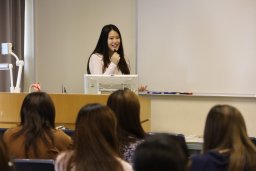 Suzannie Leung合作论文数Dept Curriculum & Instruct, Chinese Univ Hong Kong4
 Daniel Blalock合作论文数Behavioral Medicine & Neurosciences Division, Department of Psychiatry & Behavioral Sciences, School of Medicine, Duke University4Leili Jin (金蕾莅)合作论文数4Peter Westwood合作论文数4Rachel C. F. Sun合作论文数4
 Wing Chung Patrick Lau合作论文数香港浸會大學運動心理學4
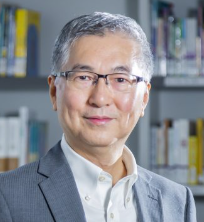 Allan H. K. Yuen合作论文数Yew Chung College of Early Childhood Education4psy lau合作论文数3Josephine K Y Yau合作论文数3Sandra Cheng合作论文数3julia b richberg合作论文数3Elvo K. L. Sou合作论文数3s liu合作论文数3
 Kenneth T Wang合作论文数3Kevin Young合作论文数3
 Tracy Hui合作论文数Department of Management, Birmingham City Business School3
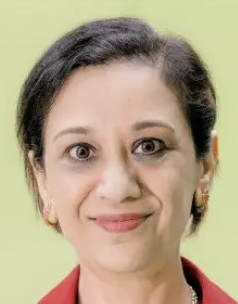 Nirmala Rao (劉麗薇)合作论文数Faculty of Education, The University of Hong Kong3Gunter Wong合作论文数3Man-Ping Lam合作论文数3
 Patrick Mcknight合作论文数3Eadaoin K. P. Hui合作论文数3Reid Trotter合作论文数2
 Kim Kwok合作论文数2Flora Yau合作论文数2
 Wing Yee Kimburley Choi (蔡穎儀)合作论文数Centre for Cultural Research and Development, Department of Cultural Studies, Lingnan University2Stephen Hay合作论文数2




