Zero-shot generalization in contextual reinforcement learning remains a core challenge, particularly when the context is latent and must be inferred from data. A canonical failure mode arises when latent context discontinuously changes how actions affect the environment, requiring incompatible control responses across contexts. We propose DMA*-SH, a framework where a single hypernetwork, trained solely via dynamics prediction, generates a small set of adapter weights shared across the dynamics model, policy, and action-value function. This shared modulation imparts an inductive bias matched to discontinuous context-to-dynamics shifts, while input/output normalization and random input masking stabilize context inference, promoting directionally concentrated representations. We provide theoretical support via expressivity separation results for hypernetwork modulation, and a variance decomposition with policy-gradient variance bounds that formalize how within-mode compression improves learning under non-overlapping contexts. For evaluation, we introduce the Actuator Inversion Benchmark (AIB), a suite of environments designed to isolate challenging context-to-dynamics interactions, including actuator inversion, actuator permutations, and weakly non-overlapping continuous dynamics. On AIB's held-out tasks, DMA*-SH achieves zero-shot generalization, outperforming domain randomization by 58.1
One problem with researching cognitive modeling and reinforcement learning (RL) is that researchers spend too much time on setting up an appropriate computational framework for their experiments. Many open source implementations of current RL algorithms exist, but there is a lack of a modular suite of tools combining different robotic simulators and platforms, data visualization, hyperparameter optimization, and baseline experiments. To address this problem, we present Scilab-RL, a software framework for efficient research in cognitive modeling and reinforcement learning for robotic agents. The framework focuses on goal-conditioned reinforcement learning using Stable Baselines 3, CleanRL and the Gymnasium interface. It enables native possibilities for experiment visualizations and hyperparameter optimization. We describe how these features enable researchers to conduct experiments with minimal time effort, thus maximizing research output.
Real-world reinforcement learning demands adaptation to unseen environmental conditions without costly retraining. Contextual Markov Decision Processes (cMDP) model this challenge, but existing methods often require explicit context variables (e.g., friction, gravity), limiting their use when contexts are latent or hard to measure. We introduce Dynamics-Aligned Latent Imagination (DALI), a framework integrated within the Dreamer architecture that infers latent context representations from agent-environment interactions. By training a self-supervised encoder to predict forward dynamics, DALI generates actionable representations conditioning the world model and policy, bridging perception and control. We theoretically prove this encoder is essential for efficient context inference and robust generalization. DALI's latent space enables counterfactual consistency: Perturbing a gravity-encoding dimension alters imagined rollouts in physically plausible ways. On challenging cMDP benchmarks, DALI achieves significant gains over context-unaware baselines, often surpassing context-aware baselines in extrapolation tasks, enabling zero-shot generalization to unseen contextual variations.
Infants actively explore the relationship between actions and their associated effects (i.e., sensorimotor contingencies) before full-blown agency emerges. While there is experimental evidence for this development during the first year of life, the interplay of the associated cognitive processes is not yet well understood. This paper uses computational modeling to examine how exploratory behavior develops, based on one of the earliest experiments showing such behavior. In a seminal study of Rochat & Striano (1999), 2-month-old infants, contrary to newborns, showed differential behavioral patterns towards mouth-contingent sounds versus random sounds. This is interpreted as early evidence for action-effect exploration. We consider seven potential developmental factors as possibly explaining the emergence of active exploratory behavior in 2-month-olds: i) outcome prediction, ii) novelty preference, iii) fatigue, iv) strength, v) memory, vi) sensory noise, and vii) motor noise. These factors were implemented in both a supervised-learning model and a reinforcement learning model. Results from both models indicate that increased memory capacity with age is a key developmental factor underlying active exploration and, possibly, agency. Our code is published at: https://github.com/SpisakJ/Computational-models-of-the-emergence-of-self-exploration-in-2-month-old-infants
Robotic platforms that can efficiently collaborate with humans in physical tasks constitute a major goal in robotics. However, many existing robotic platforms are either designed for social interaction or industrial object manipulation tasks. The design of collaborative robots seldom emphasizes both their social interaction and physical collaboration abilities. To bridge this gap, we present the novel semi-humanoid NICOL, the Neuro-Inspired COLlaborator. NICOL is a large, newly designed, scaled-up version of its well-evaluated predecessor, the Neuro-Inspired COmpanion (NICO). NICOL adopts NICO’s head and facial expression display and extends its manipulation abilities in terms of precision, object size, and workspace size. Our contribution in this paper is twofold—firstly, we introduce the design concept for NICOL, and secondly, we provide an evaluation of NICOL’s manipulation abilities by presenting a novel extension for an end-to-end hybrid neuro-genetic visuomotor learning approach adapted to NICOL’s more complex kinematics. We show that the approach outperforms the state-of-the-art Inverse Kinematics (IK) solvers KDL, TRACK-IK and BIO-IK. Overall, this article presents for the first time the humanoid robot NICOL, and contributes to the integration of social robotics and neural visuomotor learning for humanoid robots.
Human-to-human conversation is not just talking and listening. It is an incremental process where participants continually establish a common understanding to rule out misunderstandings. Current language understanding methods for intelligent robots do not consider this. There exist numerous approaches considering non-understandings, but they ignore the incremental process of resolving misunderstandings. In this article, we present a first formalization and experimental validation of incremental action-repair for robotic instruction-following based on reinforcement learning. To evaluate our approach, we propose a collection of benchmark environments for action correction in language-conditioned reinforcement learning, utilizing a synthetic instructor to generate language goals and their corresponding corrections. We show that a reinforcement learning agent can successfully learn to understand incremental corrections of misunderstood instructions.
We present a follow-up study on our unified visuomotor neural model for the robotic tasks of identifying, localizing, and grasping a target object in a scene with multiple objects. Our Retinanet-based model enables end-to-end training of visuomotor abilities in a biologically inspired developmental approach. In our initial implementation, a neural model was able to grasp selected objects from a planar surface. We embodied the model on the NICO humanoid robot. In this follow-up study, we expand the task and the model to reaching for objects in a 3-D space with a novel data set based on augmented reality and a simulation environment. We evaluate the influence of training with auxiliary tasks, i.e., if learning of the primary visuomotor task is supported by learning to classify and locate different objects. We show that the proposed visuomotor model can learn to reach for objects in a 3-D space. We analyze the results for biologically plausible biases based on object locations or properties. We show that the primary visuomotor task can be successfully trained simultaneously with one of the two auxiliary tasks. This is enabled by a complex neurocognitive model with shared and task-specific components, similar to models found in biological systems.
This paper focuses on robotic reinforcement learning with sparse rewards for natural language goal representations. An open problem is the sample-inefficiency that stems from the compositionality of natural language, and from the grounding of language in sensory data and actions. We address these issues with three contributions. We first present a mechanism for hindsight instruction replay utilizing expert feedback. Second, we propose a seq2seq model to generate linguistic hindsight instructions. Finally, we present a novel class of language-focused learning tasks. We show that hindsight instructions improve the learning performance, as expected. In addition, we also provide an unexpected result: We show that the learning performance of our agent can be improved by one third if, in a sense, the agent learns to talk to itself in a self-supervised manner. We achieve this by learning to generate linguistic instructions that would have been appropriate as a natural language goal for an originally unintended behavior. Our results indicate that the performance gain increases with the task-complexity.
According to cognitive psychology and related disciplines, the development of complex problem-solving behaviour in biological agents depends on hierarchical cognitive mechanisms. Hierarchical reinforcement learning is a promising computational approach that may eventually yield comparable problem-solving behaviour in artificial agents and robots. However, so far, the problem-solving abilities of many human and non-human animals are clearly superior to those of artificial systems. Here we propose steps to integrate biologically inspired hierarchical mechanisms to enable advanced problem-solving skills in artificial agents. We first review the literature in cognitive psychology to highlight the importance of compositional abstraction and predictive processing. Then we relate the gained insights with contemporary hierarchical reinforcement learning methods. Interestingly, our results suggest that all identified cognitive mechanisms have been implemented individually in isolated computational architectures, raising the question of why there exists no single unifying architecture that integrates them. As our final contribution, we address this question by providing an integrative perspective on the computational challenges to develop such a unifying architecture. We expect our results to guide the development of more sophisticated cognitively inspired hierarchical machine learning architectures. Although artificial reinforcement learning agents do well when rules are rigid, such as games, they fare poorly in real-world scenarios where small changes in the environment or the required actions can impair performance. The authors provide an overview of the cognitive foundations of hierarchical problem-solving, and propose steps to integrate biologically inspired hierarchical mechanisms to enable problem-solving skills in artificial agents.
Human language is inherently embodied and grounded in sensorimotor representations of the self and the world around it. This suggests that the body schema and ideomotor action-effect associations play an important role in language understanding, language generation, and verbal/physical interaction with others. There are computational models that focus purely on non-verbal interaction between humans and robots, and there are computational models for dialog systems that focus only on verbal interaction. However, there is a lack of research that integrates these approaches. We hypothesize that the development of computational models of the self is very appropriate for considering joint verbal and physical interaction. Therefore, they provide the substantial potential to foster the psychological and cognitive understanding of language grounding, and they have significant potential to improve human-robot interaction methods and applications. This review is a first step toward developing models of the self that integrate verbal and non-verbal communication. To this end, we first analyze the relevant findings and mechanisms for language grounding in the psychological and cognitive literature on ideomotor theory. Second, we identify the existing computational methods that implement physical decision-making and verbal interaction. As a result, we outline how the current computational methods can be used to create advanced computational interaction models that integrate language grounding with body schemas and self-representations.
Robots are usually equipped with many different sensors that need to be integrated. While most research is focused on the integration of vision with other senses, we successfully integrate tactile and auditory sensor data from a complex robotic system. Herein, we train and evaluate a neural network for the classification of the content of eight optically identical medicine containers. To investigate the relevance of the tactile modality in classification under realistic conditions, we apply different noise levels to the audio data. Our results show significantly higher robustness to acoustic noise with the combined multimodal network than with the unimodal audio based counterpart.
This paper outlines a perspective on the future of AI, discussing directions for machines models of human-like intelligence. We explain how developmental and evolutionary theories of human cognition should further inform artificial intelligence. We emphasize the role of ecological niches in sculpting intelligent behavior, and in particular that human intelligence was fundamentally shaped to adapt to a constantly changing socio-cultural environment. We argue that a major limit of current work in AI is that it is missing this perspective, both theoretically and experimentally. Finally, we discuss the promising approach of developmental artificial intelligence, modeling infant development through multi-scale interaction between intrinsically motivated learning, embodiment and a fastly changing socio-cultural environment. This paper takes the form of an interview of Pierre-Yves Oudeyer by Mandred Eppe, organized within the context of a KI - K{ü}nstliche Intelligenz special issue in developmental robotics.
In this paper, we investigate the roles that social robots can take in physical exercise with human partners. In related work, robots or virtual intelligent agents take the role of a coach or instructor whereas in other approaches they are used as motivational aids. These are two “paradigms”, so to speak, within the small but growing area of robots for social exercise. We designed an online questionnaire to test whether the preferred role in which people want to see robots would be the companion or the coach. The questionnaire asks people to imagine working out with a robot with the help of three utilized questionnaires: (1) CART-Q which is used for judging coach-athlete relationships, (2) the mind perception questionnaire and (3) the System Usability Scale (SUS). We present the methodology, some preliminary results as well as our intended future work on personal robots for coaching.
Safe human-robot interactions require robots to be able to learn how to behave appropriately in spaces populated by people and thus to cope with the challenges posed by our dynamic and unstructured environment, rather than being provided a rigid set of rules for operations. In humans, these capabilities are thought to be related to our ability to perceive our body in space, sensing the location of our limbs during movement, being aware of other objects and agents, and controlling our body parts to interact with them intentionally. Toward the next generation of robots with bio-inspired capacities, in this paper, we first review the developmental processes of underlying mechanisms of these abilities: The sensory representations of body schema, peripersonal space, and the active self in humans. Second, we provide a survey of robotics models of these sensory representations and robotics models of the self; and we compare these models with the human counterparts. Finally, we analyze what is missing from these robotics models and propose a theoretical computational framework, which aims to allow the emergence of the sense of self in artificial agents by developing sensory representations through self-exploration.
Cognitive science suggests that the self-representation is critical for learning and problem-solving. However, there is a lack of computational methods that relate this claim to cognitively plausible robots and reinforcement learning. In this paper, we bridge this gap by developing a model that learns bidirectional action-effect associations to encode the representations of body schema and the peripersonal space from multisensory information, which is named multimodal BidAL. Through three different robotic experiments, we demonstrate that this approach significantly stabilizes the learning-based problem-solving under noisy conditions and that it improves transfer learning of robotic manipulation skills.
Cognitive Psychology and related disciplines have identified several critical mechanisms that enable intelligent biological agents to learn to solve complex problems. There exists pressing evidence that the cognitive mechanisms that enable problem-solving skills in these species build on hierarchical mental representations. Among the most promising computational approaches to provide comparable learning-based problem-solving abilities for artificial agents and robots is hierarchical reinforcement learning. However, so far the existing computational approaches have not been able to equip artificial agents with problem-solving abilities that are comparable to intelligent animals, including human and non-human primates, crows, or octopuses. Here, we first survey the literature in Cognitive Psychology, and related disciplines, and find that many important mental mechanisms involve compositional abstraction, curiosity, and forward models. We then relate these insights with contemporary hierarchical reinforcement learning methods, and identify the key machine intelligence approaches that realise these mechanisms. As our main result, we show that all important cognitive mechanisms have been implemented independently in isolated computational architectures, and there is simply a lack of approaches that integrate them appropriately. We expect our results to guide the development of more sophisticated cognitively inspired hierarchical methods, so that future artificial agents achieve a problem-solving performance on the level of intelligent animals.
Hierarchical abstraction and curiosity-driven exploration are two common paradigms in current reinforcement learning approaches to break down difficult problems into a sequence of simpler ones and to overcome reward sparsity. However, there is a lack of approaches that combine these paradigms, and it is currently unknown whether curiosity also helps to perform the hierarchical abstraction. As a novelty and scientific contribution, we tackle this issue and develop a method that combines hierarchical reinforcement learning with curiosity. Herein, we extend a contemporary hierarchical actor-critic approach with a forward model to develop a hierarchical notion of curiosity. We demonstrate in several continuous-space environments that curiosity can more than double the learning performance and success rates for most of the investigated benchmarking problems. We also provide our source code (https://github.com/knowledgetechnologyuhh/goal_conditioned_RL_baselines) and a supplementary video (https://www2.informatik.uni-hamburg.de/wtm/videos/chac_icann_roeder_2020.mp4).
Reinforcement learning is a promising method to accomplish robotic control tasks. The task of playing musical instruments is, however, largely unexplored because it involves the challenge of achieving sequential goals - melodies - that have a temporal dimension. In this paper, we address robotic musicianship by introducing a temporal extension to goal-conditioned reinforcement learning: Time-dependent goals. We demonstrate that these can be used to train a robotic musician to play the theremin instrument. We train the robotic agent in simulation and transfer the acquired policy to a real-world robotic thereminist. Supplemental video: this https URL
 Stefan Wermter合作论文数Knowledge Technology Research Group, Department of Informatics, Universitat Hamburg25
 Matthias Kerzel合作论文数10
 Phuong D. H. Nguyen合作论文数Department of Obstetrics and Gynecology, Santa Clara Valley Medical Center8
 Marco Schorlemmer合作论文数Institut d’Investigacio en Intel·ligencia Artificial, IIIA-CSIC ,Campus de la Universitat Autonoma de Barcelona8
 Frank Röder合作论文数Dept Neurol, Univ Med Ctr Hamburg Eppendorf7
 Enric Plaza Cervera合作论文数Learning Systems Department, Institut d’Investigacio en Intel·ligencia Artificial, Consell Superior d'Investigacions Cientifiques7
 Oliver Kutz合作论文数Research Centre for Knowledge-based Artificial Intelligence, Free University of Bozen-Bolzano;Faculty of Engineering, Free University of Bozen-Bolzano7
 Mehul Bhatt合作论文数School of Science and Technology, Orebro University7
 Rafael Peñaloza Nyssen合作论文数Department of Computer Science, Systems, and Communications, University of Milano-Bicocca;Information and Knowledge Representation, Retrieval and Reasoning Laboratory, University of Milano-Bicocca5
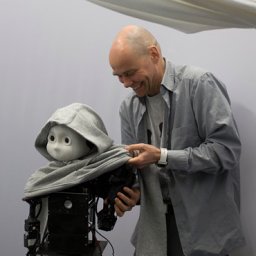 Erik Strahl合作论文数Knowledge Technology University of Hamburg4
 Frank Dylla合作论文数Encoway GmbH4
 Fares Abawi合作论文数Department of Informatics, University of Hamburg3
 Sean Trott合作论文数Cognitive Science, University of California3
 Tayfun Alpay合作论文数University of Hamburg3
 Ewen Maclean合作论文数3
 Jerome A. Feldman合作论文数Department of Electrical Engineering and Computer Sciences, University of California, Berkeley3
 Sascha Sebastian Griffiths合作论文数Technische Universität München3Vivek Raghuram合作论文数2
 Christian Gumbsch合作论文数Department of Computer Science, Faculty of Science, Eberhard Karls Universität Tübingen;Max Planck Institute for Intelligent Systems2
 German I. Parisi合作论文数IBM Watsonx;IBM Data & AI;ContinualAI2
 Kai-Uwe Kühnberger合作论文数Institute of Cognitive Science, University of Osnabrück2
 Martin Butz合作论文数Department of Computer Science, Faculty of Science, Eberhard Karls Universitat Tubingen;Departments of psychology, Faculty of Science, Eberhard Karls Universitat Tubingen2Adam Janin合作论文数International Computer Science Institute2
 Pablo Barros合作论文数Sistemas de Informação, Vocal Lab2Mihai Codescu合作论文数2Pradeep Kr. Banerjee合作论文数1Jan Benad合作论文数1Jan-Gerrit Habekost合作论文数1J Suchan合作论文数1
 Michael Görner合作论文数Department of Informatics, Faculty of Mathematics, Informatics and Natural Science, Universität Hamburg1
 Niklas Fiedler合作论文数1
 Nicolas Frick合作论文数1Josua Spisak合作论文数1
 Ozan Özdemir合作论文数1
 Yasmin Kim Georgie合作论文数Denartment of Comnuter Science, Humboldt-Universität1
 Yannick Jonetzko合作论文数Univ Hamburg, Dept Informat, Grp Tech Aspects Multimodal Syst TAMS, Hamburg, Germany1Ahmed Marzouk合作论文数1
 Alexander Sutherland合作论文数Dept Informat, Univ Hamburg1
 Hwei Geok Ng合作论文数1
 Stefan Heinrich合作论文数University of Hamburg1
 Philipp Allgeuer合作论文数Autonomous Intelligent Syst AIS Grp, Univ Bonn1
 Sven Magg合作论文数Hamburger Informatik Technologie-Center E.V.;Department of Informatics, Faculty of Mathematics, Informatics and Natural Sciences, University of Hamburg1
 Roberto Confalonieri合作论文数Department of Environmental Science and Policy, Università degli Studi di Milano1
 Verschoor Stephan合作论文数Institute of Psychological Research, Leiden University Leiden1
 Yukie Nagai合作论文数Research Institute for Cognition and Robotics;Bielefeld University;Research Institute for Cognition and Robotics, Bielefeld University1
 Xun Liu (刘勋)合作论文数Institute of Psychology, Chinese Academy of Sciences1
 Jianwei Zhang (张建伟)合作论文数Shenyang University of Chemical Technology1




