On average in the United States (US), low-income communities and communities of color face disproportionate burdens of air pollution and associated health impacts. Much of the effort to reduce these disparities will need to occur at the state level, through the targeting of specific emission sources and exposures. We present the first analysis of exposure disparities in the US that systematically investigates temporal trends, disaggregated by economic sector and state. Our approach combines a recently released time-series (2002 to 2019) emission inventory (EQUATES) with a computationally efficient air pollution model (InMAP Source-Receptor Matrix) to predict annual average exposure to ambient PM2.5 in each census tract in the contiguous US, disaggregated by emission sector. We find that, in general, absolute disparities have decreased, but relative disparities remain largely unchanged. This pattern holds for some sectors (e.g., transportation and electricity) but not others (e.g., disparities are largely unchanged for agriculture emissions and are generally increasing for residential and cooking emissions). Some state-sector combinations exhibit distinct patterns (e.g., most-recent disparities in New York are dominated by cooking and in Florida by construction). Of all sectors, industrial emissions contribute the largest exposures and the greatest exposure disparities. Agriculture and residential energy use are also large contributors to most-recent disparities, underscoring that inequities persist in sectors historically subject to less regulatory focus. Overall, our findings reveal how disparities have changed during 2002 to 2019 for each sector-state combination and elucidate which sectors each state should focus on to address recent disparities.
ABSTRACT: The rightward drift of Latinos—especially Latino males—in the 2024 presi-dential election shocked the political establishment. According to NBC News exit polls, 54 percent of Latino men and 39 percent of Latina women voted for Donald trump, enough to toss a bomb into the dreams of a come-from-behind Democratic victory. It was bewildering to many: wasn't trump a xenophobe who delighted in separating families, disparaging diversity, and cutting social spending? But it should not have been a surprise.
Community-engaged research has been pivotal in strengthening the impact of research efforts in policymaking by centering the voices of impacted communities to address environmental issues at the local level. CER at a statewide level presents opportunities to elevate local environmental justice issues to scale, but there are issues with how to do this and stay close to diverse local voices that are so much a part of community-engaged research methods. This article discusses the key components and tensions of scaling community-engaged research to a statewide level, using a 2024 equity assessment of the California Climate Investments jointly conducted by the USC Equity Research Institute and The Greenlining Institute as a case study. We posit that engaging in state-level CER can be challenging but equips researchers and local environmental justice leaders to both inform state-level policy recommendations and build state-level power. Below, we detail our experience of soliciting input from local community stakeholders and document how that led to recommendations around new policy, and more profoundly, about the need to build community power. We conclude with lessons learned and recommendations for future efforts to conduct larger-scale community-engaged research for environmental justice.
Black immigrants represent a growing share of the immigrant population in the United States and may face unique barriers to health insurance coverage. Using microdata from the 2017-21 American Community Survey five-year estimates, supplemented by an imputation of documentation status, we compared Black immigrants with their US-born Black and US-born and immigrant White, Latino, and Asian American and Pacific Islander (AAPI) counterparts. We found that Black immigrants had higher uninsurance rates than almost every other group except non-Black Latino immigrants. After covariates were controlled for in multivariable regression models, Black immigrants had 9 percent higher odds of being uninsured when compared with US-born White people. There were no significant differences in adjusted insurance rates between US-born White and Black people. Non-Black Latinos had notably high odds of being uninsured, with US-born Latinos experiencing a 31 percent higher likelihood of lacking coverage and Latino immigrants reporting more than double those odds. US-born people and AAPI immigrants reported significantly lower odds of being uninsured. We offer suggestions to community organizations and program planners to improve health insurance coverage among Black immigrants.
A recent article by Danae Hernandez-Cortes and Kyle Meng suggests that the cap-and-trade program in California led to improvements in the degree of environmental inequity in the state, a result that was taken up with some enthusiasm by proponents of carbon pricing. We suggest that their approach is not designed to capture the variation at the heart of the equity debate and show that the results these authors offer may be problematic because of the potential misidentification of which facilities were actually subject to the cap.
This JAMA Insights in the Climate Change and Health series discusses the increase in extreme weather events caused by climate change and how these events bring about increased migration due to effects on water availability, food access, and rates of endemic diseases.
In the realm of climate policy, issues of environmental justice (EJ) are often treated as second-order affairs compared to overarching sustainability goals. We argue that EJ is in fact critical to successfully addressing our national and global climate challenges; indeed, centering equity amplifies the voices of the diverse constituencies most impacted by climate change and that are needed to build successful coalitions that shape and advance climate change policy. We illustrate this perspective by highlighting the experience of California and the contentious processes by which EJ became integrated into the state’s climate action efforts. We examine the achievements and shortcomings of California’s commitment to climate justice and discuss how lessons from the Golden State are influencing the evolution of current federal climate change policy.
Grieve Chelwa, Darrick Hamilton, and Avi Green offer a vision of stratification economics in which social identities interact with multiple forms of domination to reproduce inequality over time. Afar cry from the individualism inherent in traditional economic theory, Chelwa, Hamilton, and Green illustrate how the market-choice moorings of neoliberalism - intentionally or not-have weakened efforts to challenge structural racism and argue that a strategy of "inclusive economic rights " offers a way both to understand difference and embrace commonality. Since, as Marx noted, "the task is not just to understand the world but to change it, " I stress how social movements can build the power to make such rights real and forge the intersectional bridges to make mutuality our new economic anchor.(1)
Despite the benefits of gaining citizenship, many eligible immigrants in the United States are not naturalizing. In this article, we examine factors that lead to naturalization in the United States, finding that immigrants’ pathways to citizenship are simultaneously shaped by individual characteristics, place-based attributes, and family dynamics. Of notable significance, and largely omitted from previous empirical work on naturalization, we find that having a naturalized spouse prior to one’s own naturalization is associated with a higher probability of naturalization, whereas being married to an undocumented immigrant reduces the probability of naturalization. Similarly, having a naturalized adult in the family other than a spouse improves the odds of naturalization, but having an undocumented family member other than a spouse reduces the odds. These findings suggest that while eligible immigrants with naturalized family members are more likely to improve their access to naturalization through pooled resources and increased information sharing, eligible immigrants with undocumented family members are more likely to avoid the naturalization process entirely, likely due to chilling effects from immigrant enforcement and policies that target close ties with liminal legality. These findings suggest that immigrants’ access to citizenship could be improved by (1) reaching immigrants who are the first in their families to naturalize and (2) improving the context of reception for undocumented immigrants and mixed-status families. More broadly, while individual factors play a role in naturalization, complex contextual factors, including place and family, shape immigrants’ pathways to citizenship and provide opportunities for new policies to promote immigrant integration.
Zhou and DiRago significantly update and advance our understanding of immigrant life in Los Angeles. One primary contribution: their insistence that older models of assimilation do not likely describe the new norm and that researchers should pay careful attention to the emerging patterns revealed by the Latinization of South L.A. and the emerging ethnoburbs of the San Gabriel Valley. I suggest that a fuller picture should also take into account how the asymmetry of Black-Latino exposure problematizes a sense of "shared fate" at the regional level. I also note the key role of social movements in promoting immigrant integration in the Los Angeles metro and suggest that the polycentric nature of the region requires that these movements develop a deeper reach into immigrant-heavy suburbs.
Comprehensive and meaningful inclusion of marginalized communities within the research enterprise will be critical to ensuring an equitable, technology-informed, clean energy transition. We provide five key action items for government agencies and philanthropic institutions to operationalize the commitment to an equitable energy transition.
As fossil fuel activity declines, workers and communities dependent upon this activity will face negative economic and social consequences. Mitigating these impacts and including socio-economic considerations in the energy transition is often referred to as “just transition.” While there is robust discussion on what is meant by a just transition, there is not a uniform definition or vision of what a just transition entails. Moreover, the dynamics of community-based engagement and advocacy in advancing a just transition is often downplayed. This study contributes to the body of just transition research through an analysis of just transition advocacy in the U.S. states of California, Kentucky, Louisiana, and New York that sought to understand what is needed for a just transition and how just transition can be advanced at the state-level. While many cross-state comparisons focus on policy regimes, this research focused on the underlying balance of community power, and the ability to face established interests. A key finding of our research is that many of our interviewees noted that the current system of providing power was deeply impacted by the current configuration of economic and political power. For them, just transition was not just a policy package but a political project. The paper begins with a discussion of what is meant by just transition in existing literature. We then move into presenting the results of our study with a particular focus on how just transition stakeholders envision the idea and whether they saw just transition as a clean energy transition or something more transformative. We conclude with a discussion of how these findings can contribute to better understandings of just transitions, the role that community-based advocacy plays in confronting and overcoming entrenched interests, and the importance of state-based actions.
Introduction The last few decades have seen an upsurge in research linking health outcomes to the “conditions in the environments in which people are born, live, learn, work, play, worship, and age,” commonly referred to as the social determinants of health (Cash-Gibson et al., 2018). These conditions include “economic stability, education, social and […]
This book examines the complex ways in which Latino immigrants root themselves in new places while navigating the terrain of US social hierarchies and relationships with African American neighbors. In particular, the study looks at neighborhood change in South Los Angeles, which has shifted from predominantly African American to Latino. The authors ask the following questions: How did Latino immigrants and their children make a new home for themselves in South L.A.? What kinds of relations did they develop with African Americans, and how did this change over time? And what are the consequences for civic engagement and for cross-racial community organizing? The book draws on a multiyear, mixed-method project conducted by a team of ten researchers, and it is based on nearly two hundred audio-recorded, transcribed interviews, which were conducted in homes, garages, parks, offices, and urban gardens (one hundred with Latino residents, twenty-five with Black residents, twenty-nine interviews with civic leaders, and another forty-four with Latino and Black men at public parks and community gardens), as well as new databases charting historical demographic change. Taken together, this book provides both an intimate, close-up window into how people experience urban life and race on the streets, in schools, and in homes, and it scopes out to consider change over time, providing a broader view of new civic collaborations and political projects, race and place identities. The picture that emerges challenges traditional views of assimilation, identity formation, and urban politics and emphasizes a perspective highlighting immigrant homemaking, racial-identity transformation, and the production of Black/Brown collaborations in politics and placemaking.
This chapter provides a brief history of South L.A., emphasizing that it has always been a place with changing demographics. Before it became the heart of Black Los Angeles, African Americans were largely shut out of most of what is now South L.A. due to racially restrictive real estate practices, with a tipping point coming in the wake of the 1965 Watts Rebellion. The authors historicize the entry of Latino immigrants in the 1980s and 1990s and lay the groundwork for understanding the ongoing shift in urbanization and civic life, particularly the emergence of Black–Brown place-identified organizing groups as the major motive force in local politics. They then offer a detailed statistical profile of South L.A. (with most data ranging from 1980 to 2016) to provide a backdrop for the qualitative work of the next four substantive chapters.
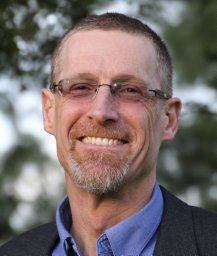 Chris Benner合作论文数Department of Bioengineering, University of California, San Diego30
 James L. Sadd合作论文数Department of Geology, Occidental College28
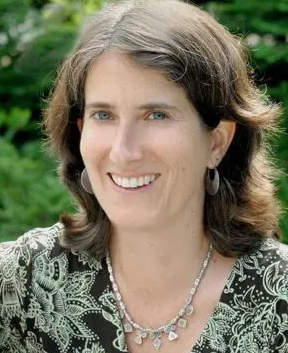 Rachel Morello-Frosch合作论文数Sustainability and Health Equity Lab, Department of Environmental Science, Policy and Management, School of Public Health, University of California, Berkeley28
 James Kenneth Boyce合作论文数Department of Economics, College of Social & Behavioral Sciences, University of Massachusetts Amherst12Martha Matsuoka合作论文数11
 Carol A Wise合作论文数9
 Enrico Marcelli合作论文数8Scoggins Justin合作论文数7
 Pierrette Hondagneu Sotelo合作论文数Department of Sociology, University of Southern California5Pamela Stephens合作论文数4Michael Ash合作论文数Department of Economics, University of Massachusetts Amherst;Amherst4
 Robert D Bullard合作论文数Barbara Jordan-Mickey Leland School of Public Affairs, Texas Southern University;Environmental and Climate Justice Center, Texas Southern University4
 John Mollenkopf合作论文数4
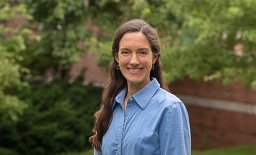 Alice Fothergill合作论文数Department of Sociology, University of Vermont4
 Bill M. Jesdale合作论文数TB/HIV Research Laboratory, Brown University4Peter Dreier合作论文数4Beverly Wright合作论文数3Paul English合作论文数3J. T. Boer合作论文数3O Alegre合作论文数2Jennifer Ito合作论文数2Michael E. Conroy合作论文数2
 Albert Ariza-Sole合作论文数2Vanessa Carter合作论文数2Max Richardson合作论文数2J. Mijin Cha合作论文数2Juan Sanchis合作论文数2Robert Chlala合作论文数2
 antonia trompeta carpintero合作论文数2E Martin合作论文数2M Martinez-Selles合作论文数2grace chang合作论文数2
 Laura Perez合作论文数Univ Valencia2
 Lara Cushing合作论文数Department of Environmental Health Sciences, Fielding School of Public Health, University of California, Los Angeles2
 Nino Künzli合作论文数Swiss School of Public Health, University of Basel;Swiss Tropical and Public Health Institute Basel2
 Francisco Marín Sánchez合作论文数Departamento de Medicina y Dermatología, Universidad de Murcia;Hospital Clínico de Málaga2
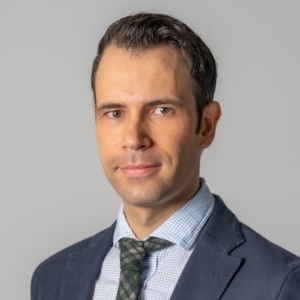 Pablo Díez Villanueva合作论文数Department of Cardiology, Hospital Universitario de La Princesa;Universidad Autonoma de Madrid2
 Wander Madeline合作论文数2
 John P. Wilson合作论文数Spatial Sciences Institute, Dana and David Dornsife College of Letters, Arts and Sciences, University of Southern California2Eric Steven Hall合作论文数2Formiga Francesc合作论文数2Lili Farhang合作论文数2
 Seth B Shonkoff合作论文数California Climate Change Center2
 Michael Jerrett合作论文数Center for Occupational and Environmental Health, University of California, Los Angeles;Fielding School of Public Health, University of California, Los Angeles2Tony Lopresti合作论文数2
 Michael Mendez合作论文数Department of Thoracic and Cardkovascular Surgery, University of Southern California School of Medicine2
 Jeffry Frieden合作论文数Department of Government, Faculty of Arts and Sciences, Harvard University2
 Carol Wise合作论文数Sarah M. and Charles E. Seay Center for Musculoskeletal Research, Texas Scottish Rite Hospital for Children2
 Daniel M. Kammen合作论文数Department of Nuclear Engineering, Goldman School of Public Policy, University of California, Berkeley;Center for Environmental Policy, Goldman School of Public Policy, University of California, Berkeley2




