The menace of unaffordable housing delivery has spread like a virus across the countries within the African continent. The virus has infested numerous activities and is responsible for the slum development and other social vices on the continent. Towards combating the virus this study makes a case for developing tiny houses as a vaccine for unaffordable housing delivery. The prospect and challenges of developing tiny houses were examined in this study. A random sampling technique was used in collecting data from construction and housing stakeholders within the study area. The data were collected with the aid of a questionnaire and analysed using statistical tools such as mean score, Kruskal Wallis test, and factor analysis. The study discovered that there is a high prospect for tiny houses in overcoming the menace of housing unaffordability. Findings from the factor analysis revealed that the development of tiny houses is hindered by occupant’s acceptance, government permit/approval, and security. The study’s findings revealed that stakeholders in the construction sector are willing to develop tiny houses. The study recommended that the government should create and support policies that encourage the development of tiny houses. The study provides the roadmap for creating an innovative method of ensuring housing affordability in Africa.
Many in the academic community find claims made about the virtuous nature of smart cities dumbfounding. In that sense left not only bewildered by the claims which academics make about the virtues of smart cities, but the audacious nature of the expectations advocates of them as developments based on the future internet also harbour. In surveying the foundations of smart cities as developments based on the future internet, this paper shall address the bewilderment over the claims made about the virtues of smart cities by academics and audacious nature of the expectations the IEA, IRENA, UN, WB and WHO now also harbour of them as developments based on the future internet. In rendering both the virtues of smart cities and audacious nature of them as future internet-based developments, the paper shall reveal how cities can be smart in developing the future internet as a basis to meet the social challenge adapting to climate change poses. This shall go some way to close a gap that has opened in the past decade over the foundations of smart cities by reporting on the results of a case-study into the metrics of future internet-based developments. Those metrics that provide smart cities with a system of measurements which link the informatics of digital technologies to data management platforms and connect the infrastructures of future internet-based developments to the management of natural resources. To the management of natural resources as environments that in turn relate the energetic of climate change adaptation strategies to a metabolic which serves to green the intellectual capital of urban and regional innovation systems. Green the intellectual capital of urban and regional innovation systems and qualify whether in meeting the social challenge SDG7 poses this keeps 1.5 alive.
Conceived in the framework of regional studies on Smart Specialisation Strategy (S3) development, this special issue strengthens research efforts oriented towards assembling a technology-enhanced approach to S3 policymaking. First, it sheds light on fundamental methodological limitations that affect S3 development and reports on the digital support tools currently available. Second, it offers a knowledge base for producing novel digital applications that align with the overlooked needs of S3 orchestrators. Third, it complements this practical input with theoretical advancements in regional innovation studies by addressing intellectual questions and policy issues of pivotal importance for the S3 debate.
In the past decade there have been a series of articles on the status of Triple, Quadruple and N-Tuple Helices. In responding to the most recent of these from Leydesdorff and Lawson Smith (2022), this article examines the respective status of the Triple and Quadruple Helix as the scientific basis of the Research and Innovation Strategies related to Smart Specialisation (RIS3) and as the foundation of the Entrepreneurial Discovery Process (EDP). In conducting this examination, the article draws attention to the strengths of the Triple Helix Model, the communication overlay, fourth selection environment and associated ecology of the meta-stabilisation it posits not as the Quadruple Helix, but N-Tuple helices of a higher-order policy model. That policy model which stands high in terms of the status it commands as a regime governing the transition to a next-order system. To a next-order system whose governing regime commands this heightened status as the model policy for nation-states to adopt in sustaining the economic growth of regions.
This Special Issue begins with a middle-range theory of sustainable smart city transitions, which forms bridges between theorizing in smart city development studies and some of the foundational assumptions underpinning transition management and system innovation research, human geography, spatial planning, and critical urban scholarship. This interdisciplinary theoretical formulation details our evidence-based interpretation of how smart city transitions should be conceptualized and enacted in order to overcome the oversimplification fallacy resulting from corporate discourses on smart urbanism. By offering a broad and realistic understanding of smart city transitions, the proposed theory combines different smart-city-related concepts in a model which attempts to expose what causal mechanisms surface in sustainable smart city transitions and to guide empirical inquiry in smart city research. Together with all the authors contributing to this Special Issue, our objective is to give smart city research more robust scientific foundations and to generate theoretical propositions upon which subsequent large-scale empirical testing can be conducted. With the proposed middle-range theory, different empirical settings can be investigated by using the same analytical elements, facilitating the cross-case analysis and synthesis of the systematic research efforts which are progressively contributing to shedding light on the assemblage of sustainable smart city transitions.
The purpose of this project is to provide evidence of the potential contribution offsite construction offers to address the challenges faced by the affordable housing sector in Scotland. Funding for the project is drawn from the Construction Scotland Innovation Centre, Scottish Government and Scottish Enterprise. The project is made up of three components: - a research project mapping the benefits of offsite construction and the barriers confronting the sector’s potential contribution to affordable housing in Scotland; - a study to understand the current and future capacity of offsite construction to overcome these barriers and for the sector to increase the contribution it makes to the provision of affordable housing in Scotland; - a series of co-design workshops with key stakeholders to consider how offsite construction can overcome the barriers the sector currently faces and realise the potential contribution it can make to the future of affordable housing in Scotland.
This paper closes a gap in the literature on smart cities relating to the metrics of future Internet-based developments. It achieves this by presenting the findings of a case study that overcomes the methodological shortcomings that otherwise exist in the metrics of future Internet-based developments and sets the stage for the renewable energies that play out as an urban and regional innovation. The case study serves to demonstrate how getting beneath the headlines that surround claims made about the metrics of future Internet-based developments provide the measures needed to bottom them out and verify whether the renewable energies, which play out as an urban and regional innovation, are not only clean enough for the growth this generates to sustain an ecological modernization, but also sufficiently inclusive for climate neutral adaptations to be just.
Bibliometrics is a powerful tool for analyzing knowledge domains and revealing their cognitive-epistemological structure. Different mathematical models and statistical techniques have been proposed and tested to carry out bibliometric analyses and demonstrate their effectiveness in uncovering how fields of research are intellectually structured. These include two hybrid techniques that allow clusters of related documents obtained from a co-citation analysis to be labeled using textual data. This paper reports on the findings of a bibliometric study in which these hybrid techniques are combined to: (1) build and visualize the network of publications shaping the intellectual structure of the smart city research field by considering the first two decades of literature dealing with this subject; (2) map the clusters of thematically-related publications; and (3) reveal the emerging development paths of smart cities that each thematic cluster represents and the strategic principles they embody. The five development paths which the analysis uncovers and the strategic principles each stands on are then compared by reviewing the most recent literature on smart cities. Overall, this bibliometric study offers a systematic review of the research on smart cities produced since 1992 and helps bridge the division affecting this research area, demonstrating that it is caused by the dichotomous nature of the development paths of smart cities that each thematic cluster relates to and the strategic principles they in turn support.
This chapter challenges recent mode 2 accounts of smart cities and in particular, the idea they are an index of the future internet. Adopting the triple helix model of knowledge production, it studies smart cities, not as the emergent technologies of economic transactions, but in terms of civil society's support for the integration of Web2.0-based information and communication platforms into their regional innovation systems. This reveals that no matter how technologically advanced such an internet-driven reinvention of cities may appear, being smart is something which reaches beyond this. Beyond this and towards policies, leadership qualities and corporate strategies that not only serve the knowledge economy, but which are also smart in allowing cities to cultivate the creativity of the internet as the information and communication technologies of regional innovation systems.
Since the concept of smart city first entered in the urban development discourse about three decades ago, it has received wide-ranging support from academia, industry, government, at both local and national levels, and civil society organizations. A wide consensus has emerged that the deployment of information and communication technologies represents a critical step towards accelerating urban sustainability processes. This chapter demonstrates the validity of this firmly held belief by reporting on a series of smart city projects showcasing how ICT solutions can be instrumental in tackling the global issues affecting the sustainability of urban environments. A detailed overview of the technological trends that have underpinned the development of the smart city concept will be provided, followed by comprehensive accounts of the smart city initiatives that have been selected. For each initiative, attention will be focused on (1) the urban challenges that have been faced by means of a smart city approach to urban sustainability, (2) the ICT solutions that have been deployed, and (3) the benefits that such solutions have brought about. The analysis concludes with a critical reflection upon the current debate on smart city development, which aims to call attention on the research gaps and questions that this book aims to address.
The bibliometric analyses and extensive literature review presented in the previous chapters demonstrate the presence of a deep-rooted division in the research on smart cities, which surfaces as a set of dichotomies questioning whether smart city development should be based on a (1) technology-led or holistic strategy, (2) double- or quadruple-helix model of collaboration, (3) top-down or bottom-up approach, and (4) monodimensional or integrated intervention logic. These dichotomies suggest divergent hypotheses on what principles need to be considered when implementing strategies for enabling smart city development. This generates a critical knowledge gap that this chapter starts filling by reporting on the findings of a multiple case study analysis that is conducted into European best practices. The validity of the hypotheses emerging from each dichotomy is tested by analyzing four European cities considered to be leaders in the field of smart city development. The results of this best practice analysis offer critical insight into what strategic principles drive smart city development in Europe and generate scientific knowledge that helps to start overcoming the dichotomous nature of smart city research.
This last chapter concludes the investigation by summing up the key lessons and recommendations that this book can offer to the community of stakeholders involved in smart city research, policy, and practice. The series of complementary analyses that the previous chapters report on demonstrate that, when untangled from the technocentric urban utopia pictured by the corporate sector, smart cities have the potential to develop into innovation systems that set the stage for a technology-enabled approach to urban sustainability. But realizing this opportunity requires to move beyond traditional boundaries, separate the hype from reality, and strengthen the focus on the social shaping of smart cities. The investigation demonstrates that, in order for such a social shaping to develop, the design of smart cities needs to be understood as a collective action in which two complementary forces are combined. On the one hand, the faith in the technological advancement exposed in the utopian thinking. On the other, the knowledge, skills, and interests of a quadruple-helix collaborative environment where the need for technological innovation in response to urban sustainability goals is not shaped by the corporate sector and its technocentric and market-oriented logic, but an open community whose actions serve the public interest and are based on a holistic interpretation of smart city development.
This chapter reports on the first two decades of research on smart city development by way of a bibliometric analysis of the literature published between 1992 and 2012. The analysis shows that the research into smart cities produced during the period under investigation is fragmented, lacks cohesion, and promotes two main development paths. The first path introduces a holistic perspective of smart city development, which emerges from the peer-reviewed publications produced by European universities. The second path, in contrast, stands on the grey literature produced by the American corporate sector, which endorses a techno-centric understanding of the smart city subject. Divided along these divergent interpretations, the future of this new and promising field of research appears at risk, because it has proven unable of delivering on the expectations that the public has of smart city development and the ICT-driven approach to urban sustainability that such a development should deliver.
This chapter reports on a second bibliometric analysis in which two hybrid techniques are combined, which allow clusters of related documents obtained from a co-citation analysis to be labeled using textual data. The aim of this bibliometric study, which continues the analysis of the first two decades of research on smart city development, is to (1) visualize the network of publications shaping the overall intellectual structure of the smart city research field by considering the period between 1992 and 2012, (2) map the clusters of thematically related publications, and (3) reveal the emerging development paths that each thematic cluster represents and strategic principles they embody. The findings demonstrate that the emerging development paths of smart cities are not only two but five. The development paths that this second analysis uncovers and the strategic principles each of them stands on are then compared by reviewing the most recent literature on smart city development. Overall, this chapter offers a systematic review of the smart city research produced between 1992 and 2018, and it serves to further expose the division within its intellectual structure. A division which is caused by the dichotomous nature of the development paths of smart cities that each thematic cluster relates to.
This chapter sets out to introduce the purpose of this book, its structure and the research methodology adopted to meet the expected outcome, that is, to demonstrate that the smart city concept has the potential to develop into something meaningful, which cities all over the world can benefit from, rather than get tangled up in the context of utopian urbanism. In order to achieve this aim, evidence shall be provided of the potential that smart cities have to overcome the utopian discourse they are currently embroiled in and develop into innovation systems that set the stage for a technology-enabled approach to urban sustainability. This evidence will be sourced from a review of the expanding literature on smart cities that has been published over the past 30 years, and the deployment of a mixed-method research strategy in which bibliometric techniques and case study research are combined.
 Luca Mora合作论文数Academy of Architecture and Urban Studies, Tallinn University of Technology18
 Alasdair Reid合作论文数Stop TB Department, WHO18
 Steve Curwell合作论文数13
 Patrizia Lucia Lombardi合作论文数Politecnico di Torino11Fiona Campbell合作论文数9
 Sam Allwinkle合作论文数8
 Gordon Mitchell合作论文数School of Geography, University of Leeds7
 Peter Nijkamp合作论文数School of Business and Economics, Vrije Universiteit Amsterdam;Institute of Labor Economics7Ron Vreeker合作论文数5ron vreeker合作论文数4
 Bhzad Sidawi合作论文数4Stephen Curwell合作论文数3lynn killick合作论文数3
 Francesco Appio合作论文数3
 Hazel Hall合作论文数School of Computing, Edinburgh Napier University3
 Ian Cooper合作论文数The Martin Centre for Architectural and Urban Studies, University of Cambridge3Alistair S. Duff合作论文数3Krassimira Paskaleva-Shapira合作论文数2Joel Orsinger合作论文数2
 Loet Leydesdorff合作论文数School of Communications Research, University of Amsterdam;Zhejiang University2
 Paolo Santi合作论文数MIT Senseable City Lab2
 Michael Batty合作论文数The Bartlett Centre for Advanced Spatial Analysis, Faculty of the Built Environment, University College London2
 Xiaoling Zhang (張曉玲)合作论文数Department of Real Estate and Construction, Faculty of Architecture, The University of Hong Kong2
 Davide Diamantini合作论文数Universita degli Studi di Milano-Bicocca-Plaza dell Ateneo Nuavo2
 W.M. (Martin) de Jong合作论文数Department of Business-Society Management, Rotterdam School of Management, Erasmus University Rotterdam;Erasmus School of Law, Erasmus University Rotterdam;Institute for Gloabl Public Policy, Fudan University2
 Hishamuddin Mohd. Ali合作论文数Department of Property Management;Faculty of Geoinformation Science and Engineering;Universiti Teknologi Malaysia;Faculty of Geoinformation Science and Engineering, Universiti Teknologi Malaysia2
 Ibrahim Sipan合作论文数2
 Shahabudin Abdullah合作论文数Centre for Real Estate Studies;Faculty of Geoinformation Science & Technology;Universiti Teknologi Malaysia;Faculty of Geoinformation Science & Technology, Universiti Teknologi Malaysia2Paul Jakov Smith合作论文数1Silvia Giordano合作论文数1
 Osunsanmi Temidayo合作论文数CIDB Ctr Excellence, Univ Johannesburg1
 Suha Jaradat合作论文数Sch Engn & Built Environm, Edinburgh Napier Univ1Madeline Smith合作论文数1
 Timothy O. Olawumi合作论文数Corresponding author.1
 Roberto Bolici合作论文数1
 Anastasia Panori合作论文数Corresponding author.1
 Margarita Angelidou合作论文数Q-PLAN International Advisors P.C.1
 Mohammed Al-Hariri合作论文数Dept Physiol, Imam Abdulrahman Bin Faisal Univ1Joe Ravetz合作论文数School of Environment, Education and Development, Faculty of Humanities, The University of Manchester1
 Krassimira Paskaleva合作论文数Alliance Manchester Business School, Faculty of Humanities, The University of Manchester1
 Robert Hairstans合作论文数Centre for Offsite and Innovative Structures, Edinburgh Napier University1
 C. H. Wong合作论文数1
 Karima Kourtit合作论文数Vrije Universiteit Amsterdam;School of Management, Maastricht1Chiara Del Bo合作论文数1S. Allwinkle合作论文数1
 Raquel Ortega-Argiles合作论文数University of Barcelona Regional Quantitative Analysis Research Group (AQR), Department of Econometrics, Statistics and the Spanish Economy Av. Diagonal 690 08034 Barcelona Spain1Yusuf Aina合作论文数1
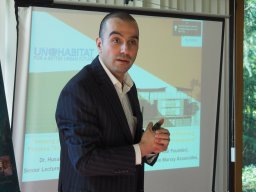 Husam Alwaer合作论文数1
 Nunzia Borrelli合作论文数1




