Creatures that display 'hedonic place preference behaviour' are thought by many scientists to experience feelings, on the assumption that their attraction to pleasure-producing substances which lack nutritional value (e.g. cocaine, morphine) cannot easily be attributed to unconscious instinctual behaviour. In this paper, we discuss how a simple artificial agent that instantiates attributes of an affective system engaging in felt uncertainty about its intrinsic needs in relation to environmental resources can similarly display hedonic place preference behaviour – through an apparently subjective form of information processing – while simultaneously being entirely deter-ministic. We outline some implications of this artificially engineered behaviour for our understanding of the physical basis of consciousness and the experience of free will.
Biological systems must regulate competing needs under limited perceptual bandwidth, where sharpening one estimate costs the capacity to sharpen the others. Any fixed-budget system therefore has to decide where to allocate its perceptual precision. We study this in a foraging agent that must keep several bodily needs satisfied to survive, modelled with active inference. At each step it reads its own body-state beliefs, identifies the most-needed channel, and reallocates a fixed budget of interoceptive precision toward it, so that the same precision-shaped likelihood feeds both belief update and planning. In AffectWorld, a four-channel foraging gridworld, this selective allocation more than doubles learning-phase survival at matched budget against a uniform-precision agent (0.414 vs 0.199 across 11 layouts, n=32 seeds each, paired cluster-bootstrap p ≤ 10^-4). Two further results sharpen the mechanism. The benefit runs through planning as well as perception, since denying the shaped likelihood to the planner alone removes about half of it. It is also need-aligned, since aiming precision at the least-needed channel does worse than spreading it evenly. The attended channel additionally learns its own dynamics about twice as fast, and stays ahead even at matched observation count, a behavioural trace of the same precision routing, visible in learning speed, not survival.
The origin of consciousness constitutes one of the most enduring challenges in contemporary science, with implications for neuroscience, philosophy, medicine and ethics. Traditional accounts have emphasized the cerebral cortex as the seat of conscious awareness, largely due to its expansion and complexity in humans. However, converging evidence suggests that the foundations of consciousness lie not in higher cognition, but in more ancient subcortical systems responsible for affective experience. Central among these are the ascending arousal networks of the upper brainstem and the periaqueductal gray, which together sustain wakefulness and imbue it with valence. This reframing positions consciousness as an embodied biological function grounded in feeling, rather than as a component of higher cognition. From a developmental perspective, the relevant subcortical structures mature relatively early in gestation, raising the possibility that a primitive form of subjective feeling may emerge during the third trimester, well before cortical maturation. Such a view has far-reaching ethical consequences, informing debates on fetal pain perception, neonatal care, and the treatment of individuals with profound cognitive impairment. By synthesizing recent neuroscientific findings with developmental data, this paper argues for a subcortical basis of consciousness, and highlights the need for an integrative approach that situates the origins of consciousness within affective brainstem systems.
Esta conferencia forma parte de un webinar organizado por la Fundación Turning Point para la Salud y Sostenibilidad representada por su presidenta, la Dra. Andrea Rodríguez Quiroga, con el objetivo de promover la formación en clínica basada en investigación. El encuentro tuvo una duración de dos horas y consistió en la exposición teórica respecto a BUSCAR como un afecto, sus antecedentes neuropsicoanalíticos y su aplicación clínica. En la segunda parte del webinar, se presentó un caso clínico, que por razones de confidencialidad no se reproduce en este texto.
Behavioral studies indicate that adverse childhood experiences (ACE) are associated with altered empathic responding, but the neural mechanisms underlying this relationship remain unclear. Given the significance of empathy in contexts marred by historical conflict and systemic inequality, work on these mechanisms is particularly important in such contexts. The current study extends previous work by (1) examining associations of different dimensions of ACE with volumetric change in empathy-related circuitry, (2) distinguishing between trait and state empathy, and (3) including perceived discrimination as an additional psychosocial stressor. Thirty-nine healthy South African adults from the general population (Mage = 40.6 years) underwent 3 T MRI. FreeSurfer v6.0 was used to extract predefined volumes subserving empathy. Results showed that childhood abuse and perceived discrimination were associated with reduced state empathic concern, whereas childhood neglect was associated with reduced trait cognitive empathy. Childhood abuse was furthermore associated with volumetric increases in frontolimbic (hippocampus, anterior cingulate cortex (ACC)) and neocortical (superior frontal and temporal) regions subserving affective and cognitive empathy, and uniquely mediated the relationship between ACC volume and perceived discrimination. The association of ACE with altered empathic responding may thus be underpinned by specific circuitry reflective of adversity type, with childhood abuse contributing to heightened responsivity to socioemotional cues.
Convincing narratives are not confabulations. Presumably they "feel right" to decision-making agents because the probabilities they assign intuitively (i.e., implicitly) to potential outcomes are plausible. Can we render explicit the calculations that would be performed by a decision-making agent to evaluate the plausibility of competing narratives? And if we can, what, exactly, makes a narrative "feel right" to an agent?
EDITORIAL article Front. Hum. Neurosci., 22 March 2023Sec. Cognitive Neuroscience Volume 17 - 2023 | https://doi.org/10.3389/fnhum.2023.1170480
The criteria for determining animal sentience proposed in the target article are sensible but they lack an explicit functional justification for the focus on pain. This commentary provides an abbreviated account of the most basic functional principles that underpin animal sentience and articulates some minimal criteria for determining its presence.
Several deep revisions of Freud’s theory of the drives are proposed: (1) Drives are conscious and are in fact the source of all consciousness. (2) Drive energy is equated with variational free energy and is therefore quantifiable in principle. (3) There are not two drives but many, seven of which may be described as “emotional” as opposed to “bodily” drives. (4) All drives are self-preservative or preservative of the species; there is no death drive at work in the mind. This means, at the mechanistic level, that all drives are homeostatic and anti-entropic. (5) The great task of mental development is to supplement instinctual predictions about how our multiple drive demands may be met and reconciled with each other. This work is done by learning from experience, mainly through voluntary behavior, which is governed by conscious feelings.
Mark Solms*Neuroscience Institute & Psychology Dept., University of Cape Town, Cape Town, South Africa
Cases with visuospatial abnormalities provide opportunities for understanding the underlying cognitive mechanisms. Three cases of visual mirror-reversal have been reported: AH (McCloskey, 2009), TM (McCloskey, Valtonen, & Sherman, 2006) and PR (Pflugshaupt et al., 2007). We report a fourth case, BS -- with focal occipital cortical dysgenesis -- who displays highly unusual visuospatial abnormalities. She initially produced mirror reversal errors similar to those of AH, who -- like our patient -- showed a selective developmental deficit. On further examination, it became apparent that BS differed from AH in significant respects. A detailed study followed which: (1) comprehensively documented BS’s disorder, (2) determined the ways in which it differed from that of AH, and (3) compared it to other similar disorders reported in the literature. Extensive examination of BS revealed the following phenomena: mirror reversal errors (sometimes affecting only parts of the visual fields) in both horizontal and vertical planes; subjective representation of visual objects and words in distinct left and right visual fields; subjective duplication of objects of visual attention (not due to diplopia); uncertainty regarding the canonical upright orientation of everyday objects; mirror reversals during saccadic eye movements on oculomotor tasks; failure to integrate visual with other sensory inputs (e.g., she feels herself moving backwards when visual information shows she is moving forward). Fewer errors are produced under conditions of certain visual variables. These and other findings have led us to conclude that BS draws upon a subjective representation of visual space that is structured phenomenally much as it is anatomically in early visual cortex (i.e., rotated through 180 degrees, split into left and right fields, etc.). Despite this, BS functions remarkably well in her everyday life, apparently due to extensive compensatory mechanisms deployed at higher (executive) processing levels beyond the visual modality.
As science continues to explore the mysteries of the unconscious, two critical questions remain. First, can unconscious impulses, desires, and feelings be willfully raised to the level of the conscious self?, and, if so, would the unveiling of unconscious mechanisms lead to genuine self-knowledge or empowerment? Second, can we methodically tap into the unconscious to gear ourselves along more creative lines? If the unconscious is a source of intuitive and creative inspiration, how might a more expansive understanding of consciousness help us to flourish? How can we harness the intuitive parts of ourselves to think “outside the box,” transcending the limitations of preconceived categories? And along those same lines, how would an expanded view of the unconscious frame our spiritual experiences or offer spiritual nourishment? Writer Siri Hustvedt , historian of psychology Sonu Shamdasani , and neuropsychologist Mark Solms will tackle everything from noetic experiences and the role of intuition to the phenomenon of peak experience and Jung's “collective unconscious.”
 Oliver H Turnbull合作论文数Department of Experimental Psychology, University of Cambridge5
 Marianne Leuzinger-Bohleber合作论文数2
 Jaak Panksepp合作论文数Department of Veterinary and Comparative Anatomy, Pharmacology, and Physiology, College of Veterinary Medicine, Washington State University;Department of Psychology, Bowling Green State University2
 Benjamin Rosman合作论文数School of Computer Science and Applied Mathematics, University of the Witwatersrand;Deep Learning Indaba;Canadian Institute for Advanced Research;MIND Institute2
 Doug Watt合作论文数1
 Ryan Smith合作论文数1José Fernando Muñoz Zúñiga合作论文数1Maggie Zellner合作论文数1Edward Nersessian合作论文数1Siri Hustvedt合作论文数1
 Ross Balchin合作论文数1Virginia Barry合作论文数1Paul A Moore合作论文数1Daniela Flores Mosri合作论文数1Sonu Shamdasani合作论文数1
 Jane Abrams合作论文数School of Social Policy & Pract, University of Pennsylvania1
 Filippo Cieri合作论文数1
 Gilles Ambresin合作论文数1Clarici Andrea合作论文数1
 Fischmann Tamara合作论文数Sigmund Freud Institute1Dollman Aimee K合作论文数1Paulson Steve合作论文数1
 David L. Olds合作论文数Prevention Research Center for Family and Child Health, Department of Pediatrics, School of Medicine, University of Colorado Anschutz Medical Campus1
 Melike Fourie合作论文数ACSENT Laboratory, University of Cape Town Cape Town1
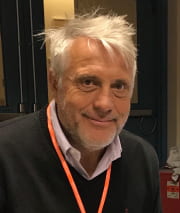 Jean Decety合作论文数Social Cognitive Neuroscience Laboratory, Department of Psychology, The University of Chicago1
 Dan Stein合作论文数Neuroscience Institute, University of Cape Town;Department of Psychiatry, University of Cape Town;Department of Psychiatry, Stellenbosch University1
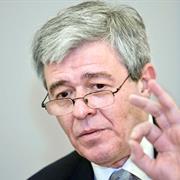 Karl Friston合作论文数Institute of Neurology, University College London;The National Hospital for Neurology and Neurosurgery1
 Richard J. Kessler合作论文数1
 Iftah Biran合作论文数Dept. of Neurology Ein-Karem Jerusalem, Hadassah University Hospital1
 Rudi Coetzer合作论文数Department of Psychiatry, University of Stellenbosch1
 Ariane Bazan合作论文数Medical School, Ghent University1
 Fleur Warton合作论文数University of Cape Town Division of Physiology, Department of Human Biology Observatory Cape Town 7925 South Africa1
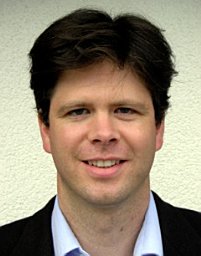 Christoph Mathys合作论文数Music and Neuroimaging Laboratory, Beth Israel Deaconess Medical Center and Harvard Medical School1




