The Southern Galactic Disk Survey (GDS) monitored a mosaic of 268 fields along a -wide stripe in the southern Galactic disk with simultaneous observations in and () from September 2010 to September 2019. The survey design and data characteristics, as well as first results in , were presented by Haas et al. (2012; Paper I). Hackstein et al. (2015; Paper II) extended the photometry and analysis process, and introduced the first catalogue including photometry of all 268 fields in and light curves comprising up to 272 observations per field made between September 2010 and May 2015. Here we describe our custom-made observational scheduler and conclude the GDS with light curves of up to 407 observations per field until September 2019 and light curves for a fraction of the fields. 113,449 distinct sources are identified as variables. Together with Paper II, we identified 77,592 variables that are not listed in either the International Variable Star Index (VSX) or the cross-match catalogue by Gavras et al. (2023). All emerging catalogues, comprising light curves, photometry and reduced images, are made publicly available via the German Astrophysical Virtual Observatory (GAVO).
The Astronomy Open Science Competence Centre Pilot (Astro-CC) is an ESCAPE-cluster related project meant to enable the astronomy research communities to accelerate their use of Open Science by supporting the implementation of FAIR principles. The Astro-CC project aims at expanding the use of Virtual Observatory standards by astronomy-focused ESFRIs, RIs, and data-producing projects of all scales, enabling the astronomy research communities to accelerate their use of Open Science by supporting the implementation of FAIR principles. It will run community events engaging experts in astronomical data service interoperability to prepare and define the scope of a Community Competence Center. The project will support the community development of the Virtual Observatory interoperability framework and its integration into EOSC, building on the progress made in the ESCAPE Science Cluster project. It aims at contributing to the vision of EOSC as a federation, providing feedback on the practical implementation of Open Science to the EOSC governance.
This workshop report from "Shaping the Digital Future of ErUM Research: Sustainability Ethics" (Aachen, 2025) reviews progress on sustainability measures in data-intensive ErUM-Data research since the 2023 call-to-action on resource-aware research. It evaluates short-, medium-, and long-term actions around monitoring and reducing CO2 emissions, improving data and software FAIRness, optimizing workflows and computing infrastructures, and aligning operations with low-carbon energy availability, including concepts such as "breathing" computing centers, long-term data storage strategies, and software efficiency certification. The report stresses the need for systematic teaching, training, mentoring, and new support formats to establish sustainable coding and computing practices, particularly among students and early-career researchers, and highlights the importance of dedicated steering and funding instruments to embed sustainability in project planning. Ethical discussions focus on the transformative use of AI in ErUM-Data, addressing autonomy, bias, transparency, explainability, attribution of responsibility, and the risk of deskilling, while reaffirming that accountability for scientific outcomes remains with human researchers. Finally, the report emphasizes that sustainable transformation requires not only technical measures but also targeted awareness-building, communication strategies, incentives, and community-driven initiatives to move from awareness to action and to integrate sustainability and ethics into everyday scientific practice.
We present the database of potential targets for the Large Interferometer For Exoplanets (LIFE), a space-based mid-infrared nulling interferometer mission proposed for the Voyage 2050 science program of the European Space Agency (ESA). The database features stars, their planets and disks, main astrophysical parameters, and ancillary observations. It allows users to create target lists based on various criteria to predict, for instance, exoplanet detection yields for the LIFE mission. As such, it enables mission design trade-offs, provides context for the analysis of data obtained by LIFE, and flags critical missing data. Work on the database is in progress, but given its relevance to LIFE and other space missions, including the Habitable Worlds Observatory (HWO), we present its main features here. A preliminary version of the LIFE database is publicly available on the German Astrophysical Virtual Observatory (GAVO).
VESPA (Virtual European Solar and Planetary Access, Erard et al. EPSC2020-190, 2020) is a network of interoperable data services covering all fields of Solar System Sciences. It is a mature project, developed within EUROPLANET-FP7 and EUROPLANET-2020-RI. The latter ended in Aug. 2019. It is further supported under the EUROPLANET-2024-RI project (started in Feb. 2020). The VESPA data providers are using a standard API (based on the Table Access Protocol of IVOA (International Virtual Observatory Alliance) and EPNcore, a common dictionary of metadata developed by the VESPA team). The VESPA services consist in searchable metadata tables, with links (URLs) to science data products (files, web-services...). The VESPA metadata includes relevant keywords for scientific data discovery, such as data coverage (temporal, spectral, spatial...), data content (physical parameters, processing level...), data origin (observatory, instrument, publisher...) or data access (format, URL, size...). VESPA hence provides a unified data discovery service for Solar System Sciences. The architecture of the VESPA network is distributed (the metadata tables are hosted and maintained by the VESPA providers), but it is not redundant. The hosting and maintenance of VESPA provider's servers has proved to be a single point failure for small teams with little IT support. The VESPA-Cloud project with EOSC-Hub will greatly facilitate the sustainability of data sharing from small teams as well as teams, whose institutions have restrictive firewall policies (like labs hosted by space agencies, e.g., DLR in Germany). Most of the VESPA data provider are using the same server software, namely DaCHS (Data Centre Helper Suite), developed by the Heidelberg team included in the project. VESPA-Cloud provides a cloud-hosted facility to host VESPA compliant metadata tables in a controlled and maintained software environment. The VESPA providers will focus on the science application configuration, whereas the VESPA core team will support them with the maintenance of the deployed instances. The development of the VESPA provider’s data service will be done using a git versioning system (github or institute gitlab). An instance of the VESPA query interface portal will also be implemented on EOSC-hub provided virtual machine. The community AAI (Authorization and Authentication Infrastructure) is provided by GÉANT, through its eduTEAMS service. In the context of EOSC-hub, the EGI Federation is providing virtual machine services from IN2P3 and CESNET while data storage and registry services will be provided by EUDAT. In the course of the VESPA-Cloud project, we will implement in the DaCHS framework cloud-storage API connectors (such as Amazon S3, iRODS, etc.) to read data in the cloud and ingesting metadata. Since DacHS is used worldwide by many datacenters to share astronomical and solar system data collections, many teams will benefit from this development. The Europlanet-2024 Research Infrastructure project has received funding from the European Union's Horizon 2020 research and innovation programme under grant agreement No 871149. This work used the EGI Infrastructure with the dedicated support of IN2P3-IRES and CESNET-MCC. The eduTEAMS Service is made possible via funding from the European Union's Horizon 2020 research and innovation programme under Grant Agreement No. 856726 (GN4-3).
Given the urgency to reduce fossil fuel energy production to make climate tipping points less likely, we call for resource-aware knowledge gain in the research areas on Universe and Matter with emphasis on the digital transformation. A portfolio of measures is described in detail and then summarized according to the timescales required for their implementation. The measures will both contribute to sustainable research and accelerate scientific progress through increased awareness of resource usage. This work is based on a three-days workshop on sustainability in digital transformation held in May 2023.
We report on ongoing discussions and plans of NFDI consortia in physics and reltated natural sciences with respect to (persistent) identifiers.
Stellar physical and dynamical properties are essential knowledge to understanding the structure, formation, and evolution of our Galaxy. We produced an all-sky uniformly derived catalog of stellar astrophysical parameters (APs; age, mass, temperature, bolometric luminosity, distance, dust extinction) to give insight into the physical properties of Milky-Way stars. Exploiting the power of multi-wavelength and multi-survey observations from Gaia DR2 parallaxes and integrated photometry along with 2MASS and AllWISE photometry, we introduce an all-sky uniformly derived catalog of stellar astrophysical parameters, including dust extinction (A0) and average grain size (R0) along the line of sight, for 123,097,070 stars. In contrast with previous works, we do not use a Galactic model as prior in our analysis. We validate our results against other literature (e.g., benchmark stars, interferometry, Bayestar, StarHorse). The limited optical information in the Gaia photometric bands or the lack of ultraviolet or spectroscopic information renders the chemistry inference prior dominated. We demonstrate that Gaia parallaxes bring sufficient leverage to explore the detailed structures of the interstellar medium in our Milky Way. In Gaia DR3, we will obtain the dispersed optical light information to break through some limitations of this analysis, allowing us to infer stellar chemistry in particular. Gaia promises us data to construct the most detailed view of the chemo-dynamics of field star populations in our Galaxy. Our catalog is available from GAVO at http://dc.g-vo.org/tableinfo/gdr2ap.main (soon Gaia Archive and VizieR)
PUNCH4NFDI (Particles, Universe, NuClei and Hadrons for the NFDI) aims at developing concepts and tools for the efficient management of digital research products in fundamental physics research. At the heart of the research products are scientific data sets that should be made interoperable and available to a broad scientific community and the public for a sustainable usage (“open data”). The first PUNCH4NFDI “Open Data Workshop” gave the opportunity for an initial survey of existing and planned open data initiatives within the PUNCH science field. The paper addresses the conceptual differences and commonalities of the participating communities presented in the workshop. Existing open data collections were presented and discussed. This is an inquiry into the community’s requirements for a better use of open data and in this context also of “Open Science”.
The Gaia mission is delivering exquisite astrometric data for 1.47 billion sources, which are revolutionizing many fields in astronomy. For a small fraction of these sources the astrometric solutions are poor, and the reported values and uncertainties may not apply. For many analyses it is important to recognize and excise these spurious results, commonly done by means of quality flags in the Gaia catalog. Here we devise and apply a path to separating ’good’ from ’bad’ astrometric solutions that is an order-of-magnitude cleaner than any single flag: we achieve a purity of 99.7% and a completeness of 97.6% as validated on our test data. We devise an extensive sample of manifestly bad astrometric solutions: sources whose inferred parallax is negative at ≥ 4.5σ; and a corresponding sample of presumably good solutions: the sources in HEALPix patches of the sky that do not contain extremely negative parallaxes. We then train a neural net that uses 14 pertinent Gaia catalog entries to discriminate these two samples, captured in a single ’astrometric fidelity’ parameter. An extensive and diverse set of verification tests show that our approach to assessing astrometric fidelity works very cleanly also in the regime where no negative parallaxes are involved; its main limitations are in the very low S/N regime. Our astrometric fidelities for all EDR3 can be queried via the Virtual Observatory. In the spirit of open science, we make our code and training/validation data public, so that our results can be easily reproduced.
Astrometric microlensing is a unique tool to measure stellar masses. It allows us to determine the mass of the lensing star with an accuracy of a few percent. In this paper, we update, extend, and refine our predictions of astrometric-microlensing events based on Gaia’s early Data release 3 (eDR3). We selected about 500.000 high-proper-motion stars from Gaia eDR3 with μ tot > 100 mas yr −1 and searched for background sources close to their paths. We applied various selection criteria and cuts in order to exclude spurious sources and co-moving stars. By forecasting the future positions of lens and source, we determined epoch of and angular separation at closest approach, and determined an expected positional shift and magnification. Using Gaia eDR3, we predict 1758 new microlensing events with expected shifts larger than 0.1 mas between the epochs J2010.5 and mid J2066.0. Further, we provide more precise information on the angular separation at closest approach for 3084 previously predicted events. This helps to select better targets for observations, especially for events that occur within the next decade. Our search lead to the new prediction of an interesting astrometric-microlensing event by the white dwarf Gaia eDR3-4053455379420641152. In 2025 it will pass by a G = 20.25 mag star, which will lead to a positional shift of the major image of δ θ + = 1.2 − 0.5 + 2.0 mas . Since the background source is only Δ G = 2.45 mag fainter than the lens, also the shift of the combined center of light will be measurable, especially using a near-infrared filter, where the background star is brighter than the lens (Δ Ks = −1.1 mag).
FAIR principles have the intent to act as a guideline for those wishing to enhance the reusability of their data holdings and put specific emphasis on enhancing the ability of machines to automatically find and use the data, in addition to supporting its reuse by individuals. Interoperability, one core of these principles, especially when dealing with automated systems’ ability to interface with each other, requires open standards to avoid restrictions that negatively impact the user’s experience. Open-ness of standards is best supported when the governance itself is open and includes a wide range of community participation. In this contribution we report our experience with the FAIR principles, interoperable systems and open governance in astrophysics. We report on activities that have matured within the ESCAPE project with a focus on interfacing the EOSC architecture and Interoperability Framework.
Stellar distances constitute a foundational pillar of astrophysics. The publication of 1.47 billion stellar parallaxes from Gaia is a major contribution to this. Despite Gaia's precision, the majority of these stars are so distant or faint that their fractional parallax uncertainties are large, thereby precluding a simple inversion of parallax to provide a distance. Here we take a probabilistic approach to estimating stellar distances that uses a prior constructed from a three-dimensional model of our Galaxy. This model includes interstellar extinction and Gaia's variable magnitude limit. We infer two types of distance. The first, geometric, uses the parallax with a direction-dependent prior on distance. The second, photogeometric, additionally uses the color and apparent magnitude of a star, by exploiting the fact that stars of a given color have a restricted range of probable absolute magnitudes (plus extinction). Tests on simulated data and external validations show that the photogeometric estimates generally have higher accuracy and precision for stars with poor parallaxes. We provide a catalog of 1.47 billion geometric and 1.35 billion photogeometric distances together with asymmetric uncertainty measures. Our estimates are quantiles of a posterior probability distribution, so they transform invariably and can therefore also be used directly in the distance modulus (5 log(10) r - 5). The catalog may be downloaded or queried using ADQL at various sites (see http://www.mpia.de/similar to calj/gedr3_distances.html), where it can also be cross-matched with the Gaia catalog.
The Gaia DR2 radial velocity sample (GDR2RVS), which provides six-dimensional phase-space information on 7.2 million stars, is of great value for inferring properties of the Milky Way. Yet a quantitative and accurate modelling of this sample is hindered without knowledge and inclusion of a well-characterized selection function. Here we derive the selection function through estimates of the internal completeness, i.e. the ratio of GDR2RVS sources compared to all Gaia DR2 sources (GDR2all). We show that this selection function or "completeness" depends on basic observables, in particular the apparent magnitude GRVS and colour G-GRP, but also on the surrounding source density and on sky position, where the completeness exhibits distinct small-scale structure. We identify a region of magnitude and colour that has high completeness, providing an approximate but simple way of implementing the selection function. For a more rigorous and detailed description we provide python code to query our selection function, as well as tools and ADQL queries that produce custom selection functions with additional quality cuts.
The International Virtual Observatory Alliance (IVOA) has developed and built, in the last two decades, an ecosystem of distributed resources, interoperable and based upon open shared technological standards. In doing so the IVOA has anticipated, putting into practice for the astrophysical domain, the ideas of FAIR-ness of data and service resources and the Open-ness of sharing scientific results, leveraging on the underlying open standards required to fill the above. In Europe, efforts in supporting and developing the ecosystem proposed by the IVOA specifications has been provided by a continuous set of EU funded projects up to current H2020 ESCAPE ESFRI cluster. In the meantime, in the last years, Europe has realised the importance of promoting the Open Science approach for the research communities and started the European Open Science Cloud (EOSC) project to create a distributed environment for research data, services and communities. In this framework the European VO community, had to face the move from the interoperability scenario in the astrophysics domain into a larger audience perspective that includes a cross-domain FAIR approach. Within the ESCAPE project the CEVO Work Package (Connecting ESFRI to EOSC through the VO) has one task to deal with this integration challenge: a challenge where an existing, mature, distributed e-infrastructure has to be matched to a forming, more general architecture. CEVO started its works in the first months of 2019 and has already worked on the integration of the VO Registry into the EOSC e-infrastructure. This contribution reports on the first year and a half of integration activities, that involve applications, services and resources being aware of the VO scenario and compatible with the EOSC architecture.
The Digitized First Byurakan Survey has digitized and processed about 1900 photographic plates from the objective prism surveys conducted in Byurakan by Benjamin Markarian and collaborators in the 1960ies and 1970ies. After digitization, a custom web service was built and operated first in Rome, then in Trieste. However, as astronomical data systems and standards evolved, it became desirable to update the data and build standards-compliant, Virtual Observatory services from it. This contribution reports on the challenges encountered during this migration, the solutions we chose, and the lessons to be learned. It also discusses the use of the resulting services.
 M. B. Taylor合作论文数12
 Alberto Accomazzi合作论文数Harvard-Smithsonian Center for Astrophysics10
 Baptiste Cecconi合作论文数Laboratory for Space Studies and Instrumentation in Astrophysics, Observatoire de Paris10
 Michael J. Kurtz合作论文数Harvard-Smithsonian Center for Astrophysics10Patrick Dowler合作论文数9Thomas Rauch合作论文数8Marco Molinaro合作论文数Carnegie Mellon University8stephane erard合作论文数7
 Guenther Eichhorn合作论文数Harvard-Smithsonian Center for Astrophysics7Pierre Le Sidaner合作论文数7Francois Bonnarel合作论文数7Jan Rybizki合作论文数Max Planck Inst Astron, Konigstuhl 17, D-69117 Heidelberg, Germany6
 Joachim Wambsganss合作论文数Department of Physics and Astronomy, Heidelberg University/Astronomisches Rechen-Institut, Zentrum für Astronomie der Universität Heidelberg6Stephen S. Murray合作论文数6
 Klaus Werner合作论文数Institute for Astronomy and Astrophysics, Faculty of Science, Eberhard Karls Universität Tübingen6Sebastien Derriere合作论文数6
 Pascal Quinet合作论文数Physique Atomique et Astrophysique, Université de Mons5
 Nicolas André合作论文数Research Institute in Astrophysics and Planetology, French National Centre for Scientific Research5Doug Tody合作论文数National Optical Astronomy5Ulrich Bastian合作论文数5
 Mireille Louys合作论文数5Siegfried Roeser合作论文数5Renaud Savalle合作论文数5
 Vincent Genot合作论文数Institut de Recherche en Astrophysique et Planétologie;Université de Toulouse5
 Coryn Bailer-Jones合作论文数Department of Atmospheric Physics of Exoplanets, Max Planck Institute For Astronomy;Department of Physics and Astronomy, University of Heidelberg5M. A. Mendoza合作论文数4J. P. Torres-Papaqui合作论文数4F. F. Rosales-Ortega合作论文数4A. Monreal Ibero合作论文数4A. R. López Sánchez合作论文数4R. A. Marino合作论文数4M. G. Allen合作论文数4E. A. D. Lacerda合作论文数4D. Hoyer合作论文数4M. Cano-Díaz合作论文数Inst Astron, Univ Nacl Autonoma Mexico4
 Mercedes Molla合作论文数CIEMAT, Dept Invest Basica, E-28040 Madrid, Spain4
 Vivienne Wild合作论文数School of Physics and Astronomy, University of St Andrews4
 Laurent Denis合作论文数4
 Isabel Márquez Pérez合作论文数Instituto de Astrofísica de Andalucía, CSIC4
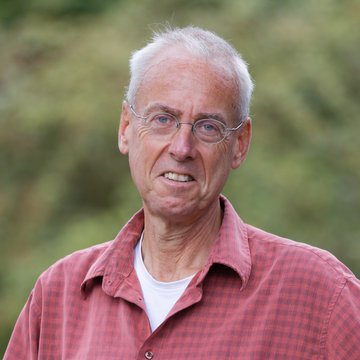 Lutz Wisotzki合作论文数Leibniz Institute For Astrophysics Potsdam4
 Damián Mast合作论文数CALIFA Team4
 Bernd Husemann合作论文数Eumetsat4Francois Ochsenbein合作论文数4
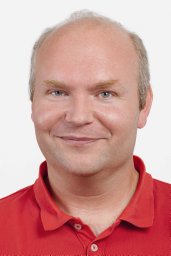 Glenn van de Ven合作论文数Institute for Advanced Study4Yago Ascasibar合作论文数University of Oxford4
 Lluís Galbany合作论文数Institute of Space Sciences;Institut d'Estudis Espacials de Catalunya4
 A. Schaaff合作论文数4B. García-Lorenzo合作论文数4
 Jose Alfonso Lopez Aguerri合作论文数Instituto de Astrofísica de Canarias4




