Mental illness and homelessness intersect to form a wicked problem. So wicked that contemporary solutions are little better than they were 300 years ago when towns relied on jails to provide meals and a bed to those whose behavior was “strange” and their families would not or could not care for them. Current estimates are that two-thirds of those who are unhoused need supportive living facilities and mental health care. From reliance on jails, to the establishment of state-operated psychiatric hospitals, to deinstitutionalization, to reliance on jails and camping on the street, the problem has come full circle.
There is a significant emotive dimension to the work of public interest lawyers (PILs), whose jobs involve working with traumatized clients in a high-stakes legal environment. This vital public service profession represents marginalized clients, many of whom face extraordinary challenges. These attorneys must maintain their own composure as they simultaneously manage their clients' emotional distress and legal predicaments. Drawing on interviews of PILs, we identify themes related to emotion regulation, vicarious trauma, burnout, and resilience. Findings reveal that PILs leverage emotion to build the trust that is essential for effective legal advocacy and they do this while navigating client trauma and systemic injustice. Compounding the emotive burden are risks of secondary trauma and feelings of institutional betrayal. Findings also reveal strategies that PILs employ to thrive, including on-ramps and off-ramps they use to set boundaries around the emotive demands of their work. HR implications are discussed.
Governing is a labor-intense enterprise. This is why a focus on performance includes human capital dimensions. Are agencies staffed by partisan zealots or skilled experts? Are employees protected from political coercion? Should they be? Does job security produce better performance? Are job classifications broad enough to permit managerial discretion? Are performance evaluations worth the effort? Do systems that work at the national level work at the subnational level? How varied are processes across cities, counties, provinces? Is there a mismatch between labor pools and labor needs? In the U.S., because data has been plentiful about federal employees, most research has focused at that level. However, federal employees represent only a fraction of government employees. Much more needs to be known about the link between performance and human capital issues at subnational levels. And much more needs to be known about how national and local context affects human performance. Each nation has its own system and too little is known about each to enable meaningful comparisons. Fifteen questions are posed that illuminate gaps in knowledge and can be used to guide comparisons that will link human capital to government performance.
The U.S. federal civil service has been rocked to its core since January 20, 2025. Random, unplanned, unannounced firings are leaving every agency in doubt. I argue that those who care about good government, and public sector human resource scholars in particular, should advocate for merit principles and explain how they ensure government performance. Bolstered by lessons from the past, this is an easy case to make.
Two essential questions for those leading the field of public administration are: What do we teach our students, and how do we train them? As scholars, we pay significant attention to our research, often to the detriment of recognizing the potential for merging our research with teaching through the Scholarship of Teaching and Learning (SoTL). However, given our students' leadership positions, SoTL-related work is vital to their success. In this article, we have come together to reflect on the state of SoTL's work in public administration. Through this reflection, we explore the windows of opportunity for research that we see emerging. Included among these opportunities is the need for research on how we can best serve students in and out of the classroom, as well as research the most effective way of managing our programs. We also see the need for research into faculty development, instructional design, and the return on investment for a public administration degree. Lastly, we argue for improved recognition of the value and contribution of SoTL-related work in tenure and promotion standards.
There is uncertainty among emotional labor researchers as to when emotive expression leads to positive work outcomes and when it does not. This study uses the circumplex model of affect to test whether the answer lies in the interaction of display rules and emotive intensity. The model postulates that emotive experiences are two-dimensional, with gradations from positive to negative affect and from low to high intensity. The analysis uses display rules of social work, a frequent occupation in government and nonprofit services, to compare enthusiasm (high intensity), empathy (medium intensity), and calmness (low intensity). Results produce differential effects on organizational commitment and emotional exhaustion. Emotive expression has a beneficial effect when arousal is intense. Higher intensity leads to more commitment and less exhaustion. We conclude that emotive intensity is a missing link in the relationship between emotional labor and work outcomes. Implications for supervision, training, and development are discussed.
Written by the coeditors-in-chief, this essay introduces the Journal of Social Equity and Public Administration (JSEPA) and situates it among other public administration journals. Its mission, aims, and scope are explained. Manuscripts are welcomed that identify and probe societal structures and dynamics that create or perpetuate inequity, or that overcome it. Published for a global audience, it is a theoretically and methodologically inclusive journal. Because social equity is a moving target, always evolving, the pages of this journal will reflect its course.
MPA programs are the only place where public sector human resource management (HRM) is taught. When HRM is not among the list of required courses, programs forgo their responsibility to teach the next generation of public servants why merit-based civil service is crucial to a functioning democracy. The danger of ignorance is reflected in an Executive Order issued in 2020 that would have removed job protections from thousands of federal civil servants. While the Order was rescinded in 2021, it has many advocates and remains on the agenda. This is a wake-up call to MPA programs to require students to learn why job protections are the bedrock of good government, a bedrock as foundational as a free press and more foundational than budgeting skills. However, 97% of MPA programs require a budgeting course but only 72% require an HRM course. If theory and practice meet in MPA classrooms, then HRM has to be there.
The relationship between organizational commitment and job performance matters in public service delivery, and so does the emotive dimension of the citizen-state interaction. However, public management theories and principles must take national culture into account, because comparative investigation reveals limits to generalizability across cultures. This study provides an example. It examines the link between commitment and performance as well as the moderating effect of emotional labor for public service workers in Korea and the United States. Probably due to the differing effect of collectivist versus individualist norms, findings reveal that authentic emotive expression bolsters the relationship between organizational commitment and job performance in Korea, while its opposite, inauthentic emotive expression weakens the link between commitment and performance in the United States.
Teaching cultural competency is a two-way street. Instruction is more comprehensive when it raises awareness of cultural context. And students see relevancy when they learn how theories and principles relate to the context they know. Cultural context is especially obvious in nations colonized by cultures different from theirs. India provides a compelling example because it has a blended public service culture containing several parts tradition and several parts that fit uncomfortably with the nation’s psyche. This discussion uses public administration in India to demonstrate how cultural context shapes preferences for institutions and how it influences expectations for interpersonal dynamics when state meets street. After presenting the Indian scenario, suggestions are provided for how to incorporate cultural competency into the curriculum and how to spotlight it in a classroom exercise.
During his 50-year career, H. George Frederickson contributed on multiple fronts: to better government, to a more thoughtful and rigorous public administration field, to better scholarship, to a network of scholars, and to collaborative interaction among practitioners and scholars. He was the founding Editor of the Journal of Public Administration Research and Theory as well as the Journal of Public Administration Education. He was one of the founders of the Public Management Research Association (PMRA) and was instrumental in establishing the world headquarters of PMRA at the University of Kansas School of Public Affairs, where he was the Edwin O. Stene Distinguished Professor. He was President of Eastern Washington University. A gifted writer and thinker who excelled in both breadth and depth, George published important articles and books, and won many awards for his scholarship. Most importantly, he was a catalyst for establishing social equity as the “third pillar” of public administration. In this article, five public administration scholars pay tribute to H. George Frederickson’s most influential scholarly works, with an emphasis on social equity and accountability. George’s impact outside of the United States, especially in South Korea, also is highlighted.
There is an emotional proletariat in public service. This class of worker is employed in lower ranking, lower paid jobs that are disproportionately performed by women. While this study focuses on the Korean context, findings also raise awareness to the U.S. context. An investigation of two distinctly different missions—national tax officials and police officers—reveals how the combination of gender and rank produces differential outcomes in regard to emotive demands. Women in lower grades suffer more emotional exhaustion and feel less pride in their jobs than women and men in higher ranks. The pattern provides evidence that emotional exhaustion is less about individual failure and more about predictable job characteristics. After describing findings, the conclusion speculates about generalizing to the American context.
This paper argues for the importance of the citizen ? state encounter as the focal point for public administration research. It urges theory development and testing that humanizes practice, provides meaning, and builds healthy communities. The citizen ? state encounter is the crux of public administration, but the tools investigators reach for in their research toolboxes are designed for other uses: to treat events and attitudes as if they are linear, to analyze big datasets, to compare taxing and spending, to map incidents of crime, to compare inputs to outputs. While necessary for categorizing people and tracking management, these tools stop short of supplying answers to the central question for government: How good is the quality of the encounter between citizen and state? How do residents feel about their government? These questions are fundamental and researchers should have a selection of tools broad enough to answer them.
Social upheavals are punctuation marks in the progression toward social equity. The American democratic mythos has evolved since the first days of the republic. Those who were ‘in the room’ when the Constitution was signed drove the interests that were represented and protected. Those in the room now are different, infusing old words with new meanings. Today’s fissured political culture, combined with the ripple effects of a global pandemic, offer another upheaval and create the opportunity to impel social justice. The ongoing process of meaning-making transforms power and advantage. This essay urges public service professionals to adopt a message that champions the mythos while acknowledging lived reality.
ABSTRACT This study probes the relationship between emotional labor and organizational culture by contrasting two classic forms of government work: tax collection and law enforcement. First, an analysis examines the differential effects of self-focused versus other-focused emotional labor in both types of work. Then, hierarchical regression analysis is used to examine the moderating effects of organizational culture. Findings reveal a different relationship between the forms and outcomes by level in the hierarchy: self-focused emotional labor is positively related to pride in job while other-focused is positively related to emotional exhaustion, except for those in lower ranks with shorter tenures. A deeper probe reveals that work demands and cultural orientation are significant moderators. Tax officials experience more exhaustion and police officers experience more pride. Compared to role-oriented culture, which is the embodiment of bureaucracy, support-, power-, and achievement-oriented cultures affect emotional labor constructs.
 Sharon H. Mastracci合作论文数Labor And Service Delivery;University of Texas at Austin;Labor And Service Delivery, University of Texas at Austin17
 Seung-Bum Yang合作论文数13
 Meredith A. Newman合作论文数8
 Chih-Wei Hsieh (謝智偉)合作论文数Department of Public Policy,College of Liberal Arts and Social Sciences,City University of Hong Kong6Sean McCandless合作论文数5
 Xiaojun Lv (吕晓俊)合作论文数School of International and Public Affairs, Shanghai Jiao Tong University4Marilyn M. Rubin合作论文数3
 Aisha Azhar合作论文数Univ Management & Technol, Lahore, Punjab, Pakistan3
 Myung H. Jin合作论文数3Hyun Jung Lee合作论文数Graduate School of Environmental Studies, Tohoku University3michael j potemra合作论文数2
 Sung Wook Choi合作论文数2
 Xiaojun Lu (卢小军)合作论文数School of Foreign Languages, Shanghai Jiao Tong University2Schumacher Kristin L合作论文数2George C. Thornton合作论文数2
 Patricia M Shields合作论文数Texas State University2
 Rosemary O'Leary合作论文数Center for The Business of Government, IBM2
 Elizabeth A. Tomsich合作论文数School of Public Affairs, University of Colorado Denver2
 Daryl D. Green合作论文数2Richard Stillman合作论文数1Vanessa M. Fenley合作论文数1
 Elaine Yi Lu合作论文数1Hunter Bacot合作论文数1Becky Liscum合作论文数1Daan Wang合作论文数1
 Maren Trochmann合作论文数Dept Polit Sci, Coll Charleston1
 Rajade M. Berry-James合作论文数North Carolina State Univ1Michaela Abbott合作论文数1
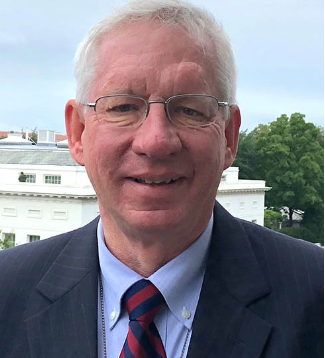 Donald F. Kettl合作论文数LBJ School of Public Affairs, University of Texas at Austin1
 Rachel Emas合作论文数Sch Publ Affairs & Adm, Rutgers State Univ1
 Tia Sherèe Gaynor合作论文数Polit Sci, Univ Cincinnati1
 Nuri Heckler合作论文数Sch Publ Adm, Univ Nebraska1
 William Hatcher合作论文数Dept Social Sci, Augusta Univ1
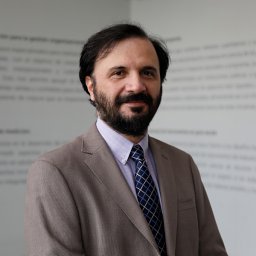 Cristian Pliscoff合作论文数Sch Govt, Univ Catolica Chile1Megan E. Hatch合作论文数1
 Sarah Young合作论文数Univ North Georgia1
 Sebawit G. Bishu合作论文数Univ Washington1
 Kimberly Wiley合作论文数Dept Family Youth & Community Sci, Univ Florida1
 Jamie Levine Daniel合作论文数Paul H ONeill Sch Publ & Environm Affairs, IUPUI1
 Michelle Evans合作论文数Department of Management and Marketing, Faculty of Business and Economics, The University of Melbourne1
 Ador R Torneo合作论文数DE LA SALLE UNIVERSITY1
 Robert I. Sutton合作论文数Management Science and Engineering, Stanford University1
 Blessett Brandi合作论文数1
 Ting Gong (公婷)合作论文数Institute for Global Public Policy, Fudan University1
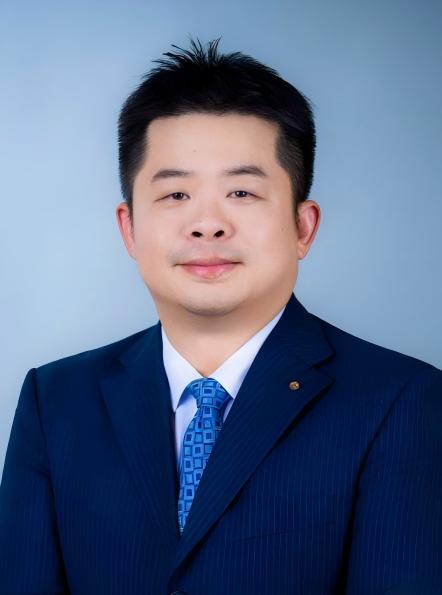 Peng Liu (刘鹏)合作论文数School of Public Administration and Policy, Renmin University of China1
 Yahong Zhang合作论文数Nanyang Technological University1C. Whalen合作论文数1Richard D. White合作论文数Department of Radiology, University of Florida1
 N. Emel Ganapati合作论文数1




