Social media platforms have significantly expanded the reach of social movements, allowing individuals to more easily publicly advocate for politically and socially salient causes. In this research, we examine whether the moral rhetoric used to promote a cause shapes people's willingness to publicly share it. Across five behavioral experiments (N = 3549), we find that liberals are less willing to share messages supporting causes they personally endorse when those messages employ moral rhetoric they perceive as aligned with conservative values (i.e., binding foundations), relative to rhetoric aligned with liberal values (i.e., individualizing foundations). In contrast, conservatives' willingness to share cause-related messages remains relatively stable regardless of rhetorical framing (Studies 1b and 2b). We also identify mechanisms underlying this asymmetry, including evidence of ideological signaling: liberals appear less willing to amplify rhetoric they associate with political opposition (Study 3). Supplementary observational analyses of aggregate sharing patterns on Twitter/X are directionally consistent with these experimental findings. Together, these findings show that moral language associated with an opposing political group can suppress liberals' public support for aligned causes, revealing how the dynamics of online visibility may hinder collective advocacy even when substantive agreement exists.
Major contemporary religions tend to emphasize self-control and moral purity in their believers. Such belief systems may have implications for moral judgments and social predictions. One topic that has received attention—with mixed results—is the relative punitiveness of religious believers. In the present research, we examine whether religiosity predicts punitive attitudes and propose a novel mechanism: slippery slope thinking, in which small changes are predicted to have potentially disastrous consequences. In eight samples across three nations and religious traditions, we find that greater religiosity is associated with greater slippery slope thinking. This association is related to psychological tendencies to believe in karma and moralize matters of self-control. Furthermore, we find that slippery slope thinking helps explain why more religious people are more punitive, especially for relatively minor transgressions. This research provides insight into the psychology of religious beliefs and provides a cognitive mechanism (slippery slope thinking) linking religiosity and punishment.
Passion is often celebrated as a driver of success, yet it also serves as a social cue that shapes moral expectations. Across five studies (N = 1,849), we examine how perceptions of obsessive versus harmonious passion influence workplace inferences and decisions. Obsessively passionate individuals are perceived as more likely to engage in goal-instrumental unethical behavior than harmoniously passionate or less passionate counterparts. These expectations guide selection: obsessively passionate individuals are disproportionately chosen for roles involving morally questionable conduct. This preference emerges even when obsessive passion is viewed as no more ethically risky than low self-control, suggesting that anticipated immorality is not penalized uniformly. Rather, obsessive passion pairs moral suspicion with valued qualities (e.g., dedication, drive), making ethical flexibility seem instrumentally useful. Passion type thus functions as a moral cue shaping how people are evaluated and deployed at work, raising concerns that organizations may inadvertently reinforce boundary crossing by rewarding "passion."
Research on moral decision-making in organizations has expanded significantly over the past few decades. In this review, we build on prior comprehensive reviews on the topic to provide an updated view of the field, based on the latest findings. We first provide a brief historical overview of influential theories of moral decision-making and then describe the individual characteristics, interpersonal factors, and organizational factors that have been shown to influence people's morally relevant choices, as well as the cognitive, affective, and even physiological processes at play. We then provide a more critical view of the field and focus on what we do not know, suggesting several avenues for future research. Specifically, we call for more research that incorporates the temporal dynamics of moral decision-making in organizations and that better accounts for the nature of the real-world moral issues people face at work. We conclude with some practical implications.
Mirroring the increasingly pervasive impact of politics in everyday life, research on politics, ideology, and partisanship in the workplace has escalated in recent years across a variety of domains germane to the organizational sciences. But for as many new insights as these lines of inquiry have produced—ranging from interpersonal interactions to employee behaviors to the organizational implications of top executives’ political leanings—there are just as many (if not more) compelling questions that remain unanswered. In this article, we offer our perspectives on the literatures involving politics, ideology, and partisanship in organizations, including an overview of research in the area and some particularly encouraging future directions. We also invite submissions for a new special issue that solicits scholarship on the topic across myriad disciplines, traditions, and empirical approaches. In the process, we delineate the nature of this special issue, introduce its associate editors, and offer guidelines for submissions—which we are accepting starting at this very moment.
Given growing political polarization in recent years, partisan dislike-defined as the negativity that individuals display at the prospect of having close social relations with supporters of the other party-has received increasing attention. While traditional work in social and political psychology has held that conservatives display greater outgroup hostility than liberals, the worldview conflict perspective suggests that both groups similarly express hostility toward value incongruent outgroups. Contradicting both established perspectives, we present evidence across five preregistered studies (and two additional studies reported in the Supplemental Materials) conducted between 2022 and 2023-two social media field experiments (N = 10,000) examining actual behavior and five survey-based studies (N = 2,443) operationalizing partisan dislike in various ways (e.g., blocking on social media, rating the likability of various targets, and evaluating hiring suitability)-that Democrats (i.e., liberals) dislike Republicans (i.e., conservatives) more than vice versa. We provide a potential explanation for this phenomenon by extending the worldview conflict perspective to account for asymmetries in how moralized specific values are among two conflicting groups at a given point in time. Specifically, we theorize that in light of recent social trends in the modern-day United States, the moralized belief that counter-partisans pose harm to disadvantaged groups, particularly racial/ethnic minorities, has become an asymmetric contributor to partisan dislike among Democrats. We found support for our theory across both measurement-of-mediation and experimental-mediation approaches and in both field experimental and survey data. Overall, this work advances research on ideology and outgroup hostility and extends the worldview conflict perspective to better explain partisan dislike. (PsycInfo Database Record (c) 2026 APA, all rights reserved).
We examine how perceived automation and AI threats (the belief that advanced technology threatens humans' career prospects) shape workers' strategies for career preparation. In nine studies (N = 2,320; three preregistered), we find that perceived automation threat drives people to prioritize creative skills over technical and social skills. A pilot study revealed that people view creativity as less prone to automation and more likely to complement automation. Subsequent experiments confirmed that automation threat leads people to highlight creativity in job applications (Studies 1a-1c), leads STEM students and professional graphic designers to cultivate creative abilities (Studies 2a-2b), and increases jobseekers' interest in companies that champion creativity (Study 3). People value creative skills in response to the automation threat even when reminded of generative AI's ability for creativity (Studies 4a-4b). These results suggest that advanced technology steers individuals to prioritize creativity as a skill necessary to compete in the labor market.
The prevailing view among scholars has been that the preference for strong leaders is an idiosyncratic feature of right-wing individuals. However, it is unclear whether this inference is accurate given that prior research has largely overlooked the role of ethnicity. We analyzed data from the United States and Western Europe (N = 34,443) and found that ethnic minorities (and right-wing individuals) preferred strong leaders to a greater extent than Whites (and left-wing individuals). Notably, ethnic minorities across diverse ethnic and political backgrounds were closer to right-wing Whites on strong-leader preference than to left-wing Whites. Our work also provides some evidence, using both measurement-of-mediation (Studies 1-4) and experimental mediation (preregistered Studies 5 and 6), that generalized trust helps explain group differences in strong-leader preference. In sum, our research illustrates the unique nature of left-wing Whites' leadership preferences, and highlights the importance of testing social science theories using diverse participant samples.
The success of diversity initiatives depends on the support of those in positions of structural power-that is, managers. However, managers often resist such initiatives. Existing academic and practitioner conversations point to managers' demographics or ideology as the source of resistance to diversity initiatives. We propose that such resistance may originate from the managerial position itself. We argue that positions of structural power induce organizational identification, which motivates a view that one's workplace is equitable. Seven archival studies of government employees (Studies 1a-1 g) and three surveys of working adults (Studies 2a, 2b, and 3) suggest those higher in structural power perceive less inequity in their workplace due to higher organizational identification, resulting in lower support for diversity initiatives. Asking managers to deliberate on inequities within their own organization, thus challenging their default positive view, helps managers overcome their identification barrier (Study 4). This research helps shift the foci of resistance toward diversity initiatives from demographics or ideology to one's managerial position and provides practical implications for organizations seeking to support their diversity initiatives.
Relying on the work on creative prototype and role theory, we demonstrate that having a creative identity can lead to moral objection depending on the implication of the act for one's identity as a creative individual. In a pilot study using a survey of working adults, we find that employees' creative identities and their intention to object in moral situations are positively and significantly correlated. Utilizing measurement-of-mediation (Study 1) and experimental mediation (Studies 2-4) approaches, we test and find support for the mediating role of norm-breaking motives predicting moral objection. In Studies 2-4, we find that creative identities lead to moral objection when moral objection is counter-normative and not when it is an expected, normative behavior. Across five studies (N = 1,327), utilizing both experimental and correlational methods, this paper shows that creative identities can prompt moral objection when such objection is counter-normative, aligning with the creative prototype and reinforcing a creative identity through norm-breaking motives. We extend prior theories on the consequences of creativity, the creative prototype, creative identities, and their link with moral acts.
We conducted a preregistered field experiment examining racial discrimination in tie formation on social media. We randomly assigned research accounts varying on race (Black, White) and politics (liberal/Democrat, conservative/Republican, neutral) to follow a politically balanced sample of Twitter (i.e., X) users (N = 5,951) who were unaware they were in a research study. We examined three predictions from the social and political psychology literatures: i) individuals favor White over Black targets, ii) this tendency is stronger for conservatives/Republicans than for liberals/Democrats, and iii) greater discrimination by conservatives/Republicans is explained by the assumption that racial minorities are liberal/Democrat. We found evidence that individuals were less likely to reciprocate social ties with Black accounts than White accounts. However, this tendency was not moderated by individuals' political orientation, shared partisanship, or partisan mismatch. In sum, this work provides field experimental evidence for racial discrimination in tie formation on social media by individuals across political backgrounds.
Over the past decade, there has been a shift in the way charities deliver humanitarian aid. Historically, the most prevalent way to help the global poor was by providing in-kind asset transfers. Recently, alternatives to in-kind aid, such as cash aid, have been increasing in prevalence. Although there has been widespread endorsement from the academic community and the public on the popularizing model of giving cash aid, one perspective remains untouched: the recipient’s perspective. Thus, the present research explores how food-insecure individuals feel when receiving money vs. in-kind food aid to help meet their hunger and nutrition needs. Specifically, we explore the degree of positive (e.g., feeling cared for) and negative (e.g., feeling ashamed) social emotions felt when receiving the aid opportunity and how willing recipients are to accept monetary (vs. food) aid. Results from five preregistered experiments (N= 3,110)—a field experiment in Kenya and four online experiments in the United States—find that monetary (vs. food) aid elicits comparatively more of a market-pricing relationship and less of a communal sharing relationship and, hence, makes people feel less positive and more negative social emotions when receiving the help. Subsequently, recipients are less likely to take up monetary (vs. food) aid from a charity. However, we find that this effect does not persist when receiving government aid: Recipients are similarly willing to accept money and in-kind food aid from the government. This research suggests that future scholarship ought to examine ways to improve psychological experiences when receiving money from charity.
To create social ties to support their professional or personal goals, people actively engage in instrumental networking. Drawing from moral psychology research, we posit that this intentional behavior has unintended consequences for an individual’s morality. Unlike personal networking in pursuit of emotional support or friendship, and unlike social ties that emerge spontaneously, instrumental networking in pursuit of professional goals can impinge on an individual’s moral purity — a psychological state that results from viewing the self as clean from a moral standpoint — and make an individual feel dirty. We theorize that such feelings of dirtiness decrease the frequency of instrumental networking and, as a result, work performance. We also examine sources of variability in networking-induced feelings of dirtiness by proposing that the amount of power people have when they engage in instrumental networking influences how dirty this networking makes them feel. Three laboratory experiments and a survey study of lawyers in a large North American law firm provide support for our predictions. We call for a new direction in network research that investigates how network-related behaviors associated with building social capital influence individuals’ psychological experiences and work outcomes.
 Francesca Gino合作论文数26
 Smith Isaac H合作论文数Graduate School of Management, Cornell University12
 Tiziana Casciaro合作论文数Rotman School of Management, University of Toronto9
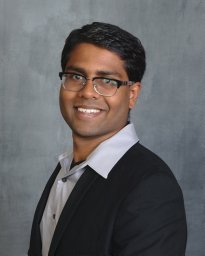 Krishnan Nair合作论文数Northwestern U.8
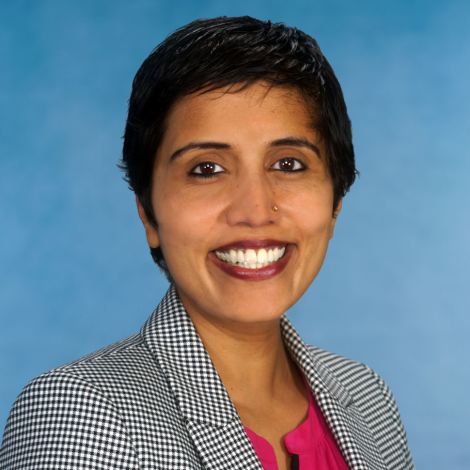 Sreedhari Desai合作论文数Kenan–Flagler Business School, The University of North Carolina at Chapel Hill7
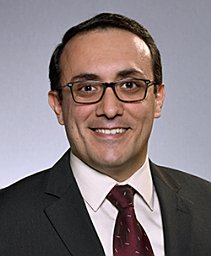 Jami Ata合作论文数College of Business Administration, University of Central Florida6
 Samantha Kassirer合作论文数Kellogg Sch Management, Northwestern Univ5
 Ekaterina Netchaeva合作论文数Bocconi University5
 Marlon Mooijman合作论文数5Christopher Oveis合作论文数Rady School of Management, University of California, San Diego4
 Burak Oc合作论文数4
 Yuval Feldman合作论文数Fac Law, Bar Ilan Univ4
 Kristin Smith-Crowe合作论文数Tulane University4
 Feng Qiu合作论文数3
 Monica Gamez-Djokic合作论文数3
 Christopher To合作论文数3
 Dylan Wiwad合作论文数Corresponding author.3
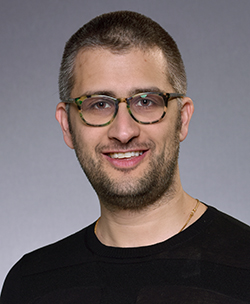 Adam Waytz合作论文数Department of Psychology, Weinberg College of Arts and Sciences, Northwestern University3
 Jillian J. Jordan合作论文数Department of Psychology and;Department of Psychology, Yale University;Department of Psychology and;Department of Psychology, Yale University3
 Lynne C Vincent合作论文数Department of Organizational Behavior, Cornell University3
 Justin D. Wareham合作论文数Yale School of Medicine3golnaz tajeddin合作论文数2
 David M. Markowitz合作论文数2
 Redona Methasani合作论文数R Methasani, University of Connecticut School of Business2Elizabeth Huppert合作论文数Dept Psychol, Univ Chicago2Li Jiang合作论文数2
 Rajen A. Anderson合作论文数Dept Psychol, Cornell Univ2
 Madeline Ong合作论文数Department of Management, Mays Business School, Texas A&M University2
 Ke Michael Mai (麦珂)合作论文数China Europe International Business School2
 Anjier Chen合作论文数Departments of Management and Organisation, National University of Singapore Business School2
 Philip L. Roth合作论文数Department of Management, Clemson University2
 Joseph P Gaspar合作论文数Quinnipiac University2
 Levine Emma E合作论文数The Wharton School.2
 Tai Kenneth合作论文数Department of Organisational Behaviour and Human Resources.2
 Linda K. Trevino合作论文数Department of Management and Organization, Smeal College of Business, Pennsylvania State University2
 Leavitt Keith N合作论文数oregon state university2Arthur Paul Brief合作论文数David Eccles School of Business, The University of Utah2
 Edward J. Zajac合作论文数Department of Management & Organizations, Kellogg School of Management, Northwestern University2Bidhan Parmar合作论文数2
 Danielle E. Warren合作论文数Rutgers Business School, The State University of New Jersey2
 Gerardo A. Okhuysen合作论文数David Eccles School of Business, University of Utah Department of Management2
 Jesse Graham合作论文数Department of Management, Eccles School of Business, University of Utah2
 Mohsen Mosleh合作论文数Oxford Internet Institute, University of Oxford;Wolfson College, University of Oxford;Sloan School of Management, Massachusetts Institute of Technology2
 Marie S. Mitchell合作论文数Department of Management, University of Nebraska2
 Natalia Karelaia合作论文数Universitat Pompeu Fabra2Aleksander P. J. Ellis合作论文数2
 Carlos Sousa合作论文数2
 Mary J. Waller合作论文数University of Illinois at Urbana-Champaign2Scott J. Reynolds合作论文数School of Business;University of Washington2




