Workplace mentors play a crucial role in supporting degree apprentices, as guides and advocates in the workplace and partners in the tripartite meetings with the university. The mentor can help to facilitate relevant work-based opportunities and identify appropriate credit-bearing workplace projects. So, it is in the interest of the university to provide the mentor with appropriate information and training. This study aimed to establish the current mentor training context within computing apprenticeship degrees in UK universities, with a specific focus on training to support inclusion. Two online surveys gathered the perspectives of workplace mentors (n = 44) and of university staff providing training (n = 13). A review of guidance materials provided to mentors by universities triangulated the picture. Activity theory (AT) facilitated a new way of exploring current training systems to include the actors and influences beyond the immediate collaboration. The main finding is that few mentors felt they were receiving adequate training for the role, with many not receiving any, representing a lost opportunity to learn and share knowledge. The AT analysis highlighted the challenges of ringfencing time for mentoring and allocating responsibility for appropriate training and inclusion strategies among the collaboration partners.
The environmental cost of computing continues to grow, yet behaviour change remains limited. We present a composite sustainability score integrating average carbon intensity, resource utilisation, and embodied emissions into a single 0-100 metric designed for gamified feedback. Each component rewards a different dimension of sustainable behaviour: carbon-aware workload shifting, high resource utilisation, and selecting hardware that is commonly underutilised. This scoring system is built into an existing cluster management interface and underpins three dashboard conditions: raw metrics, composite score, and a gamified tree visualisation, which we are planning to evaluate in a 12-week within-subjects study with approximately 35 researchers. Furthermore, we open the discussion on the challenge of defining computational work `goodness' in the context of sustainability scores.
Purpose The purpose of this study was to explore how degree apprentices' career outcomes vary across their apprenticeship and beyond their degree award, both in economic terms and with respect to job satisfaction, looking specifically at outcomes based on gender and socio-economic status (SES). Design/methodology/approach We surveyed former, now graduated, apprentices across engineering and computing in seven universities in Scotland (n = 113). Survey questions were designed to ascertain career success across demographic groups and included wage uplift during and after their apprenticeship, and job satisfaction. Findings We found the majority of apprentices had moved into post-apprenticeship graduate-level roles with their apprenticeship employer, had enjoyed a considerable uplift in pay and reported high levels of job satisfaction. However, a concerning gender pay gap was found for women starting their new graduate careers. We also found significant pay differences based on SES with those with higher SES starting their apprenticeship on lower apprenticeship wages but then accelerating through pay scales more quickly after graduating. Originality/value This study provides a first exploration of career trajectories of those graduating from computing, engineering and built environment programmes looking at job mobility, pay and job satisfaction with a particular focus on gender and SES. This study fills an important gap in our understanding of the value of the degree apprenticeship in terms of career outcomes including salary uplift and job satisfaction.
Online Student Peer Review (OSPR) is increasingly used in higher education to enhance engagement, reflection, and active learning. However, research on gender differences in OSPR remains limited, particularly regarding psychological factors such as self-efficacy and motivation. This study examines gender differences in these constructs during OSPR, with a secondary focus on a teacher-centered, gender-segregated educational context. 56 undergraduate computer science students (24 male, 32 female) participated in a structured, anonymous peer review task. Self-efficacy in evaluating and receiving feedback, along with intrinsic and extrinsic motivation, were measured using validated instruments. Results showed that female students reported significantly higher self-efficacy, particularly in evaluating peer work, while motivation did not differ significantly by gender. Across the sample, intrinsic motivation correlated moderately to strongly with all self-efficacy dimensions, particularly among females. For male students, extrinsic motivation was moderately associated with self-efficacy in receiving feedback. These findings suggest that well-designed OSPR activities can foster confidence and motivation, especially for female students in male-dominated disciplines like computer science. In teacher-centered environments, where feedback is top-down and student autonomy is limited, OSPR offers a valuable way to promote learner agency and engagement. The study contributes to the limited research on gender in OSPR and offers practical insights for designing inclusive online peer review activities in both mixed-gender and gender-segregated settings.
This Winter issue brings you 12 articles, with contributions by authors from across the UK, Canada, Greece, the Netherlands, and Norway. The articles cover a range of topics – from students’ sense of belonging to artist-teacher identity, student evaluations of teaching, registered reports, competencies required for science communication graduates, ways that staff can support student neurodivergence and mental health, and implications of open educational resources (OERs) and artificial intelligence for higher education. A strong theme recurring in this issue is online learning, and how educators have evolved their practice post-pandemic, with a view to using learning technologies in transformative ways to engage learners and support relationship building and inclusion, as well as building capability within the institution and wider tertiary education sector.
The number of people choosing to study computing in higher education remains low. Previous research has developed a research instrument to identify factors underlying student participation grounded in Bourdieu's sociocultural theory. This study replicates and extends the original study, which identified key social, cultural, and psychological factors linked to computing education participation in Sweden. Using the validated research instrument, we distributed a survey across 11 UK universities, gathering responses from 131 students. Through Confirmatory Factor Analysis, we assessed the robustness of the original study's constructs - career interest, subject-specific interest, influence from family and friends, confidence, and sense of belonging - and their relationship to subject choice in computing. After model refinements, the replication confirmed and validated the factor structure, supporting the stability of these constructs and their relationship to computing subject choice across cultural contexts. In addition, the current study adds additional open-ended questions to the research instrument to help explain the quantitative results. A thematic analysis further explains the correlation between previous experience, social influence, confidence, and gender, and how that relates to participation in the field. By replicating and extending the original study's methodology, this research evaluates the reliability and generalisability of its conclusions, contributing to the evidence base needed to design interventions that broaden participation in computing education.
We aim to explore and develop strategies for incorporating socially responsible computing into the foundational curriculum of computer science and software engineering programs in higher education in the UK. The objectives of the collaborative session are: reviewing the components of socially responsible computing - ethics, sustainability, societal impact and equity, governance and data protection, security; identifying essential competencies that should be fostered from early on in the program; developing actionable learning outcomes and curriculum changes to embed these principles from the outset.
Work-based learning (WBL) programs in Software Engineering provide students with opportunities to apply academic knowledge in the workplace. However, how students navigate the transition between knowledge and skills acquired at university and their application in the workplace remains largely unexplored. We implemented a WBL Software Engineering program in which students spend most of their time in the workplace rather than at university. Reflective student essays were used to examine how our implementation supports the integration and transfer of learning between academic and professional contexts. University modules - such as those on software design patterns and programming - offered directly applicable skills, while foundational knowledge and problem-solving frameworks supported further development. Workplace experiences reinforced understanding, provided context, and enabled practical application. However, skills such as project management, leadership, and context switching were primarily developed in the workplace, revealing gaps between academic team projects and industry needs. Difficulties in transferring some advanced technical skills also point to a disconnect between academic instruction and industry application. Our findings suggest a cyclical relationship between university and workplace learning, with each enhancing the other. We propose key considerations for WBL program design, including curriculum alignment, structured skill development, and integrated delivery. Finally, we underscore the value of reflective essays in observing and supporting skill integration.
Reviewer acknowledgements for oSoTL 5(1), Winter 2025.
The academic preparation of computing graduates ready for successful long-term careers remains challenging due to a variety of factors, with most universities still unable to incorporate competencies into their education. Competencies refer to the knowledge, skills, and professional dispositions expected from these graduates during task performance. This panel presents three different perspectives on how work experiences may be incorporated into the program curriculum to develop the needed competencies.
The software engineering graduate apprenticeship program at the School of Computing, University of Glasgow, has a significant emphasis on work-based learning (WBL), with approximately 80% of the students' time over four years spent in the workplace. This work-based aspect of the program plays a more prominent role in the final two years, by which time apprentices are undertaking increasingly larger roles in the workplace. In this report, we present how we addressed the challenge of structuring and assessing WBL in these senior years such that there is a balance between professional competency attainment and ranked academic achievement, while providing a fair and flexible structure. Based on a model of WBL presented by Raelin in 1997, we outline our rationale for dividing the assessments into workplace projects, workplace journal, and a portfolio of artefacts. The projects are categorised into different types both for flexibility and to encourage academia-industry collaboration, the workplace journal encourages higher forms of reflection, while the portfolio assessment encourages and assesses the attainment of professional competencies. We present our experience of implementing this structure, an analysis of student feedback, and the adjustments made in response. With an increasing focus on work-ready skills and competency-based education in software engineering education, we expect the theory-informed structure we developed, and our experience of running and adapting it, to serve as an exemplar for developing a WBL program at research-led institutions.
Acknowledgements for the Ukraine special issue, oSoTL 4(2): “Tempus fugit, Academia sempiternal”
This study examines the development of reflective practice among students in an undergraduate work-based Software Engineering program. Using two established models of reflection - Boud et al.'s Model of Reflective Process and Bain et al.'s 5R Framework for Reflection - we analyse a series of reflective reports submitted by students over four years. Our longitudinal analysis reveals clear trends in how students' reflective abilities evolve over the course of the program. We find that more sophisticated forms of reflection, such as integration of knowledge, appropriation of skills, and reconstruction of practice, increase markedly in prevalence in later years. The complementary nature of workplace experience and university study is highlighted in students' reflections, demonstrating a key benefit of the work-based learning approach. Our findings provide insight into how reflective practice develops in Software Engineering education and suggest potential value in incorporating more structured reflection into traditional degree programs.
We wholeheartedly thank the following reviewers, who freely gave their time and expertise, supporting authors and adding value to the work of oSoTL.
Computing educators' emotion display is regulated by various norms and conventions. These (unwritten) rules affect which emotions educators feel comfortable expressing to different extents when students can perceive such displays. We draw on emotions and norms literature to investigate higher education computing educators' perceptions of what kinds of norms they have as criteria when considering which emotions they are (not) comfortable showing when teaching. Based on the qualitative content analysis of 22 interviews with computing educators from seven countries, we present various - sometimes connected or conflicting - norms that influence emotion display. These norms comprise moral, national, societal, professional, and affiliation norms that are salient in different ways for different educators. The findings contribute to a more nuanced understanding of various combinations of nested, context-dependent, and partly conflicting norms that guide educators' emotion display, an understanding of educators' work that goes beyond cognitive aspects.
 Vicki H.M. Dale合作论文数10
 Nathalie Tasler合作论文数7
 Oana Andrei合作论文数Faculty of Computer Science, “A.I.Cuza” University of Iasi, Iasi, Romania7
 Derek Somerville合作论文数6
 Sally Smith合作论文数Sch. of Comput., Edinburgh Napier Univ.;c;Sch. of Comput., Edinburgh Napier Univ.6
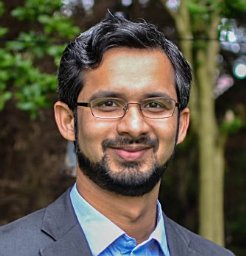 Syed Waqar Nabi合作论文数6
 Jack Parkinson合作论文数University of Glasgow5
 Mihaela Sabin合作论文数University of New Hampshire5Landon Kyle Berry合作论文数4
 Sarah Evans合作论文数4
 Mahli-Ann Butt合作论文数Dept Gender & Cultural Studies, Univ Sydney4
 Lars De Wildt合作论文数Ctr Excellence Game Culture Studies, Tampere Univ4
 Maria Kallia合作论文数University of Glasgow4
 Virginia Grande合作论文数Uppsala Univ4
 Matilde Sanchez-Pena合作论文数Engineering Education, University at Buffalo4Daniel Dunne合作论文数4
 Anne-Kathrin Peters合作论文数Department of Learning, School of Industrial Engineering and Management, KTH Royal Institute of Technology4
 Ella Taylor-Smith合作论文数Napier University4
 Mark Zarb合作论文数University of Dundee4Päivi Kinnunen合作论文数Helsinki University of Technology4
 Amari N. Lewis合作论文数Department of Computer Science, University of California, Irvine, Irvine, USA#TAB#3
 Tessa Berg合作论文数Heriot Watt Univ, Sch Math & Comp Sci, Edinburgh, Midlothian, Scotland3
 Khristin Fabian合作论文数Ctr Comp Educ Res, Edinburgh Napier Univ3
 Mats Daniels合作论文数Uppsala University3
 Asa Cajander合作论文数Uppsala University3Alistair Morrison合作论文数University of Glasgow's Department of Computing Science3
 Andrew McHugh合作论文数Department of Computers, Mathematics and Engineering, Mitchell College3Neena Thota合作论文数Department of Information Technology, Uppsala University3Quintin I. Cutts合作论文数Department of Computing Science;University of Glasgow3Michael James Scott合作论文数2Charlie Ecenbarger合作论文数2Carina Assuncao合作论文数2Eric Murnane合作论文数2James Paterson合作论文数Geography and the Lived Environment, School of GeoSciences, The University of Edinburgh2Ian Anderson合作论文数2
 Mario Kolberg合作论文数University of Stirling2
 Leo Konstantelos合作论文数2
 Sebastian Dziallas合作论文数Franklin W. Olin College of Engineering, Needham, MA, USA2
 Quintin Cutts合作论文数Department of Computing Science
University of Glasgow2Jim Paterson合作论文数1Sam Holden合作论文数1Joseph Maguire合作论文数1Alasdair Bachell合作论文数1Ivaylo Valkov合作论文数1
Quintin Cutts合作论文数Department of Computing Science
University of Glasgow2Jim Paterson合作论文数1Sam Holden合作论文数1Joseph Maguire合作论文数1Alasdair Bachell合作论文数1Ivaylo Valkov合作论文数1 Ali Ahmad Malik合作论文数1Camilla Barnett合作论文数1
 Thom Kunkeler合作论文数1Nick Quinn合作论文数1
 Olga Petrovska合作论文数1




