In this talk we will give a very brief overview of Flipkart, highlighting the major milestones in its journey so far and some latest market size numbers. We will enumerate some of the important data science challenges in an e-commerce company like ours. Finally we will cover one of the problems, demand forecasting, in some details to highlight some of our recent work: Accurate demand forecasts can help on-line retail organizations better plan their supply-chain processes. The challenge, however, is the large number of associative factors that result in large, non-stationary shifts in demand, which traditional time series and regression approaches fail to model. We propose a Neural Network architecture called AR-MDN, that simultaneously models associative factors, time-series trends and the variance in the demand
The subject matter of this document generally relates to reducing noise in aggregated data using frequency analysis. In some implementations, a system for reducing data noise using frequency analysis includes a data storage device that stores content and a network association processor in data communication with the data storage device. The network association processor aggregates, for a given group, content of one or more additional groups that each have overlapping members with the given group. The network association processor reduces noise in the aggregated content of the one or more additional groups using frequency analysis by determining, for each portion of content in the aggregated content, a frequency of occurrence of the portion of content within the aggregated content and filtering, from the aggregated content, each portion of content that has a frequency of occurrence that is less than a threshold.
Traditional database management systems are best equipped to run one-time queries over finite stored data sets. However, many modern applications such as network monitoring, financial analysis, manufacturing, and sensor networks require long-running, or continuous, queries over continuous unbounded streams of data. In the STREAM project at Stanford, we are investigating data management and query processing for this class of applications. As part of the project we are building a general-purpose prototype Data Stream Management System (DSMS), also called STREAM, that supports a large class of declarative continuous queries over continuous streams and traditional stored data sets. The STREAM prototype targets environments where streams may be rapid, stream characteristics and query loads may vary over time, and system resources may be limited.
We present some results related to small space computation over sliding windows in the data-stream model. Most research in the data-stream model, including results presented in some of the other chapters, assume that all data elements seen so far in the stream are equally important and synopses, statistics or models that are built should reflect the entire data set. However, for many applications this assumption is not true, particularly those that ascribe more importance to recent data items. One way to discount old data items and only consider recent ones for analysis is the sliding-window model: Data elements arrive at every instant; each data element expires after exactly N time steps; and, the portion of data that is relevant to gathering statistics or answering queries is the set of last N elements to arrive. The sliding window refers to the window of active data elements at a given time instant and window size refers to N. This chapter presents a general technique, called the Exponential Histogram (EH) technique, that can be used to solve a wide variety of problems in the sliding-window model; typically problems that require us to maintain statistics. We will showcase this technique through solutions to basic counting problems, as well as other applications.
 Rajeev Motwani合作论文数Department of Computer Science, Stanford University27
 Brian Babcock合作论文数Demandbase23
 Tomasz J. Tunguz-Zawislak合作论文数13julie tung合作论文数13Jason C. Miller合作论文数13megan nance合作论文数13Andres S Perez-Bergquist合作论文数13
 Jennifer Widom合作论文数School of Engineering, Stanford University13
 Ashutosh Garg合作论文数Eightfold AI;Laddrr13
 Jeremiah J. Harmsen合作论文数Google DeepMind13Bahman Rabii合作论文数13
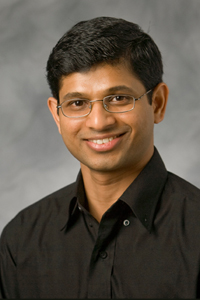 Shivnath Babu合作论文数Unravel12
 Arvind Arasu合作论文数Stealth Startup9mike hochberg合作论文数8
 Surajit Chaudhuri合作论文数Microsoft Research6
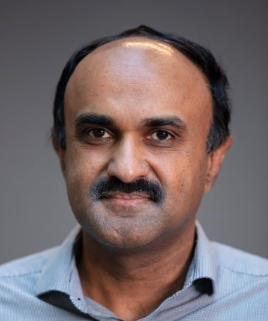 Vivek Narasayya合作论文数Microsoft Research6Matthias Ruhl合作论文数Google, Mountain View6
 Piotr Indyk合作论文数Department of Electrical Engineering and Computer Science, Schwarzman College of Computing, Massachusetts Institute of Technology;Computer Science and Artificial Intelligence Laboratory, Schwarzman College of Computing, Massachusetts Institute of Technology6Itaru Nishizawa合作论文数5Keith Ito合作论文数5
 S. Muthu Muthukrishnan合作论文数Amazon5
 Michael Hochberg合作论文数Elenion Technologies, LLC5Terrence Rohan合作论文数4Sverre Sundsdal合作论文数4Thomas M. Annau合作论文数4Justin Rosenstein合作论文数4S Babu合作论文数3
 Nicole Immorlica合作论文数Microsoft Research3
 Aristides Gionis合作论文数Division of Theoretical Computer Science, Department of Computer Science, School of Electrical Engineering and Computer Science, KTH Royal Institute of Technology3
 Kedar Dhamdhere合作论文数Carnegie Mellon University3
 Gagan Aggarwal合作论文数Google Research3
 Vahab Mirrokni合作论文数Google Research3
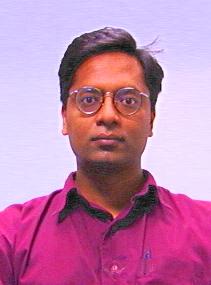 Vibhu Mittal合作论文数Just Research, 4616 Henry Street, Pittsburgh, PA2Abhinandan S. Das合作论文数2
 John Cieslewicz合作论文数Google LLC2
 Utkarsh Srivastava合作论文数Patreon2
 Liadan O'Callaghan合作论文数2
 Sridhar Rajagopalan合作论文数Almaden Research Lab, IBM2Rohit Varma合作论文数1Dilys Thomas合作论文数1
 Nina Mishra合作论文数Amazon;Stanford University1A. Andoni合作论文数1ray su合作论文数1siavash sedigh nejad合作论文数1justin lewis kosslyn合作论文数1pranav kumar tiwari合作论文数Cellworks Grp Inc, San Jose, CA USA1
 Alexandr Andoni合作论文数Department of Computer Science, The Fu Foundation School of Engineering and Applied Science, Columbia University1




