Medical image registration is a preprocessing stage in a variety of applications such as change detection and mosaicking. Matching is one of the essential steps in image registration. The Scale invariant feature transform (SIFT) is an applicable algorithm used in image matching problems. In all matching methods, including the SIFT algorithm, incorrect matches are created due to the soft-tissue and similar patterns in medical images. Various methods have been suggested to eliminate incorrect matches, each of which has its drawbacks. For example, the Mean-based adaptive RANSAC (MAR) uses the adaptive transformation model to eliminate incorrect matches. This method effectively eliminates incorrect matches against geometric deviations, but it cannot remove incorrect matches of soft-tissue images. The Graph Transformation Matching (GTM) method, on the other hand, is another important and common method in eliminating incorrect matches. This uses the spatial relationships of the image to eliminate incorrect matches, but is not suitable for removing incorrect matches in images with geometric and noise distortions. However, the literature suggests no method that alleviates these problems simultaneously and that works well in all image types. In this paper, a new method based on the hybrid GTM-Mean-based adaptive RANSAC is suggested. In the proposed method, MAR and GTM algorithms are combined innovatively to maintain the advantages of both methods and to eliminate their weaknesses. In this strategy, if two methods have the same result, it is considered as the final decision. In the opposite case, the final decision is made based on the root mean square error between candidate matching points. Simulation results confirm the suggested method’s superiority over standard medical databases such as those of retina and brain compared to classic methods in terms of RMSE and precision. The proposed method has increased matching precision by 37% in average, and reduced RMSE by 40% in average.
Stress is one of the emotional states that cause disruption in decision-making, that’s why stress while driving can be dangerous. Identification of stress in drivers by smart algorithms and timely warning can prevent traffic accidents. In the proposed method to provide a stress detection driver assistance system, the feature vector is used as convolutional neural network input, which makes the training of the network stable in repeated repetitions, improves the weight update, and increases the classification accuracy. The drivedb database contains biosignals such as the ECG of drivers in city driving and in our proposed method, the ECG of this database is used. By using the proposed method, three stress states were identified with 93.6% accuracy, which has increased classification accuracy compared to similar methods.
Epilepsy can be defined, according to the World Health Organization, as recurrent seizures related to physical reactions caused by a sudden discharge of electricity to some human brain cells. Electroencephalogram (EEG) signals play a vital role in the diagnosis of this disease. The recording of EEG signals recorded by mobile recording devices produces very long information that the detection of the epileptic area requires a long time for the expert to analyze all the information. Traditional methods of analysis are tedious, which is why in recent years there have been so many automated systems for diagnosing epilepsy. In this article, a new approach to the diagnosis of epilepsy is presented. First, the preprocessing process is applied to the EEG signals and the signal is decomposed into ten sub-signals using an experimental wavelet transform. Then, the best features are selected using the proposed method of analysis of variance. Then, using the Siamese network to decrease the dimensions of the feature vector in improving the performance of seizure detection. Finally, the support vector machine (SVM) algorithm uses these features to classify convulsive and non-convulsive EEG signals. The simulation results show that the proposed method of the paper using the EEG signal dataset of the University of Bonn has resulted in 99.30 accuracy and this method can effectively help physicians in diagnosing epilepsy, thus reducing their workload.
In smart cars, checking driver’s conditions is necessary for safe driving. Stress is a destructive emotional state that causes drivers not to make timely decisions and brings irreparable risks. Therefore, detecting drivers’ stress and giving timely warnings can prevent possible accidents. The best way to identify stress is to use bio-signals and intelligent processing algorithms. In the proposed method to identify drivers’ stress, the drivedb database is used. Then, various statistical, frequency, entropy, and morphological characteristics are extracted from the ECG data of this database. To optimize the features, the Binary Marine Predators Algorithm is used, which is a meta-heuristics method inspired by hunting prey by a marine in nature. Using two transfer functions, this algorithm can optimize features more than other heuristics optimizers. Using the proposed method, three states of low, medium, and high stress in drivers have been identified with 94.6% accuracy, which has increased the accuracy by 3-4% compared to the latest research in the field.
Heart sounds play an important role in diagnosing heart diseases. The phonocardiogram (PCG), is the recording of the sounds produced by the heart and the main heart valves. The PCG signal can be recorded invasively by internal microphones that are inserted into the heart and valves as well as noninvasively by placing the microphone on the surface of the body. A main challenge of PCG signal is environmental factors which reduces the signal-to-noise ratio (SNR). This has made it difficult and time-consuming for experts to detect heart sounds. Therefore, automatic classification of heart sounds is very helpful for physicians. In this paper, the features are extracted by the Discrete Wavelet Transform (DWT) and group-based sparse to distinguish the main and abnormal heart sounds. Afterwards, the Support Vector Machine (SVM) algorithm is used to classify these heart sounds. The simulation results on the PhysioNet dataset affirm the suggested method outperforms classical methods in terms of sensitivity, precision, F1-score and, specificity.
Purpose: Sleep is a subconscious state, and the brain is active during it. Automatic classification of sleep stages can help identify various diseases. In recent years, automatic sleep monitoring using deep learning networks has attracted the attention of researchers. Materials and Methods: In this paper, a deep learning type neural network called Stacked Autoencoders (SAEs) is used for automatically classifying sleep stages. SAEs are a kind of neural network with encoder and decoder blocks. The function of these networks is similar to the human brain and is capable of automatically processing signals; also SAEs are robust to noise. To prove the efficiency of this network, in addition to examining the effect of various biological signals such as Electrocardiogram (ECG) and Electroencephalogram (EEG) on the performance of sleep stage classification, Sleep Heart Health Study (SHHS) and ISRUC standard databases have been used, which include night recordings of 30 and 10 healthy humans, respectively. Results: The accuracy of classifying 2 to 6 classes by SHHS database are 0.995, 0.983, 0.9780, 0.9688, 0.961, and on ISRUC database accuracies are 0.996, 0.994, 0.9511, and 0.9431. Moreover, the proposed network can classify wake, deep sleep, and light sleep using the ECG signal (acc = 0.75, kappa = 0.69). Conclusion: In the review of the results, it is concluded that sleep stages classification based on EEG signal has better results, still acquisition of ECG signal and its acceptable results can be a good alternative to use. In addition to its high ability of the proposed method to detect sleep stages, this network is robust to noise, which is very necessary and important for the clinical processing of sleep signals.
In recent years, the use of metaheuristic algorithms in solving optimization and data mining problems has been widely embraced. These algorithms have shown significant efficiency in solving complex and high-dimensional problems. The water flow algorithm, inspired by the natural movement of water towards the lowest possible point on the ground, has demonstrated remarkable superiority in solving continuous problems with high dimensions. However, it is not suitable for solving discrete and binary issues. In this article, the Water Stream Algorithm has been converted into a binary version using a combination of sigmoid and U-shaped transfer functions without changing operators. The statistical results show that the BWSTO algorithm has faster convergence and more robust exploitation than the Genetic Algorithm and Binary Particle Swarm Optimization Algorithm. This algorithm performs better than the Binary Gray Wolf Algorithm in avoiding local minima. The proposed algorithm has more exploratory capabilities compared to the binary gravitational search algorithm.
Purpose: The process of Magnetic Resonance Imaging (MRI) image registration is one of the important branches in MRI image analysis, which is a necessary pre-processing to use the information in these images. The purpose of this paper is to present a new approach for MRI image registration that can maintain the total number of initial matches and have the highest precision. Materials and Methods: The Clustered Redundant Keypoint Elimination Method-Scale Invariant Feature Transform (CRKEM-SIFT) algorithm has recently been introduced to eliminate redundancies and upgrade the correspondence precision. The disadvantages of this algorithm include the high execution time and the number of incorrect correspondences. In this paper, to increase the accuracy and speed of MRI image registration, the CRKEM method is first used over the Speeded Up Robust Features (SURF) algorithm. Then, Spatial Relations Correspondence (SRC) and Alpha-Trimmed Spatial Relations Correspondence (ATSRC) methods are suggested to improve correspondences. These suggested methods, unlike conventional methods such as Random Sample Consensus (RANSAC(, which only eliminates incorrect correspondences, detect incorrect correspondences based on spatial relationships and turn them into correct correspondences. Converting incorrect correspondences to correct ones can increase the number of correct correspondences and ultimately increase the precision of correspondences. Results: The simulation results show that the suggested CRKEMSURF-ATSRC approach improves the mean by 28.92% in terms of precision and 37.58% in SITMMC compared to those of the SIFT-ARANSAC method. Conclusion: The suggested SRC and ATSRC methods use the spatial relations of the initial correspondences to convert the incorrect correspondences into correct ones. The number of initial correspondences is maintained in these suggested approaches. These methods are better than other methods of improving correspondences such as RANSAC, and Graph Transformation Matching (GTM). These suggested methods can be used as a new and efficient approach to improve the correspondence of medical images.
In this article, a new approach is suggested in remote-sensing images registration. In the suggested approach, first, the features extraction process is done based on proposed redundant keypoint elimination method synthetic aperture radar-SIFT (RKEM-SARSIFT). Second, creating descriptors is based on the Multi-Support Region Order-Based Gradient Histogram (MROGH) algorithm. Finally, matching process is done based on nearest neighbor distance ratio (NNDR) and transformation model is done based affine transform. The simulation results on several remote sensing image datasets affirm the suggested approach advantage in comparison with some other basic registration methods in terms of precision matching, SITMMR and SITMMC.
In this paper, a new approach is proposed for object recognition in remote-sensing images. In the proposed approach, the matching process between the object in the template and test images is done based on Scale Invariant Feature Transform (SIFT). To decrease the false matches of SIFT, an adaptive Random sample consensus (RANSAC) algorithm is used. In the proposed RANSAC, the threshold value is calculated adaptively based on the mean and variance of the correct and false matched points. Finally, the exact object boundary is extracted using the extended region-growing algorithm. The proposed algorithm uses the correct matched points as multiple seed points instead of a single seed point. The proposed method is implemented in MATLAB, and compared with classic object detection methods. Simulation results confirm the superiority of the proposed method based on some evaluation criteria such as precision, correct detection ratio and false alarm rate.
Copy move forgery is one of the most common types of image forgery, and it is very important to detect this type of forgery. Feature-based forgery detection methods perform better than block-based methods. In this article, a new feature-based approach is suggested in the copy-move forgery detection process. In the suggested approach, first, the features extraction process is done based on SIFT. Second, matching process is based on the g2NN criteria. Finally, removal mismatches are done based on the suggested improved A-RANSAC that stopping criteria is presented based on the number of final matches. The stop time in the basic A-RANSAC method is based on the number of repetitions, which increases the execution time and decreases its speed. This suggested approach, in addition to proper accuracy, increases speed. The simulation results on MICC-F220 datasets affirm the suggested approach advantage in comparison with some other basic methods in terms of precision matching and execution time.
Natural Image Mosaicing based on Redundant Keypoint Elimination Method in SIFT algorithm and Adaptive RANSAC method
In this paper, a new method for image mosaicing (image stitching) is introduced based on Scale Invariant Feature transform (SIFT). One of the main drawbacks of SIFT is the redundancy of the extracted keypoints, which leads to lower image mosaicing quality. Recently, a new method called Redundant Keypoint Elimination (RKEM) was presented to remove these redundant features, and enhance image registration performance. Despite the applicability of RKEM, its threshold value is considered the same in all parts of the image. This characteristic leads to inappropriate removal of keypoints due to the fact that distribution of keypoints in the high-detailed region is denser than the low-detailed ones. This paper proposes a new method to improve RKEM called Clustered RKEM (CRKEM) which is based on keypoints distribution. Moreover, in this paper a new blending algorithm is proposed based on a Gaussian-weighted function. In the proposed blending method, the Gaussian function is proposed based on the mean and variance of the pixels in the overlapped region of images to be mosiaced. In comparison with the classical methods, the experimental results confirm the superiority of the proposed method in image mosaicing as well as to image registration and matching.
The popularity of integrating technology in language instruction and its fundamental effect on the language learning dimensions has been widely acknowledged whereas learners’ motivation and attitude are expected to be improved in a web-based Computer-assisted language learning (CALL) environment. Therefore, this paper aimed to investigate the Iranian EFL learners’ motivation to learn English and attitude in a CALL environment. The participants of this study were 120 intermediate EFL learners from two private English language institutes in Isfahan, Iran. They were divided into two equal groups; one experimental group (EG) and one control group (CG). Then, a motivation questionnaire pretest was administered out to check the participants’ motivation at the beginning of the course. As the treatment, the EG learners were taught through CALL-based instruction and the CG learners were taught traditionally. After the treatment, a posttest of motivation and an attitude questionnaire were administered. The outcomes indicated that the CALL-based instruction promoted the participants’ motivation as checked by the Motivation Questionnaire. Moreover, as measured by a 20-item A-CALL attitude questionnaire, it was discovered that the learners in the EG had positive attitudes toward using CALL-based instruction. In light of the findings, a number of conclusions are obtained and several implications are put forward.
Introduction: In recent years, due to physical problems of patients or restrictions on social interactions in COVID-19 pandemic, telerehabilitation based on virtual reality (VR) attracted the attention of many researchers. Method: In this applied research, a Kinect sensor and an image processing software were used to design and implement a motion simulator for rehabilitation of patients with physical problems in upper or lower limb. To do this, the patient was supposed to touch or catch moving objects such as a bee. The movement of objects was based on physician’s decision and while comparing patients’ movements with reference ones in the designed system, the patient was encouraged to correct his/her movements to finally be able to do them in the desired manner. In the designed system, it is possible to monitor the patient’ movements outside the clinical environment and based on telerehabilitation. Results: The efficiency of the designed system in patients with physical disabilities was investigated based on quantitative analysis (via motion charts) and qualitative analysis (through questionnaire). Conclusion: The results showed the high efficiency of this system in analysis of patients’ movements (through comparing it with reference ones), and the possibility to practically use it in rehabilitation centers especially in recent situation of covid-19 pandemic
Sleep is a normal state in humans and the subconscious level of brain activity increases during sleep. The brain plays a prominent role during sleep, so a variety of mental and brain-related diseases can be identified through sleep analysis. A complete sleep period according to the two world standards R&K and AASM consists of seven and five steps, respectively. To diagnose diseases through sleep, it is necessary to identify different stages of sleep because the disorder at each stage indicates a certain disease. On the other hand, efficient and useful features should be selected to increase the accuracy of sleep stage classification. In this paper, at first, different statistical, entropy, and chaotic features are extracted from sleep data. Afterwards, by introducing and using the Laplacian score selector, the best feature set is selected. At the end, some conventional classification algorithms such as SVM, ANN and KNN are used to classify different sleep stages. Simulation results confirms the superiority of the proposed method based on the classification results. With the proposed algorithm, 2, 3, 4, 5 and 6 stages of sleep were classified by SVM and decision tree with 98.0%, 98.0%, 97.3%, 96.6%, and 95.0% accuracy, which are more superior to previous method’s results.
A two-step approach to energy management in smart micro-grids aimed at improving social welfare levels and the demand side management effect
Sleep is a natural and essential state for all beings. By examining people's sleep, various mental and physical diseases such as depression, apnea, and epilepsy can be diagnosed. Due to this fact, classification of sleep stages is very important and critical in sleep analysis. In this paper, an automatic method is proposed for sleep stages classification based on EEG signal. To do this, different statistical, entropy, and distance features are extracted from one-channel EEG of sleep-EDF database. To select the optimum set of features, different heuristic optimization algorithms such as genetic algorithm (GA), ant colony optimization (ACO) and simulated annealing (SA) are exploited. Using the proposed method, two to six classes of sleep are classified by 97.54%-92.66% accuracy which, shows its superiority over classic methods.
Purpose of the study: This article report’s findings from a study on the differences and similarities between experienced and novice English language learners with regards to their personal use of VLS. Methodology: Closed questionnaire and semi-structure interviews were applied to collect the data. The questionnaire was distributed among 60 (30 experienced learners and 30 novice learners). In addition, 20 learners (10 experienced learners and 10 novice learners) were asked to answer the questions in the interview. Therefore, descriptive statistics, U Mann Whitney test, and independent-sample t-test were run to compare and analyzed the data. Main Findings: The finding showed that there were significant differences between experienced and novice learners’ thoughts towards vocabulary learning strategies and experienced learners used vocabulary learning strategies while learning new words in English language learning. Applications of this study: If the learners are taught how to use each strategy correctly, their understanding of the language can naturally be improved. Moreover, VLS is beneficial throughout the process of vocabulary learning which makes learners more independent and allows teachers to focus on other things as well. Novelty/Originality of this study: To the best of researchers’ knowledge, no study has been done on investigating Iranian experienced and novice English language learners` perceptions towards most useful vocabulary learning strategies (VLS).
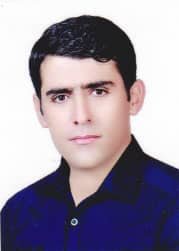 Ehsan Namaziandost合作论文数Department of English Faculty of Humanities Shahrekord Branch, Islamic Azad University19
 Zahra Hossein-Nejad合作论文数Islamic Azad University, Iran15
 Hossein Nezamabadi Pour合作论文数Shahid Bahonar University of Kerman6
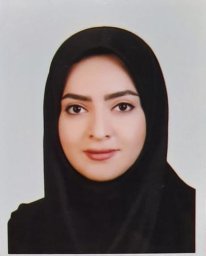 Mahtab Vaezi合作论文数Khomeinishahr branch, Islamic Azad University5
 Fariba Rahimi Esfahani合作论文数Shahrekord Branch, Islamic Azad Univ5
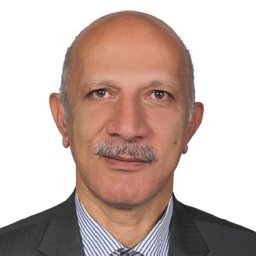 Saeid Saryazdi合作论文数Department of Electrical Engineering, Shahid Bahonar University of Kerman5Mohammad Mahdi Rezaei合作论文数3
 Leila Neisi合作论文数3
 Reza Biria合作论文数Islamic Azad University3Samira Akbari合作论文数2Fateme Saadat合作论文数2
 Farhad Azimifar合作论文数2
 Mohammad Hossein Keshmirshekan合作论文数Dept English, Yazd Univ2
 Sheida Ahmadi合作论文数2
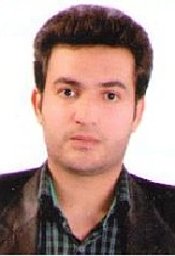 Mahdi Mosleh合作论文数Dept Elect Engn, Islamic Azad Univ2Javad Ebrahimi合作论文数2
 Mohammad Abedini合作论文数Faculty of Engineering, Bu-Ali Sina University2H. Nezamabadi-pour合作论文数1
 Majid Eslami合作论文数1Farahnaz Ahmadpour karimAbadi合作论文数1Rasool Mirshekaran合作论文数1
 Mahzad Karimi合作论文数1Vida Shatalebi合作论文数1
 Mehrdad Sepehri合作论文数Shahrekord Branch, Islamic Azad Univ1
 Fatemeh Mahdavirad合作论文数English Language & Literature Dept, Yazd Univ1
 Ghasemali Azadi合作论文数Isfahan Branch Khorasgan, Islamic Azad Univ1
 Meisam Ziafar合作论文数Department of English Language Teaching, Islamic Azad University1
 Sajad Shafiee合作论文数Shahrekord Branch, Islamic Azad Univ1
 Mohammad Ali Heidari-Shahreza合作论文数Dept English, Islamic Azad Univ1Malihe Maghfoori合作论文数1
 Metrane Abdelmoutalib合作论文数Ecole Nationale des Sciences Appliquées de Khouribga, Université Hassan 1 and GERAD1
 I. Hafidi合作论文数CNRS–UMR 5208, INSA de Lyon1
 Akbar Afghari合作论文数English Department, Sheikh Bahaaee University1




