The growing demand for courier, express, and parcel (CEP) services, driven by the rise in online retail, has intensified competition for urban road space, leading to increased congestion. Delivery vehicles frequently resort to second-row parking, obstructing traffic flow and exacerbating delays for motorised individual transport (MIT). However, neither the competitive dynamic between CEP services and MIT nor the loading and unloading zones (LUZs) have been considered in current urban freight transport models. A prevalent consequence of this competition is the obstruction of traffic flow due to delivery vehicles engaging in second-row parking. For solving this issue, LUZs could be an important contribution. To assess the impact of this transport policy measure, ex-ante simulation-based evaluations are necessary. For this reason, we develop a feedback approach between the microscopic traffic simulation SUMO and the mesoscopic, agent-based transport simulation MATSim, which is linked to the Vehicle Routing Problem (VRP) solver Jsprit to adequately illustrate the interactions between freight transport and MIT. We also apply this approach to assess the impacts of LUZs on traffic flow and environment. We show the effects of the LUZs in the framework of a case study in the district Mitte of Berlin, Germany. The simulation results reveal that the implementation of designated LUZs improves overall traffic flow, increases network travel speeds, and reduces time losses for other road users.
Air pollution in metropolitan areas is one of their main problems, which has led to the implementation of Low Emission Zones (LEZ) in different cities worldwide. Estimating the benefits such LEZ can provide heavily depends on correctly predicting the resulting pollutant concentrations due to vehicle emissions. Yet, one of the main problems in traffic-related research is that the emission models of traffic simulators merely allow determining the mass emissions of vehicles, and not the concentrations of these pollutants as experienced by citizens. Although urban pollutant dispersion models have been developed to fill this gap, seamless integration with traffic simulators remains elusive. One of the solutions recently adopted is to create frameworks that integrate both concepts. In this work, we present a novel tool called SUMO2GRAL, that facilitates the creation of an integrated framework. In particular, it combines the SUMO traffic simulator with the GRAL pollutant dispersion model, in order to obtain reliable concentrations of urban air pollutants. Based on those results, researchers shall be able to help city administrations in their policymaking process. In addition, we demonstrate how this tool works, and compare it against a state-of-the-art solution. The validation results show that, even when an expert uses the state-of-the-art solution, our tool is still able to substantially improve the overall time spent in the process, making it about 130 times faster. This improvement helps in the process of focusing on creative tasks by offering the ability to test different scenarios in a much faster way.
This paper examined the performances of the current four battery models in SUMO. The possibility of expanding the model parameterization was also investigated and the corresponding extension was carried out for PHEMlight. Accordingly, the models can be compared more fairly. Three scenarios were used, namely the Worldwide harmonized Light vehicles Test Cycle, a constant high-speed highway scenario and an area scenario with a relatively complex traffic situation. The results show that all models can address recuperation and propulsion, and deliver the similar result at very low acceleration. The models based on average vehicle data generally tend to deliver higher battery consumption than the models with individual vehicle type-specific parameterization, especially PHEMlight5, while HBEFA4 only has one electric vehicle class and is therefore not sensitive to various vehicle characteristics. Moreover, the model by Kurczveil and López (EVM) seems to tend to have the lowest consumption of all models.
Microscopic traffic simulation tools provide ever-increasing value in the design and implementation of motor vehicle transport systems. Research and development of automated and intelligent technologies have highlighted the usefulness of simulation tools and development efforts have accelerated in recent years. However, the majority of traffic simulation software is developed with a focus on motor vehicle traffic and has limited capabilities in the simulation of bicycles and other micro-mobility modes. Bicycles, e-bikes and cargo bikes represent a non-negligible modal share in many urban areas and their impact on the operation, efficiency and safety of traffic systems must be considered in any comprehensive study. The Differentiation between different types of micro-mobility modes, including microcars, e-kick scooters, different types of bicycles and other personal mobility devices, has not yet attracted enough attention in the development of simulation software which creates difficulties in including these modes in simulation-based studies. On November 25th, 2022, members of the SUMO team at DLR organized a workshop to assess the state of bicycle simulation in SUMO, identify shortcomings and missing capabilities and prioritize the order in which bicycle traffic related features should be modified or implemented in the future. In this paper, different aspects of simulating bicycle traffic in SUMO are examined and an overview of the results of the workshop discussions is given. Some suggestions for the future development of SUMO emerging from this workshop, are presented as a conclusion.
Automated and connected vehicles are assumed to have a major impact on road safety, traffic flow, energy consumption, greenhouse gas emissions, as well as on future mobility. This paper aims to analyze, the impact of privately owned automated vehicles on travel behavior in the region covering the Test Bed Lower Saxony in Germany. The main focus is laid on the evaluation of long-distance trips in the entire study area as well as on commuter journeys to and from the city of Brunswick. An agent-based demand model in conjunction with a traffic flow model was used to simulate four scenarios with different penetration rates of fully automated vehicles. The results show a major shift in the mode share, an increasing of the daily mileage, and reduced travel time of the motorized individual transport, as well as minor changes in travel distance and total traffic volume.
There are already several tools available to generate traffic demand for the microscopic simulation suite SUMO. This paper focuses on setting up a simulation scenario for the peak hour in a small conurbation when there are vehicle counts available for the major streets. We describe tools which are part of SUMO or available as open source and compare their results with the real traffic counts as well as with the outcome of countless demand generation.
Currently, the city of Huainan, China, is constructing its intelligent transportation system, and traffic and environmental monitoring system for efficiently and effectively monitoring and managing city traffic. DLR’s traffic information platform KeepMoving is adopted in the aforementioned system, where the existing online calibration module with SUMO has been extended in order to provide current and predicted traffic states and the resultant emission information in real-time. Accordingly, a comprehensive city-wide traffic situation can be captured and shown at the KeepMoving portal, as a decision support tool for traffic management personnel. The comparison between the real and simulated data shows a promising calibration result.
For emergency vehicle drivers it is an important task to reach the incident location as fast as possible. Therefore a self-organizing green wave could help emergency vehicles to accomplish this goal. This study presents an approach how emergency vehicle can be prioritized at traffic lights and simulates the possible benefit for the emergency vehicle. Traffic data from vehicular communication can be used to find the optimal timing for the traffic light to modify the existing traffic phases and reduce the possible negative impact on other traffic participants.
Simulating driving behavior and vehicle interaction is central to the development of automation techniques as well as the study of human drivers. We present an approach of coupling traditional driver simulators with the open source traffic simulator Eclipse SUMO to generate precise surrounding traffic which reacts to the driver behavior and create a variety of traffic scenarios for testing human and automation behavior.
In this paper, the focus is put on the integration of XVR, SE-Star and SUMO simulators via the Driver+ test-bed, where XVR provides different learning environments for all levels of incident command, SE-Star handles crowd simulation and SUMO focuses on vehicular simulation and routing. With the test-bed and the provided services these simulation tools can synchronically exchange information with each other, creating a common simulation space that offers more possibilities for CM-training, trials and tests. A simulation scenario around the train station in Rotterdam, the Netherlands, is established for demonstration of the connected systems.
Mapping software components to hardware resources is a central part of the systems engineering process. This task can be automated by formalization and transformation into a Constraint Satisfaction Problem and the subsequent application of a constraint solver. The toolsuite ASSIST demonstrates the feasibility of this concept. In ASSIST, dislocality requirements can be specified for software components to constrain the set of valid mapping solutions and to ensure reliability and fault tolerance of the system. Three approaches to model these dislocality requirements with constraints are presented. They are compared to each other based on twenty synthetic mapping examples.
Microscopic traffic simulation is an invaluable tool for traffic research. In recent years, both the scope of research and the capabilities of the tools have been extended considerably. This article presents the latest developments concerning intermodal traffic solutions, simulator coupling and model development and validation on the example of the open source traffic simulator SUMO.
This journal contains the proceedings of the SUMO Conference 2018 – Simulating Autonomous and Intermodal Transport Systems. The conference was held form 14. until 16.May 2018 in Berlin. The aim of the conference is to present new and unique results in the field of mobility simulation and modelling using openly available tools and data. Traffic simulations are of immense importance for researchers as well as practitioners in the field of transportation. SUMO has been available since 2001 and provides a wide range of traffic planning and simulation applications. SUMO consists of a suite of tools covering road network imports and enrichment, demand generation and assignment and a state-of-the-art microscopic traffic simulation capable to simulate private and public transport modes, as well as person-based trip chains. Being open source, SUMO is ready to implement new behavioral models or to control the simulation remotely using various programming environments. These and other features make SUMO one of the most often used open source traffic simulations with a large and international user community. The major topic of the 6th SUMO conference is the simulation of autonomous and intermodal transport. This journal includes articles about RoboShuttles, Robo-Taxis and the influence of autonomous driving functions. Furthermore, the coupling of other simulations, the modelling of different traffic modes and the validation of transport systems are also addressed in the proceedings to name only a few topics.
Proper travel demand models aim to create an equilibrium between expected travel times in the planning phase and simulated travel times after mapping the road traffic on the road network. While agent-based travel demand models (ABM) focus on the trip generation mainly based on pre-calculated travel times, traffic flow models simulate these trips and compute travel times taking into account speed restrictions and road capacities. This leads to deviations between the simulated travel times and the initially expected ones especially during rush hour so that both models are not in equilibrium state. Due to the complexity and limited computational resources, combinations of these two models are often simplified in either one or both parts. In this work we present an iteratively combined simulation model with feedback of travel times. We couple an ABM with a queue-based traffic flow model which simulates the set of trips for each agent. The ABM used adjusts its activity generation, destination choice and mode choice according to the re-calculated travel times resulting in more realistic day plans. The traffic flow model takes the sequential character of the trips into account and propagates the delay to the subsequent trips of each modelled agent, resulting in feasible trips. We show that equilibrium of travel time between these two models can be achieved with a low number of iterations. Our approach is sensitive to new travel times in destination and mode choice and results in trips which are consistent for a whole day for each modelled agent.
We present an algorithm which calculates a list of routes in a street network, approximating the flows given on the streets by traffic counts. We prove optimality with respect to maximizing the flows treating the counts as constraints and show that the algorithm can cope very well with missing data using a real motorway example.
Dear reader, You are holding in your hands a volume of the series „Reports of the DLR-Institute of Transportation Systems“. We are publishing in this series fascinating, scientific topics from the Institute of Trans- portation Systems of the German Aerospace Center (Deutsches Zentrum fur Luft- und Raumfahrt e.V. – DLR) and from his environment. We are providing libraries with a part of the circulation. Outstanding scientific contributions and dissertations are here published as well as projects reports and proceedings of conferences in our house with different contributors from science, economy and politics. With this series we are pursuing the objective to enable a broad access to scientific works and results. We are using the series as well as to promote practically young researchers by the publication of the dissertation of our staff and external doctoral candidates, too. Publications are important milestones on the academic career path. With the series „Reports of the DLR-Institute of Transportation Systems / Berichte aus dem DLR-Institut fur Verkehrssystemtechnik“ we are widening the spectrum of possible publications with a building block. Beyond that we understand the communication of our scientific fields of research as a contribution to the national and international research landscape in the fields of automotive, railway systems and traffic management. With this volume we publish the proceedings of the SUMO Conference 2016 which was held from 23rd to 25th May 2016 with a focus on traffic, mobility, and logistics. SUMO is an open source tool for traffic simulation that provides a wide range of traffic planning and simulation functionalities.The conference proceedings offer an overview of the applicability of the SUMO tool suite as well as its universal extensibility due to the availability of the source code. The major topic of this fourth edition of the SUMO conference are the different facets of moving objects occurring as personal mobility and freight delivery as well as communicating networks of intelligent vehicles. Several articles cover heterogeneous traffic networks, junction control and new traffic model extensions to the simulation. Subsequent specialized issues such as disaster management aspects and applying agile development techniques to scenario building are targeted as well. At the conference the international user community exchanged their experiences in using SUMO. With this volume we provide an insight to these experiences as inspiration for further projects with the SUMO suite.
This contributed volume contains the conference proceedings of the Simulation of Urban Mobility (SUMO) conference 2015, Berlin. The included papers cover a wide range of topics in traffic planning and simulation, including intermodal simulation, intermodal transport, vehicular communication, modeling urban mobility, open data as well as autonomous driving. The target audience primarily comprises researchers and experts in the field of mobility research, but the book may also be beneficial for graduate students.
Emission modelling is one of the key applications of traffic simulation because it allows for the detailed evaluation of ITS and other traffic measures before implementation. In order to assess the outcomes correctly it becomes necessary to compare the different emission and traffic models for their applicability to different scenarios. This paper compares two different traffic models and three different emission models of diverse origins in an urban and a highway scenario.
Two of the basic methods of traffic assignment being static assignment of link costs and a dynamic assignment based on microscopic traffic simulation results are combined to derive a good starting solution for the more precise microscopic approach from the coarse macroscopic solution. In addition a new tool from the SUMO suite and some first results of applying the schema to the city of Berlin are presented.
 Daniel Krajzewicz合作论文数German Aerospace Centre;Institute for Transportation Research;German Aerospace Centre, Institute for Transportation Research16
 Jakob Erdmann合作论文数15
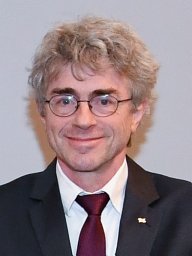 Peter Wagner合作论文数Institute of Land and Sea Transport Systems, TU Berlin9
 Laura Bieker-Walz合作论文数9
 Yun-Pang Flotterod合作论文数7
 yunpang wang合作论文数6
 Amin Coja-Oghlan合作论文数Department of Computer Science, TU Dortmund University6Andrés Acosta Gil合作论文数4
 Jorge Ernesto Espinosa Oviedo合作论文数Politécnico Colombiano Jaime Isaza Cadavid – Medellín4
 Robert Hilbrich合作论文数4Petru Pau合作论文数3
 Karl-Heinz Kastner合作论文数3
 Robbin Blokpoel合作论文数3Mihyun Kang合作论文数Deutsche Forschungsgemeinschaft
Humboldt-Universitat zu Berlin.3Björn Schünemann合作论文数2vincent baines合作论文数2sten ruppe合作论文数2Florian Weinert合作论文数2
Robbin Blokpoel合作论文数3Mihyun Kang合作论文数Deutsche Forschungsgemeinschaft
Humboldt-Universitat zu Berlin.3Björn Schünemann合作论文数2vincent baines合作论文数2sten ruppe合作论文数2Florian Weinert合作论文数2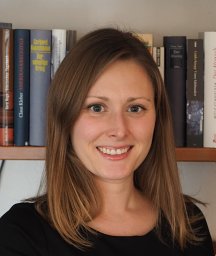 Heather Kaths合作论文数Dept Bicycle Traff Planning, Univ Wuppertal2Mirko Barthauer合作论文数2michael bonert合作论文数2
 Gaby Gurczik合作论文数2
 Teron Nguyen合作论文数Samwoh Innovat Ctr Pte Ltd SWIC, 51 Kranji Crescent, Singapore 728661, Singapore2
 Rui Rodrigues合作论文数Univ Porto, INESC TEC, P-4100 Oporto, Portugal2
 Rosaldo Rossetti合作论文数Artificial Intelligence and Computer Science Lab, University of Porto2Dangel, U.合作论文数2
 Michael during合作论文数2
 Pablo Álvarez López合作论文数2
 Mario Krumnow合作论文数2
 Ilja Radusch合作论文数Fraunhofer Inst Offene Kommunikat Syst FOKUS2Anusch Taraz合作论文数Zentrum mathematik, technische universität münchen2
 Quentin Bragard合作论文数2
 Patrick Mcdonagh合作论文数School of Computer Science and Informatics;University College Dublin;School of Computer Science and Informatics, University College Dublin2
 Laurence Capus合作论文数2
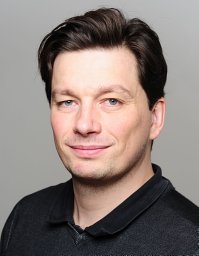 Matthias Heinrichs合作论文数Berlin University of Technology2
 Julian Padget合作论文数Department of Computer Science, University of Bath2
 Anthony Ventresque合作论文数LINA, University of Nantes2
 Liam Murphy合作论文数Performance Engineering Laboratory, School of Computer Science, University College Dublin2
 David Rieck合作论文数the Center for Solid State Science, Arizona State University2
 Fabio Cartolano合作论文数University Miguel Hernández of Elche;Innovalia Association;Municipality of Bologna2
 Matthew Fullerton合作论文数Schepens Eye Research;Medical School, Harvard;Schepens Eye Research, Harvard Medical School2
 Leonhard Lücken合作论文数Institute of Mathematics;Humboldt University of Berlin;Institute of Mathematics, Humboldt University of Berlin2Hartmut Friedl合作论文数1GONTER MARK合作论文数1raphael luz合作论文数1eric nicolay合作论文数1carlo michelacci合作论文数1Robin North合作论文数1




