Existing research demonstrates strong connections between community, identity, place, and narrative. Using a case study focused on the Bears Ears National Monument in San Juan County, Utah, USA, this paper utilizes the framework of "community as story" to explore how narratives both draw on and shape local identity. Through an exploratory content analysis of publicly available media, we examine how residents responded to changes in their communities. Locals expressed their connection to the land through personal and collective narratives, often invoking family history, stewardship, and memories tied to place. Our findings illustrate that residents use storytelling not only to affirm their individual and collective identities but also to resist perceived threats to their community. By demonstrating how place-based narratives influence community responses to change, this study advances our understanding of the relational dimensions of community and underscores the importance of local voices in discussions on land use and policy.
Rapid population growth challenges governance systems, housing markets, infrastructure capacity, and social cohesion, yet it is often treated as a predictable and uniform process. This structured comparative review synthesizes four distinct rapid-growth literatures: energy boomtowns, amenity-migration destinations, gateway communities, and mega-event host towns, to examine how different growth drivers shape community resilience. Using systematic forward and backward citation tracking grounded in community theory, the review identifies recurring patterns across otherwise separate research traditions. The analysis shows that outcomes are shaped less by growth itself than by institutional and spatial conditions. Extractive boomtowns and mega-event hosts experience compressed cycles of disruption and recovery that test adaptive capacity, while amenity-migration destinations and gateway communities face sustained pressures related to housing affordability, land-use conflict, and social boundary formation. Across contexts, three interrelated dimensions of adaptive capacity consistently structure trajectories: multilevel governance coordination, housing and land-use elasticity, and the management of social equity and cohesion. The findings advance a conceptual resilience framework that interprets rapid population change as a socio-spatial shock filtered through institutional and spatial conditions, with implications for sustainable urban design, flexible infrastructure planning, and inclusive governance.
'Divisive concept' legislation and related social media rhetoric seek to limit conversations about race, gender, and other 'divisive' issues in K-12 schools. Emerging research suggests that these politicised curriculum disputes may be harmful to teachers. Although recent studies have explored teachers' initial reactions to divisive concept legislation, limited research exists on how teachers see this legislation affecting their behaviour. This research addresses this gap by examining the strategies teachers employ to navigate challenges to their professional status stemming from divisive concept legislation. We interviewed 18 secondary school teachers throughout Utah's Wasatch Front, a suburban area in a conservative state, during a period of heated state-wide discussion of these issues. Analysing these interviews using a grounded theory approach showed that teachers demonstrated strong adverse emotional reactions to limitations related to 'divisive' issues and related interactions. Teachers also described behavioural changes that impede their ability to apply their professional pedagogical training, including professional self-censorship and minimising interactions with parents. These responses illustrate how the informal surveillance and reputational threat implied in divisive concept legislation and rhetoric undermine teacher professionalism. Teachers' altered behaviour underscores the risks that 'divisive issue' legislation poses to teacher wellbeing and student success.
To what extent does community context shape individuals' experience of community? This study replicates and extends Flaherty and Brown's multilevel application of Kasarda and Janowitz' systemic model using four separate multilevel datasets and multiple measures of community experience. The results reaffirm Flaherty and Brown's findings and support the systemic model by showing that community attachment varies little across communities and is primarily explained by individual-level variables. In contrast, psychological sense of community appears to vary more substantially between communities and may provide a more nuanced and effective way to assess community experience. The authors urge community sociologists to reflect on the original rationale for using community attachment and to consider the theoretical implications of its limited variance between communities-despite its longstanding use as a key community-level social indicator.
As museums serve as major tourist destinations, ensuring the sustainable presentation of exhibits addressing social justice issues, such as colonial legacies, is increasingly critical. This study examines how one destination museum engaged with its colonial past through a temporary exhibit designed to challenge traditional narratives and amplify marginalized perspectives. The primary objective is to assess whether such temporary interventions foster lasting engagement with colonial histories or risk becoming fleeting gestures that ultimately reinforce hegemonic narratives. Using Gramsci’s theory of hegemony and the concept of moral licensing as analytical frameworks, this research systematically analyzes the content of both original and supplementary exhibit labels to evaluate their impact on visitor engagement with colonial histories. Specifically, this study addresses two key research questions: (RQ1) What new historical narratives and perspectives on colonialism did visitors encounter through the inclusion of supplementary museum labels addressing colonial legacies? (RQ2) What insights can be drawn from the addition and subsequent removal of these labels to inform future strategies for fostering sustained critical engagement with social justice issues, particularly colonial histories, in museum settings? Findings indicate that the addition of supplementary labels provided tourists with a deeper, more critical understanding of the museum’s colonial history and helped disrupt hegemonic narratives. However, as the exhibit was temporary, the removal of these labels revealed the risks of moral licensing, where short-term efforts may justify a return to dominant perspectives. This research contributes to the literature by demonstrating that to effectively and sustainably engage visitors with social justice issues, destination museums must integrate marginalized narratives into permanent or recurring exhibits. While even modest interventions, such as additional museum labels, can challenge established narratives, sustained efforts are essential to ensure that tourists continue engaging with critical social justice issues.
The global expansion of shale oil and gas extraction has generated widespread attention for its environmental, economic, and political implications. However, its social consequences remain less systematically assessed. This review synthesizes interdisciplinary research on how shale energy development affects communities, particularly in rural and resource-dependent regions. While extraction activities may generate economic opportunities and strengthen national energy security, they are also associated with population influx, pressure on infrastructure, housing shortages, public health risks, and increased political polarization. These impacts can alter social relationships, institutional trust, and access to essential services. By organizing and analyzing key themes in the social science literature, this review offers a structured overview of how shale energy development shapes local experiences and social systems. The goal of the present paper is to support researchers, policymakers, and community stakeholders in understanding the civic, communal, and public dimensions of energy transitions and in developing more equitable and sustainable policy responses.
This study examines associations of place meanings and perceived individual preparedness with subjective household resilience and community resilience. Research has shown an active controversy over whether place meanings and individual preparedness could strengthen perceived household and community resilience. Results from a random sample household survey of 912 coastal Louisiana residents confirm that people who have close ties to their living environs, which is one key aspect of place meanings, are more likely to perceive their households and community as resilient. We also find a positive effect of individual preparedness on household and community resilience, especially the perceived ability to plan and adapt to environmental changes. Conversely, we find that higher risk awareness, as a key aspect of perceived individual preparedness, is associated with decreased confidence in household and community resilience. Taken together, we affirm that promoting environmental threat-related information and strategies is vital for fostering resilient communities.
For many Native American students, the thirty-seven existing tribal colleges improve their access to post-secondary education, especially for those living in reservation communities and surrounding rural areas. They also support tribal nations’ goals of offering accredited degree programs, as well honoring Indigenous knowledge. This is important for students enrolled in STEM courses since Native Americans are under-represented in these fields. In the early 2000s, Chief Dull Knife College (CDKC), the tribal college of the Northern Cheyenne Nation, was supported by National Science Foundation funding in developing a new math program to meet the unique cultural and instructional needs of its students. In this case study of a culturally responsive math program, we hypothesize that students participating in the new developmental math program attempt and earn more credits compared to cohorts participating in previous math programs and take less time on average to reach college-level math. We present information on the math outcomes of the participants in two variations of the math program reforms that have addressed the obstacles to student retention and achievement. The panel data available include students’ demographic characteristics, placement test scores, and math course grades and the credits for all students enrolled from 2006 to 2019. While the number of credits attempted or earned did not differ statistically across the cohorts, the qualitative data further show that the students appreciate the culturally responsive aspects of the program. Ultimately, we have found that these aspects resulted in increased confidence of the students in their academic skills, stronger Native identities and engagement as students, as well as an improved sense of belonging in this higher education environment, all of which were important goals of the developmental math program.
In the community research literature, the concepts of community attachment, community satisfaction, and quality of life are widely used but often lack clear and consistent definitions. Despite a substantial body of work across multiple disciplines, scholars frequently struggle to distinguish these terms, resulting in fragmented and sometimes contradictory discourse. This paper reviews and synthesizes existing literature on each concept, highlighting various interpretations, common definitions, and measurement strategies. Rather than aiming to resolve these conceptual inconsistencies, this review aims to serve as a conceptual resource for community researchers seeking to better navigate and apply these three widely used but often inconsistently defined terms. It contributes to both theory and practice by clarifying distinctions and overlaps, guiding future operationalization, and encouraging theoretical precision in community-based research across disciplines. By drawing on a broad interdisciplinary range of sources, this review provides a resource for scholars navigating this complex theoretical landscape and aims to support a more coherent and informed dialogue around these key community-based concepts.
Female participation in NCAA athletics has grown significantly since the passage of Title IX—the 1972 U.S. federal law that prohibits sex-based discrimination in educational programs and activities receiving federal funding—yet much of the existing research continues to focus on male athletes, leaving important gaps in our understanding of women’s experiences in collegiate sports. One underexamined area with important public health implications is the role of coach–athlete relationships in shaping female athletes’ mental health, access to resources, and overall collegiate experience. This exploratory study draws on in-depth interviews with 19 former female NCAA athletes to examine how their relationships with coaches influenced their athletic careers, mental health, and perceptions of support. Participants represented a range of sports and competitive levels, allowing for variation in experiences across contexts. Findings reveal that coach–athlete relationships are not only central to performance and motivation but also serve as key sources of emotional, social, and material support—or, in some cases, stress and disengagement. The quality and impact of these relationships were shaped by competitive pressures, team dynamics, and institutional expectations. This study underscores the importance of relational context in understanding the broader landscape of female NCAA athletes’ experiences and suggests that coach–athlete dynamics merit greater attention in both research and athletic program development. These findings underscore the relevance of coach–athlete dynamics as a public health concern, particularly in relation to mental health and emotional well-being in competitive sports environments. Supporting healthier relational cultures in collegiate athletics is essential for promoting positive health outcomes among female student-athletes.
This study explores the role of schools in the local community and, more specifically, how the role of schools can influence individuals' experience of community. Current literature centers on schools as facilities for education and socialization. School-community research focuses on the ability of schools to create a sense of belonging in students and suggests reform through partnerships between school, family, and community. Yet, minimal research has been done to understand how schools may influence the way that individuals experience community. Our research uses the Rural Utah Community Study to examine how respondents' views of local education, schools, and degrees affect their experience of community through community attachment, community satisfaction, and community desirability. We find that respondents' views of local schools in the community have a positive relationship with respondents' experiences of community; these findings indicate a need for increased research regarding the role of schools beyond education and socialization.
This study seeks to investigate residents' support for a future Winter Olympic host bid in Heber, Utah, a growing rural community about 45 miles from Salt Lake City. Specifically, we examine how feelings toward one's community and feelings toward Salt Lake City's hosting of the 2002 Winter Olympics predict support for a future Olympic bid. In order to investigate our research question, we use data collected in Heber Valley in 2012 and 2018. We find that community attachment, community satisfaction, and the community's perceived desirability significantly predict support for a future Olympic bid. Compared to the baseline year of 2012, 2018 was significantly different, indicating that support for a future bid has decreased as time has passed since the 2002 Olympic Games. Length of residence, employment status, and use of the Soldier Hollow facilities were also significant predictors of support for a future Olympic bid. There were slight variations among the independent variables when separating the observations by community within Heber Valley (i.e., among residents of the city of Heber, Midway, or other towns).
Although gender ideologies influence many outcomes, research shows they often fluctuate across the life course. Family structure transitions are one mechanism through which gender ideologies change. Divorced and single adults report more egalitarian ideologies than stably married adults. Little research has examined whether children in these families experience similar gender ideologies. Based on parental role modeling, we would expect children in non-traditional families to exhibit more egalitarian gender ideologies. We examine family structure and youth gender ideologies in two contexts, essentially two case studies: Germany and South Korea. Using Starting Cohort 3—Grade 5 ( N = 4,021) and Starting Cohort 4—Grade 9 ( N = 9,913) of the Germany National Educational Panel Study (NEPS) and Cohorts 1 ( N = 2,844) and 2 ( N = 3,449) of the Korea Youth Panel Survey (KYPS), we uncover counterintuitive findings that youth gender ideologies do not vary across family structures. Child gender is the most salient predictor of gender ideologies across contexts.
Students in online courses continue to feel disconnected, frustrated, isolated, and anxious even as they continue to enroll in online courses. This contradiction presents a puzzling challenge for online instructors in higher education contexts. Using microethnographic methods, this case study explores how instructors and students emotionally engage in online spaces. Using video recordings as primary data sources, we inquire into the online interactions of participants. Data analysis revealed how emotion was linguistically, visibly, and verbally managed through chat comments and emojis, physical gestures, and video feeds. Additionally, instructors and students suggest that online connection is fatiguing. We hope by highlighting the textual, visible, and verbal exchanges of emotion, instructors, and students can reduce emotional distance and fatigue in online classrooms. Additionally, by highlighting and utilizing text-based exchanges of emotion, we hope our findings help instructors and students feel more connected and encouraged to teach and learn in online spaces.
Rural SociologyVolume 89, Issue 1 p. 180-182 Book Review Groundwater Citizenship: Well Owners, Environmentalism, and the Depletion of the High Plains Aquifer, by Brock Ternes, New York, NY: Lexington Books, 2022. 224 pp. Hardback $100, e-book $45. ISBN (Hardback): 978-1-66690-346-1; ISBN (eBook): 978-1-66690-347-8. Michael R. Cope, Corresponding Author Michael R. Cope [email protected] Brigham Young UniversitySearch for more papers by this author Michael R. Cope, Corresponding Author Michael R. Cope [email protected] Brigham Young UniversitySearch for more papers by this author First published: 16 January 2024 https://doi.org/10.1111/ruso.12527Read the full textAboutPDF ToolsRequest permissionExport citationAdd to favoritesTrack citation ShareShare Give accessShare full text accessShare full-text accessPlease review our Terms and Conditions of Use and check box below to share full-text version of article.I have read and accept the Wiley Online Library Terms and Conditions of UseShareable LinkUse the link below to share a full-text version of this article with your friends and colleagues. Learn more.Copy URL Share a linkShare onEmailFacebookTwitterLinkedInRedditWechat No abstract is available for this article. Volume89, Issue1March 2024Pages 180-182 RelatedInformation
This research builds on previous mega event research that found that policymakers must understand citizens’ perceptions of mega events and the long-term effects it has on their community to create positive and sustainable legacies. The present study provides new insights and understanding of the social impact of the 2002 Salt Lake City Winter Olympics on Heber Valley. Using the well-established systemic model of community and quantitative survey data from 1999 until 2003, as well as waves from 2007, 2012, and 2018 data, we investigate, first, if community attachment, satisfaction, and desirability changed over time and, second, how enduring feelings about the Olympics affected community sentiment. Our research finds that there were some changes in residents’ community experience over time; community attachment decreased during 2018, community satisfaction decreased in 2001, 2007, and 2018, and community desirability increased slightly in 2002. We also found that the legacies of the 2002 Winter Olympics do influence how residents feel about their community.
Rural SociologyEarly View Book Review The Rural Primitive in American Popular Culture, by Karen E. Hayden, New York: Lexington Books, 2022. Paperback $39.99. ISBN: 978-1-4985-4762-8. Michael R. Cope, Corresponding Author Michael R. Cope [email protected] Brigham Young UniversitySearch for more papers by this author Michael R. Cope, Corresponding Author Michael R. Cope [email protected] Brigham Young UniversitySearch for more papers by this author First published: 08 June 2024 https://doi.org/10.1111/ruso.12549Read the full textAboutPDF ToolsRequest permissionExport citationAdd to favoritesTrack citation ShareShare Give accessShare full text accessShare full-text accessPlease review our Terms and Conditions of Use and check box below to share full-text version of article.I have read and accept the Wiley Online Library Terms and Conditions of UseShareable LinkUse the link below to share a full-text version of this article with your friends and colleagues. Learn more.Copy URL Share a linkShare onEmailFacebookTwitterLinkedInRedditWechat No abstract is available for this article. Early ViewOnline Version of Record before inclusion in an issue RelatedInformation
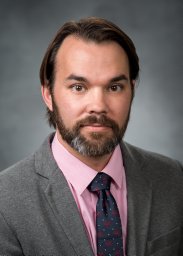 Sanders Scott R合作论文数Department of Sociology, Brigham Young University23
 Carol Ward合作论文数23
 Jorden E. Jackson合作论文数Penn State Univ15
 Shannon B. Cappellazzi合作论文数10
 Elizabeth L. Rieke合作论文数Soil Health Institute10
 Daniel Liptzin合作论文数Department of Geography;University of Iowa;Department of Geography, University of Iowa10
 Cristine L. S. Morgan合作论文数Heep Center, Texas A&M University10
 G. Mac Bean合作论文数9
 Tim Slack合作论文数Department of Sociology, Louisiana State University9
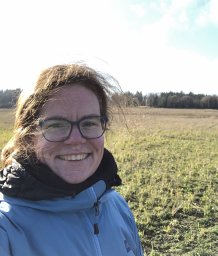 Charlotte E. Norris合作论文数Department of Renewable Resources, University of Alberta9Kelsey L.H. Greub合作论文数8Paul W. Tracy合作论文数8
 Paige Park合作论文数Brigham Young University8Brown Ralph B合作论文数8
 Charles Honeycutt合作论文数8Kayci A. Muirbrook合作论文数7Haylie M. June合作论文数6borbon gracia alberto合作论文数5James J. W. Crawford合作论文数5Oscar Bañuelos Tavarez合作论文数5Dolores Briones Reyes合作论文数5Darren Bruhjell合作论文数5Ernesto Solís Moya合作论文数5Alberto Trujillo Campos合作论文数5Avelino Espinosa Solorio合作论文数5Antonio Lopez Ramirez合作论文数5Miguel Angel Martinez Gamino合作论文数5Manuel Mora Gutierrez合作论文数5Leodegario Osorio Alcalá合作论文数5Rachel M. M. Sumsion合作论文数5
 Audrey Gamble合作论文数Dep. of Crop, Soil and Environmental Sciences, Auburn Univ.5
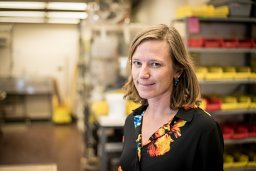 Kirsten Kurtz合作论文数Dep. of Natural Resources Cornell Soil Health Laboratory, Cornell Univ.5
 Brenda Ponce Lira合作论文数Universidad Politécnica de Francisco I. Madero (UPFIM)5
 Jonathan A. Muir合作论文数Emory Univ5William E. May合作论文数5
 Deirdre Griffin-LaHue合作论文数Northwestern Washington Research & Extension Center, Washington State University5Mark Kautz合作论文数5
 Amber Moore合作论文数Dept Crop & Soil Sci, Oregon State Univ5
 Andy Bary合作论文数5
 Tiequan Zhang (张铁全)合作论文数Harrow Research and Development Centre, Agriculture & Agri-Food Canada5Ezra Aberle合作论文数5
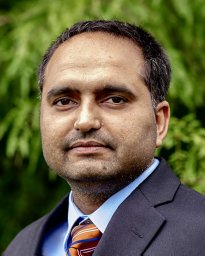 sudeep s sidhu合作论文数Univ. of Florida5
 Cody Creech合作论文数Dept Agron & Hort, Univ Nebraska5
 Katie L. Lewis合作论文数Soil and Crop Sciences, Texas A&M University5Jameson Brennan合作论文数West River Res & Extens Ctr, South Dakota State Univ5
 Charles M. Geddes合作论文数Lethbridge Res & Dev Ctr, Agr & Agri Food Canada5
 Amanda J. Ashworth合作论文数Poultry Prod & Prod Safety Res Unit, USDA ARS5Zachary D. Hayden合作论文数Dept Hort, Michigan State Univ5
 Virginia R. Sykes合作论文数Dep. of Plant Sciences, Univ. of Tennessee5




