Prior work suggests that loneliness is associated with a threat-sensitive cognitive style and that news media is often threat-focused and politically polarised. With this in mind, the present study develops and tests a model of loneliness, trust in news media and intolerance of political out-groups. We hypothesised that the more subjectively lonely a person is, the more politically intolerant they are, and that this relationship is moderated by trust in news media. To examine this, we conducted an online survey with 1,335 adults from the United States of America. Results suggested that trust in news media moderates the relationship between loneliness and two dimensions of intolerance: (a) intolerance towards out-group political affiliates, and (b) intolerance towards supporters of out-group political candidates. There was a direct effect of loneliness on both dimensions of intolerance; but that effect was stronger the higher the level of reported trust in news media. These findings lend support to a risk model of intolerance, and contributes to our understanding of how exposure to (and trust in) news media may interact with loneliness in ways that radicalise individuals against political out-groups.
UFO hunters and anti-vaxxers might seem like modern phenomena, but they both take inspiration from a little-known anti-science movement.
While political scientists have investigated political non-affiliation and religious scholars have investigated religious non-affiliation, no work has yet examined the correlates of those identifying as both religiously and politically non-affiliated. Across two separate studies, we investigate the personality, social network, and cultural engagement correlates of political and religious non-affiliates. Some statistically significant effects found in Study 1 fail to replicate in Study 2, though replicated findings provide interesting avenues for future work. Notably, compared to those who report being both politically and religiously affiliated, we find that dual non-affiliates are more socially liberal, more fiscally conservative, far less likely to vote, and less religious across several attitudinal and behavioral measures. Crucially, we find no consistent evidence that dual non-affiliates suffer from social isolation or a lack of social support.
In response to recent discussion about terminology, we propose “tracking science” as a term that is more inclusive than citizen science. Our suggestion is set against a post-colonial political background and large-scale migrations, in which “citizen” is becoming an increasingly contentious term. As a diverse group of authors from several continents, our priority is to deliberate a term that is all-inclusive, so that it could be adopted by everyone who participates in science or contributes to scientific knowledge, regardless of socio-cultural background. For example, current citizen science terms used for Indigenous knowledge imply that such practitioners belong to a sub-group that is other, and therefore marginalized. Our definition for “tracking science” does not exclude Indigenous peoples and their knowledge contributions and may provide a space for those who currently participate in citizen science, but want to contribute, explore, and/or operate beyond its confinements. Our suggestion is not that of an immediate or complete replacement of terminology, but that the notion of tracking science can be used to complement the practice and discussion of citizen science where it is contextually appropriate or needed. This may provide a breathing space, not only to explore alternative terms, but also to engage in robust, inclusive discussion on what it means to do science or create scientific knowledge. In our view, tracking science serves as a metaphor that applies broadly to the scientific community—from modern theoretical physics to ancient Indigenous knowledge.
When I was writing The Moral Arc, I found my life-long libertarianism challenged on so many fronts that I began to reconsider my politics and to look for a new label, one that better described what I came to believe was the right balance between Left and Right, between liberalism and conservatism. I believe I may have found it in classical liberalism, a defense of which follows in this essay, originally published in the online magazine Quillette.
Who is the 'Devil'? And what is he due? The Devil is anyone who disagrees with you. And what he is due is the right to speak his mind. He must have this for your own safety's sake because his freedom is inextricably tied to your own. If he can be censored, why shouldn't you be censored? If we put barriers up to silence 'unpleasant' ideas, what's to stop the silencing of any discussion? This book is a full-throated defense of free speech and open inquiry in politics, science, and culture by the New York Times bestselling author and skeptic Michael Shermer. The new collection of essays and articles takes the Devil by the horns by tackling five key themes: free thought and free speech, politics and society, scientific humanism, religion, and the ideas of controversial intellectuals. For our own sake, we must give the Devil his due.
 Anondah Saide合作论文数Dept Psychol, Univ Calif Riverside3Joe Nickell合作论文数2pat linse合作论文数2
 Kevin McCaffree合作论文数Univ North Texas2
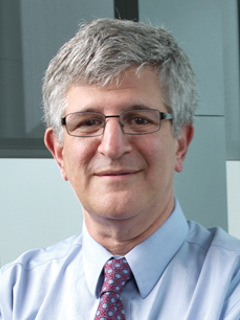 Paul A. Offit合作论文数Division of Infectious Diseases, Children's Hospital of Philadelphia2
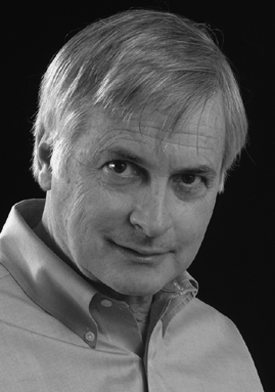 Seth Shostak合作论文数2Benjamin Radford合作论文数1Ray Pierrehumbert合作论文数1Nicky Clayton合作论文数1Horekhwe (Karoha) Langwane合作论文数1Justin Steventon合作论文数1jing shi gang tian (靖史 岡田)合作论文数1david w orr合作论文数1Kxao Moses Oma合作论文数1Njoxlau Kashe合作论文数1Uase Xhukwe合作论文数1melissa pollak合作论文数1Steve Stewart Williams合作论文数1
 Michael D. Voysey合作论文数1Li Gong合作论文数Mozilla Online Ltd, Beijing, Peoples R China1
 Candis Callison合作论文数School of Journalism, Writing, and Media, The University of British Columbia1
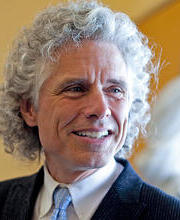 Steven Pinker合作论文数Department of Psychology, Harvard University1
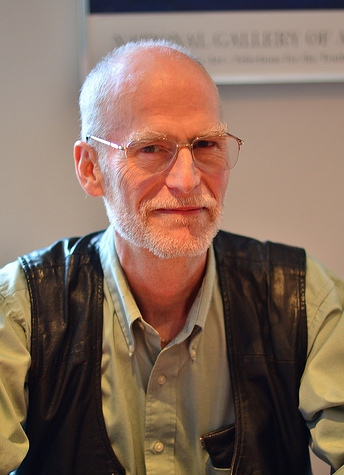 Peter Carruthers合作论文数Department of Philosophy, University of Maryland1Minye James合作论文数1
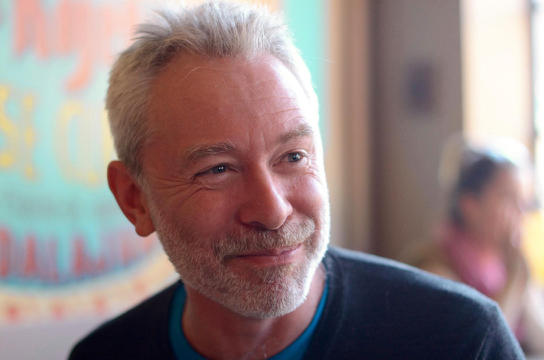 Andrew J. Berry合作论文数Department of Organismic & Evolutionary Biology, Harvard University1
 Jennifer Rohn合作论文数Department of Renal Medicine, Division of Medicine, Faculty of Medical Sciences, University College London1
 L. Mark Elbroch合作论文数Panthera1
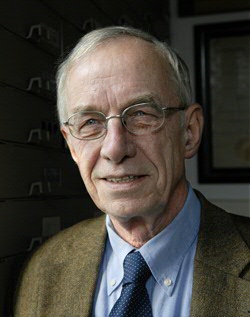 Serge Daan合作论文数Faculty of Science and Engineering, University of Groningen1
 Derek Keeping合作论文数1
 Marlize Lombard合作论文数University of Johannesburg1Paulson Steve合作论文数1
 Abdallah S. Daar合作论文数Dalla Lana School of Public Health, University of Toronto;Sandra Rotman Centre, University Health Network1
 Steven Shapin合作论文数Department of the History of Science, Harvard University1
 Vaclav Smil合作论文数Faculty of Environment, University of Manitoba1Graham P. Collins合作论文数1
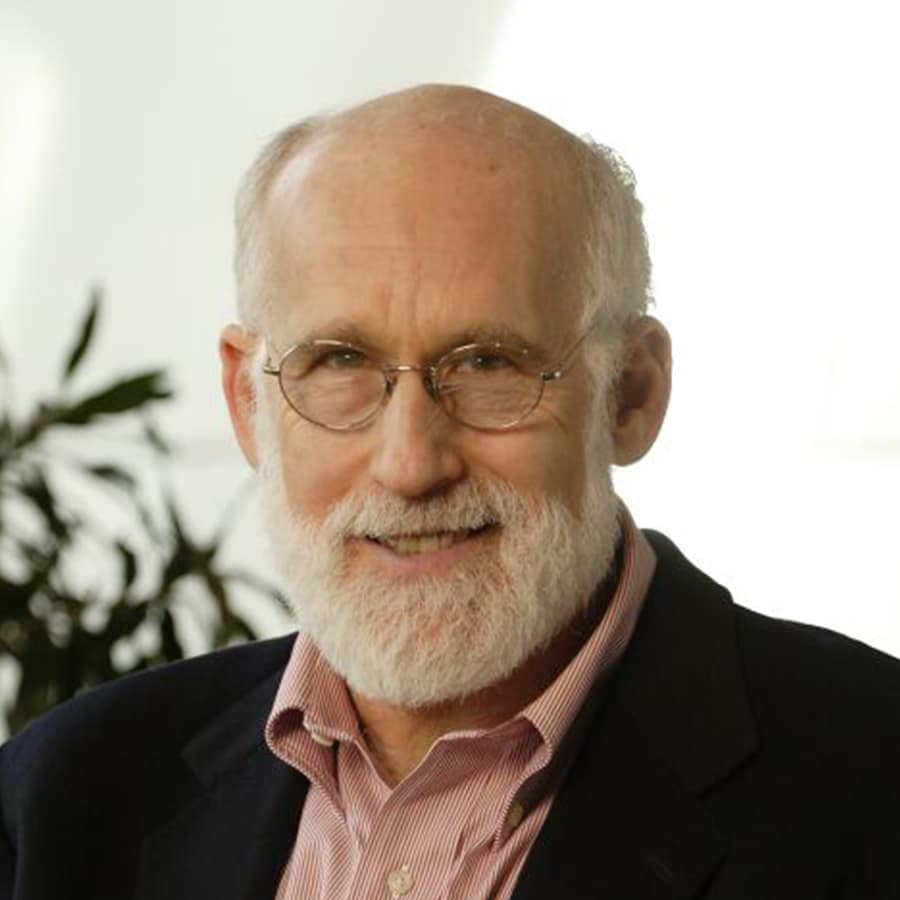 Jerome Groopman合作论文数Faculty of Arts and Sciences, Harvard Medical School;Beth Israel Deaconess Medical Center, Department of Medicine, Harvard Medical School1
 Hans Von Storch合作论文数Institute for Coastal Systems, Helmholtz-Zentrum Hereon;Meteorological Institute, University of Hamburg;Faculty of Social Sciences, University of Hamburg1Ray Hyman合作论文数1
 Heather A Berlin合作论文数1
 Rodrigo Quian Quiroga合作论文数University of Leicester;Cognitive Neurophysiology Laboratory1
 Henry Bauer合作论文数1
 George S. Musser合作论文数1Linda Rosa合作论文数1Peter A. Sturrock合作论文数1Pat Shipman合作论文数1
 Wayt Gibbs合作论文数1Barry L. Beyerstein合作论文数1Victor J. Stenger合作论文数1Megan Biesele合作论文数1




