This study addresses the critical need for realistic emergency training in industries where non-stationary conditions can quickly escalate into accidents or incidents. Real-life training is often impractical due to safety concerns and cost constraints. Consequently, incorporating immersive technologies into training curricula becomes crucial. This research explores participants' self-reflection on safety readiness during virtual reality (VR) emergency training and investigates the impact of interactive versus passive exposure to emergency situations in VR.Three distinct exposure methods were developed, varying in the degree of participant involvement. Surprisingly, no statistically significant differences were found among the groups, indicating a positive perception of VR emergency training regardless of the exposure method. Participants valued the opportunity to safely make mistakes, witness consequences, and repeat procedures in VR. They believed such training enhanced their real-life emergency responses by fostering calmness, quick thinking, and prudent reactions.However, some participants expressed skepticism, suggesting that VR training might not accurately simulate real-life stress conditions. Future research should explore the impact of photorealistic VR experiences on operators' perceptions and assess the benefits of additional efforts in VR development for emergency training.
AbstractGrußwort zum 25‐jährigen Jubiläum CITplus
Immersive technologies aim to improve crucial process and safety training by increasing motivation, engagement and skills development. A Systematic Literature Review (SLR) was performed to identify immersive technologies applications that have been published in the past twenty years and aimed to enhance the training and learning of operators in the process industry, with special emphasis on the chemical industry. A set of 44 articles was obtained following the PRISMA framework with backward and forward snowballing. They were examined based on type of training, industry and technology. Only very few studies (10 out of 44) reported a comparison of immersive and traditional training. Six performance indicators (time; number of: mistakes, hints and instruction repetitions; events and equipment identification) were named to evaluate the immersive experience. To allow for a consistent analysis of the quality of immersive training in future studies, an effectiveness-efficiency model from the trainee viewpoint is proposed. (C) 2022 Published by Elsevier Ltd.
Although modern consumer level head-mounted-displays of today provide high-quality room scale tracking, and thus support a high level of immersion and presence, there are application contexts in which constraining oneself to seated set-ups is necessary. Classroom sized training groups are one highly relevant example. However, what is lost when constraining cybernauts to a stationary seated physical space? What is the impact on immersion, presence, cybersickness and what implications does this have on training success? Can a careful design for seated virtual reality (VR) amend some of these aspects? In this line of research, the study provides data on a comparison between standing and seated long (50–60 min) procedural VR training sessions of chemical operators in a realistic and lengthy chemical procedure (combination of digital and physical actions) inside a large 3-floor virtual chemical plant. Besides, a VR training framework based on Maslow's hierarchy of needs (MHN) is also proposed to systematically analyze the needs in VR environments. In the first of a series of studies, the physiological and safety needs of MHN are evaluated among seated and standing groups in the form of cybersickness, usability and user experience. The results (n=32, real personnel of a chemical plant) show no statistically significant differences among seated and standing groups. There were low levels of cybersickness along with good scores of usability and user experience for both conditions. From these results, it can be implied that the seated condition does not impose significant problems that might hinder its application in classroom training. A follow-up study with a larger sample will provide a more detailed analysis on differences in experienced presence and learning success.
Operator training in the chemical industry is important because of the potentially hazardous nature of procedures and the way operators' mistakes can have serious consequences on process operation and safety. Currently, operator training is facing some challenges, such as high costs, safety limitations and time constraints. Also, there have been some indications of a lack of engagement of employees during mandatory training. Immersive technologies can provide solutions to these challenges. Specifically, virtual reality (VR) has the potential to improve the way chemical operators experience training sessions, increasing motivation, virtually exposing operators to unsafe situations, and reducing classroom training time. In this paper, we present research being conducted to develop a virtual reality training solution as part of the EU Horizon 2020 CHARMING Project, a project focusing on the education of current and future chemical industry stakeholders. This paper includes the design principles for a virtual reality training environment including the features that enhance the effectiveness of virtual reality training such as game-based learning elements, learning analytics, and assessment methods. This work can assist those interested in exploring the potential of virtual reality training environments in the chemical industry from a multidisciplinary perspective.
Chemie Ingenieur TechnikVolume 92, Issue 6 p. 790-790 VorschauFree Access Vorschau: Chem. Ing. Tech. 7/2020 First published: 28 May 2020 https://doi.org/10.1002/cite.202070608AboutPDF ToolsRequest permissionExport citationAdd to favoritesTrack citation ShareShare Give accessShare full text accessShare full-text accessPlease review our Terms and Conditions of Use and check box below to share full-text version of article.I have read and accept the Wiley Online Library Terms and Conditions of UseShareable LinkUse the link below to share a full-text version of this article with your friends and colleagues. Learn more.Copy URL Share a linkShare onEmailFacebookTwitterLinked InRedditWechat No abstract is available for this article. Volume92, Issue6June 2020Pages 790-790 RelatedInformation
The digital transformation as well as the changes leading towards a "new work" world create huge challenges regarding the education and life-long learning of process engineers. Higher education institutions and lecturers do not only have to deal with all the new opportunities and changes for themselves but need to take the specifics and expectations of the future digital natives student generation into account. Likewise, industry needs to substantially foster and increase their life-long learning offers for the workforce to safeguard employability as well as competitiveness.
AbstractMit der digitalen Transformation und den Veränderungen hin zur Arbeitswelt 4.0 entstehen neue Herausforderungen für die Aus‐ und Fortbildung von Verfahrensingenieuren und artverwandten Berufen. So müssen sich die Hochschulen und ihre Lehrenden nicht nur mit den neuen Möglichkeiten und Veränderungen auseinandersetzen, sondern auch auf die Besonderheiten und Erwartungen der zukünftigen Studierendenschaft aus der Generation der Digital Natives eingehen. Ähnlich große Herausforderungen hat die Industrie, die dem Wandel durch substanzielle Anpassungen und Erweiterungen der beruflichen Fortbildung begegnen muss, um die Beschäftigungsfähigkeit ihrer Belegschaft zu sichern und im Wettbewerb zu bestehen.
AbstractDigitalisierung und Industrie 4.0 verändern komplette Geschäftsmodelle, heben neue Effizienzpotenziale und stärken die Wettbewerbsfähigkeit. Auf dem 57. Tutzing‐Symposion vom 15.–18.04.2018 wurde mit Vorträgen und Kreativworkshops erkundet, welche speziellen Anforderungen die Prozessindustrie hat, welche digitalen Innovationen bereits umgesetzt wurden und wo noch Handlungsbedarf besteht. Ein Workshop befasste sich mit der Bedeutung der Digitalisierung für Bildung und Lehre.
Chemie Ingenieur TechnikVolume 90, Issue 9 p. 1245-1245 TandemvortragFree Access Bildung 4.0: Welche Veränderungen für Studierende, Hochschulen und Industrie lassen sich absehen? M. Wilk, Corresponding Author M. Wilk michael.wilk@merckgroup.com Merck KGaA, SM Engineering Services, Frankfurter Straße 250, 64293 Darmstadt, DeutschlandCorrespondence: M. Wilk (michael.wilk@merckgroup.com), Merck KGaA, SM Engineering Services, Frankfurter Straße 250, 64293 Darmstadt, DeutschlandSearch for more papers by this authorS. Rommel, S. Rommel Konica Minolta Business Solutions Deutschland GmbH, IoT Business Center Digital Manufacturing, Dolivostraße 17, 64293 Darmstadt, DeutschlandSearch for more papers by this authorM. A. Liauw, M. A. Liauw RWTH Aachen, Institut für Technische und Makromolekulare Chemie, Worringer Weg 2, 52074 Aachen, DeutschlandSearch for more papers by this authorW. Meier, W. Meier Dechema e.V, Theodor-Heuss-Allee 25, 60486 Frankfurt am Main, DeutschlandSearch for more papers by this authorH.-U. Moritz, H.-U. Moritz Universität Hamburg, Institut für Technische und Makromolekulare Chemie, Bundesstraße 45, 20146 Hamburg, DeutschlandSearch for more papers by this authorB. Schinke, B. Schinke Hochschule Mannheim, Institut für Anlagentechnik und Anlagensicherheit, Paul-Wittsack-Straße 10, 68163 Mannheim, DeutschlandSearch for more papers by this authorH.-W. Zanthoff, H.-W. Zanthoff Evonik Technology & Infrastructure GmbH, Process Technology and Engineering, Paul-Baumann-Straße 1, 45772 Marl, DeutschlandSearch for more papers by this author M. Wilk, Corresponding Author M. Wilk michael.wilk@merckgroup.com Merck KGaA, SM Engineering Services, Frankfurter Straße 250, 64293 Darmstadt, DeutschlandCorrespondence: M. Wilk (michael.wilk@merckgroup.com), Merck KGaA, SM Engineering Services, Frankfurter Straße 250, 64293 Darmstadt, DeutschlandSearch for more papers by this authorS. Rommel, S. Rommel Konica Minolta Business Solutions Deutschland GmbH, IoT Business Center Digital Manufacturing, Dolivostraße 17, 64293 Darmstadt, DeutschlandSearch for more papers by this authorM. A. Liauw, M. A. Liauw RWTH Aachen, Institut für Technische und Makromolekulare Chemie, Worringer Weg 2, 52074 Aachen, DeutschlandSearch for more papers by this authorW. Meier, W. Meier Dechema e.V, Theodor-Heuss-Allee 25, 60486 Frankfurt am Main, DeutschlandSearch for more papers by this authorH.-U. Moritz, H.-U. Moritz Universität Hamburg, Institut für Technische und Makromolekulare Chemie, Bundesstraße 45, 20146 Hamburg, DeutschlandSearch for more papers by this authorB. Schinke, B. Schinke Hochschule Mannheim, Institut für Anlagentechnik und Anlagensicherheit, Paul-Wittsack-Straße 10, 68163 Mannheim, DeutschlandSearch for more papers by this authorH.-W. Zanthoff, H.-W. Zanthoff Evonik Technology & Infrastructure GmbH, Process Technology and Engineering, Paul-Baumann-Straße 1, 45772 Marl, DeutschlandSearch for more papers by this author First published: 24 August 2018 https://doi.org/10.1002/cite.201855251AboutPDF ToolsRequest permissionExport citationAdd to favoritesTrack citation ShareShare Give accessShare full text accessShare full-text accessPlease review our Terms and Conditions of Use and check box below to share full-text version of article.I have read and accept the Wiley Online Library Terms and Conditions of UseShareable LinkUse the link below to share a full-text version of this article with your friends and colleagues. Learn more.Copy URL Share a linkShare onFacebookTwitterLinkedInRedditWechat No abstract is available for this article. Volume90, Issue9Special Issue: ProcessNet-Jahrestagung und 33. DECHEMA-Jahrestagung der Biotechnologen 2018September 2018Pages 1245-1245 RelatedInformation
Chemie Ingenieur TechnikVolume 86, Issue 9 p. 1512-1513 TandemvortragFree Access Multimediales Lernen in der ProcessNet Akademie: Eine tragfähige Idee zur Beseitigung von Kompetenz-Defiziten? Dr.-Ing. M. Wilk, Corresponding Author Dr.-Ing. M. Wilk michael.wilk@merckgroup.com Merck KGaA, Frankfurter Straße 250, D-64293 Darmstadt, GermanyMerck KGaA, Frankfurter Straße 250, D-64293 Darmstadt, Germany===Search for more papers by this authorProf. Dr.-Ing. R. Granow, Prof. Dr.-Ing. R. Granow Fachhochschule Lübeck, Mönkhofer Weg 239, D-23562 Lübeck, GermanySearch for more papers by this author Dr.-Ing. M. Wilk, Corresponding Author Dr.-Ing. M. Wilk michael.wilk@merckgroup.com Merck KGaA, Frankfurter Straße 250, D-64293 Darmstadt, GermanyMerck KGaA, Frankfurter Straße 250, D-64293 Darmstadt, Germany===Search for more papers by this authorProf. Dr.-Ing. R. Granow, Prof. Dr.-Ing. R. Granow Fachhochschule Lübeck, Mönkhofer Weg 239, D-23562 Lübeck, GermanySearch for more papers by this author First published: 28 August 2014 https://doi.org/10.1002/cite.201450459AboutPDF ToolsRequest permissionExport citationAdd to favoritesTrack citation ShareShare Give accessShare full text accessShare full-text accessPlease review our Terms and Conditions of Use and check box below to share full-text version of article.I have read and accept the Wiley Online Library Terms and Conditions of UseShareable LinkUse the link below to share a full-text version of this article with your friends and colleagues. Learn more.Copy URL Share a linkShare onFacebookTwitterLinkedInRedditWechat No abstract is available for this article. Volume86, Issue9Special Issue: ProcessNet-Jahrestagung 2014 und 31. DECHEMA-Jahrestagung der BiotechnologenSeptember, 2014Pages 1512-1513 RelatedInformation
Chemie Ingenieur TechnikVolume 64, Issue 10 p. 950-953 Wissenschaftliche Kurzmitteilungen Mechanischer Aufschluß von Mikroorganismen im Verfahrensvergleich zwischen Naßvermahlung und Hochdruck-Homogenisation† Dipl.-Ing. Martin Pittroff, Dipl.-Ing. Martin Pittroff Institut für Lebensmittelverfahrenstechnik, Universität Karlsruhe (TH), Postfach 69 80, 7500 Karlsruhe 1Search for more papers by this authorDipl.-Ing. Michael Wilk, Dipl.-Ing. Michael Wilk Institut für Lebensmittelverfahrenstechnik, Universität Karlsruhe (TH), Postfach 69 80, 7500 Karlsruhe 1Search for more papers by this authorProf. Dr.-Ing. Helmar Schubert, Prof. Dr.-Ing. Helmar Schubert Institut für Lebensmittelverfahrenstechnik, Universität Karlsruhe (TH), Postfach 69 80, 7500 Karlsruhe 1Search for more papers by this author Dipl.-Ing. Martin Pittroff, Dipl.-Ing. Martin Pittroff Institut für Lebensmittelverfahrenstechnik, Universität Karlsruhe (TH), Postfach 69 80, 7500 Karlsruhe 1Search for more papers by this authorDipl.-Ing. Michael Wilk, Dipl.-Ing. Michael Wilk Institut für Lebensmittelverfahrenstechnik, Universität Karlsruhe (TH), Postfach 69 80, 7500 Karlsruhe 1Search for more papers by this authorProf. Dr.-Ing. Helmar Schubert, Prof. Dr.-Ing. Helmar Schubert Institut für Lebensmittelverfahrenstechnik, Universität Karlsruhe (TH), Postfach 69 80, 7500 Karlsruhe 1Search for more papers by this author First published: October 1992 https://doi.org/10.1002/cite.330641021Citations: 1 † Nach einem Poster-Beitrag von M. Pittroff auf dem Jahrestreffen der Verfahrens-Ingenieure, 25. bis 27. Sept. 1991 in Köln. AboutPDF ToolsRequest permissionExport citationAdd to favoritesTrack citation ShareShare Give accessShare full text accessShare full-text accessPlease review our Terms and Conditions of Use and check box below to share full-text version of article.I have read and accept the Wiley Online Library Terms and Conditions of UseShareable LinkUse the link below to share a full-text version of this article with your friends and colleagues. Learn more.Copy URL Share a linkShare onEmailFacebookTwitterLinkedInRedditWechat Literatur 1 Schütte, H.; Kula, M.-R.: Biotech-Forum BTF 3 (1986) Nr. 2, S. 70/79. 2 Schwedes, J.; Bunge, F.: Preprints, 7th European Symposium Comminution, Part 1, June 12–14, Ljubljana 1990, S. 55/77. 3 Pittroff, M.; Schubert, H.: DECHEMA Biotechnology Conferences, Vol. 4, Part B, May 28–30, Frankfurt/M. 1990, S. 1055/1059. 4 Bunge, F.; Schwedes, J.: Poster auf dem GVC-Jahrestreffen, 25.–27. 9. 1991 in Köln. 5 Büschelberger, H.-G.; Loncin, M.: Chem.-Ing.-Tech. 61 (1989) Nr. 5, S. 420/421. 6 Falabella, M. C.; Pittroff, M.; Schubert, H.: Wiss. Abschlußber. 25. Internat. Seminar, Universität Karlsruhe 1990, S. 145/155. 7 Wilk, M. A.: Diplomarbeit, Univ. Karlsruhe 1990. Citing Literature Volume64, Issue10October 1992Pages 950-953 ReferencesRelatedInformation
 Sofia Garcia Fracaro合作论文数4
 Kristel Bernaerts合作论文数Chemical Reactor Engineering and Safety, KU Leuven4
 Marcel A. Liauw合作论文数4Jarka Glassey合作论文数School of Chemical Engineering and Advanced Materials, Newcastle University4
 Tim Gallagher合作论文数Social and Behavioural Sciences, Utrecht University3Yusra Tehreem合作论文数3Ryo Toyoda合作论文数3
 Steve Rommel合作论文数3Horst-Werner Zanthoff合作论文数2Bernd Schinke合作论文数2
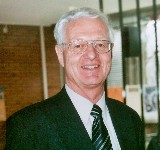 Helmar Schubert合作论文数Karlsruher Institut für Technologie2
 Leon Urbas合作论文数Dresden University of Technology2
 Sven Wachsmuth合作论文数Applied Informatics Group (Angewandte Informatik) at the Faculty of Technology, Bielefeld University2
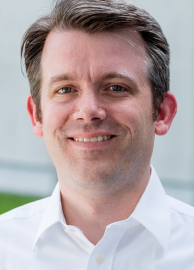 Thies Pfeiffer合作论文数Department for Electrical Engineering and Information Technology, Leer Faculty of Technology, University of Applied Sciences Emden;RAUMTANZER GmbH2Martin Pittroff合作论文数2
 Roland Ulber合作论文数Department of Mechanical and Process Engineering, Institute of Bioprocess Engineering, Rheinland-Pfälzische Technische Universität Kaiserslautern-Landau2Ljuba Woppowa合作论文数1H.-U. Moritz合作论文数1Dominic Wirz合作论文数1
 Jonas Schulz合作论文数1Philippe Chan合作论文数1
 Alexander Keller合作论文数Chair Separat Sci & Technol, Tech Univ Kaiserslautern1
 A. Winkler合作论文数Inst Lightweight Engn & Polymer Technol ILK, Tech Univ Dresden1Julia Riese合作论文数1
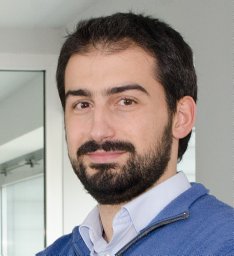 Angelos Filippatos合作论文数Dresden Ctr Intelligent Mat DCIM, Tech Univ Dresden1
 Mark W. Hlawitschka合作论文数1N. Modler合作论文数Faculty of Mechanical Engineering, TU Dresden1Sebastian Zeck合作论文数1
 Fernando Russo Abegao合作论文数Department of Chemical Engineering and Biotechnology, University of Cambridge1S. Rommel合作论文数1
 Kai Sundmacher合作论文数Max Planck Institute for Dynamics of Complex Technical Systems;Otto-von-Guericke-Universität Magdeburg1
 Daniel Weck合作论文数1
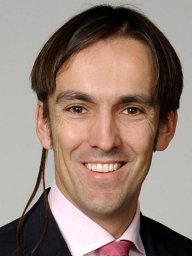 Lars M. Blank合作论文数Institute of Applied Microbiology, RWTH Aachen University1
 Bert Slof合作论文数University of Groningen1




