IntroductionThis study explores how drone movements and human bodily gestures influence spectators’ perceptions, focusing on physical and emotional involvement, aesthetic appreciation, and time perception.MethodsInspired by the iconic staircase scene from the Soviet film The Cranes Are Flying (1957), a set of 81 naturalistic video stimuli was created using a drone-mounted camera, varying in Drone Movement (Ascending, Descending, Still), Human Presence (Female, Male, None), and Image Speed (Normal, Low, Very Slow). Participants evaluated each video based on Liking, Perceived Movement, Physical Involvement, Emotional Involvement and Perceived Duration.Results and discussionResults showed that ascending movements elicited the highest levels of perceived movement, aesthetic appreciation and emotional engagement, outperforming descending and still movements. These results could be explained by a stronger sense of effort and exertion associated with ascending movements, aligning with the embodied simulation of upward motion against gravity. Human presence significantly enhanced ratings across all metrics compared to videos without human figures, thus suggesting that bodily movements play a crucial role in evoking stronger viewer involvement. Additionally, the Female condition received higher aesthetic ratings. Notably, normal image speed yielded greater perceived movement and physical involvement than slowed footage, highlighting a stronger connection to the natural rhythm of bodies in motion. Furthermore, ascending and descending conditions were perceived as lasting longer than still, corroborating prior research on time perception distortions with dynamic stimuli. Correlation analysis highlighted a strong link between physical involvement, emotional engagement, and aesthetic appreciation, underscoring the interplay between bodily and emotional responses. This study emphasizes the potential of drone-based cinematography to evoke embodied and emotional responses, reinforcing the role of embodied simulation theory in cinematic experiences.
Embodied music cognition predicts that our understanding of human-made sounds relates to our experience of making the same or similar movements and sounds, which involves imitation of the source of visual and auditory information. This embodiment of sound may lead to numerous kinetic cross-modal correspondences (CMCs). This article investigates music experience in participants with a non-professionally trained music background across three musical dimensions: Contour (Ascending, Descending, Flat), Vertical Density (Low, Medium, High), and Note Pattern (Binary, Ternary, Quaternary). In order that stimuli should reflect contemporary musical usage yet be subject to a high degree of experimental control, 27 ten-second digital piano tracks were created in collaboration with a film composer. In Study 1, participants were asked to rate the stimuli for perceived Direction, Rotation, Movement, and Emotional and Physical Involvement. We test the effects of these factors in terms of the following theories: general and vocal embodied responses to music, the Ecological Theory of Rotating Sounds, and the Shared Affective Motion Experience model of emotion induction. Results for Study 1 were consistent with theories of general and vocal embodied responses to music, as well as with theories of embodied emotional contagion in music. Study 1 also revealed potential confounds in the stimuli, which were further investigated in Study 2 with a new set of participants rating the stimuli for perceived Pitch, Loudness, and Speed. Results for Study 2 served to dissociate intrinsic features of the stimuli from CMCs. Taken together, the two studies reveal a range of embodied CMCs. Although there are limitations to a perceptual study such as this, these stimuli stand to benefit future research in further investigating the embodiment of musical motion.
In the last decades, the contribution of cognitive neuroscience to film studies has been invested in at least three different lines of research. The first one has to do with film theory and history: the new attention, inspired by cognitive neuroscience, to the viewer’s brain-body, the sensorimotor basis of film cognition, and the forms of embodied simulation elicited by the cinematic experience has stimulated a profound rethinking of a relevant part of the theoretical discourse on cinema, from the very beginning of the twentieth century to the most recent reflections within cognitive film studies and the phenomenology of film. The second line has to do with the intersubjective relationship between the movie—its style, rhythm, characters, and narrative—and the viewer, and it is characterized by an empirical approach that yields very interesting results, useful for rethinking and problematizing our ideas about editing, camera movements, and film reception. The third line concerns a possible experimental approach to the new life of film, focusing on the digital image, the innovative forms of technological mediation, and the inscription of a new film spectatorship within a completely different medial frame. The goal of this special issue is to offer insights across these lines of research.
Unsupervised Anomaly Detection (UAD) is an inexpensive and effective method to bring value to the clinical workflow for pathology detection, especially in the emergency room setting, where quick prioritization of Computed Tomography (CT) scans is necessary. While there are numerous works dealing with UAD for medical images, most of them focus on Magnetic Resonance Imaging (MRI) and 2D slices of the brain. This work’s aim is to build a comparison between two commonly used baselines for UAD of volumetric CT scans. In addition to this, we borrowed two recent contributions to the field of Computer Vision in order to improve the reconstruction quality of our networks. These contributions effectively increased the AUROC for anomaly detection from 0.7 to 0.77 for one of our baselines. In order to guarantee that the anomaly detection algorithm is effective for all diseases, including fractures, we tested our models both on skull-stripped scans and unstripped scans. Leaving the skull in the CT volumes allowed the algorithm to efficiently classify fractures. To the best of our knowledge, this is the first work to show a comparison regarding the usage of skull-stripping. To facilitate further research in UAD for Head CT, we publish supplementary labels for the publicly available CQ500 dataset. The code for this study can be found in a GitHub repository athttps://github.com/pederismo/CTFSH
The meaning of music may rely upon perceived motion (Zuckerkandl, 1971). Recently, the framework of embodied music cognition, which draws on the discovery of mirror neurons and the theory of embodied simulation (Gallese, 2007), makes the claim that our understanding of human-made sounds draws upon our experience of making the same or similar movements and sounds, which involves imitation of the source of visual and auditory information (Cox, 2011). This paper investigates perceived motion and embodied music experience in non-musicians across three musical dimensions: melodic contour (ascending, descending and flat), melodic complexity (low, medium, high) and, following from Hanson and Huron (2019), note pattern (binary, ternary, quaternary). As part of an initiative to adhere to a high aesthetic standard, 27 ten-second piano tracks were created in collaboration with a film composer. In the computer task, participants rated stimuli on a Visual Analogue Scale (VAS) ranging from 0 to 100 for perceived Direction, Rotation, Movement, and Emotional and Physical Involvement. Results showed that: 1) Quaternary conditions were perceived as having significantly more Rotation, Movement and being more Physically Involving than Ternary and Binary, 2) High Complexity conditions were perceived as evoking significantly more Movement and being more Emotionally Involving than Low and Medium, and 3) Ascending conditions were perceived as having significantly more Movement, Rotation and being more Emotionally and Physically Involving than Descending and Flat. Results indicate that greater embodiment evoked by musical ascent may be modulated by greater perceived exertion or ‘effort’ to reach higher pitches, in line with the mimetic subvocalization hypothesis (Cox, 2017). Future studies are needed to investigate whether perceived rotation is driven by note pattern (i.e. metre) or note density and pitch., and how musical contour and rotation impact sensorimotor activation in the brain.
In the last two decades, the history of film criticism gained significant attention both within Italy and internationally.The three-year research project "A Private History of Italian Film Criticism.Public Roles and Private Relations: the Institutionalization of Film Criticism in Italy from 1930s to 1970s" (funded by the Italian Ministry for University and Research) aims at investigating the process of institutionalization of Italian film criticism and the role that the main film critics and their personal and public networks played in making cinema a crucial part of Italian cultural discourse.Studying film criticism as a system of social relations and an agent of cultural mediation implies, on the one hand, the use of a composite toolkit of methodologies and approaches, which makes collaborative work essential to research, while on the other hand, it implies a new attention to the ephemeral nature of human and professional relationships which made the tradition of the Italian thought on film.
Technique and creativity Having been called upon to provide a contribution to a publication dedicated to “Techne”, I feel it is fitting to start from the theme of technique, given that for too many years now, we have fruitlessly attempted to understand the inner workings of cinema whilst disregarding the element of technique. And this has posed a significant problem in our field of study, as it would be impossible to gain a true understanding of what cinema is without immersing ourselves in the technical and industrial culture of the 19th century. It was within this culture that a desire was born: to mould the imaginary through the new techniques of reproduction and transfiguration of reality through images. Studying the development of the so-called “pre-cinema” – i.e. the period up to the conventional birth of cinema on 28 December 1895 with the presentation of the Cinématographe Lumière – we discover that the technical history of cinema is not only almost more enthralling than its artistic and cultural history, but that it contains all the great theoretical, philosophical and scientific insights that we need to help us understand the social, economic and cultural impact that cinema had on the culture of the 20th century. At the 1900 Paris Exposition, when cinema had already existed in some form for a few years, when the first few short films of narrative fiction also already existed, the cinematograph was placed in the Pavilion of Technical Discoveries, to emphasise the fact that the first wonder, this element of unparalleled novelty and modernity, was still there, in technique, in this marvel of innovation and creativity. I would like to express my idea through the words of Franco Moretti, who claims in one of his most recent works that it is only possible to understand form through the forces that pulsate through it and press on it from beneath, finally allowing the form itself to come to the surface and make itself visible and comprehensible to our senses. As such, the cinematic form – that which appears on the screen, that which is now so familiar to us, that which each of us has now internalised, that has even somehow become capable of configuring our way of thinking, imagining, dreaming – that form is underpinned by forces that allow it to eventually make its way onto the screen and become artistic and narrative substance. And those forces are the forces of technique, the forces of industry, the economic, political and social forces without which we could never hope to understand cinema. One of the issues that I always make a point of addressing in the first few lessons with my students is that if they think that the history of cinema is made up of films, directors, narrative plots to be understood, perhaps even retold in some way, then they are entirely on the wrong track; if, on the other hand, they understand that it is the story of an institution with economic, political and social drivers within it that can, in some way, allow us to come to the great creators, the great titles, but that without a firm grasp of those drivers, there is no point in even attempting to explore it, then they are on the right track. As I see it, cinema in the twentieth century was a great democratic, interclassist laboratory such as no other art has ever been, and this occurred thanks to the fact that what underpinned it was an industrial reasoning: it had to respond to the capital invested in it, it had to make money, and as such, it had to reach the largest possible number of people, immersing it into a wholly unprecedented relational situation. The aim was to be as inclusive as possible, ultimately giving rise to the idea that cinema could not be autonomous, as other forms of art could be, but that it must instead be able to negotiate all the various forces acting upon it, pushing it in every direction. This concept of negotiation is one which has been explored in great detail by one of the greatest film theorists of our modern age, Francesco Casetti. In a 2005 book entitled “Eye of the Century”, which I consider to be a very important work, Casetti actually argues that cinema has proven itself to be the art form most capable of adhering to the complexity and fast pace of the short century, and that it is for this very reason that its golden age (in the broadest sense) can be contained within the span of just a hundred years. The fact that cinema was the true epistemological driving force of 20th-century modernity – a position now usurped by the Internet – is not, in my opinion, something that diminishes the strength of cinema, but rather an element of even greater interest. Casetti posits that cinema was the great negotiator of new cultural needs, of the need to look at art in a different way, of the willingness to adapt to technique and technology: indeed, the form of cinema has always changed according to the techniques and technologies that it has brought to the table or established a dialogue with on a number of occasions. Barry Salt, whose background is in physics, wrote an important book – publishing it at his own expense, as a mark of how difficult it is to work in certain fields – entitled “Film Style and Technology”, in which he calls upon us stop writing the history of cinema starting from the creators, from the spirit of the time, from the great cultural and historical questions, and instead to start afresh by following the techniques available over the course of its development. Throughout the history of cinema, the creation of certain films has been the result of a particular set of technical conditions: having a certain type of film, a certain type of camera, only being able to move in a certain way, needing a certain level of lighting, having an entire arsenal of equipment that was very difficult to move and handle; and as the equipment, medium and techniques changed and evolved over the years, so too did the type of cinema that we were able to make. This means framing the history of cinema and film theory in terms of the techniques that were available, and starting from there: of course, whilst Barry Salt’s somewhat provocative suggestion by no means cancels out the entire cultural, artistic and aesthetic discourse in cinema – which remains fundamental – it nonetheless raises an interesting point, as if we fail to consider the methods and techniques of production, we will probably never truly grasp what cinema is. These considerations also help us to understand just how vast the “construction site” of cinema is – the sort of “factory” that lies behind the production of any given film. Erwin Panofsky wrote a single essay on cinema in the 1930s entitled “Style and Medium in the Motion Pictures” – a very intelligent piece, as one would expect from Panofsky – in which at a certain point, he compares the construction site of the cinema to those of Gothic cathedrals, which were also under an immense amount of pressure from different forces, namely religious ones, but also socio-political and economic forces which ultimately shaped – in the case of the Gothic cathedral and its development – an idea of the relationship between the earth and the otherworldly. The same could be said for cinema, because it also involves starting with something very earthly, very grounded, which is then capable of unleashing an idea of imaginary metamorphosis. Some scholars, such as Edgar Morin, will say that cinema is increasingly becoming the new supernatural, the world of contemporary gods, as religion gradually gives way to other forms of deification. Panofsky’s image is a very focused one: by making film production into a construction site, which to all intents and purposes it is, he leads us to understand that there are different forces at work, represented by a producer, a scriptwriter, a director, but also a workforce, the simple labourers, as is always the case in large construction sites, calling into question the idea of who the “creator” truly is. So much so that cinema, now more than ever before, is reconsidering the question of authorship, moving towards a “history of cinema without names” in an attempt to combat the “policy of the author” which, in the 1950s, especially in France, identified the director as the de facto author of the film. Today, we are still in that position, with the director still considered the author of the film, but that was not always so: back in the 1910s, in the United States, the author of the film was the scriptwriter, the person who wrote it (as is now the case for TV series, where they have once again taken pride of place as the showrunner, the creator, the true author of the series, and nobody remembers the names of the directors of the individual episodes); or at times, it can be the producer, as was the case for a long time when the Oscar for Best Picture, for example, was accepted by the producer in their capacity as the commissioner, as the “owner” of the work. As such, the theme of authorship is a very controversial one indeed, but one which helps us to understand the great meeting of minds that goes into the production of a film, starting with the technicians, of course, but also including the actors. Occasionally, a film is even attributed to the name of a star, almost as if to declare that that film is theirs, in that it is their body and their talent as an actor lending it a signature that provides far more of a draw to audiences than the name of the director does. In light of this, the theme of authorship, which Panofsky raised in the 1930s through the example of the Gothic cathedral, which ultimately does not have a single creator, is one which uses the image of the construction site to also help us to better understand what kind of development a film production can go through and to what extent this affects its critical and historical reception; as such, grouping films together based on their director means doing something that, whilst certainly not incorrect in itself, precludes other avenues of interpretation and analysis which could have favoured or could still favour a different reading of the “cinematographic construction site”. Design and execution The great classic Hollywood film industry was a model that, although it no longer exists in the same form today, unquestionably made an indelible mark at a global level on the history not only of cinema, but more broadly, of the culture of the 20th century. The industry involved a very strong vertical system resembling an assembly line, revolving around producers, who had a high level of decision-making autonomy and a great deal of expertise, often inclined towards a certain genre of film and therefore capable of bringing together the exact kinds of skills and visions required to make that particular film. The history of classic American cinema is one that can also be reconstructed around the units that these producers would form. The “majors”, along with the so-called “minors”, were put together like football teams, with a chairman flanked by figures whom we would nowadays refer to as a sporting director and a managing director, who built the team based on specific ideas, “buying” directors, scriptwriters, scenographers, directors of photography, and even actors and actresses who generally worked almost exclusively for their major – although they could occasionally be “loaned out” to other studios. This system led to a very marked characterisation and allowed for the film to be designed in a highly consistent, recognisable way in an age when genres reigned supreme and there was the idea that in order to keep the audience coming back, it was important to provide certain reassurances about what they would see: anyone going to see a Western knew what sorts of characters and storylines to expect, with the same applying to a musical, a crime film, a comedy, a melodrama, and so on. The star system served to fuel this working method, with these major actors also representing both forces and materials in the hands of an approach to the filmmaking which had the ultimate objective of constructing the perfect film, in which everything had to function according to a rule rooted in both the aesthetic and the economic. Gore Vidal wrote that from 1939 onwards, Hollywood did not produce a single “wrong” film: indeed, whilst certainly hyperbolic, this claim confirms that that system produced films that were never wrong, never off-key, but instead always perfectly in tune with what the studios wished to achieve. Whilst this long-entrenched system of yesteryear ultimately imploded due to certain historical phenomena that determined it to be outdated, the way of thinking about production has not changed all that much, with film design remaining tied to a professional approach that is still rooted within it. The overwhelming majority of productions still start from a system which analyses the market and the possible economic impact of the film, before even starting to tackle the various steps that lead up to the creation of the film itself. Following production systems and the ways in which they have changed, in terms of both the technology and the cultural contexts, also involves taking stock of the still considerable differences that exist between approaches to filmmaking in different countries, or indeed the similarities linking highly disparate economic systems (consider, for example, India’s “Bollywood” or Nigeria’s “Nollywood”: two incredibly strong film industries that we are not generally familiar with as they lack global distribution, although they are built very solidly). In other words, any attempt to study Italian cinema and American cinema – to stay within this double field – with the same yardstick is unthinkable, precisely because the context of their production and design is completely different. Composition and innovation Studying the publications on cinema in the United States in the early 1900s – which, from about 1911 to 1923, offers us a revealing insight into the attempts made to garner an in-depth understanding of how this new storytelling machine worked and the development of the first real cultural industry of the modern age – casts light on the centrality of the issues of design and composition. I remain convinced that without reading and understanding that debate, it is very difficult to understand why cinema is as we have come to be familiar with it today. Many educational works investigated the inner workings of cinema, and some, having understood them, suggested that they were capable of teaching others to do so. These publications have almost never been translated into Italian and remain seldom studied even in the US, and yet they are absolutely crucial for understanding how cinema established itself on an industrial and aesthetic level. There are two key words that crop up time and time again in these books, the first being “action”, one of the first words uttered when a film starts rolling: “lights, camera, action”. This collection of terms is interesting in that “motore” highlights the presence of a machine that has to be started up, followed by “action”, which expresses that something must happen at that moment in front of that machine, otherwise the film will not exist. As such, “action” – a term to which I have devoted some of my studies – is a fundamental word here in that it represents a sort of moment of birth of the film that is very clear – tangible, even. The other word is “composition”, and this is an even more interesting word with a history that deserves a closer look: the first professor of cinema in history, Victor Oscar Freeburg (I edited the Italian translation of his textbook “The Art of Photoplay Making”, published in 1918), took up his position at Columbia University in 1915 and, in doing so, took on the task of teaching the first ever university course in cinema. Whilst Freeburg was, for his time, a very well-educated and highly-qualified person, having studied at Yale and then obtained his doctorate in theatre at Columbia, cinema was not entirely his field of expertise. He was asked to teach a course entitled “Photoplay Writing”. At the time, a film was known as a “photoplay”, in that it was a photographed play of sorts, and the fact that the central topic of the course was photoplay writing makes it clear that back then, the scriptwriter was considered the main author of the work. From this point of view, it made sense to entrust the teaching of cinema to an expert in theatre, based on the idea that it was useful to first and foremost teach a sort of photographable dramaturgy. However, upon arriving at Columbia, Freeburg soon realised whilst preparing his course that “photoplay writing” risked misleading the students, as it is not enough to simply write a story in order to make a film; as such, he decided to change the title of his course to “photoplay composition”. This apparently minor alteration, from “writing” to “composition”, in fact marked a decisive conceptual shift in that it highlighted that it was no longer enough to merely write: one had to “compose”. So it was that the author of a film became, according to Freeburg, not the scriptwriter or director, but the “cinema composer” (a term of his own coinage), thus directing and broadening the concept of composition towards music, on the one hand, and architecture, on the other. We are often inclined to think that cinema has inherited expressive modules that come partly from literature, partly from theatre and partly from painting, but in actual fact, what Freeburg helps us to understand is that there are strong elements of music and architecture in a film, emphasising the lofty theme of the project. In his book, he explores at great length the relationship between static and dynamic forms in cinema, a topic that few have ever addressed in that way and that again, does not immediately spring to mind as applicable to a film. I believe that those initial intuitions were the result of a reflection unhindered by all the prejudices and preconceived notions that subsequently began to condition film studies as a discipline, and I feel that they are of great use to use today because they guide us, on the one hand, towards a symphonic idea of filmmaking, and on the other, towards an idea that preserves the fairly clear imprint of architecture. Space-Time In cinema as in architecture, the relationship between space and time is a crucial theme: in every textbook, space and time are amongst the first chapters to be studied precisely because in cinema, they undergo a process of metamorphosis – as Edgar Morin would say – which is vital to constructing the intermediate world of film. Indeed, from both a temporal and a spatial point of view, cinema provides a kind of ubiquitous opportunity to overlap different temporalities and spatialities, to move freely from one space to another, but above all, to construct new systems of time. The rules of film editing – especially so-called “invisible editing”, i.e. classical editing that conceals its own presence – are rules built upon specific and precise connections that hold together different spaces – even distant ones – whilst nonetheless giving the impression of unity, of contiguity, of everything that cinema never is in reality, because cinema is constantly fragmented and interrupted, even though we very often perceive it in continuity. As such, from both a spatial and a temporal perspective, there are technical studies that explain the rules of how to edit so as to give the idea of spatial continuity, as well as theoretical studies that explain how cinema has transformed our sense of space and time. To mark the beginning of Parma’s run as Italy’s Capital of Culture, an exhibition was organised entitled “Time Machine. Seeing and Experiencing Time”, curated by Antonio Somaini, with the challenge of demonstrating how cinema, from its earliest experiments to the digital age, has managed to manipulate and transform time, profoundly affecting our way of engaging with it. The themes of time and space are vital to understanding cinema, including from a philosophical point of view: in two of Gilles Deleuze’s seminal volumes, “The Movement Image” and “The Time Image”, the issues of space and time become the two great paradigms not only for explaining cinema, but also – as Deleuze himself says – for explaining a certain 20th-century philosophy. Deleuze succeeds in a truly impressive endeavour, namely linking cinema to philosophical reflection – indeed, making cinema into an instrument of philosophical thought; this heteronomy of filmmaking is then also transferred to its ability to become an instrument that goes beyond its own existence to become a reflection on the century that saw it as a protagonist of sorts. Don Ihde argues that every era has a technical discovery that somehow becomes what he calls an “epistemological engine”: a tool that opens up a system of thought that would never have been possible without that discovery. One of the many examples of this over the centuries is the camera obscura, but we could also name cinema as the defining discovery for 20th-century thought: indeed, cinema is indispensable for understanding the 20th century, just as the Internet is for understanding our way of thinking in the 21st century. Real-virtual Nowadays, the film industry is facing the crisis of cinema closures, ultimately caused by ever-spreading media platforms and the power of the economic competition that they are exerting by aggressively entering the field of production and distribution, albeit with a different angle on the age-old desire to garner audiences. Just a few days ago, Martin Scorsese was lamenting the fact that on these platforms, the artistic project is in danger of foundering, as excellent projects are placed in a catalogue alongside a series of products of varying quality, thus confusing the viewer. A few years ago, during the opening ceremony of the academic year at the University of Southern California, Steven Spielberg and George Lucas expressed the same concept about the future of cinema in a different way. Lucas argued that cinemas would soon have to become incredibly high-tech places where people can have an experience that is impossible to reproduce elsewhere, with a ticket price that takes into account the expanded and increased experiential value on offer thanks to the new technologies used. Spielberg, meanwhile, observed that cinemas will manage to survive if they manage to transform the cinemagoer from a simple viewer into a player, an actor of sorts. The history of cinema has always been marked by continuous adaptation to technological evolutions. I do not believe that cinema will ever end. Jean-Luc Godard, one of the great masters of the Nouvelle Vague, once said in an interview: «I am very sorry not to have witnessed the birth of cinema, but I am sure that I will witness its death». Godard, who was born in 1930, is still alive. Since its origins, cinema has always transformed rather than dying. Raymond Bellour says that cinema is an art that never finishes finishing, a phrase that encapsulates the beauty and the secret of cinema: an art that never quite finishes finishing is an art that is always on the very edge of the precipice but never falls off, although it leans farther and farther over that edge. This is undoubtedly down to cinema’s ability to continually keep up with technique and technology, and in doing so to move – even to a different medium – to relocate, as contemporary theorists say, even finally moving out of cinemas themselves to shift onto platforms and tablets, yet all without ever ceasing to be cinema. That said, we should give everything we’ve got to ensure that cinemas survive.
According to embodied simulation theory, humans tacitly ‘simulate’ the actions of the other by mapping them in the sensorimotor cortex of the brain. According to the framework of embodied cinema, the meaning-making process in film is considered to be inextricably linked to the interrelation between the brain, body and environment of the viewer. Athough there are a growing number of theoretical and technological studies on the embodied nature of drone flight, to date no studies have investigated the effect of drone footage with and without human bodily movement on spectators’ cognitive behavioral mechanisms. Thus, the present study investigates the relationship between Drone Movement (Ascending, Descending, Still) , Actor Presence (Female, Male, None) and Image Speed (Normal, Slow, Very Slow) on perceived motion, appeal and involvement measures. To achieve these aims, a custom-made, naturalistic set of video stimuli modeled after the staircase scene in the Soviet film The Cranes Are Flying (Kalatozov, 1957) was created using a DJI Phantom Pro 4 Drone. In the experimental task (carried out at the computer), participants were asked to rate video stimuli using a Visual Analogue Scale (VAS) ranging from 0 to 100 for perceived Duration, Liking, Movement, and Emotional and Physical Involvement. Results demonstrate that: 1) Ascending and Descending had significantly higher ratings for perceived Duration, Movement and Physical and Emotional Involvement than Still; 2) Ascending had significantly higher ratings for perceived Duration, Movement and Emotional Involvement than Descending; 3) Female and Male had significantly higher ratings for Movement, Physical Involvement and Emotional Involvement than None (No Actor); 4) Normal Image Speed had significantly higher ratings for Movement, Physical Involvement and Emotional Involvement with respect to Slow and Very Slow. Results indicate that drone/actor ascent may evoke more motion and involvement due to perceived exertion or ‘effort’ to climb up the stairs, and that participants resonate more with conspecifics and familiar repertoires, in support of embodied simulation theory. Results also indicate that movement in the drone/actor image modulates perceived time. Neuroimaging studies are needed to investiate the impact of drone movement with or without human bodily movement on cortical sensorimotor activation in the brain.
It is common opinion that the diffusion on large-scale of the photovoltaic application, based on the installation of small-size grid-connected PV systems, even if promoted and supported by governative initiatives, will be successfull if technical and non-technical barriers are overcome. In the past, in Ital, because of some regulation restrictions, the barrier, concerning the low-voltage grid connection and interface device, caused many uncertainties so that national industries weren't encouraged in developing inverters for this kind of application. In order to promote the development and optimization of national products, a dedicated test-facility has been realized by Enea ( Italaian National Agency for New Technologies, Energy and the Environment) at Enea Monte Aquilone Test-Site. A detailed description of the test-facility, designed to be able to assess the inverters technical main features and to test them in simulated and operating conditions, is reported. In the paper, preliminary experimental results will be presented and discussed in order to compare different commercial products and draw some conclusions about design criteria to optimize this kind of component.
In this paper we intend to formulate some hypotheses about the contributions that a theoretical reflection on the audiovisual can provide to a semiotics of textual enunciation. In order to do this, we will focus our attention on the cinematographic and audiovisual subjective.
This chapter provides the key neuroscientific data that enable the reader to follow the case studies. The subheadings are “Cinema, brain and empathy,” in which the reception of film is discussed, and the notion of empathy is introduced with an outline of its history; “Body, brain and neuroscience,” provides a critical account of neuroscience and details of the specific approach used; “From classic cognitivism to embodied cognition,” discusses two mainstream approaches to social cognition, classic cognitivism, and evolutionary psychology; “Motor cognition: Movements and motor goals,” explains why and how the cognitive role of the motor system and its role in visual perception should be reconceived; “Motor cognition: Area F4 and peri-personal space,” provides evidence for the role of the motor system in mapping space; “Motor cognition: Canonical neurons and objects ‘close to hand’,” discusses canonical neurons and their role in object perception; “Motor cognition: Mirror neurons and mirroring mechanisms,” introduces mirror neurons in macaques and mirror mechanisms in humans, and outlines their role in social perception; “Emotions, sensations and embodied simulation,” describes the role of embodied simulation in the perception of the emotions and sensations of others; “The person as a corporeal form between the real world and the world of fiction: Liberated simulation,” introduces the aesthetic specificity of the visual perception model with an explanation of how it could be applied to film viewing in particular and more generally to fiction; and “Brain–body and cinema,” discusses how neuroscience has been applied to the study of film and cinema.
This chapter discusses close-ups of the face and body in relation to film and neuroscience. The subheadings are “Touching in the mirror,” which introduces and discusses the opening scenes of Ingmar Bergman’s Persona; “The somatosensory system and multimodality,” which addresses the notion of multimodality, and explains how the brain processes touch and pain; “The social perception of touch,” provides an overview of how the brain processes the vision of touch; “Feeling the film,” in which scenes from Jean Luc Godard’s Une Femme Mariée are analyzed and a suggestion provided for approaching the notion of “haptic vision,” discussed by film theorists, from a neuroscientific perspective; and “Animations,” in which the authors propose that their model of embodied simulation can be used to explain the sense of presence generated by animation films, analyzing Jan Švankmajer’s films and Pixar’s Toy Story.
This chapter presents the authors’ view of the future, discussing new digital technologies and mediations and their impact on film and its reception. The subheadings are: “New positioning,” a discussion of the future of film and cinema in the light of new and emerging technologies and the few empirical studies addressing these issues; “Digital presences,” an overview of how the authors’ model can help in formulating new theoretical and empirical approaches; “Death by chat,” an analysis of the film Unfriended with a discussion of how new mediations of filmic content reshape the spectator’s relation to film; “A new film grammar,” which introduces action cams and their impact on film viewing; and “Goodbye to the screen?” which envisions how the new filmic mediation may generate a new form of film reception.
One key feature of film consists in its power to bodily engage the viewer. Previous research has suggested lens and camera movements to be among the most effective stylistic devices involved in such engagement. In an EEG experiment we assessed the role of such movements in modulating specific spectators´ neural and experiential responses, likely reflecting such engagement. We produced short video clips of an empty room with a still, a zooming and a moving camera (steadicam) that might simulate the movement of an observer in different ways. We found an event related desynchronization of the beta components of the rolandic mu rhythm that was stronger for the clips produced with steadicam than for those produced with a still or zooming camera. No equivalent modulation in the attention related occipital areas was found, thus confirming the sensorimotor nature of spectators´ neural responses to the film clips. The present study provides the first empirical evidence that filmic means such as camera movements alone can modulate spectators’ bodily engagement with film.
This chapter deals with montage. The subheadings are “Calumet City,” a discussion of parallel montage in Jonathan Demme’s The Silence of the Lambs from the authors’ perspective; “Continuity,” in which continuity editing is addressed in relation to several film scholars and authors, including Joseph Anderson, Lev Kuleshov, and Jean Epstein; “Action, action, action!,” where the role of action in montage is addressed by referring to early American film theory, introducing and discussing authors such as Victor Freeburg, Hugo Münstenberg, Henry Albert Phillips, and Epes Winthrop Sargent; and “The mirror crack’d,” which introduces and discusses the empirical neuroscientific results of the authors’ high-density electroencephalography experiment on montage, where continuity editing and jump-cuts are compared.
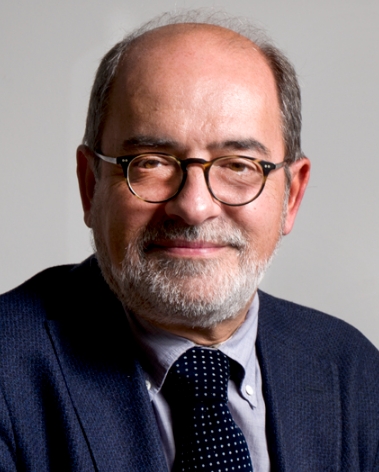 Vittorio Gallese合作论文数Department of Medicine and Surgery, Unit of Neuroscience, University of Parma;Institute of Philosophy, School of Advanced Study, University of London;Department of Art History and Archeology, Columbia University19
 Maria Alessandra Umiltà合作论文数Italian Institute of Technology, University of Parma7
 Calbi Marta合作论文数Department of Psychology, University of Milano-Bicocca;Department of Neuroscience, University of Parma;University of Milano-Bicocca, University of Parma6
 Anna Kolesnikov合作论文数Univ Parma4
 Martina Montalti合作论文数Department of Medicine and Surgery Unit of Neuroscience, University of Parma4
 Nunzio Langiulli合作论文数Unit Neurosci, Univ Parma3
 Katrin Heimann合作论文数Centre for Educational Development, University of Aarhus;Tallinn University3Jennifer Malvezzi合作论文数2Giulio Tosi合作论文数2Sara Martin合作论文数2Andrea Mariani合作论文数2Paolo Noto合作论文数2
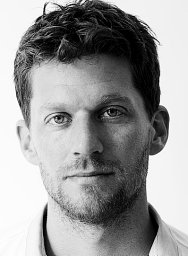 Sebo Uithol合作论文数Dept Neurosci, Univ Parma2
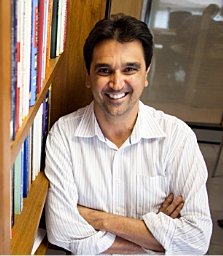 Eduardo B. Andrade合作论文数Warrington College of Business Administration;University of Florida;Warrington College of Business Administration, University of Florida2
 Abhijeet Parida合作论文数1
 Joshua Michael Silberstein Bamford合作论文数Institute of Cognitive and Evolutionary Anthropology, University of Oxford1
 Shadi Albarqouni合作论文数Klinik für Diagnostische und Interventionelle Radiologie, University of Bonn;Helmholtz AI;Technical University of Munich1
 Joerg Fingerhut合作论文数Fakultät für Philosophie, Wissenschaftstheorie und Religionswissenschaft, Ludwig-Maximilians-Universität München1
 Daniel Rueckert合作论文数Department of Computing, Imperial College London;Centre for Cardiac Engineering, Imperial College London;School of Computation, Information and Technology, Technical University of Munich;School of Medicine and Health, Technical University of Munich1
 Mehmet Yigitsoy合作论文数Computer Aided Medical Procedures, Technische Universität München1
 Riccardo Schioppo合作论文数ENEA Area Sperimentale di Monte Aquilone1




