In 1997 an international group of scientists organized a meeting in Barcelona, Spain, to discuss the use of biomarkers in the management of patients with bladder cancer. This meeting was the offspring of an - initially informal - group that finally resulted in the foundation and incorporation of the International Bladder Cancer Network (IBCN) e.V. in 2005. Over the years the group has supported several research initiatives and generated several recommendations on the use of biomarkers in the diagnosis and treatment of bladder cancer. Meeting quality was generated by inviting experts presenting state-of-the-art lectures or work in progress reports, interdisciplinarity and the limited number of participants supporting an open and personal exchange resulted in a format increasingly attracting participants from all over the world. The recent limitations caused by the Covid-19 pandemic were partially met by organizing several well attended webinars. The future challenge is to maintain the IBCN meeting spirit despite an increasing interest of the scientific community and industrial partners to participate. However, the integration of and interaction between increasingly more specialized disciplines is a challenge that can be better catalyzed by an international multidisciplinary network than mostly national professional associations. (c)
This narrative of the history of the Society of Urologic Oncology (SUO) presents the story of the founding and development of this organization and the creation and establishment of its initiatives and programs. It includes a description of how “Urologic Oncology: Seminars and Original Investigations” came to be designated as its “official journal”, thus commemorating the anniversary of the Journal's twenty-five years of publication.
This narrative reviews the history of Urologic Oncology: Seminars and Original Investigations from its inception and founding through its development to reach its current status. It describes the difficulties it experienced during its initial years when it almost folded, its resuscitation when it was designated as the "official journal" of the Society of Urologic Oncology, its merger with Seminars in Urologic Oncology to strengthen the content of both journals in a new format, its acceptance for indexation by the National Library of Medicine, its progress to monthly publication in addressing the needs of both authors and readership, and its current status as a leading multidisciplinary journal in urologic oncology. As a founding editor and managing editor for the first 5 years and then as editor-in-chief for the next 20 years, the author has been integrally involved in each step of the Journal's development and maturation. The Journal has been referred to as "the journal that almost never was" as it now has reached its 25th year of publication. This article commemorates the Journal's 25th Anniversary and gratefully acknowledges all of those investigators, authors, reviewers, editors, publishers and the readership who have contributed to the Journal's ongoing success.
Background, context and purposeIn spite of the mixed evidence for their impact, survivorship Care Plans (SCPs) are recommended to enhance quality of care for cancer survivors. Data on the feasibility of SCPs in bladder cancer (BC) is sparse. Using a mixed-methods approach, this study describes the iterative development, acceptability and feasibility of BC specific SCP (BC-SCP) in clinical settings.MethodsIn Phase I, we developed the BC-SCP. In Phase II, we conducted four focus groups with 19 patients and 15 providers to examine its acceptability and usability challenges. Data analyses using the Atlas.ti program, informed refinement of the BC-SCP. In Phase III, we conducted feasibility testing of the refined BC-SCP with 18 providers from 12 health-centers. An encounter survey was completed after each assessment to examine the feasibility of the BC-SCP. Chi-square and Fisher Exact tests were used for comparative analyses.ResultsDuring phase I, we observed high patient and provider acceptability of the BC-SCP and substantial engagement in improving its content, design, and structure. In Phase II, providers completed 59BC-SCPs. Mean time for BC-SCP completion was 12.3min. Providers reported that BC-SCP content was clear, did not hamper clinic flow and was readily completed with easy-to-access information. Comparative analyses to examine differences in SCP completion time by patient clinico-demographic characteristics and provider type revealed no significant differences.ConclusionsOur BC-SCP has clinical relevance, and can be used in an active practice setting. However, considerable progress will be necessary to achieve implementation of and sharing the BC-SCP with patients and care providers, particularly within the electronic medical record. In summary, BC-SCPs are essential to improve the follow up care of BC survivors. Clinical resources are required to ensure appropriate implementation of BC-SCPs.Trial registrationStudy HUM00056082.
With the advent of novel genomic and transcriptomic technologies, new urinary biomarkers have been identified and tested for bladder cancer (BCa) surveillance. To summarize the current status of urinary biomarkers for the detection of recurrence and/or progression in the follow-up of non-muscle invasive BCa patients, and to assess the value of urinary biomarkers in predicting response to intravesical Bacillus Calmette–Guerin (BCG) therapy.
We thank the authors for their letter and hope to provide some clarification from the perspective of the six journal editors [1–5]. The Gleason system has endured because it aligns with clinical outcomes but is awkward for patients and physicians alike. It is misleading, as it starts at 6; it does not discriminate between the combinations that compose Gleason 7; and it does not clearly show the emerging prognostic distinctions among the high-grade cancers. These issues have created an obstacle not only in managing patients but also in the consistency of scientific reports. This is particularly true for assessing patient suitability for active surveillance and for the nuanced treatments for higher grade tumors. The conference at which the new systemwas proposed was attended by several of us. The naming of the systemwas a contentious issue and is not yet fully resolved, as emphasized in the letter by Egevad et al, but there was little disagreement among participants about the new system’s value or validity. As editors and as practitioners caring for patients with prostate cancer, we believe that the new system for grouping of Gleason grade has clinical and pragmatic merit. Accordingly, we have encouraged our authors to use the new grouping in submitted manuscripts. This should help provide clarity and better comparative assessment of outcomes and treatment results. Nevertheless, we recognize that little in scientific publishing is static, and ongoing study and novel analyses will likely result in further modifications. The exact name used for the system, while important for reference and consistency, is not within our purview to decide, and we await wider discussion in the prostate cancer community—and
I am the son of immigrant parents from simple backgrounds in Germany who had escaped from the Holocaust in the late 1930s and settled in a middle-class neighborhood in Brooklyn, New York. They lived their everyday lives with honesty and integrity, engraining these values in my younger brother and me as they spoke of the importance of education, an appreciation of a simple, non-materialistic lifestyle, and the responsibility of “giving back” for whatever success we might achieve. Their encouragement that I go into medicine as the embodiment of these values seemed the logical outgrowth.
Editors of the major urological literature advocate the use of the recent Gleason Grade groupings when reporting analyses of prostate cancer.
We thank the authors for their letter and hope to provide some clarification from the perspective of the 7 journal editors. The Gleason system has endured because it aligns with clinical outcomes but is awkward for patients and physicians alike. It is misleading as it starts at 6, does not discriminate between the combinations that comprise Gleason 7, and does not clearly show the emerging prognostic distinctions between the high-grade cancers. This has created an obstacle, not only in managing patients, but also in the consistency of scientific reports. This is particularly true when assessing patient suitability for active surveillance, and also with the nuanced treatments for higher-grade tumors. The conference at which the new system was proposed was attended by several of us. The naming of the system was a contentious issue and is not yet fully resolved, as emphasized by the letter from Samaratunga et al, but there was little disagreement among participants about its value or validity.
The International Society of Urologic Pathology (ISUP) has endorsed modifications to the Gleason grading system for prostate cancer (1Epstein J.I. Egevad L. Amin M.B. et al.The 2014 International Society of Urological Pathology (ISUP) Consensus Conference of Gleason Grading of Prostatic Carcinoma.Am J Surg Pathol. 2016; 40: 244-252Crossref PubMed Scopus (7) Google Scholar). Five grade groups have been defined, with tumors of Grade Group 1 being the least aggressive and having the lowest likelihood of progression, whereas those of Grade Group 5 have the highest likelihood of early systemic spread. We believe this new system provides clearer guidance for pathologists to classify cancers on the basis of gland morphology, and it aligns better with contemporary management including active surveillance. The editors of the major uro-oncology journals believe this is a helpful change for clinicians, researchers, and patients alike and are eager to help this system establish itself in the reporting of pathologic grade. To that end, we are now asking investigators to use the new system in the reporting of prostate cancers in their publications. As the Grade Groups correspond largely with current Gleason scores 6, 3+4, 4+3, 8, 9, and 10, the translation should be relatively simple. Over the next 1 to 2 years, side-by-side reporting of old and new histology may be temporarily necessary. We do recognize that some institutional and national databases are not set up to make the translation, and exceptions will be granted in these cases. In Regard to Zietman et alInternational Journal of Radiation Oncology, Biology, PhysicsVol. 96Issue 5PreviewTo the Editor: It was with some surprise that we read of 6 Letters to the Editor (1-6) authored by the editors of the International Journal of Radiation Oncology • Biology • Physics, Urology, Urologic Oncology, BJU International, European Urology, and The Journal of Urology regarding the recently defined grading system for prostate cancer (7). For clarification the letter published in The Journal of Urology (3) is headed “Stage Grouping,” which would seem to be an error. Full-Text PDF
 Bcs Liu合作论文数15
 Nelson N Stone合作论文数Department of Urology, Icahn School of Medicine, Mount Sinai11
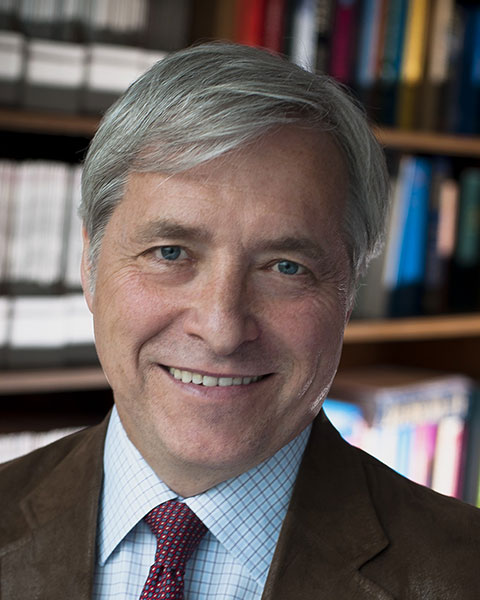 Yves Fradet合作论文数Division of Urology, Department of Surgery, Université Laval;Department of Urology, CHU de Quebec-Universite Laval10D Gomolka合作论文数9
 Richard G. Stock合作论文数Eastside Radiation Oncology9
 Steven Lehrer合作论文数Department of Economics, Queen’s University;Institute for Interdisciplinary Study of Decision Making, New York University;Institute for Brain and Cognitive Science, New York University;Center for Data Science and Analytics, New York University8
 H. Barton Grossman合作论文数Department of Urology, University of Texas M. D. Anderson Cancer Center8
 Bernd J Schmitz-Drager合作论文数7
 Shahrokh F. Shariat合作论文数Department of Urology, Medical University of Vienna, Vienna General Hospital;University of Texas Southwestern Medical Center;Weill Cornell Medicine, Cornell University7
 Prokar Dasgupta合作论文数King’s College London7Edward J. Diamond合作论文数7
 James Catto合作论文数Department of Oncology and Metabolism, The Medical School, University of Sheffield7
 Yair Lotan合作论文数Department of Urology, The University of Texas Southwestern Medical Center6Joseph A. Smith合作论文数6Alexander Kirschenbaum合作论文数6
 Eric A. Klein合作论文数Stanford Distinguished Careers Institute, Stanford University;Glickman Urological and Kidney Institute, Cleveland Clinic6
 Anthony Zietman合作论文数Massachusetts General Hospital, Harvard Medical School6Re Weiss合作论文数5
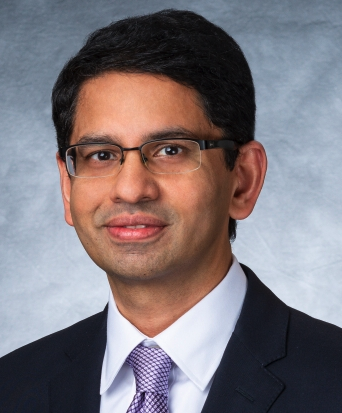 Ashish M. Kamat合作论文数Department of Urology, Division of Surgery, The University of Texas MD Anderson Cancer Center5
 Stenzl Arnulf合作论文数Department of Urology, University Hospital Tubingen4
 Pierre Karakiewicz合作论文数Department of Surgery, Universite de Montreal;Cancer Prognostics and Health Outcomes Unit, CHUM4
 Leonard Gomella合作论文数Department of Urology, Jefferson Medical College, Thomas Jefferson University4
 Patrick C. Walsh合作论文数School of Medicine, Johns Hopkins University4
 Peter J. Goebell合作论文数Department of Urology, Friedrich-Alexander Universität Erlangen-Nürnberg;Department of Urology, University Comprehensive Cancer Center4
 Edward M. Messing合作论文数Department of Urology, University of Rochester Medical Center;Department of Urology, School of Medicine and Dentistry, University of Rochester4WP Shu合作论文数3E Kavaler合作论文数3Sm Redwood合作论文数3
 Petru Octavian Drăgoescu合作论文数Department of Urology, University of Medicine and Pharmacy of Craiova3Hugh J Lavery合作论文数Department of Urology, The Mount Sinai Medical Center3
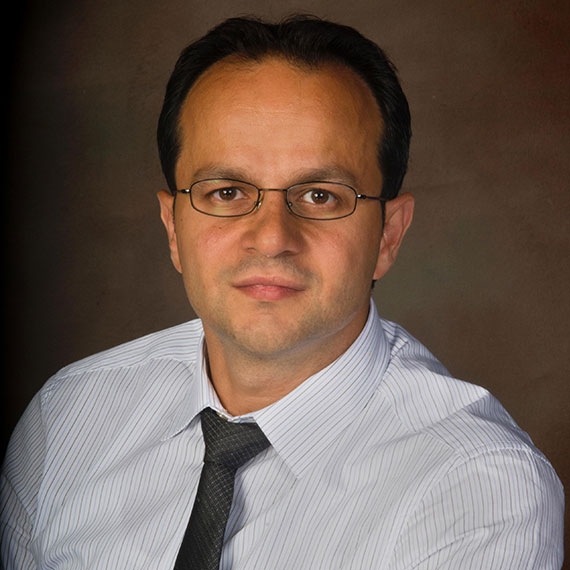 Wassim Kassouf合作论文数Department of Surgery (Urology), McGill University3Dieter Jocham合作论文数3Joseph C. Presti合作论文数3George P. Hemstreet合作论文数3
 Jaime Landman合作论文数Department of Urology, University of California, Irvine3
 Robert S Svatek合作论文数Bladder Cancer Center of Excellence, Department of Urology, Long School of Medicine, The University of Texas Health Science Center at San Antonio;Division of Urologic Oncology, Department of Urology, Long School of Medicine, The University of Texas Health Science Center at San Antonio3Peter Perlmann合作论文数Universität Stockholm3
 Michael Marberger合作论文数Department of Urology, Medical University of Vienna3
 Matthew I. Milowsky合作论文数Lineberger Comprehensive Cancer Center, School of Medicine, University of North Carolina3Vinata B. Lokeshwar合作论文数3Alexander Karl合作论文数3
 Unyime O. Nseyo合作论文数3Brian C.-S. Liu合作论文数3Bas W. van Rhijn合作论文数2M'Liss A. Hudson合作论文数2Richard Bihrle合作论文数2Cwm Ritenour合作论文数2
 Roland Seiler合作论文数2MU SCHNEIDER合作论文数2




