Unmanned aerial vehicles (UAVs) have gained widespread applications in areas such as logistics, surveillance, precision agriculture, disaster response, and smart city infrastructure. Efficient and autonomous path planning is a critical challenge in UAV operations, requiring optimized trajectory generation to enhance navigation, obstacle avoidance, energy efficiency, and multi-agent coordination. To address these challenges, researchers have increasingly adopted metaheuristic algorithms, particularly ant colony optimization (ACO), along with hybrid AI-driven approaches such as genetic algorithms (GA), particle swarm optimization (PSO), and reinforcement learning. This study conducts a bibliometric analysis using Scopus data and VOSviewer visualization techniques to explore global research contributions in UAV path planning and optimization. The analysis identifies key research clusters, influential authors, institutional collaborations, and regional research distributions, providing insights into emerging trends and methodologies in UAV navigation. The findings reveal a strong emphasis on bio-inspired algorithms, AI integration, and multi-agent UAV coordination, with China leading in publication contributions. Additionally, hybrid optimization models are gaining traction for real-time decision-making and adaptive route planning in dynamic environments. The results of this study offer a comprehensive overview of the research landscape, highlighting current advancements, challenges, and opportunities in UAV path planning. Future research is expected to focus on fully autonomous UAV systems, swarm intelligence, secure UAV communication networks, and energy-efficient navigation strategies. This bibliometric study serves as a valuable resource for researchers and industry stakeholders aiming to enhance UAV autonomy through cutting-edge optimization and AI-driven solutions.
Unmanned Aerial Vehicles (UAVs) are increasingly deployed for wildlife monitoring, anti-poaching patrols, and search-and-rescue operations. Deployment in remote environments remains constrained by three interdependent challenges: energy-efficient area coverage, real-time responsiveness to dynamic obstacles, and reliable safety intervention under limited onboard computational power. Existing solutions address these challenges in isolation, producing architectures that are inefficient, unreliable, or reliant on probabilistic safety mechanisms unsuitable for safety-critical missions. The objective of this study is to design, implement, and statistically validate a hierarchical hybrid navigation framework that simultaneously addresses all three challenges within a computationally efficient architecture suitable for edge-deployed wildlife monitoring UAVs. The framework separates autonomy into three coordinated layers: (1) a strategic layer employing a Genetic Algorithm (GA) enhanced with a 2-Opt topological mutation for globally efficient path planning; (2) a tactical layer driven by a Twin Delayed Deep Deterministic Policy Gradient (TD3) agent to generate smooth, energy-aware local trajectories; and (3) a reactive layer based on an Adaptive Fuzzy Logic (AFL) safety governor providing rule-based, low-latency, interrupt-driven collision avoidance. To mitigate deep reinforcement learning failure modes, the TD3 agent is trained via a three-stage curriculum learning strategy, validated in a 2D kinematic sandbox before transfer to a high-fidelity 3D simulator. The system was evaluated across two AirSim environments (Africa and LandscapeMountains) under dynamic obstacle conditions. Statistical validation across n = 20 independent planner trials and n = 15 ablation trials confirmed 100% mission completion, a 70% reduction in control jerk versus the PID baseline (41.97 versus 139.84 m/s3, p < 0.01), and zero collisions under AFL supervision across all five stress-test scenarios in both environments. Inference profiling confirmed an actor model size of 0.276 MB and a mean latency of 0.097 ms on CPU hardware, supporting compatibility with resource-constrained edge platforms. These results demonstrate that integrating evolutionary optimization, deep reinforcement learning, and fuzzy-logic safety supervision produces a statistically validated and computationally feasible autonomous navigation system for wildlife conservation.
Traditional state estimation methods often become unreliable in the presence of measurement anomalies, abrupt disturbances, and nonlinear dynamics. Such conditions are ubiquitous in high-stakes operational settings, including air traffic surveillance, autonomous systems, and advanced manufacturing. These challenges expose an enduring methodological gap: the inability to ensure both strong robustness to uncertainty and stable, continuous correction behaviour. This paper aims to address these limitations by developing estimation methods that maintain stability while adapting intelligently to uncertainty. To this end, we introduce the Sliding Sigmoid Filter (SSF), a novel estimator that combines sliding-mode robustness with a continuous sigmoid-based gain function, and further extend it to the Adaptive Sliding Sigmoid Filter (ASSF), which adjusts its gain online using recent innovation statistics for fault detection and adaptive correction. Using linear and nonlinear simulation benchmarks together with a full experimental pipeline involving physics-informed neural network parameter identification and SSF-based state estimation for a magnetorheological damper, we evaluate the performance of the proposed filters against classical methods. The results show that SSF and ASSF significantly reduce estimation error, attenuate outliers more smoothly than threshold-based approaches, and provide faster recovery under measurement faults. Overall, the findings demonstrate that the proposed filters offer a practical and theoretically grounded alternative for robust state estimation in uncertain and fault-prone environments.
Content-Based Image Retrieval (CBIR) is an important area in multimedia and computer vision, enabling image search and retrieval based on visual content rather than metadata. This paper proposes a Hybrid Deep Feature Fusion (HDFF) framework, a hybrid Convolutional Neural Network (CNN) approach for efficient CBIR, leveraging a combination of ResNet18 and GoogleNet pre-trained models. The proposed HDFF methodology begins with feature extraction, where ResNet18 and GoogleNet separately extract deep features from images in the Corel-1 K dataset. These features are then fused and reduced via Principal Component Analysis (PCA) to minimize dimensionality while preserving the most discriminatory information. The resulting compact feature set is utilized for two tasks: classification and retrieval. A Gaussian Support Vector Machine (SVM) is employed for classification, achieving an outstanding accuracy of 99
Electromyographic (EMG) signals provide valuable insights into muscle activity and can be leveraged for human motion classification, particularly in applications such as prosthetics, rehabilitation, and human–computer interaction. This study presents a deep learning-based approach for classifying forearm motions using EMG signals recorded from eight muscles. The dataset, comprising 30 subjects performing seven distinct motions, was preprocessed by applying a bandpass filter (10–400 Hz), down sampling to 1000 Hz, and removing unnecessary rest periods. The signals were segmented using region-of-interest (ROI) masking, ensuring precise alignment between EMG signals and motion labels. A convolutional neural network (CNN) was designed for sequence-to-sequence classification, incorporating 1D convolutional layers, transposed convolutional layers, and layer normalization techniques to effectively extract spatial patterns from the EMG data. The model was trained using the Adam optimizer with a learning rate of 0.001, mini-batch size of 32, and 100 epochs. Training and testing data were split in an 80–20
Commonly applied in satellites and other complex systems, the Kalman filter (KF) is an optimal estimation strategy and many nonlinear variants have been introduced in practice. A trade-off commonly exists between optimality and robustness. In the presence of unmodeled disturbances, modeling errors, or sub-system failure, non-robust strategies can fail to correctly estimate states, resulting in failure across the system. In the context of Earth observing satellites, this can materialize as internal or environmental disturbances, operational faults, or changes to the system properties, resulting in communication or data loss with performance decline. In this paper, estimation strategies for a nonlinear satellite system are derived and evaluated. Introducing disturbances, modeling errors, and sub-system faults to the simulated dynamics, the state estimation error for each filter is calculated and compared to each other, quantifying robustness. The extended KF and extended sliding in- novation filter (ESIF) are applied, as well as two nonlinear extensions of the second-order SIF and alpha SIF, not previously applied in literature. Computational simulations are performed on an ideal satellite system undergoing an attitude regulation maneuver subjected to selected com- plications. From the results of the experiment, it was concluded that the robust strategies out-performed the conventional EKF when faults were injected, having less error between the estimated and true states.
Multi-domain operations have grown in complexity with the integration of diverse operational theaters such as land, air, sea, space, and cyberspace. Artificial intelligence and machine learning have become essential tools for enhancing decision-making, operational planning, and autonomous system management in this evolving defense landscape. This paper presents a comprehensive bibliometric analysis of AI and ML applications in multi-domain operations from 2013 to 2024. Data were gathered from multiple academic databases and analyzed using VOSviewer, which enabled the mapping of keyword co-occurrences, citation networks, and influential research clusters. The analysis identified thematic clusters that encompass foundational AI/ML techniques, advanced algorithmic innovations such as adversarial and federated learning, optimization methodologies, deep learning frameworks, and systems supporting command and control. Emerging trends also include cybersecurity integration and human-machine teaming, underscoring the dynamic evolution of the field. These findings offer critical insights into the intellectual structure of research at the intersection of technology and military strategy. They provide a foundation for future studies aimed at developing secure, adaptive, and efficient AI-driven systems capable of addressing the challenges inherent in complex, multi- domain environments.
The increasing production of disposable plastic products contributes greatly to marine pollution and its impact on the marine ecosystem and organisms consuming ocean-derived food. To address this issue, this paper proposes a new customized convolutional neural network (CNN) model for categorizing the level of marine pollution in underwater ocean regions using image classification. The customized CNN model is developed and compared with five preexisting models, including DenseNet121, Inception-ResNetV2, InceptionV3, VGG-19, and VGG-16. The results show that the customized model achieves an accuracy of 99.5
Improving the accessibility technologies for the visually impaired is an important step towards the formation of an inclusive society. This paper presents a new deep learning approach for object recognition using Faster R-CNN to improve the accessibility of the blind and visually impaired. The system combines object detection and classification into a single framework where Faster R-CNN is used to detect objects in the real world and classify them with high accuracy and efficiency. The proposed system is capable of detecting and classifying objects in real-time, and since the two functions are integrated into one architecture, the system can provide reliable object recognition. The framework is trained and validated on a large and varied dataset of objects and situations that are likely to be encountered in daily life. The proposed system has a higher detection accuracy, classification precision, and inference speed than conventional methods. This work demonstrates the possibilities of deep learning in the context of accessibility technologies and provides a feasible and efficient approach to enhancing the lives of the blind and visually impaired.
This paper presents a bibliometric analysis of UAV-based sensing for agricultural optimization, with a focus on phenotyping and crop monitoring from 2012 to 2024. Drawing on 2675 publications from 838 sources and exhibiting an annual growth rate of 41.5%, the field demonstrates rapidly expanding scholarly attention and technological innovation. Using VOSviewer and Biblioshiny, the study explores key concepts such as precision agriculture, remote sensing, advanced imaging (multispectral and hyperspectral), and machine learning algorithms. Results reveal four major thematic clusters: algorithmic and data-processing methods for phenotyping, application-oriented agriculture and sustainability concerns, UAV technology infrastructure with AI-based analytics, and spectral imaging systems for vegetation assessment. Cross-cluster linkages underscore the synergy between hardware developments, data-driven analytics, and agronomic applications. High citation rates suggest that this body of research has significant influence, shaping new insights into disease detection, yield prediction, and resource management. The findings highlight major trends, including the rise of deep learning, sensor fusion, and robotics, as well as ongoing challenges related to data standardization, validation protocols, and economic accessibility. By synthesizing these patterns, the paper offers a comprehensive overview of how UAV-based sensing is transforming large-scale phenotyping and crop monitoring, while pointing to strategic directions for future research and technological advancement.
Lung cancer is still one of the deadliest diseases in the world, which proves the importance of effective and early diagnosis. This paper proposes AI-Lung Detect, a new system that aims to improve lung cancer detection using a combination of Convolutional Neural Network (CNN). In its essence, the system employs ResNet-50, a highly advanced deep learning model, to identify high-level features from CT scans that are characteristic of cancerous tissues. These features are then classified using optimized ensemble classifiers to ensure that the imaging data is classified accurately as normal or cancerous findings. The framework is trained and validated on a large dataset from Kaggle to make it more reliable and accurate. The findings show that the proposed approach of using ResNet-50 with optimized ensemble classifiers is more accurate, precise, and recall-oriented than the conventional methods. Further work will be directed towards the creation of a MATLAB application with a graphical user interface to enhance the clinical application of AI-Lung Detect. This initiative is to offer a strong and effective means for medical practitioners in the fight against this deadly disease.
 Stephen Andrew Gadsden合作论文数87
 Talal Bonny合作论文数University of Karlsruhe52
 Khaled Obaideen合作论文数Sustainable Energy & Power Syst Res Ctr, Univ Sharjah42
 Mamdouh El Haj Assad合作论文数36
 Nida Nasir合作论文数Research Institute of Science and Engineering, University of Sharjah20
 Ahmed Al-Shammaa合作论文数19Bassam Khuwaileh合作论文数University of Sharjah18
 Al-Yateem Nabeel合作论文数School of Nursing and Midwifery, National University of Ireland17
 Syed Azizur Rahman合作论文数Univ Sharjah, Dept Hlth Serv Adm, Sharjah, U Arab Emirates16
 Feras Barneih合作论文数Research Institute of Science and Engineering, University of Sharjah14
 Omar Alshaltone合作论文数Research Institute of Science and Engineering, University of Sharjah14
 Waleed Hilal合作论文数McMaster University14
 Ali Bou Nassif合作论文数College of Graduate Studies, University of Sharjah;Department of Computer Engineering, University of Sharjah14
 Muhammad Arsyad Subu合作论文数College of Health Sciences, University of Sharjah13
 Amr Elnady合作论文数13
 Yousuf Faroukh合作论文数12
 Amina Mohammed Al Marzouqi合作论文数College of Health Sciences, University of Sharjah12Andrew S. Lee合作论文数Univ Guelph, Sch Engn, Guelph, ON N1G 2W1, Canada12
 Maamar Bettayeb合作论文数Department of Electrical and Computer Engineering, College of Engineering, University of Sharjah12
 Stephen A. Wilkerson合作论文数11
 Fatma Ahmed合作论文数College of Health Sciences, University of Sharjah;Faculty of Nursing, Alexandria University;University of Sharjah, Alexandria University10
 Jacqueline Maria Dias合作论文数Department of Nursing, College of Health Sciences, University of Sharjah, Sharjah, United Arab Emirates.10
 Khaled Hatamleh合作论文数10Mohammad Yousef Alkhawaldeh合作论文数8
 Heba H. Hijazi合作论文数Faculty of Medicine, Jordan University of Science & Technology8
 Maryam Nooman Almallahi合作论文数Department of Mechanical and Aerospace Engineering, United Arab Emirates University7
 Aburuz Mohannad E合作论文数7
 Saifan Ahmad合作论文数7
 Saeid Habibi合作论文数Department of Mechanical Engineering, Faculty of Engineering, McMaster University;Centre for Mechatronics and Hybrid Technologies, Faculty of Engineering, McMaster University;EECOMOBILITY Inc.7
 Naseem Alsadi合作论文数Department of Mechanical Engineering, McMaster University6Ahmad Alobaid合作论文数5
 Wafaa Al Nassan合作论文数5
 Ahmed Hossain合作论文数5
 Ehab Banihani合作论文数Australian College of Kuwait5
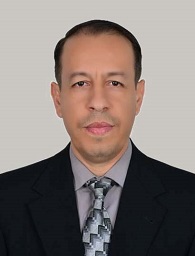 Chaouki Ghenai合作论文数Research Funding Department, University of Sharjah;Sustainable and Renewable Energy Engineering Department, College of Engineering, University of Sharjah5
 C. Harrison Brodie合作论文数4
 Isaac Spotts合作论文数School of Engineering, The University of British Columbia4
 Abolfazl Rahimnejad合作论文数Univ Guelph, Dept Engn Syst & Comp, Guelph, ON, Canada4
 Christopher Collier合作论文数School of Engineering, The University of British Columbia4
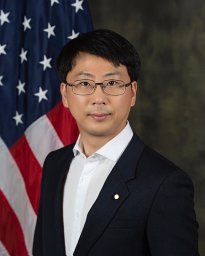 Jinho Kim合作论文数Res. Labs., NTT DOCOMO;c4
 Sheikh Iqbal Ahamed合作论文数Ubicomp Research Lab, Department of Computer Science, Klingler College of Arts and Sciences, Marquette University4
 Mohammed Bani Younis合作论文数University of Kaiserslautern4M.A. Ehyaei合作论文数3Afreen Kansal合作论文数3Samer Al-Shaer合作论文数3Richard Bustos合作论文数3Mahmmud Qatmh合作论文数3Ali A. Ismail合作论文数3
 Iyad Salameh合作论文数3




