From the late 1970s onward, the global telecommunication industry has gone through several waves of regulatory and technological changes. Today, the very definition of telecommunication has changed. First, the traffic is no longer confined to voice and/or limited data services. Second, the boundary line between telecommunication and information sectors is increasingly blurred. Third, the parties that offer products and services for consumers, businesses and industrial users operate under different regulatory regimes, ranging from strict regulations to no regulations at all. Fourth, the merging of the physical and virtual worlds through immersive technologies opens new social, cultural and business dimensions. Finally, the post-covid environment has opened unprecedented avenues for virtual workplaces (E-work).
This special section presents an updated version of the paper that won the first prize award in the ITU (International Telecommunication Union) Kaleidoscope conference (K-2020).
The three papers in this special section were presented at the ninth International Telecommunication Union’s (ITU) Kaleidoscope Academic Conference. The conference took place in Nanjing, Jiangsu Province, China from 27–29 November 2017.
Understanding whether process standards foster or hinder technological innovation lacks consensus in the literatures. From the process management perspective, this study aimes at exploring the mechanisms underlying this relationship under a specific situation of intelligent manufacturing. By analyzing interview data from four case companies in the environmental instrument industry in China and secondary data at the firm level, we find that (i) process standards have a positive effect on technological innovation and (ii) process standards in companies with relatively high levels of intelligent manufacturing raise technological innovation. In particular, these four companies are differentiated with respect to intelligent manufacturing context: two companies with relatively high levels of intelligent manufacturing; and the other two with relatively low levels of intelligent manufacturing. Based on the case analysis, we find that there is an open logic, tightening both internal and external communication linkages, between process standards and technological innovation, so process standards positively affect technological innovation. Further, we find that for those with a higher level of intelligent manufacturing, firms typically benefit more organizational learning competency, which enhances the impact of process standards on technological innovation. The findings are also confirmed by a post hoc survey. Above all, this study contributes to the literatures on process management and technological innovation as well as the new trend of intelligent manufacturing in Industry 4.0.
The challenges posed by intellectual property rights (IPR) in terms of licensing fees have stimulated China's active participation in the standardisation of information and communication technologies (ICTs) through standards development organisations (SDOs). This participation allowed the accumulation of knowledge, the assimilation of external information and the development of new indigenous technologies. The Chinese experience shows that SDOs can be considered as interactive learning spaces (ILS). This case contrasts with that of other global ICT standards producers, where learning is a secondary outcome of the standardisation process.
The papers selected for this Series present various standards that assist in meeting the explosive demand for content delivery by efficient use of network resources. The first article, "Efficient HDTV and 3DTV Services over DVB-T2 using Multiple PLPs with Layered Media," by Hellge et al., describes how DVB-T2 can be adapted to the high transmission rates of future High Definition TV (HDTV) services including three dimensional digital TV (3DTV) services. The DVB-T2 standard from the Digital Video Broadcasting (DVB) consortium is designed to reuse the transmission infrastructure of the first generation digital TV but improves throughput and allocates the bandwidth and frequency resources in a flexible manner [1].
Under the title of dynamics of standards, some academic programs in business and management have begun to consider the challenges of tracking and implementing continuous changes in devices, technologies, and standards on telecommunication networks and services [1]. Standards are designed to ensure interoperability, but because they are voluntary, they can contribute to the fragmentation of markets. The following selection of articles illustrates how necessary technological improvements may also pose critical issues for global networks.
Kaleidoscope 2011 took place in Cape Town, South Africa, from December 12-14, 2011. This fourth event in the series focused on the central role of users of information and communication technologies (ICT). Accordingly, one of the aspects discussed was the adaptation of ICT to the African context (e.g., to monitor solar and climatic variations and to help microenterprises). Parallel with the conference, an exhibit of local universities organized by the International Telecommunication Union (ITU) Secretariat offered a glimpse into ICT activities in South Africa.
Karl S. Gudmundsson (Ph.D.) graduated from the Marine Engineering College of Iceland in 1984. He received his B.S. and M.S. degree in computer engineering 1996 and 1998 and his Ph.D in Engineering with electrical engineering concentration from Wright State University 2004. He was project manager with the research and development company Tern Systems Inc. from 1998 until 2001. His research interests include theoretical and experimental, optical signal/image processing, classification, and tracking, optical computing algorithms and architectures. Intelligent sensor systems, digital systems design, digital signal/image processing, classification, and tracking.
Wireless communication would not be possible without the radio spectrum as a transport medium. Like air, water or oil, this natural resource needs careful management, including frequency licensing, release and reallocation. The following articles provide a glance at the work many IEEE standards committees have undertaken to satisfy demands for reliable and high-throughput wireless data communicati...
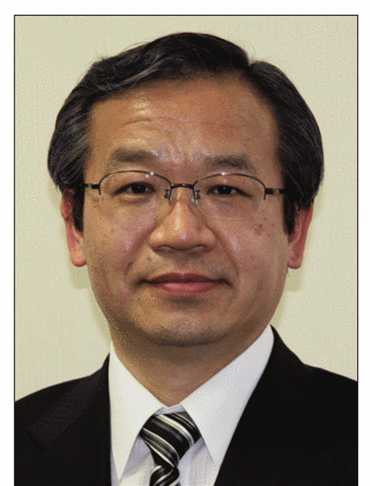 Yoichi Maeda合作论文数18
 silvia giordano合作论文数9
 Edoardo S. Biagioni合作论文数Dept. of Information and Computer Sciences, University of Hawaii at Manoa9peter t s yum合作论文数8vimal kumar khanna合作论文数8sean moore合作论文数8
 Luca Delgrossi合作论文数8
 Nelson L. S. Da Fonseca合作论文数Instituto de Computac;Universidade Estadual de Campinas;Instituto de Computac, Universidade Estadual de Campinas8Zhiwei Xu (徐志伟)合作论文数8Nader F. Mir合作论文数Electrical Engineering Department of San Jose State University8
 Timo Kosch合作论文数8glenn parsons合作论文数7yingdar lin合作论文数7stefano galli合作论文数7
 Zoran Zvonar合作论文数Analog Devices Inc.7
 Janusz Konrad合作论文数Department of Electrical and Computer Engineering, Boston University7
 Mario Kolberg合作论文数University of Stirling7Osman S. Gebizlioglu合作论文数7
 Joseph B. Evans合作论文数Department of Electrical Engineering & Computer Science, The University of Kansas;Information & Telecommunication Technology Center, The University of Kansas;STR7
 Mohammed Atiquzzaman合作论文数School of Computer Science, The University of Oklahoma7
 Antonio Sánchez-Esguevillas合作论文数Telefónica I+D7liverpool john moores合作论文数7ad hoc合作论文数6amitabh mishra合作论文数6
 John Spencer合作论文数6
 Kai Jakobs合作论文数University of Edinburgh6Tee-Hiang Cheng合作论文数6S. Aissa合作论文数Université du Québec
Institut National de la Recherche Scientifique
Énergie, Matériaux et Télécommunications (INRS-EMT)6
Kai Jakobs合作论文数University of Edinburgh6Tee-Hiang Cheng合作论文数6S. Aissa合作论文数Université du Québec
Institut National de la Recherche Scientifique
Énergie, Matériaux et Télécommunications (INRS-EMT)6 Paolo Bellavista合作论文数Department of Computer Science and Engineering, Universita Di Bologna6tom mcbeath合作论文数5
 Eduardo Joo合作论文数5tom w chen合作论文数5Alexander M. Wyglinski合作论文数5
 Joel Rodrigues合作论文数Instituto de Telecomunicações5
 A. Pras (Aiko)合作论文数Department of Design and Analysis of Communication Systems, Faculty of Electrical Engineering, Mathematics and Computer Science, University of Twente5
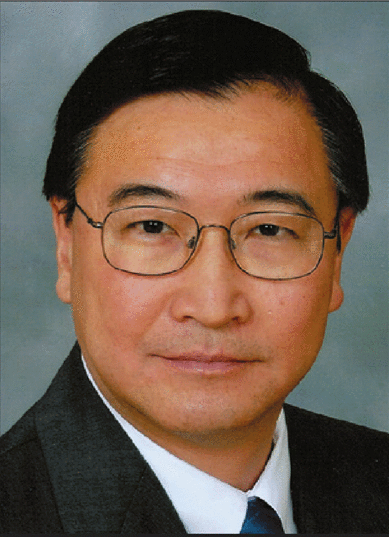 Nim Cheung合作论文数5
 Vijay Jain合作论文数5
 Hideo Kuwahara合作论文数Fujitsu5Steve Gorshe合作论文数4m j lee合作论文数4hady salloum合作论文数4
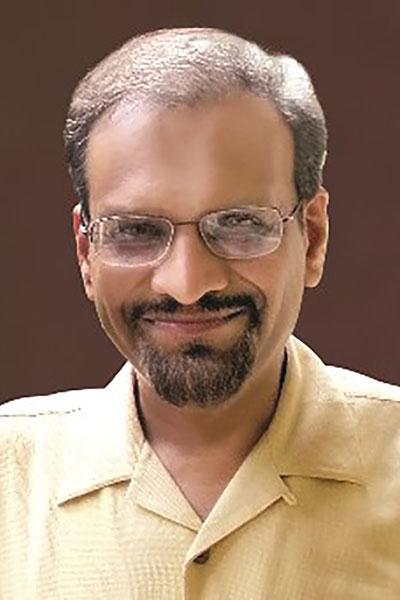 Sudhir Dixit合作论文数University of Oulu;Basic Internet Foundation;Trustyfi4Admela Jukan合作论文数4Joan Garcia-Haro合作论文数Information Technologies and Communications;Polytechnic University of Cartagena (UPCT), Spain4
 Mischa Dohler合作论文数King’s College London;Ericsson Inc4
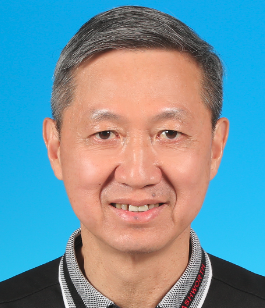 Danny Hin-Kwok Tsang (曾憲國)合作论文数Department of Electronic and Computer Engineering, School of Engineering, The Hong Kong University of Science and Technology4
 Dongback Seo合作论文数University of Groningen4
 Chonggang Wang合作论文数InterDigital Communications4d manivannan合作论文数3




