Kamala Harris, Nikki Haley, Alexandria Ocasio-Cortez, Sarah Huckabee Sanders, Jasmine Crockett. When women step into the political spotlight, they're often met with a barrage of gendered and racialized attacks. And while there have always been hecklers, the evolution of information and communication technologies has changed the game. What does this landscape of identity-based abuse and harassment look like? What impact does it have in general? In this episode of "Ask a Feminist," Moya Bailey, Nina Jankowicz, and Sarah Sobieraj help us understand the way intersectional inequality, technology, and politics intersect. The authors also take advantage of the critical distance we now have from the 2024 election to reflect on what Kamala Harris's candidacy can teach us going forward.
My Day of DH (Digital Humanities) 2020 included an hour long talk with a social media platform about diversity and inclusion on said platform. Following their initial inquiry, I raised concern around the language of "inclusion," countering that inclusion implies bringing people into an already existing center. I asked if their BIPOC users really wanted to be included or if they wanted to be allowed to exist on the platform without being disproportionately surveilled. My ability to garner the attention of a social media platform and then critique its work is not something I envisioned for myself when I started out in DH.
Disability studies has continually asked us to rethink the demands on our bodies and time by reminding us that not all humans are able to move and produce in line with these ever-mounting societal expectations. Drawing on the work of disability theorists like Susan Wendell, this article addresses the unique challenges of creating an ethical pace of life for those multiply marginalized by race, gender, sexuality, and ability. The author focuses on her own occupation in the academy and in the field of digital humanities as a necessary case study to argue that, in our social justice visions of the future, we must reimagine the ethics of pace.
Danielle "StrugglingToBeHeard" Cole is a Black nonbinary femme who was launched from the relative safety of their Tumblr famous social justice online community into infamy via a viral video reposted to the notoriously unjust, WorldStarHipHop gossip blog. In this excerpt from my book, Misogynoir Transformed: Black Women's Digital Resistance (NYU Press May 2021), I asked Cole about her vision for a social media platform built on Black feminist principles. What would it look and feel like when #BlackLivesMatter was a central tenet of the platform, with queer, trans, nonbinary, agender and gender variant Black folks to the front?
This chapter takes up the haunting of African American lives by examining the role of biomedicine in twentieth- and twenty-first-century African American life writing. For Black people, American biomedicine has always been a haunted house, filled with the ghosts of Black lives lost in the name of racist science and scientific racism. The approach Bailey and Peoples take questions what is knowable under biomedical frameworks. What is prohibited from knowing? What kinds of biographical and historical identities are produced in biomedicine and biomedical narratives? How, if at all, can biomedicine and Black auto/biography produce just and ethical narratives of Black lives and Black futures?
"Black Museum," the final installment of season four of the original series Black Mirror, incorporates many of the episodes that have come before it, creating an apotheosis episode that critiques the technophilia of the series. A Black woman administers justice and brings forth a rare, onscreen vision of a white man being held accountable for his racist violence. Told in three parts, with sci-fi elements that are reminiscent of the work of afrofuturist visionary Octavia Butler and borrow directly from famed illusionist Penn Jillette, "Black Museum" offers a welcome departure from the standard Hollywood tropes of magical negroes, white saviors, and Black victimhood. This British production and cast make the redress narrative possible, building on another yet unsubverted trope of Black British actors portraying Black Americans. It inspires viewers to consider the role of the museum, an institution that has long served as a compendium of technology and racialized gendered violence.
Where racism and sexism meet—an understanding of anti-Black misogyny When Moya Bailey first coined the term misogynoir , she defined it as the ways anti-Black and misogynistic representation shape broader ideas about Black women, particularly in visual culture and digital spaces. She had no idea that the term would go viral, touching a cultural nerve and quickly entering into the lexicon. Misogynoir now has its own Wikipedia page and hashtag, and has been featured on Comedy Central's The Daily Show and CNN's Cuomo Prime Time . In Misogynoir Transformed , Bailey delves into her groundbreaking concept, highlighting Black women's digital resistance to anti-Black misogyny on YouTube, Facebook, Tumblr, and other platforms. At a time when Black women are depicted as more ugly, deficient, hypersexual, and unhealthy than their non-Black counterparts, Bailey explores how Black women have bravely used social-media platforms to confront misogynoir in a number of courageous—and, most importantly, effective—ways. Focusing on queer and trans Black women, she shows us the importance of carving out digital spaces, where communities are built around queer Black webshows and hashtags like #GirlsLikeUs. Bailey shows how Black women actively reimagine the world by engaging in powerful forms of digital resistance at a time when anti-Black misogyny is thriving on social media. A groundbreaking work, Misogynoir Transformed highlights Black women's remarkable efforts to disrupt mainstream narratives, subvert negative stereotypes, and reclaim their lives.
From the earliest feminist press to Twitter, women have used technology to create and sustain narratives that demand attention and redress for gendered violence.Herein we argue that the #MeToo boom was made possible by the digital labor, consciousness-raising, and alternative storytelling created through the #YesAllWomen, #SurvivorPrivilege, #WhyIStayed, and #TheEmptyChair hashtag networks.Each of these hashtags highlight women's experiences with interpersonal and institutionally-enabled violence and each was precipitated by high-profile news events.Alongside an examination of Twitter networks, we consider the social and cultural conditions that made each hashtag significant at particular moments, examining the ideological and political work members of these hashtag networks perform.We find that feminist hashtags have been successful in creating an easy-to-digest shorthand that challenges and changes mainstream narratives about violence and victimhood.
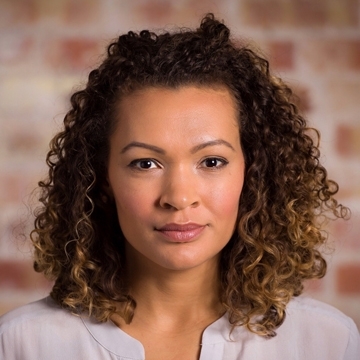 Sarah J. Jackson合作论文数Annenberg School for Communication, University of Pennsylvania13
 Brooke Foucault Welles合作论文数Northwestern University12
 Izetta Autumn Mobley合作论文数3Alexis Lothian合作论文数College Pk, Univ Maryland3Reina Gossett合作论文数2
 Anne Cong-Huyen合作论文数2
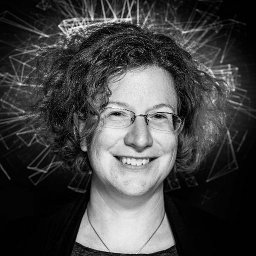 Amy Earhart合作论文数Dept English, Texas A&M Univ2
 Roopika Risam合作论文数2
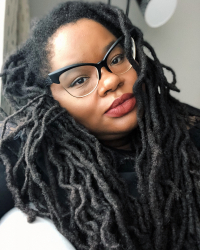 Bettina Judd合作论文数Department of Gender, Women & Sexuality Studies, University of Washington2
 Micha Cárdenas合作论文数Center for Research in Computing;California Institute for Telecommunications and Information Technology;University of California , San Diego;California Institute for Telecommunications and Information Technology, University of California , San Diego2
 Amanda Phillips合作论文数School of Nursing, University of Louisville2Zach Blas合作论文数1Mark Sample合作论文数1Ayana K. Weekley合作论文数1Michelle Schwartz合作论文数1Rita Raley合作论文数1Sandra Harvey合作论文数1Melissa Autumn White合作论文数1Amanda J. Wilkes合作论文数1vanderbilt kristin lynn合作论文数1Cody Massie合作论文数1beverly brice合作论文数1raymond alex bratton合作论文数1Hunter Witt合作论文数1jeff ruff合作论文数1Corey Maynard合作论文数1Kaitlyn Dobyns合作论文数1Brandon Tuck合作论文数1tylor malcolm合作论文数1Zachary Dooley合作论文数1ethan stanley合作论文数1Hannah L. Overstreet合作论文数1Alyssa Mattson合作论文数1LISA BRUNDAGE合作论文数1Rachel Rakes合作论文数1Tyler Markham合作论文数1Kasey Carr合作论文数1Christopher Dobyns合作论文数1lindsey songer合作论文数1jack shea合作论文数1logan byers合作论文数1kendra nichols合作论文数1mercedes jones合作论文数1alexis mattson合作论文数1dylan myers合作论文数1
 Jared Sperrazza合作论文数1Joey Miller合作论文数1jeremy ore合作论文数1Tristan Faust合作论文数1




