Heat-tolerant coral stock could supplement populations with tolerance-conferring alleles to combat rising sea surface temperatures and marine heat waves. We tested coral selective breeding and Symbiodiniaceae experimental evolution independently and in tandem as interventions for generating heat-tolerant stock. Broodstock from two sites were ranked using Symbiodiniaceae photochemical efficiency under rapid heat stress and crossed to produce offspring from heat-tolerant colonies (top 25th percentile) and control offspring. Offspring were inoculated with heat-evolved or wild-type symbionts and exposed to 28°C (ambient) or 32°C (elevated) for 2 months. Selective breeding using rapid assays enhanced Davies but not Moore Reef recruit survival and growth at 32°C, suggesting that this method does not universally generate heat-tolerant coral due to genetics, maternal effects, and/or acclimation. Heat-evolved symbionts enhanced survival and bleaching resilience at 32°C but reduced growth at 28°C. Combining interventions yielded additive benefits, no enhancement, or resulted in one intervention diminishing the other's impact. These results demonstrate assisted evolution's potential while cautioning against generalizing its outcomes.
Anthropogenic climate change is fuelling repeated marine heatwaves and has triggered the fourth global mass coral bleaching event in 2023–2025, causing widespread coral mortality worldwide. Here, we document the impacts of this event on the Great Barrier Reef (GBR), where heat accumulation peaked in February–March 2024 and caused mass coral bleaching for the seventh time since 1998. We use data from the Australian Institute of Marine Science (AIMS)’s Long-Term Monitoring Program (LTMP), which during the 2024–2025 season recorded coral cover on 124 reefs distributed across the full latitudinal and longitudinal extent of the GBR. Coral cover declined to 30.0
Modern biodiversity monitoring programs are designed to provide rapid assessments of trends in the abundance and distribution of keystone taxa and timely scientific insights for decision-making. An important consideration when delivering this information to stakeholders is the quantification of uncertainty, which determines the robustness of detecting changes across habitats and regions. In coral reef science, sparse and fragmented monitoring datasets hinder assessments of reef habitat changes. We introduce a comprehensive prediction framework for estimating trends in hard coral cover and associated uncertainty at a local scale (5 km2 predictive cells). The model accounts for spatial and temporal dependencies in coral cover through a latent process formulation, where correlation is structured explicitly in space and time, and includes environmental variables describing exposure to heat stress and tropical cyclones. We use a weighted spatial aggregation approach to predict trends at subregional and regional scales, with subregional and regional extents varying according to geographic context. The same approach is applied to estimate trends at broader spatial scales by combining outputs from multiple models through the ReefCloud platform, ensuring that predictions reflect the spatial distribution of reef-building corals and that uncertainty is appropriately propagated across spatial scales. The model also quantifies effects of heat stress and tropical cyclones and characterizes their associations with coral cover change across gradients of disturbance intensity. We demonstrate the value of the framework using two use cases: the central Great Barrier Reef in Australia and American Samoa. Together, these applications highlight the potential of our integrated approach as a widely applicable method for predicting coral cover trends at various spatial scales. We also discuss the substantial uncertainty associated with the framework due to the limitations of available datasets and suggest approaches to improve the robustness of trend detection for coral reefs and their attribution to environmental disturbances.
Wrasses (family Labridae) occupy a wide range of ecological niches, and although they are ubiquitous, their partitioning over large spatial and temporal scales is poorly understood. In this study, we surveyed the reef slope of 71 reefs between 9°S and 24°S along the Great Barrier Reef (GBR) to examine wrasse assemblages and benthic habitat associations. Seventy-two wrasse species from 24 genera were recorded. Most were widely distributed but relatively rare, with only a few exhibiting particularly high abundances or restricted distributions. Twenty-seven species accounted for 97
In the Anthropocene, understanding and managing ecological communities requires the characterization of natural spatiotemporal ecosystem dynamics. Complex ecosystems may appear chaotic and unstructured, making long-term monitoring programs with hierarchical sampling designs ideal for investigating ecological patterns at multiple scales. Here, we use a dataset spanning the entire Great Barrier Reef (GBR) and multiple decades to determine the spatial patterns of distribution and abundance, and how these change through time, in 233 reef-associated fish species. Community composition was strongly structured by position across the continental shelf, with distinct inner and outer shelf assemblages. Latitudinal differences were smaller, except for the distinctive assemblages of the southernmost Swain and Capricorn-Bunker regions. GBR-wide summaries of total density and species richness did not show directional shifts, and it was only after analyzing these metrics at the subregional scale that a wider range of temporal oscillations was identified, indicating that responses of fish assemblages to perturbations require examination of smaller than GBR scales. Within most subregions (65%), fish species composition has undergone a clear and ongoing directional shift away from the community identified in the 1990s. These changes were generally due to a reduction in the numbers of coral-dependent species and an increased dominance of grazers and generalists. Among the 233 species, there have been more "winners" than "losers" across the whole GBR, but this masks a tendency for inner shelf reefs of the central GBR to have a dominance of "losers" over time. Reef fish assemblages on the GBR are dynamic and show clear recovery potential from disturbance events. Despite some pervasive community-level shifts in the last decades, the clear biogeographic characteristics of each subregion remain intact. We pose the question of whether it is reasonable to expect these highly dynamic assemblages to reach a relatively stable "climax community," and posit that the answer is scale-dependent and, on the GBR, is currently resolved at the subregional scale, which is the scale at which most stakeholders and decision-makers operate.
Coral reefs are increasingly threatened by climate change-induced stressors, including marine heatwaves, which can lead to coral mortality, reduced reproductive output, and compromised natural recovery. Successful coral reef recovery requires the settlement of coral larvae and recruitment in degraded areas, replenishing coral communities and promoting resilience. Some restoration strategies involve utilizing natural spawning slicks, composed of coral gametes and embryos, to produce larvae to reseed reefs. However, verifying the taxonomic composition of these slicks is challenging. Here, we tested the performance of two coral ITS primer sets, CoralITS2 and CoralITS2_acro, on mock communities to evaluate their ability to capture genera composition and relative abundances. Both primer sets demonstrated high accuracy (>97%) in detecting and quantifying coral taxa. Subsequently, these primers were applied to wild-collected spawning slicks from the Great Barrier Reef, revealing variation in scleractinian (reef-building) coral community composition among slicks. For the CoralITS2_acro assay, Acropora was consistently the most abundant resolved genus detected across wild slick sample sites, with the exception of samples from the Whitsundays region, where Platygyra was dominant. The CoralITS2 assay successfully differentiated reef-building (Scleractinian) corals from other co-occurring spawning taxa, such as soft corals, anemones, and sponges, and revealed that these other co-spawners dominated slicks at two sites. Our findings underscore the potential of eDNA-based monitoring as a scalable tool to confirm the presence and relative abundance of diverse coral assemblages in natural slicks, informing restoration efforts. By enabling the characterization and comparison of slick composition across large spatial and temporal scales, eDNA metabarcoding can support restoration practices that align with the ecological requirements of reef ecosystems, safeguarding biodiversity and promoting resilience against future disturbances.
Crown-of-thorns sea stars (CoTS; Acanthaster spp.) are among the most prominent corallivorous invertebrates, contributing greatly to the plight of tropical coral reefs in the Anthropocene. Much of the success of CoTS, and their propensity to undergo major population irruptions, are likely tied to inherent biological traits. Juvenile CoTS feed on coralline algae prior to their ontogenetic switch to corallivory, but their feeding preferences for specific algae and the implications thereof remain unresolved. Here, we conducted 48-hour multiple-choice and 28-day no-choice experiments to compare the selection and consumption of different crustose coralline algae (CCA) diets by juvenile western Pacific CoTS (Acanthaster cf. solaris), and test for concomitant differences in growth rates. In the multiple-choice experiment, juvenile CoTS preferentially consumed the alga Melyvonnea cf. madagascariensis, whilst avoiding Sporolithon sp., Lithophyllum cf. kotschyanum, and Adeylithon cf. bosencei. Daily consumption rates during the no-choice experiment varied substantially among CCA species, ranging from 15.31 mm2 ind−1 d−1 (± 2.68) (mean ± SE) for M. cf. madagascariensis to 1.38 mm2 ind−1 d−1 (± 0.24) for Sporolithon sp. This preferential consumption of different CCA corresponded well with large differences observed in the surface area growth rate of CoTS, ranging from 3.01
Modern biodiversity monitoring programs are designed to assess abundance trends of keystone taxa and deliver scientific insights to inform decision-making and policy development. An important consideration when using these evidence-based frameworks is the quantification of uncertainty from trends, which determines the robustness of data-driven methods in detecting and attributing changes across habitats and regions. In coral reefs, sparse and fragmented monitoring programs challenge the assessment of long-term reef habitat changes, despite the need for actionable insights to reduce the loss of coral cover. We introduce a new predictive modelling framework, which combines machine learning for the extraction of ecological data with a statistical model to predict trends in hard coral cover and propagate uncertainty across multiple spatial scales. The model estimates the spatio-temporal variability of coral cover at monitoring locations and integrates information on marine heatwaves and cyclones to predict coral cover across entire marine ecoregions, thereby filling the spatial and temporal observational gaps inherent in coral reef monitoring programs. It also quantifies the effects of known regional drivers on coral cover loss and allows the exploration on how specific disturbances influence coral cover spatially across regions. We demonstrate the framework's capability using case studies from the northern Great Barrier Reef and in simulation experiments. Together, these illustrate the importance of incorporating the spatial dimension to capture the variability in coral cover and attribute drivers of coral cover change with greater confidence. This modelling framework is designed for integration into the ReefCloud platform, where it can automatically combine data from monitoring programs worldwide and support evidence-based decision-making for the management and conservation of coral reefs from local to global scales.
The goal of ecosystem management is to maintain healthy and resilient ecosystems over time. These attributes can be summarised under a general term widely used in management plans: ecosystem condition, defined as the overall quality of an ecosystem relative to a desired or reference state. However, measuring and monitoring ecosystem condition remains a challenge. Monitoring ecosystem condition requires a suite of ecological indicators that simultaneously capture the complexity and variability of ecological processes, while being informative and usable in management and decision-making contexts. Such indicators need to be holistic, measurable, sensitive and scalable. Here we outline a resilience-based monitoring framework for coral reefs that consolidates monitoring data and research insights into a relevant, integrated format. The framework includes indicators of ecosystem state (coral cover) and key processes (represented by recovery performance, macroalgae prevalence, community composition, and coral juvenile density). Indicators are generated and scaled from monitoring data by applying explicit, reef-specific thresholds, providing a simple but comprehensive set of ecosystem condition values. Using cases from the Great Barrier Reef, we demonstrate how the framework integrates these indicators for detailed assessments of reef habitat condition and its potential role in management. Based on these case studies, we discuss important considerations for applying this framework worldwide, acknowledging current limitations related to data availability, resolution, and the length of time series. ### Competing Interest Statement The authors have declared no competing interest. Australian Government, Reef Trust Partnership Great Barrier Reef Foundation, https://ror.org/00d4phf77, Reef Trust Partnership
The fourth Global Coral Bleaching Event (GCBE) reached the Great Barrier Reef (GBR) in the Austral summer of 2023/24 and caused substantial coral mortality in the Cooktown-Lizard Island sector of the GBR. Thermal stress in this sector ranged from 5.9 to 8.2 °C-weeks (Degree Heating Weeks—DHW) derived from NOAA Coral Reef Watch products, resulting in a 38.6
As coral reefs endure increasing levels of disturbance, understanding recovery patterns of reef-building hard corals is paramount to assessing the sustainability of these ecosystems. At local scales, coral recovery slows down; however, it's unclear how this trend propagates across spatial scales due to the inherent complexity of coral dynamics. In this paper, we aimed to learn about fine scale heterogeneity of coral dynamics and explore implications for assessing coral recovery at larger spatial scales. We developed a spatio-temporal statistical model to estimate long-term trajectories of three types of corals and predict their recovery patterns at unobserved locations within a reef. Then, model predictions were used to derive metrics that capture the interplay between coral growth and decline from disturbance(s) across time, space and growth morphology. This model is developed in the context of a substantive case study at Heron Reef using a high spatio-temporal resolution dataset. Our results revealed that successful coral community recoveries took place in different habitats of Heron Reef and associated with various reasons. Branching corals recovered in the southern slope, due to fast growth in locations that were previously abundant. Plate corals flourished in the northern slope due to fast growth, despite a large decline and low baseline cover. They also recovered in the southern slope but in this case there was both a low decline and baseline cover. At Heron Reef, the recovery of coral communities followed specific conditions that were acting at a fine scale in a complex and heterogeneous way within habitat. This implies that capturing the variability of fine-scale coral dynamics is an important first step to detect accurate signals of coral recovery at larger spatial scales. The approach proposes here can be further extend to the scale of a reef and beyond enabling assessment of recovery patterns representative at management scales.
Anthropogenic pressure is increasing the variety and frequency of environmental disturbance events, limiting recovery and leading to long-term declines in wild plant and animal populations. Coral reefs and associated fish assemblages are inherently dynamic due to their susceptibility to a host of disturbances, but regional-scale nuances in the drivers of long-term change frequently remain poorly resolved. Here, we examine the effects of multiple potential drivers of change in coral reef fish assemblages across 4 inshore regions of the Great Barrier Reef Marine Park (GBRMP), Australia, over 12-14 years (2007-2021). Each region had a unique disturbance history, in conjunction with long-term changes in physical and habitat variables. Phases of recovery were apparent in the years between disturbance events at all locations, but these were not long enough to prevent substantial declines in reef fish density (by 33%-72%) and species richness (by 41%-75%) throughout the study period. The main drivers of change in fish assemblages varied among regions; however, the most rapid changes followed cyclone and flood events. Limited recovery periods resulted in temporal shifts in fish species composition from typically coral-associated to algae-associated. Most trophic groups declined in density except farmers, grazers, omnivores and parrotfish. No-take marine reserves (NTMRs) had small and inconsistent effects on total fish assemblages, but delivered benefits for fishery-targeted piscivores. Our findings suggest that coral reef responses to local stressors and cumulative escalating climate change impacts are highly variable at regional scales, and that small NTMRs are unlikely to mitigate the impacts of increasingly frequent climatic disturbances. Nearshore coral reefs worldwide are high-value habitats that are either already degraded or vulnerable to degradation and the loss of important fish groups. Global efforts to reduce greenhouse gas emissions must be coupled with effective local management that can support the functioning and adaptive capacity of coral reefs.
Crown-of-thorns sea star (CoTS; Acanthaste r cf. solaris ) outbreaks are a significant cause of coral decline. Enhanced food supply for the larvae via eutrophication is implicated as a cause of outbreaks, yet larval feeding ecology is poorly understood. In this study, feeding experiments were carried out at two algal food concentrations of 1000 cells mL −1 (~ 1.52 µg chl a L −1 ) and 3000 cells mL −1 (~ 4.56 µg chl a L −1 ) across six successive larval stages to investigate the effect of food concentration on filtration rate and ingestion rate for these stages. Filtration rate increased with larval stage and more than tripled from 127 ± 32 µL larva −1 h −1 (mean ± SE) of the youngest (2–3 dpf) larvae to 497 ± 109 µL larva −1 h −1 at late brachiolaria stage (9–10 dpf). Ingestion rate increased with food concentration and larval age, with advanced brachiolaria larvae consuming 313.5 ± 39.1 cells larva −1 h −1 in the higher algal food treatment. Organic carbon (C) and nitrogen (N) measured in larvae and their food indicated that the youngest feeding larvae ingested 13% their body carbon content daily, with that number almost doubling to 24% by advanced bipinnaria stage. The C/N ratio decreased sharply for brachiolaria larvae, reflecting developmental changes and greater dependence on exogenous nutrition. These results add to our understanding of the role food concentration plays in the growth and survivorship of CoTS larvae in the field.
Context Restored mangrove forests are threatened by the restricted range of species used. Xylocarpus granatum has excellent timber and could add value in mangrove plantings. Methods Forest structure and environmental variables were measured at 40 sites in northern Australia and Papua New Guinea. Tree growth was measured at 18 sites. Boosted regression tree modelling identified environmental predictor variables for above-ground biomass for X. granatum (AGBX), mean annual increment in diameter at breast height (DBH) for X. granatum (MAIX) and wood production (PW). Aims To determine the environmental conditions under which X. granatum has the greatest biomass and growth. Key results Increasing stem density, basal area and AGB of other tree species were most important in limiting AGBX. MAIX (range 0.03–0.55 cm year−1) was greatest when sediment redox potential was >100 mV and mean annual catchment rainfall was >4000 mm. MAIX increased with an increasing mean minimum air temperature and sediment percentage silt and percentage phosphorus. PW declined with the stem density of all species and increased with an increasing percentage silt and when sediment redox potential was >180 mV. Conclusions and implications Under optimal conditions, X. granatum grows as fast as most mangrove species and could make an excellent, harvestable addition to the species mix used in restoration projects.
Climate-driven alterations to disturbance regimes are increasingly disrupting patterns of recovery in many biomes. Here, we examine the impact of disturbance and subsequent level of recovery in live hard coral cover on the Great Barrier Reef (GBR) across the last three decades. We demonstrate that a preexisting pattern of infrequent disturbances of limited spatial extent has changed to larger and more frequent disturbances, dominated by marine heatwaves and severe tropical cyclones. We detected an increase in the impact (measured as coral loss) across 265 individual disturbance impacts on 131 reefs in a 36-year dataset (1985-2022). Additionally, the number of survey reefs impacted by disturbance has increased each decade from 6% in the 1980s to 44% in the 2010s, as has the frequency of mass coral bleaching across the GBR, which has increased between 19% and 28% per year, and cyclones (3%-5% per year), resulting in less time for recovery. Of the 265 disturbance impacts we recorded, complete recovery to the highest levels of coral cover recorded earlier in this study (the "historical benchmark") occurred only 62 (23%) times. Of the 23% of disturbance impacts that resulted in complete recovery to historical benchmarks, 34/62 recovered to their benchmark in 2021 or 2022. Complete recovery was more likely when the historical benchmark was <25% live hard coral cover. The lack of recovery was attributed to recovery time windows becoming shorter due to increases in the frequency of cyclones and of thermal stress events that result in mass coral bleaching episodes. These results confirm that climate change is contributing to ecosystem-wide changes in the ability of coral reefs to recover.
Cycles of disturbance and recovery govern the temporal dynamics of living coral cover on coral reefs. Monitoring the state of the Great Barrier Reef at regional and individual reef scales has been ongoing by the Long-Term Monitoring Program at the Australian Institute of Marine Science since 1986. After a period of relative stability between 1986 and 2010, the latest decade of surveys recorded increased frequency of intense, large-scale disturbance events and coral cover has reached unprecedented lows and highs in each region. Following the consecutive bleaching events in 2016 and 2017, widespread recovery occurred on the northern and central Great Barrier Reef between 2017 and 2022, which was halted in 2023. An examination of the effects of the 2022 bleaching event revealed that the direct and indirect impacts of this event, along with ongoing crown-of-thorns starfish outbreaks, notable incidences of coral disease, and the passage of a tropical cyclone all contributed to the most recent coral cover changes across the Great Barrier Reef. The prognosis for future disturbances suggests increasing and longer-lasting marine heatwaves, continuing severe tropical cyclones and the ongoing risk of outbreaks of crown-of-thorns starfish. Although the observed capacity for recovery is a cause for cautious optimism for the overall state of the Great Barrier Reef, there is increasing concern for its ability to continue to bounce back in the face of escalating climatic pressure.
Knowledge of coral larval precompetency periods and maximum competency windows is fundamental to understanding coral population dynamics, informing biogeography and connectivity patterns, and predicting reef recovery following disturbances. Yet for many species, estimates of these early-life history metrics are scarce and vary widely. Furthermore, settlement cues for many taxa are not known despite consequences to habitat selection. Here we performed a comprehensive experimental time-series investigation of larval settlement behaviour, for 25 Indo-Pacific broadcast-spawning species. To investigate the duration of precompetency, improve predictions of the competency windows, and compare settlement responses within and amongst species, we completed replicated and repeated 24-hour assays that exposed larvae to five common settlement cues. Our study revealed that larval competency in some broadcast-spawning species begins as early as two days post fertilization, but that the precompetency period varies within and between species from about two to six days, with consequences for local retention and population connectivity. We also found that larvae of some species are competent to settle beyond 70 days old and display complex temporal settlement behaviour, challenging the assumption that competency gradually wanes over time and adding to the evidence that larval longevity can support genetic connectivity and long-distance dispersal. Using these data, we grouped coral taxa by short, mid and long precompetency periods, and identified their preferred settlement cues. Taken together, these results inform our understanding of larval dynamics across a broad range of coral species and can be applied to investigations of population dynamics, connectivity, and reef recovery.
 Michael J. Emslie合作论文数Australian Institute of Marine Science13
 Daniela Ceccarelli合作论文数12
 Britta Schaffelke合作论文数Centre for Research on Introduced Marine Pests, CSIRO Marine Research12
 Sven Uthicke合作论文数Australian Institute of Marine Science12
 Angus Thompson合作论文数10
 Hugh Sweatman合作论文数Australian Institute of Marine Science7
 Jonker Michelle J合作论文数Australian Institute of Marine Science7Alistair Cheal合作论文数Australian Institute of Marine Science7G. D. Sanson合作论文数6
 Sinclair-Taylor Tane合作论文数6Michelle Liddy合作论文数Australian Institute of Marine Science6Johnston Davidson合作论文数6Johns Kerryn A合作论文数5
 Christian Lønborg合作论文数Australian Inst Marine Sci5Marji Puotinen合作论文数5
 Michele Skuza合作论文数5peran bray合作论文数4
 Evans Richard D合作论文数Department of Parks and Wildlife;School of Plant Biology, University of Western Australia;School of Plant Biology, University of Western Australia4
 Manuel Gonzalez Rivero合作论文数Australian Institute of Marine Science4
 Garry Russ合作论文数School of Marine Biology and Aquaculture, James Cook University4
 Caroline Petus合作论文数Université de Bordeaux4D. H. Williamson合作论文数4
 Katharina Fabricius合作论文数Australian Institute of Marine Science4
 Jason Robert Doyle合作论文数Australian Institute for Marine Science4
 Kevin Gunn合作论文数Catholic University of America;Catholic University of America, Catholic University of America4Irena Zagorskis合作论文数4Ian R Miller合作论文数3p costello合作论文数3
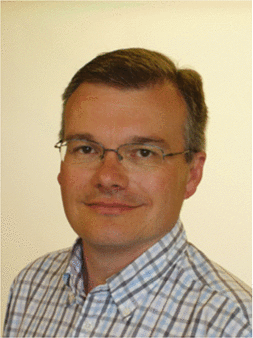 Stephen E Lewis合作论文数Sch Phys Sci, Open Univ3
 Julie Vercelloni合作论文数School of Mathematical Sciences, Queensland University of Technology;Australian Institute of Marine Science;Australian Institute of Marine Science, Queensland University of Technology3Richard Brinkman合作论文数Australian Institute of Marine Science, Townsville, Queensland, Australia3
 A. D. Mckinnon合作论文数Australian Institute of Marine Science3Kate Osborne合作论文数3
 Barbara Robson合作论文数James Cook University;Australian Institute of Marine Science;University of New South Wales3m furnas合作论文数2M. Lamare合作论文数2Samantha Duggan合作论文数2joanne o davidson合作论文数2Taylor Whitman合作论文数2
 Ziyuan Hu (胡仔园)合作论文数Institute of Oceanography, Chinese Academy of Sciences;University of Chinese Academy of Sciences2
 Song Sun (孙松)合作论文数Institute of Oceanology, Chinese Academy of Sciences2
 Carly J. Randall合作论文数Center for Marine Science, University of North Carolina Wilmington2
 Neal Cantin合作论文数Australian Institute of Marine Science2
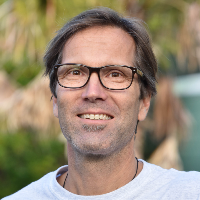 Steven W Purcell合作论文数School of Environment, Science and Engineering, National Marine Science Centre, Faculty of Science and Engineering, Southern Cross University2Ericson Gavin合作论文数2
 McKinna Lachlan I W合作论文数2Miller Ian合作论文数2Kerrie Mengersen合作论文数2
 Xiaoxia Sun (孙晓霞)合作论文数中国科学院海洋研究所2




