Floods represent one of the most destructive natural hazards, posing significant risks to both ecological systems and human societies. Consequently, the development of accurate and efficient predictive and management models has become a critical research priority. This paper presents a review of the historical progression and technological advancements in flood modeling, encompassing traditional empirical and conceptual models, physics-based hydrodynamic models derived from the Saint-Venant (SV) and Shallow Water Equations (SWEs), and contemporary approaches powered by Artificial Intelligence (AI), Machine Learning (ML), and Deep Learning (DL). The review critically examines the strengths and limitations of these methodologies: hydrodynamic models achieve high physical realism but require intensive computational resources and detailed geospatial data, whereas AI-based models offer remarkable computational efficiency and scalability in handling large datasets but often struggle with issues of interpretability, generalization, and physical consistency. The paper also highlights the emerging paradigm of hybrid modeling frameworks that integrate physical principles with AI algorithms, such as Physics-Informed Neural Networks (PINNs) and Graph Neural Networks (GNNs), which have shown promise in enhancing both predictive accuracy and computational performance. Moreover, it identifies ongoing challenges, including data scarcity, limited model transferability, and the pressing demand for explainable AI (XAI). The study concludes that the future of flood modeling lies in the synergistic integration of physics-based and data-driven approaches, supported by advances in remote sensing, cloud computing, and the Internet of Things (IoT), to build more robust and efficient early warning systems capable of addressing the intensifying impacts of climate change.
—Eyes blinking and its movement can portray many reasons of the body and health state. Eyes can blink intentionally and sometimes randomly even in sleeping mode. Thus, the aim of this paper is to discover and observe the relationship between the frequency of eye blink and the level of eye muscle stress. The eye track data is fed directly into the electroencephalogram (EEG) record for parameter classification and identification. The EEG signal might have an artifact that has been analyzed and converted the observation into the mathematical library and repository software (HPC). The artificial neural network (ANN) is integrated with EEG digital data by the derivation of the mathematical modelling. The function of ANN is to train a large sparse digital data for future prediction of eye condition associated with the stress level. In order to validate the model and simulation, the numerical analysis and performance evaluation are compared to the real data set of eye therapy industry, IC Herbz Sdn Bhd. A library and repository software of mathematical model using EEG record data is developed to integrate with wearable augmented reality (WAR) based on EEG sensor device for predicting and monitoring the real time eye blinks, movement and muscle stress.
This paper introduces a novel fourth-order explicit group iterative technique (FEGS) for solving the two-dimensional (2D) fractional mobile/immobile equation (FME). The key objective of this study is to create a reliable and accurate numerical technique for solving the FME, which represents complex physical phenomena that involve anomalous diffusion processes. The suggested approach is based on the fourth-order Crank-Nicolson (C-N) finite difference method. It uses the Caputo fractional derivative for discretizing time and a fourth-order numerical technique for discretizing space. Furthermore, a theoretical investigation validates the stability and convergence of the suggested method. This paper presents various numerical examples to assess the accuracy and efficiency of the FEGS, showcasing its accuracy in comparison to other existing approaches. The results demonstrate the scheme's stability and capacity for practical applications in modelling and simulating activities that encompass fractional diffusion equations.
The COVID-19 pandemic has forced the synchronized and asynchronized teaching and learning (TnL) to sustain educational programs. It is difficult to change the modality of most STEM courses because the TnL of many laboratory skills does not transform to an online learning environment. The complication of virtual lab skills is the motivation of this paper to focus on the online Analytical Numerical Method course (ANM) integrated with technology tools and apps. The methodology of online TnL for Analytical numerical Methods involves the scientific and mathematical thinking skills in experimental approaches. These approaches employ varied education processes such as heutagogy, peeragogy, and cybergogy. Online ANM is looking for educator 4.0 tools to facilitate the outline of synchronous and asynchronous TnL activities. The apps and tools are suitable for most aspects of ANM course. The implementation strategies integrated Mathematics, IT and engineering. As expected, without STEM approaches and without online TnL technology tools, creating learner engagement through information and communication technology cannot be achieved. The result and discussion of SEM-AMOS model enhance online teaching and learning ANM based on student feedback, questionnaires and survey. Diagram, table and data presentation reveal an unexpected result supported by virtual lab and variants of virtual laboratory. This paper will provide a guidance to educator 4.0 practitioners to modify the current curriculum in line with the latest technological developments and requirements in online TnL.
Artificial intelligence (AI) with mathematical modelling is one of the most metaphoric technologies in modern history. It helps businesses around the world, improving efficiency and optimizing resources especially in supply chain management (SCM) and logistics sector. AI has also made its way into supply chains and logistics, where it provides several advantages to businesses that are prepared to accept new technology. The review refers to the previous research papers with keywords of AI, supply chain, logistics are sorted from five recent years and aims to comprehensively review types of technologies used by optimizing the strategies and the implementation of AI methods highlight several challenges faced by AI to be deployed in this sector. The soft computing extracted in this paper mainly uses AI and fuzzy logic for problem giving and enhances the efficiency of SCM. However, there are challenges that are encountered by AI to predict and drive the decision making with minimum complications. Several challenges addressed in this paper are resources, lack of security especially in RFID systems and the complexity found in robotics systems in logistics. In conclusion, based on the literature review, the research framework, new research based on the research gap is able to be obtained for further research focus.
This article highlights the expanding issue of e-waste caused by the accessibility and widespread utilisation of electronics. Because precious metals in e-waste have high value, it is vital to recycle them while minimising their loss. Batteries in e-waste are identified and located using image processing techniques, such as semantic segmentation, which categorizes each pixel in an image. The article describes a modified U-Net Convolutional Neural Network approach with pre-processing procedures to assure clean raw photos for image segmentation of the battery component. Key matrices were used to analyse the output of three distinct CNN models with loss functions. The study comes to the conclusion that the improved model for battery segmentation of X-ray images is the modified U-Net with dice coefficient. The development of more efficient e-waste recycling methods with the help of this research could lead to a more sustainable future.
Partial differential equation (PDE) has been used widely in the development of the mathematical model to predict, design and perform optimal strategy for process control. The PDE model is performed in multidimensional; one, two and three and it is discretized using finite difference method (FDM) with central difference formula. To solve the system of linear equations, numerical methods such as Alternating Group Explicit with Brian (AGEB) and Douglas-Rachford (AGED) variances, as well as the Jacobi (JB) method, are used. The grid decomposition process involved a fine grained large sparse data by minimizing the size of interval, increasing the dimension of the model and level of time steps. In order to improve execution time, the implementation of the parallel algorithm on Matlab Distributed Computing Server (MDCS) is significant. Furthermore, the parallel algorithm helps to increase the speedup of computation and to reduce the computational complexity problem. Inappropriate directive selection and unnecessary data distribution can lead to load imbalances, unnecessary communication, or the process going into idle state. Thus, data partitioning for multidimensional problem is critical for optimal performance. Both AGE method has the potential for parallelization because it is based on domain decomposition which is independent between processors. The computational complexity of the AGEB and AGED methods per iteration is found to be greater than that of the JB method. The computational time for JB is supposedly shorter than for AGED and AGEB, but this is contradicted by the fact that the number of iterations for JB is greater than for AGED and AGEB.
In this article, we developed a new higher-order implicit finite difference iterative scheme (FDIS) for the solution of the two dimension (2-D) time fractional Cable equation (FCE). In the new proposed FDIS, the time fractional and space derivatives are discretized using the Caputo fractional derivative and fourth-order implicit scheme, respectively. Moreover, the proposed scheme theoretical analysis (convergence and stability) is also discussed using the Fourier analysis method. Finally, some numerical test problems are presented to show the effectiveness of the proposed method.
The proficiency of students in mathematical problem-solving skills is believed to be shaped by factors such as mathematical concepts understanding, creative thinking skills, and self-efficacy. This research endeavors to investigate the interplay among self-efficacy, mathematical concepts understanding, creative thinking skills, problem-solving skills, and mathematics learning outcomes. Employing a survey approach, the study encompasses all ninth-grade students in Central Bengkulu, Bengkulu, Indonesia, with a sample of 100 students selected through proportional stratified random sampling. Data collection involves Likert scale instruments for self-efficacy, along with tests for mathematical concepts understanding, creative thinking skills, and problem-solving skills. Path analysis techniques are applied for data analysis. The findings of the research indicate that mathematical concepts understanding, creative thinking skills, and problem-solving skills collectively exert a positive influence on mathematics learning outcomes. Additionally, it is demonstrated that self-efficacy, understanding mathematical concepts, and creative thinking skills collectively contribute positively to problem-solving skills. Furthermore, the research reveals a direct positive influence of self-efficacy on both mathematical concepts understanding and creative thinking skills.
A new fourth-order explicit grouping iterative method is constructed for the numerical solution of the fractional sub-diffusion equation. The discretization of the equation is based on fourth-order finite difference method. Captive fractional discretization having functions with a weak singularity at $ t = 0 $ is used for time and similarly, the space derivative is approximated with the help of fourth-order approximation. Furthermore, the convergence and stability of the scheme are analyzed. Finally, the accuracy and validity are investigated by some numerical examples.
This research aims to determine whether there is a positive correlation between mathematics learning habits through an ethnomathematics approach and entrepreneurial behavior. This research is survey research conducted by mathematics education students in Bengkulu and Lubuklinggau. The sample for this research consisted of 70 students. There are two questionnaires as research instruments. Both are a questionnaire on mathematics learning habits using an ethnomathematics approach, and an entrepreneurial behavior questionnaire. The result of this research is that the complete structural equation model fit test is a good fit, which means that the empirical structural equation model is suitable with the theoretical (conceptual) structural equation model. The results of the hypothesis test show that the calculated t value is 11.364 > 1.96, which means Ho is rejected, meaning that this research hypothesis is accepted. The conclusion is that there is a positive correlation between mathematics learning habits through an ethnomathematics approach and entrepreneurial behavior.
Conjugate gradient (CG) method is well-known for its ability to solve unconstrained optimization (UO.) problems. This article presenting a new CG method with sufficient descent conditions which improves the former method developed by Rvaie, Mustafa, Ismail and Leong (RMIL). The efficacy of the proposed method has been demonstrated through simulations on the Kijang Emas pricing regression problem. The daily data between January 2021 to May 2021 were obtained from Malaysian Ministry of Health and Bank Negara Malaysia. The dependent variable for this study was the Kijang Emas price, and the independent variables were the coronavirus disease (COVID-19) measures (i.e., new cases, R-naught, death cases, new recovered). Data collected were analyzed on its correlation and coefficient determinant, and the influences of COVID-19 on Kijang Emas price was examined through multiple linear regression model. Findings revealed that the suggested technique outperformed the existing CG algorithms in terms of computing efficiency.
Fuzzy topological topographic mapping (FTTM) is a mathematical model that consists of a set of homeomorphic topological spaces designed to solve the neuro magnetic inverse problem. The key to the model is its topological structure that can accommodate electrical or magnetic recorded brain signal. A sequence of FTTM, FTTMn, is an extension of FTTM whereby its form can be arranged in a symmetrical form, i.e., polygon. The special characteristic of FTTM, namely, the homeomorphisms between its components, allows the generation of new FTTM. The generated FTTMs can be represented as pseudo graphs. A pseudo-graph consists of vertices that signify the generated FTTM and edges that connect their incidence components. A graph of pseudo degree zero, G0(FTTMnk ), however, is a special type of graph where each of the FTTM components differs from its adjacent. A researcher posted a conjecture on G(0)(3)(FTTMn3) in 2014, and it was finally proven in 2021 by researchers who used their novel grid-based method. In this paper, the extended G03(FTTMn3), namely, the conjecture on G(0)(4)(FTTMn4) that was posed in 2018, is narrated and proven using simple mathematical induction.
Several workshops were conducted in Malaysia and Indonesia to create and spread Education 4.0 awareness among education practitioners. A survey-based questionnaire distributed at the end of each workshop aim to capture participants' perception on the impact of the session. The analysis of the questionnaire shows the implementation of Education 4.0 software in teaching and learning session is still low for both countries. However, responses indicate the conducted workshops have increased participants understanding on Education 4.0 as well as their motivation to implement it. This study also compares several factors that influence the implementation of Education 4.0 such as gender and age.
MATLAB Distributed Computing Server (MDCS) and Parallel Virtual Machine (PVM) software are two types of distributed computing environments. MDCS is recently used in selecting the best network training algorithm and assessing the effect of parallelization. Since it is practical and user friendly, it gives PVM the opportunity to become the communication paradigm of choice. The PVM provides a powerful set of process control and dynamic resource management features. In the distributed parallel computing (DPC), however, both solutions have different strengths and limitations. Based on these concerns, this paper compares the numerical analysis for mathematical modeling of large sparse 2D and 3D of second order parabolic partial differential equations (PDE) on MDCS and PVM based on parallel performance indicators (PPI). The PDE geometry is discretized into a sparse grid structure using the FDM method. In using a method with the highest accuracy, Parallel Alternating Group Explicit (PAGE) scheme was chosen. The parallel strategies focus on the PAGE's convergence speed and various domain de-composition techniques, as well as a block iterative scheme and load balance using fine granular techniques. Furthermore, comparison of distributed computing environments also relies on multiple processors running on Unix-like operating systems with Fedora installed to support large-scale simulations. The analysis and validation of PPI for both communication software is also investigated in this paper. For a sequential algorithm, accuracy, estimation of error, and stability are employed as indicators. As a conclusion, based on the PPI and numerical analysis, the tables and graphs show that compared to MDCS, PVM is a better environment for solving multidimensional parabolic PDE modeling.
Eye tracking is a popular indicator to measure student' attention and ability to focus based on eye movement and eye position. In this era of Education 4.0, interface design, user experience and privacy issues prevent people from using wearable devices, which make it difficult to measure paper visual behavior and fine eye movement for several different eye tracking device types. Therefore, this paper present results on study to investigate the importance of eye tracker availability for student learning processes. Integrated Structural Equation Modeling and Analysis of MOment Structures (SEM-AMOS) model used for presenting the results. Excel, Statistical Package for the Social Sciences (SPSS) and AMOS software employed in implementing the simulation and factors of quantitative heuristic approach (QHA) used to analyze the model performance. The results show that there is a positive and significant relationship between the eye trackers availability and its importance. The findings of the QHA paper support the hypothesis.
Fuzzy topological topographic mapping (FTTM) is a mathematical model which consists of a set of homeomorphic topological spaces designed to solve the neuro magnetic inverse problem. A sequence of FTTM, FTTMn, is an extension of FTTM that is arranged in a symmetrical form. The special characteristic of FTTM, namely the homeomorphisms between its components, allows the generation of new FTTM. The generated FTTMs can be represented as pseudo graphs. A graph of pseudo degree zero is a special type of graph where each of the FTTM components differs from the one adjacent to it. Previous researchers have investigated and conjectured the number of generated FTTM pseudo degree zero with respect to n number of components and k number of versions. In this paper, the conjecture is proven analytically for the first time using a newly developed grid-based method. Some definitions and properties of the novel grid-based method are introduced and developed along the way. The developed definitions and properties of the method are then assembled to prove the conjecture. The grid-based technique is simple yet offers some visualization features of the conjecture.
The objective of the current investigation is to examine the influence of variable viscosity and transverse magnetic field on mixed convection fluid model through stretching sheet based on copper and silver nanoparticles by exploiting the strength of numerical computing via Lobatto IIIA solver. The nonlinear partial differential equations are changed into ordinary differential equations by means of similarity transformations procedure. A renewed finite difference based Lobatto IIIA method is incorporated to solve the fluidic system numerically. Vogel's model is considered to observe the influence of variable viscosity and applied oblique magnetic field with mixed convection along with temperature dependent viscosity. Graphical and numerical illustrations are presented to visualize the behavior of different sundry parameters of interest on velocity and temperature. Outcomes reflect that volumetric fraction of nanoparticles causes to increase the thermal conductivity of the fluid and the temperature enhances due to blade type copper nanoparticles. The convergence analysis on the accuracy to solve the problem is investigated viably though the residual errors with different tolerances to prove the worth of the solver. The temperature of the fluid accelerates due the blade type nanoparticles of copper and skin friction coefficient is reduced due to enhancement of Grashof Number.
Recent advancement in scanning technologies has allowed an object to be represented in the 3D point cloud, which is an effective way to represent the overall view of the data and can be used for many purposes, such in manufacturing and visualization. However, the challenges in handling point cloud data are the noise and massive amount of data. Therefore, this study carries out a denoising process to remove the noise and reduce the size of data using statistical filtering. The process starts with neighboring points calculation using kNN. Then, the points are filtered using the statistical filtering method. This paper used 3D points of Armadillo and Stanford bunny retrieved from Point Clean Net database. To accelerate the performance of the distance calculation in kNN the process is executed on the CPU-GPU algorithm. The results show that the statistical filter has removed an amount of noise and preserved the features of the data. For the developed CPU-GPU platform, it is shown that the efficiency has accelerated the distance calculation process more than 700×.
Manual interpretation of these huge amounts of image volumes are susceptible to inter-reader variability and human error. Thus, accurate automated CAD scheme is highly desirable in clinical pathological diagnosis. In this research, plethora of machine learning paradigms (e.g. feature extraction, dimensionality reduction and supervised classification methods) were explored, evaluated, compared and analyzed to identify the optimal pathway for brain MR images (normal vs neoplastic) binary classification task. External validation dataset was used to test the generalizability of the optimal predictive models implemented. Relevant and informative features were selected to construct cross-validated decision tree and eventually simple rule set was built based on the decision tree. The experimental results show that almost all pattern recognition paradigms achieve high accuracy with careful selection of number of attributes. LDA+ELM with 55 features are the optimal pipelines which achieve perfect classification when training and test data are of same source; and achieving (accuracy=97.5%, AUC=0.989, sensitivity=95% and specificity=100%) under balanced test dataset; (accuracy=99.5%, AUC=0.988, sensitivity=95% and specificity=100%). Cross-validated decision tree model also shows comparable performance: accuracy=98.8%, AUC=99.1%, sensitivity=99.6% and specificity=98.2%. Three highly relevant and robust attributes are visualized and selected for construction of decision tree models and finally a rule sets are read directly off the decision tree. This rule sets can potentially serve as fast and accurate classification algorithm.
 Md. Rajibul Islam合作论文数Photonics Research Centre, University of Malaya, Malaysia22
 Noriza Satam合作论文数17Roziha Darwis合作论文数16
 Norhafiza Hamzah合作论文数15
 Waleed Mugahed Al-Rahmi合作论文数Univ Teknol Malaysia, Fac Educ, Johor Baharu 81310, Malaysia14
 Hafizah Farhah Saipan Saipol合作论文数14Maizatul Nadirah Mustaffa合作论文数11zarith safiza abd ghaffar合作论文数8
 Tahir Ahmad合作论文数Universiti Teknologi Malaysia8asnida che abd ghani合作论文数7Che Rahim Che Teh合作论文数7
 Norfarizan Mohd Said合作论文数7Hazidatul Akma Hamlan合作论文数5Lim Jia Qi合作论文数5Noreliza Abu Mansor合作论文数5Mohd Shahizan Othman合作论文数4Muhammad Zillullah Mukaram合作论文数Dept Math Sci, Univ Teknol Malaysia4
 Hanifah Sulaiman合作论文数Faculty of Computer and Mathematical Sciences, Universiti Teknologi MARA4
 Akhtar Ali合作论文数Dept Math, Govt Coll Univ Faisalabad4
 Normi Abdul Hadi合作论文数4
 Akram Zeki合作论文数international islamic university malaysia4
 Arsmah Ibrahim合作论文数4Mohd Salleh Sahimi合作论文数4Norhalena Mohd Nor合作论文数4
 Norsarahaida Amin合作论文数Department of Mathematics, Universiti Teknologi Malaysia4
 Farhana Johar合作论文数Department of Mathematics;Faculty of Science;Universiti Teknologi Malaysia;Faculty of Science, Universiti Teknologi Malaysia4mat nawi wan hassan合作论文数3Nadia Nofri Yeni Suhari合作论文数3Halijah Osman合作论文数3
 Bukhari Manshoor合作论文数CEIES, Univ Tun Hussein Onn Malaysia3Teh Yuan Ying合作论文数3
 Mohamed Othman合作论文数Department of Communication Technology and Networks, Universiti Putra Malaysia;Laboratory of Computational Sciences and Mathematical Physics, Institute for Mathematical Research, Universiti Putra Malaysia3Bahrom Sanugi合作论文数3Z. S. A. Ghaffar合作论文数3Abdul Rahman Abdullah合作论文数3Nazeeruddin Yaacob合作论文数3nur aminah mahmud合作论文数2
 Mahdi Ghanbari合作论文数2
 Umair Ali合作论文数2Noorazura Shahira Yusniman合作论文数2Shadaqnas Dewarif Tri Anggoro合作论文数2
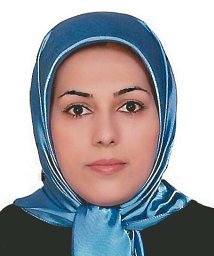 leila saeidiasl合作论文数2Noorsufia Abd Shukor合作论文数2
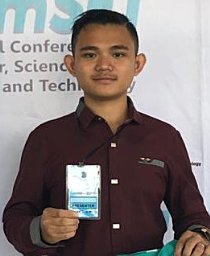 Abdurrobbil Falaq Dwi Anggoro合作论文数University of Bengkulu2
 Rahmat Jumri合作论文数University of Bengkulu2
 Abdullah Aysh Dahawi合作论文数Dept Math, Univ Teknol Malaysia2
 Mohamad Hidayad Ahmad Kamal合作论文数Universiti Teknologi Malaysia (UTM)2
 Yaseen Alwesabi合作论文数Dept Syst Sci & Ind Engn, Binghamton Univ2
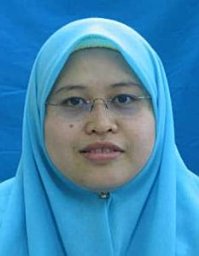 Amidora Idris合作论文数2




