Layered NbOX_2 (X=Cl, Br, I), a member of the van der Waals ferroelectric family, exhibits intrinsic ferroelectricity and pronounced nonlinear optical responses, making it a promising candidate for integrated nanophotonics applications. While previous studies have emphasized the material's strong second-order nonlinear responses, higher-order nonlinear responses are still mostly unexplored. This work systematically investigates NbOI_2 using high harmonic generation (HHG) spectroscopy. Driven by an intense mid-infrared laser field centered at ∼4 μm wavelength, highly anisotropic odd- and even-order harmonics up to the 16th order are generated at a low peak intensity of 0.4 TW cm^-2, extending beyond the material's bandgap. Both bulk and flake forms of NbOI_2 display pronounced harmonic emission from the near-infrared to the deep-ultraviolet spectral region, with a notably high overall conversion efficiency compared to other known materials. Polarization-resolved measurements reveal that even-order harmonics remain aligned with the crystal polar axis regardless of the driving-field orientation, whereas odd-order harmonics are dynamically affected. First-principles calculations suggest that the flat valence band associated with Peierls dimerization enhances HHG efficiency through electron correlation. These findings provide fresh perspectives on HHG in van der Waals ferroelectric materials and facilitate the development of compact and tunable quantum light sources.
Vanadium diselenide (VSe2), a layered metallic material with a three-dimensional charge density wave (CDW), has received considerable attention due to the high tunability of its CDW phase. Recently, organic tetrabutyl ammonium (TBA) cations have been intercalated into bulk VSe2, resulting in a novel metal-insulator transition with a new two-dimensional in-plane periodicity lattice modulation. In this study, we employ infrared spectroscopy and first-principles calculations to investigate the electronic structure of both pristine VSe2 and TBA+-intercalated VSe2. Our findings reveal a gradual development of a CDW energy gap in pristine VSe2 during the CDW transition, whereas TBA+-intercalated VSe2 undergoes an abrupt and intricate electronic band reconstruction at the phase transition. The study directly distinguishes between traditional CDW order, characterized by a change in band structure at low energy with the formation of an energy gap, and a first-order phase transition with abrupt band reconstruction over broad energies, as seen in (TBA+)xVSe2. Infrared spectroscopy provides a straightforward method to distinguish between these two scenarios. These findings enhance our understanding of structural phase transitions driven by Fermi surface nesting or alternative mechanisms.
Detection of the Higgs mode in superconductors using nonlinear terahertz spectroscopy is a key area of interest in condensed matter physics. We investigate the influence of disorder on the nonlinear terahertz response and the Higgs mode in NbN thin films with varying Ioffe-Regel parameters (k_{F}l). In strongly disordered films near the superconductor-insulator transition, we observe an anomalous third-harmonic generation (THG) signal above T_{c}, which is absent in both cleaner superconducting and nonsuperconducting counterparts. The persistence of this normal-state THG signal in a high magnetic field excludes superconducting fluctuations as its origin. Below T_{c}, the THG intensity increases sharply, indicating a dominant contribution from the driven Higgs mode. The THG spectrum of the strongly disordered sample exhibits a broadened, multipeak structure, which we attribute to quantum path interference between distinct channels involving unpaired electrons and Cooper pairs within emergent superconducting islands. Our findings not only demonstrate how disorder tunes the nonlinear terahertz response, but also uncover a strong coupling between electrons responsible for normal-state THG and the superconducting Higgs mode below T_{c} in strongly disordered samples.
The discovery of ambient-pressure superconductivity in compressively strained (La,Pr)_3Ni_2O_7 thin films has intensified efforts to identify the pairing mechanism. However, the symmetry of the superconducting order parameter and the character of the normal state remain unsettled. Here we combine bulk-sensitive terahertz (THz) time-domain spectroscopy with THz third-harmonic generation to present spectroscopic insights into these issues. Linear THz spectroscopy reveals a bulk superconducting response in the (La,Pr)_3Ni_2O_7 films, evidenced by the suppression of low-frequency spectral weight below the onset critical temperature, T_c^onset. A weak coherence peak near T_c^onset, together with substantial residual low-frequency conductivity as T→ 0, is consistent with disordered s_±-wave pairing. In the nonlinear regime, the third-harmonic signal rises sharply on cooling through T_c^onset, providing an independent signature of the transition. Strikingly, the nonlinear response persists above T_c^onset, pointing to either disorder-enhanced nonlinearity or a distinct correlated normal state. Motivated by angle-resolved photoemission spectroscopy on similarly grown films that identifies a comparable temperature scale, we associate the anomalous normal-state terahertz nonlinearity with a pseudogap. These results establish (La,Pr)_3Ni_2O_7 as a bulk superconductor with s_±-like pairing that coexists with, and may compete with, a distinct ordered state, providing a platform for exploring unconventional superconductivity beyond cuprates and pnictides.
We report the observation of ultrafast photoinduced giant enhancement of optical second harmonic generation (SHG) efficiency in cobaltite YbBaCo4O7. Upon femtosecond pumping at energies above the band gap, the system exhibits an ultrafast enhancement in SHG intensity, reaching up to 60
Two-dimensional (2D) massless Dirac fermions (MDF), which represent a type of quasiparticles with linear energy-momentum dispersions only in 2D momentum space, provide a fertile ground for realizing novel quantum phenomena. However, 2D MDF were seldom observed in the superconducting bulk states of 3D materials. Furthermore, as a cornerstone for accurately tuning the quantum phenomena based on 2D MDF, a quantitative relationship between 2D MDF and a structural parameter has rarely been revealed so far. Here, we report magnetoinfrared spectroscopy studies of the iron-arsenide-superconductor systems NaFeAs and AFe2As2 (A = Ca, Ba) at temperature T similar to 4.2 K and at magnetic fields (B) up to 17.5 T. Our results demonstrate the existence of 2D MDF in the superconducting bulk state of NaFeAs. Moreover, the 2D-MDF Fermi velocities in NaFeAs and AFe2As2 (A = Ca, Ba), which are extracted from the slopes of the linear root B dependences of the Landau-level transition energies, scale linearly with the Fe-As bond lengths. The linear scaling between the 2D-MDF Fermi velocities and the Fe-As bond lengths is supported by (i) the linear relationship between the square root of the effective mass of the dxy electrons and the Fe-As bond length and (ii) the linear dependence of the square root of the calculated tight-binding hopping energy on the Fe-As bond length. Our results open up avenues for exploring and tuning quantum phenomena based on 2D MDF in the superconducting bulk states of 3D materials.
The honeycomb magnet Na_3Co_2SbO_6 recently emerged as a promising candidate for realizing Kitaev quantum spin liquid with relatively low levels of structural disorder. While the precise spin Hamiltonian remains controversial, the potential existence of a quantum spin liquid or other novel quantum magnetic phases continues to stimulate investigation. Here, we study the temperature and magnetic field-dependent spin excitations of Na_3Co_2SbO_6 on a twin-free single crystal using magneto-terahertz (THz) spectroscopy, focusing on magnetic anisotropy and field-induced unusual phases. We observe a low-energy continuum excitation above T_N and a 0.5 THz (2 meV) spin wave excitation in magnetic order under zero field. Upon applying an in-plane magnetic field, the spin waves transform to a magnetic continuum over an intermediate field range, above which the system enters a spin-polarized state. Crucially, the spin excitation spectra reveal striking anisotropy between the a and b crystallographic axes, demanding description by a strongly anisotropic spin model. These findings establish Na_3Co_2SbO_6 as a model system for investigating field-tunable quantum magnetism and potential spin liquid behavior in highly anisotropic systems.
An excitonic insulator is a material that hosts an exotic ground state, where an energy gap opens due to spontaneous condensation of bound electron-hole pairs. Ta_{2}NiSe_{5} is a promising candidate for this type of material, but the coexistence of a structural phase transition with the gap opening has led to a long-standing debate regarding the origin of the insulating gap. Here we employ MeV ultrafast electron diffraction to obtain quantitative insights into the atomic displacements in Ta_{2}NiSe_{5} following photoexcitation, which has been overlooked in previous time-resolved spectroscopy studies. In conjunction with first-principles calculations using the measured atomic displacements, we find that the structural change can largely account for the photoinduced reduction in the energy gap without considering excitonic effects. Our Letter illustrates the importance of a quantitative reconstruction of individual atomic pathways during nonequilibrium phase transitions, paving the way for a mechanistic understanding of a diverse array of phase transitions in correlated materials where lattice dynamics can play a pivotal role.
The recently discovered infinite-layer nickelate superconductor offers a new platform for exploring hightemperature superconductivity. In this work, we employ time-resolved ultrafast optical spectroscopy to investigate the excited carrier dynamics in Eu-doped (Sm0.69Ca0.05Eu0.26)NiO2 thin film, which exhibits superconductivity with Tc0 = 16 K. The formation of superconducting gap was identified with estimating the gap size of about 2.5 meV, which can be eliminated with a small pump fluence of 0.32 mu J/cm2. The relaxation trajectories of quasiparticles exhibit a high similarity to those of the Ruddlesden-Popper nickelates, supporting the commonality in their electronic structures and superconductivity. More interestingly, from the temperature dependence of fast component, we estimate an electron-phonon coupling (EPC) strength of approximate to 0.42, which would predict a transition temperature of only 3.5 K. This suggests that EPC alone is insufficient to explain superconductivity in the RNiO2 system, and there must be other interactions that help hold Cooper pairs together.
Exploring the photoinduced dynamics of chiral states offers promising avenues for advanced control of condensed matter systems. Photoinduced or photoenhanced chirality in 1T-TiSe2 has been suggested as a fascinating platform for optical manipulation of chiral states. However, the mechanisms underlying chirality training and its interplay with the charge density wave (CDW) phase remain elusive. Here, we use time-resolved x-ray diffraction (trXRD) with circularly polarized pump lasers to probe the photoinduced dynamics of chirality in 1T-TiSe2. We observe a notable (similar to 20%) difference in CDW intensity suppression between left and right circularly polarized pumps. Additionally, we reveal momentum-resolved circular dichroism arising from domains of different chirality, providing a direct link between CDW and chirality. An immediate increase in CDW correlation length upon laser pumping is detected, suggesting the photoinduced expansion of chiral domains. These results both advance the potential of light-driven chirality by elucidating the mechanism driving chirality manipulation in TiSe2, and they demonstrate that trXRD with circularly polarized pumps is an effective tool for chirality detection in condensed matter systems.
Na2Co2TeO6 has been proposed as a candidate for realizing the Kitaev quantum spin liquid (QSL). Its intriguing magnetic properties have motivated extensive investigations into its ground state and spin excitation spectrum. A central question concerns whether an in-plane magnetic field can stabilize a QSL state with fractionalized excitations prior to full spin polarization. Using time-domain terahertz spectroscopy, we systematically study the magnetic excitations in Na2Co2TeO6 within the field-induced intermediate state regime (6 T < B < 10 T). At 5 K, we observe a broad excitation feature superimposed on multiple sharp modes corresponding to magnons. Field-dependent measurements reveal that both the sharp modes and the continuum exhibit magnetic dipole activity. However, their temperature evolution is different. Temperature-dependent measurements at 10 T demonstrate that the sharp modes disappear abruptly near 15 K, consistent with the expected phase boundary. Conversely, the continuum intensity maximizes at this temperature and persists up to at least 40 K. The survival of the broad excitation continuum above the ordering temperature suggests strong spin correlations and quantum fluctuations in this regime
Recent developments in nonequilibrium and nonlinear terahertz (THz) spectroscopies have significantly advanced the understanding of collective excitations in superconductors. However, there is ongoing debate regarding the identification of Higgs, Leggett modes, and BCS charge fluctuations in the two-band superconductor MgB_{2}. To address this issue, we have demonstrated the selective excitation of collective modes in MgB_{2} by systematically adjusting THz pump pulse characteristics. Using multicycle THz pump-probe spectroscopy, we distinguish various nonlinear processes through two-dimensional scans. The π-band Higgs mode is identified through its characteristic resonant enhancement at the temperatures where the pump frequency ω_{p} matches the π-band superconductivity gap 2Δ_{π}(T). In contrast, employing single-cycle THz pulses that satisfy nonadiabatic excitation conditions reveals a heavily damped oscillation corresponding to the Leggett mode. Our observed mode-selective responses in MgB_{2} under tailored excitation provide a clear experimental route to discriminate between the modes, helping to reconcile existing controversies while highlighting the critical role of interband coupling in collective mode observation for multiband superconductors.
Recent discoveries of superconductivity in Ruddlesden-Popper nickelates realize a rare category of superconductors. However, the use of high-pressure diamond anvil cells limits spectroscopic characterization of the density waves and superconducting gaps. Here, we systematically studied the pressure evolution of La_4Ni_3O_10 using ultrafast optical pump-probe spectroscopy. We found that the transition temperature and energy gap of density waves are suppressed with increasing pressure and disappear suddenly near 17 GPa where structural transition appears. In addition, the observation of a single density wave gap indicates that the spin density wave and charge density wave remain coupled as pressure increases, rather than decoupling. After the density wave collapse, a distinct low-temperature regime emerges, characterized by a small gap consistent with potential superconducting pairing. The separated phase region of superconductivity and density waves suggests that superconductivity in pressurized-La_4Ni_3O_10 competes strongly with density waves, offering new insights into the interplay between these two phenomena.
Using MeV ultrafast electron diffraction to map out atomic trajectories, we revealed that reduced monoclinic distortion primarily explains the photoinduced gap suppression in the electronic structure of Ta2NiSe5, a leading excitonic insulator candidate.
Exploring the photoinduced dynamics of chiral states offers promising avenues for advanced control of condensed matter systems. Photoinduced or photoenhanced chirality in 1T-TiSe_{2} has been suggested as a fascinating platform for optical manipulation of chiral states. However, the mechanisms underlying chirality training and its interplay with the charge density wave (CDW) phase remain elusive. Here, we use time-resolved x-ray diffraction (trXRD) with circularly polarized pump lasers to probe the photoinduced dynamics of chirality in 1T-TiSe_{2}. We observe a notable (∼20%) difference in CDW intensity suppression between left and right circularly polarized pumps. Additionally, we reveal momentum-resolved circular dichroism arising from domains of different chirality, providing a direct link between CDW and chirality. An immediate increase in CDW correlation length upon laser pumping is detected, suggesting the photoinduced expansion of chiral domains. These results both advance the potential of light-driven chirality by elucidating the mechanism driving chirality manipulation in TiSe_{2}, and they demonstrate that trXRD with circularly polarized pumps is an effective tool for chirality detection in condensed matter systems.
Quasi-two-dimensional (2D) perovskites have garnered substantial research interest due to their remarkable stability and exceptional optoelectronic properties. It is well recognized that upon photoexcitation, electrons transfer from phases with narrower quantum well widths (small n) to those with wider ones (large n), ultimately reaching the three-dimensional (3D) phase. However, it remains difficult to distinguish whether charge carriers transfer directly to the 3D perovskite or undergo a cascade transfer through other 2D phases within the first picoseconds after excitation. In this work, we established a straightforward method to distinguish the cascade charge transfer processes by comparing the time resolution fitted from the rising edges of bleaching signals corresponding to different 2D phases. This deconvolution fitting method further enabled calibration of the time zeros on kinetic curves. The corrected results exhibit consistency with those derived from the optical Kerr effect measurements, thereby cross-validating the accuracy of this approach. The experimental results indicate that under low light intensity, no cascade transfer occurs between two different small n phases of the quasi-2D perovskite (BDA)FA3Pb4I13 thin films in the initial picoseconds following photoexcitation. Instead, electrons transfer directly from small n phases to the 3D phase. This work provides a method for identifying cascade carrier transfer processes accurately, potentially providing enhanced guidance and a deeper understanding of optoelectronic materials.
Spin-orbit entangled materials have attracted widespread interest due to the novel magnetic phenomena arising from the interplay between spin-orbit coupling and electronic correlations. However, the intricate nature of spin interactions within Kiteav materials complicates the precise measurement of low-energy spin excitations. Using Na2Co2TeO6 as an example, we study these low-energy spin excitations using the time-resolved resonant elastic x-ray scattering (tr-REXS). Our observations unveil remarkably slow spin dynamics at the magnetic peak, whose recovery timescale is several nanoseconds. This timescale aligns with the extrapolated spin gap of 1 μeV, obtained by density matrix renormalization group (DMRG) simulations in the thermodynamic limit. The consistency demonstrates the efficacy of tr-REXS in discerning low-energy spin gaps inaccessible to conventional spectroscopic techniques.
Half-semimetals, characterized by their spin-polarized electronic states, hold significant promise for spintronic applications but remain scarce due to stringent electronic and magnetic criteria. Through a combination of transport measurements and optical spectroscopy, we investigated the intermetallic compound Mn4Al11, which features an exceptionally low carrier concentration and undergoes a magnetic phase transition near 68 K. Transport measurements reveal anomalies that deviate from typical metallic behavior at low temperatures. Optical spectroscopy indicates a small, nearly frequency-independent optical conductivity in the far-infrared region, with spectral weight decreasing as the temperature drops from 300 K to 50 K. These behaviors suggest a temperaturedependent carrier density and significant scattering of charge carriers. Combining experimental findings with calculated electronic band structures, we propose that Mn4Al11 is a novel half-semimetal candidate exhibiting a ferrimagnetic ground state.
In the intricate phase diagram of unconventional superconductors characterized by intertwined electronic orders and superconductivity, a key step in understanding the superconducting mechanism is to investigate the parent compounds from which superconductivity emerges through doping or pressure. In this study, we employed optical spectroscopy and ultrafast reflectivity measurements to examine the density wave instability in the trilayer nickelate La$_{4}$Ni$_{3}$O$_{10}$, which displays pressure-induced superconductivity up to 30 K. Our optical spectroscopy measurements reveal that La$_{4}$Ni$_{3}$O$_{10}$ behaves as a metal with a high plasma frequency. Upon cooling, we observed a distinct formation of a density wave energy gap in both optical conductivity and pump-probe measurements. The gap feature is more pronounced compared to the bilayer nickelate La$_{3}$Ni$_{2}$O$_{7}$. Through a comparison of the experimentally determined plasma frequency with first-principles calculations, we classify La$_{4}$Ni$_{3}$O$_{10}$ as a moderately electron-correlated material, resembling the parent compound of iron-based superconductors but exhibiting weaker correlation than the bilayer nickelate La$_{3}$Ni$_{2}$O$_{7}$. The enhanced gap feature and weaker electronic correlation in La$_{4}$Ni$_{3}$O$_{10}$ may explain its lower superconductivity transition temperature under high pressure. These findings significantly advance our comprehension of the density wave and superconductivity mechanisms in the trilayer nickelate La$_{4}$Ni$_{3}$O$_{10}$.
 Jianlin Luo (雒建林)合作论文数Key Lab for Physics under Extreme Conditions, Institute of Physics, Chinese Academy of Sciences;University of Chinese Academy of Sciences152
 Genfu Chen (陈根富)合作论文数State Key Lab for Superconductivity, Institute of Physics, Chinese Academy of Sciences;University of Chinese Academy of Sciences80
 Tao Dong (董涛)合作论文数International Center for Quantum Materials, Peking University78
 P. Zheng合作论文数47
 Sijie Zhang合作论文数34
 Pengcheng Dai合作论文数Department of Physics and Astronomy, Rice University33
 Gang Li (李岗)合作论文数Institute of Physics, Chinese Academy of Sciences31
 Wen-Zhen Hu合作论文数29Q. M. Liu合作论文数27
 Chen Fang (方辰)合作论文数Key Laboratory of Condensed Matter Theory and Computation, Institute of Physics, Chinese Academy of Sciences26
 Zhiguo Chen (谌志国)合作论文数Institute of Physics, Chinese Academy of Sciences26Shuxiang Xu合作论文数24Qiong Wu (吴穹)合作论文数School of Physics, Chongqing University23R. H. Yuan合作论文数23
 Zixiao Wang (王子潇)合作论文数北京大学物理学院22
 P. Richard合作论文数Advanced Institute for Materials Research, Tohoku University21
 Youguo Shi (石友国)合作论文数Beijing National Laboratory for Condensed Matter Physics, Institute of Physics, Chinese Academy of Sciences20
 Zhong Fang (方忠)合作论文数Institute of Physics, Chinese Academy of Sciences;University of Chinese Academy of Sciences19
 L. Y. Shi合作论文数18Cao Liezhao合作论文数18
 Xi Dai (戴希)合作论文数Department of Physics, The Hong Kong University of Science and Technology;University of California Santa Barbara18
 Zhaojia Chen合作论文数School of Electronic Engineering, Xidian University18
 Young-Shying Chen合作论文数18
 Dong Qian (钱冬)合作论文数Physics Department, School of Physics and Astronomy, Shanghai Jiao Tong University17
 Hong Ding (丁洪)合作论文数School of Physics and Astronomy, Shanghai Jiao Tong University;Tsung-dao Lee Institute, Shanghai Jiao Tong University17
 Genda Gu合作论文数Condensed Matter Physics and Materials Science Department, Brookhaven National Laboratory17
 Dong Wu (吴栋)合作论文数School of Physics and Astronomy, Shanghai Jiao Tong University16
 David Hsieh (謝漢強)合作论文数The Division of Physics, Mathematics and Astronomy, California Institute of Technology16Chen Zhaojia合作论文数16Tian-Chen Hu (胡天晨)合作论文数15R. S. Li合作论文数15
 Xianhui Chen (陈仙辉)合作论文数Department of Physics, School of Physical Sciences, University of Science and Technology of China15
 Gang Xu (徐刚)合作论文数School of Physics, Huazhong University of Science and Technology15
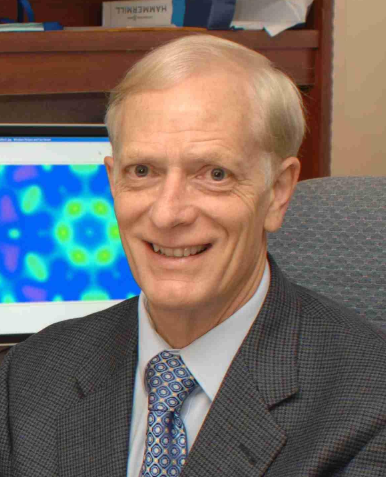 Jeffrey W Lynn (Fed)合作论文数Center for Neutron Research, National Institute of Standards and Technology;Quantum Materials Center, University of Maryland15S. X. Xu合作论文数13H. P. Wang合作论文数13
 Rong Sheng Li合作论文数13B. F. Hu合作论文数12
 Bing Cheng合作论文数Johns Hopkins Univ, Dept Phys & Astron, Baltimore, MD 21218 USA12Wang Xin-Bo合作论文数12Hasan M M合作论文数12
 Aifang Fang合作论文数12
 Jiangping Hu (胡江平)合作论文数Institute of Physics, Chinese Academy of Sciences;University of Chinese Academy of Sciences12
 Zhongxian Zhao (赵忠贤)合作论文数Institute of Physics, Chinese Academy of Sciences12
 Zheng Li (李政)合作论文数Beijing National Laboratory for controlled matrix physics, Beijing Institute of physics, Chinese Academy of Sciences12
) Guanghan Cao (曹光旱)合作论文数School of Physics, Zhejiang University12Tianchen Hu合作论文数11
Guanghan Cao (曹光旱)合作论文数School of Physics, Zhejiang University12Tianchen Hu合作论文数11 Qiaomei Liu (刘巧梅)合作论文数School of Electronic and Information Engineering, Beihang University11




