The transition of quantum computing into practical applications depends on the successful combination of quantum algorithms with existing classical software systems. The resources for creating hybrid applications are currently fragmented, requiring teamwork efforts across various disciplines. Moreover, there are currently no clear predefined methods, standards, or solutions for these complex operations. We introduce hereby EniQmA which stands as a quantum software engineering framework for unifying this development process as well as deployment and operation of hybrid quantum-classical applications. EniQmA integrates agile workflows with domain-specific tool-chains along with quantum DevOps practices to enable connecting theoretical quantum algorithms with scalable industrial applications. The framework delivers structured process models together with quality standards and cohesive development tools to produce reliable and sustainable quantum software. Through its low-code/no-code capabilities, EniQmA makes quantum application development accessible to domain experts who have minimal quantum expertise or enable specialists to provide cutting-edge approaches in quantum computing. This framework is showcased in three real-world industrial scenarios: sustainability in aircraft building, anomaly detection in production, as well as railway transportation. EniQmA creates an essential initial step towards standardizing quantum software engineering, which speeds up the journey to practical quantum advantage in industrial applications.
The rise of quantum computing/technology potentially introduces significant security challenges to cloud computing, necessitating quantum-resistant encryption, as well as protection schemes and methods for cloud infrastructures offering quantum computing services, i.e., quantum clouds. This paper explores the possibility for securing quantum clouds and ensuring privacy through the integration of homomorphic encryption (HE) into Eclipse Qrisp, a high-level programming quantum computing framework. Our study addresses the technical feasibility of integrating HE into Qrisp and evaluates resulting performance trade-offs. The successful implementation and Qrisp integration of three post-quantum cryptographic (PQC) algorithms demonstrates the feasibility of integrating HE into quantum computing frameworks and securing privacy and data protection in quantum cloud environments.
Security and resilience are paramount in urban IoT networks, yet stringent privacy requirements for sensor data remain a significant challenge to large-scale deployment. In this extended study, we present a comprehensive privacy-preserving anomaly detection framework that operates entirely on homomorphically encrypted data. To bridge the gap between the theoretical promise of Fully Homomorphic Encryption (FHE) and the practical constraints of deployment, we investigate model compression techniques, specifically Quantization-Aware Training (QAT) combined with unstructured and structured pruning, as a means to navigate the complex design space created by the intersection of IoT limitations, FHE constraints and machine learning (ML). We systematically evaluate a wide range of compression configurations across two realistic IoT intrusion detection datasets and quantify their joint impact on classification performance, encrypted inference latency, and deployment footprint. Specifically, we identify a critical quantization threshold: 3-bit models achieve encrypted inference in 1-18 s per sample, while the transition to 5-bit precision triggers a similar to 100 & times; latency increase with <= 3 percentage points gain in weighted F1. Topology-aware structured pruning further reduces latency by 4-6 & times; relative to parameter-matched unstructured counterparts. These results delineate a practical design corridor for FHE-enabled IoT anomaly detection and demonstrate that principled compression can bring privacy-preserving inference within operationally acceptable bounds.
Anomaly detection in urban IoT networks is essential for the resilience and security of smart cities. However, the privacy of sensor data remains a critical concern. In this paper, we present a machine learning-based anomaly detection approach that operates entirely on homomorphically encrypted data using Concrete ML. To enable practical deployment under the computational constraints of Fully Homomorphic Encryption (FHE), we investigate the impact of quantization-aware training (QAT) and unstructured pruning, two established techniques for reducing model complexity. We evaluate different combinations of quantization levels and pruning degrees with respect to classification performance and resource efficiency. Our results indicate that competitive accuracy can be retained even under aggressive model compression, enabling efficient and privacypreserving inference.
In this work, we study the solution of shortest vector problems (SVPs) arising in terms of learning with error problems (LWEs). LWEs are linear systems of equations over a modular ring, where a perturbation vector is added to the right-hand side. This type of problem is of great interest, since LWEs have to be solved in order to be able to break lattice-based cryptosystems as the Module-Lattice-Based Key-Encapsulation Mechanism published by NIST in 2024. Due to this fact, several classical and quantum-based algorithms have been studied to solve SVPs. Two well-known algorithms that can be used to simplify a given SVP are the Lenstra-Lenstra-Lovász (LLL) algorithm and the Block Korkine-Zolotarev (BKZ) algorithm. LLL and BKZ construct bases that can be used to compute or approximate solutions of the SVP. We study the performance of both algorithms for SVPs with different sizes and modular rings. Thereby, application of LLL or BKZ to a given SVP is considered to be successful if they produce bases containing a solution vector of the SVP.
The rise of quantum computing/technology potentially introduces significant security challenges to cloud computing, necessitating quantum-resistant encryption strategies as well as protection schemes and methods for cloud infrastructures offering quantum computing time and services (i.e. quantum clouds). This research explores various options for securing quantum clouds and ensuring privacy, especially focussing on the integration of homomorphic encryption (HE) into Eclipse Qrisp, a high-level quantum computing framework, to enhance the security of quantum cloud platforms. The study addresses the technical feasibility of integrating HE with Qrisp, evaluates performance trade-offs, and assesses the potential impact on future quantum cloud architectures.The successful implementation and Qrisp integration of three post-quantum cryptographic (PQC) algorithms demonstrates the feasibility of integrating HE with quantum computing frameworks. The findings indicate that while the Quantum One-Time Pad (QOTP) offers simplicity and low overhead, other algorithms like Chen and Gentry-Sahai-Waters (GSW) present performance trade-offs in terms of runtime and memory consumption. The study results in an overall set of recommendations for securing quantum clouds, e.g. implementing HE at data storage and processing levels, developing Quantum Key Distribution (QKD), and enforcing stringent access control and authentication mechanisms as well as participating in PQC standardization efforts.
This paper presents an evaluation framework for xAI methods that is tailored for multivariate time series data. The framework includes three evaluation approaches encompassing a stability analysis, consistency analysis, and truthfulness analysis. The stability analysis investigates the consistency of explanations provided by a single xAI method for similar inputs. In the truthfulness analysis, the meaningfulness of explanations provided by an xAI method is examined. The consistency analysis assesses the similarity of explanations generated by different xAI methods. We demonstrate the application of these evaluation techniques using a medical use case involving electrocardiogram (ECG) data. Specifically, we evaluate the explanations of two popular xAI methods, LRP and SHAP, for a convolutional neural network (CNN) that detects myocardial infarctions (MI). We will show that LRP and SHAP both provide meaningful explanations for this model, with SHAP being slightly more truthful. On the other hand, our stability analysis will reveal that LRP is more stable than SHAP for the investigated use case. Finally, the consistency analysis will allow us to demonstrate that LRP and SHAP partly disagree in explaining the leads and time intervals most relevant for the MI detection model towards its classification.
Despite its enormous economical and societal impact, lack of human-perceived control and safety is re-defining the design and development of emerging AI-based technologies. New regulatory requirements mandate increased human control and oversight of AI, transforming the development practices and responsibilities of individuals interacting with AI. In this paper, we present the SPATIAL architecture, a system that augments modern applications with capabilities to gauge and monitor trustworthy properties of AI inference capabilities. To design SPATIAL, we first explore the evolution of modern system architectures and how AI components and pipelines are integrated. With this information, we then develop a proof-of- concept architecture that analyzes AI models in a human-in-the- loop manner. SPATIAL provides an AI dashboard for allowing individuals interacting with applications to obtain quantifiable insights about the AI decision process. This information is then used by human operators to comprehend possible issues that influence the performance of AI models and adjust or counter them. Through rigorous benchmarks and experiments in real- world industrial applications, we demonstrate that SPATIAL can easily augment modern applications with metrics to gauge and monitor trustworthiness, however, this in turn increases the complexity of developing and maintaining systems implementing AI. Our work highlights lessons learned and experiences from augmenting modern applications with mechanisms that support regulatory compliance of AI. In addition, we also present a road map of on-going challenges that require attention to achieve robust trustworthy analysis of AI and greater engagement of human oversight.
Public key cryptography is nowadays a crucial component of global communications which are critical to our economy, security and way of life. The quantum computers are expected to be a threat and the widely used RSA, ECDSA, ECDH, and DSA cryptosystems will need to be replaced by quantum safe cryptography. The main objective of the HORIZON Europe PQ-REACT project is to design, develop and validate a framework for a faster and smoother transition from classical to quantum safe cryptography for a wide variety of contexts and usage domains that could have a potential interest for defence purposes. This framework will include Post Quantum Cryptography (PQC) migration paths and cryptographic agility methods and will develop a portfolio of tools for validation of post quantum cryptographic systems using Quantum Computing. A variety of real-world pilots using PQC and Quantum Cryptography, i.e., Smart Grids, 5G and Ledgers will be deployed to validate the defined framework.
this paper, we present first ideas and concepts for a methodology testing the robustness of public key cryptosystems with respect to quantum attacks. As an example, the key encapsulation mechanism (KEM) described in the NIST report FIPS 203 is considered. This cryptosystem is based on a learning with error problem (LWE problem). For this reason, different quantum algorithms solving LWE problems are analyzed regarding their efficiency and precision. Thereby, we restrict ourselves to computational means i.e. the respective quantum algorithms are implemented using Python based libraries such as Eclipse Qrisp or the software packages provided by D-Wave. In order to be able to test the different algorithms, the key generator described in FIPS 203 is re-implemented, such that keys with reduced lengths can be generated. In particular, it is of great interest to investigate, which key length guarantees a satisfactory security level. Another interesting issue is how the knowledge of side-channel attacks can be used to reduce a given LWE problem. Our test results are considered as training data for neural networks having the key lengths, the type of the quantum solver and further parameters as inputs and a number for the security level of the corresponding key as output. The envisioned neural networks can be used for predicting whether a particular algorithm can be efficiently attacked under the given circumstances and parameters known to the attacker.
While significant progress has been made on the hardware side of quantum computing, support for high-level quantum programming abstractions remains underdeveloped compared to classical programming languages. In this article, we introduce Qrisp, a framework designed to bridge several gaps between high-level programming paradigms in state-of-the-art software engineering and the physical reality of today's quantum hardware. The framework aims to provide a systematic approach to quantum algorithm development such that they can be effortlessly implemented, maintained and improved. We propose a number of programming abstractions that are inspired by classical paradigms, yet consistently focus on the particular needs of a quantum developer. Unlike many other high-level language approaches, Qrisp's standout feature is its ability to compile programs to the circuit level, making them executable on most existing physical backends. The introduced abstractions enable the Qrisp compiler to leverage algorithm structure for increased compilation efficiency. Finally, we present a set of code examples, including an implementation of Shor's factoring algorithm. For the latter, the resulting circuit shows significantly reduced quantum resource requirements, strongly supporting the claim that systematic quantum algorithm development can give quantitative benefits.
We demonstrate SPATIAL, a proof-of-concept system that augments modern applications with capabilities to analyze trustworthy properties of AI models. The practical analysis of trustworthy properties is key to guaranteeing the safety of users and overall society when interacting with AI -driven applications. SPATIAL implements AI dashboards to introduce human-in-the-loop capabilities for the construction of AI models. SPATIAL allows different stakeholders to obtain quantifiable insights that characterize the decision making process of AI. This information can then be used by the stakeholders to comprehend possible issues that influence the performance of AI models, such that the issues can be resolved by human operators. Through rigorous benchmarks and experiments in a real-world industrial application, we demonstrate that SPATIAL can easily augment modern applications with metrics to gauge and monitor trustworthiness. However, this, in turn, increases the complexity of developing and maintaining the systems implementing AI. Our work paves the way towards augmenting modern applications with trustworthy AI mechanisms and human oversight approaches.
We analyze the impact of poisoning attacks on autonomous drones and demonstrate how explainable artificial intelligence techniques can be employed to detect them. We then delve into the risks, opportunities, and research challenges, ultimately paving the way for city-scale deployments of autonomous drones.
Quantum information processing architectures typically only allow for nearest-neighbour entanglement creation. In many cases, this prevents the direct generation of GHZ states, which are commonly used for many communication and computation tasks. Here, we show how to obtain GHZ states between nodes in a network that are connected in a straight line, naturally allowing them to initially share linear cluster states. We prove a strict upper bound of $\lfloor (n+3)/2 \rfloor$ on the size of the set of nodes sharing a GHZ state that can be obtained from a linear cluster state of $n$ qubits, using local Clifford unitaries, local Pauli measurements, and classical communication. Furthermore, we completely characterize all selections of nodes below this threshold that can share a GHZ state obtained within this setting. Finally, we demonstrate these transformations on the IBMQ Montreal quantum device for linear cluster states of up to $n=19$ qubits.
The progression in quantum computing and the rapid development of quantum computation hardware has raised expectations for its application to commercially relevant use cases in the future. However, the need for high-level quantum programming abstractions and targeted use cases paired with vertical applications, which can directly benefit from quantum computing, remains an open challenge. This paper presents our vision for a decentralized architecture for swarm based IoT systems that leverages a high-level continuous development and integration quantum programming suite to support edge processing capabilities for different use cases across the edge-fog-cloud continuum. The planned Quantum DevKit provides the necessary abstractions and low-level backend interfaces for quantum computing infrastructure, enabling edge computation using quantum processing, with extensions to efficient management of Service Level Agreements (SLAs). The paper focuses on the presentation of the development kit and its coupling swarm-based architecture that automates the orchestration of the cloud-to-edge continuum, showcasing the potential of quantum technology in edge processing.
The quantum backtracking algorithm proposed by Ashley Montanaro raised considerable interest, as it provides a quantum speed-up for a large class of classical optimization algorithms. It does not suffer from Barren-Plateaus and transfers well into the fault-tolerant era, as it requires only a limited number of arbitrary angle gates. Despite its potential, the algorithm has seen limited implementation efforts, presumably due to its abstract formulation. In this work, we provide a detailed instruction on implementing the quantum step operator for arbitrary backtracking instances. For a single controlled diffuser of a binary backtracking tree with depth n, our implementation requires only 6n+14 CX gates. We detail the process of constructing accept and reject oracles for Sudoku problems using our interface to quantum backtracking. The presented code is written using Qrisp, a high-level quantum programming language, making it executable on most current physical backends and simulators. Subsequently, we perform several simulator based experiments and demonstrate solving 4x4 Sudoku instances with up to 9 empty fields. This is, to the best of our knowledge, the first instance of a compilable implementation of this generality, marking a significant and exciting step forward in quantum software engineering.
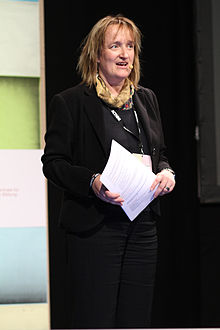 Ina Schieferdecker合作论文数Fraunhofer FOKUS22
 Philipp Lammel合作论文数20
 Michell Boerger合作论文数Fraunhofer FOKUS16
 Manfred Hauswirth合作论文数Fraunhofer Institute for Open Communication Systems;Open Distributed Systems, Technical University Berlin;German National Internet Institute15
 Ranganai Chaparadza合作论文数10
 Sebastian Bock合作论文数UNIVERSITY OF IOWA;Henry B. Tippie School of Management;Henry B. Tippie School of Management, UNIVERSITY OF IOWA9Raphael Seidel合作论文数8
 Yacine Rebahi合作论文数Fraunhofer Institut Fokus8
 Faruk Catal合作论文数Fraunhofer FOKUS, Kaiserin-Augusta-Allee 31, Berlin, 10589, Germany7Arun Prakash合作论文数7
 Denis Rangelov合作论文数5Abdul-Rasheed Ottun合作论文数5Tom Ritter合作论文数Fraunhofer Institut FOKUS, Kaiserin-Augusta-Allee 31, 10589 Berlin5
 Huber Flores合作论文数University of Tartu5Colin Kai-Uwe Becker合作论文数4Robert Scholz合作论文数Max Planck School of Cognition, Leipzig, Germany.4
 Mohan Liyanage合作论文数4Evanela Lapi合作论文数4
 Michail Alexandros Kourtis合作论文数Natl Ctr Sci Res Demokritos, Inst Informat & Telecommun4Ilie-Daniel Gheorghe-Pop合作论文数3Matic Petrič合作论文数3Grit Dudeck合作论文数3Ilie-Daniel Gheorghe-Pop合作论文数3Budankailu Sameer Kumar Subudhi合作论文数3Benjamin Dittwald合作论文数Fraunhofer FOKUS, Berlin, Germany3
 Ramon Barakat合作论文数Hannover Med Sch, Muhlenpfordtstr 23, D-38106 Braunschweig, Germany3Michael Wagner合作论文数3
 Aaron Ding合作论文数Cyber Physical Intelligence Lab, Delft University of Technology;Technical University of Munich3
 Mehrdad Asadi合作论文数3Andreas Hoffmann合作论文数3
 Evangelos K. Markakis合作论文数3Florian Marienfeld合作论文数3Adeyinka Akintola合作论文数2David Solans Noguero合作论文数2Prachi Bagave合作论文数2Paul L. Darius合作论文数2René Zander合作论文数2Wojciech Konitzer合作论文数2Lina Bruns合作论文数2
 Thulitha Theekshana Senevirathna合作论文数2
 Chamara Sandeepa合作论文数School of Computer Science, University College Dublin2
 Manh-Dung Nguyen合作论文数National University of Singapore2
 Vinh Hoa LA合作论文数2
 Martin Schneider合作论文数2
 Anna Pappa合作论文数2
 Shen Wang合作论文数Beijing Dublin International College, Beijing University of Technology2
 Claudio Soriente合作论文数Computer Science Department, University of California2
 Sasu Tarkoma合作论文数Faculty of Science, University of Helsinki;Department of Computer Science, University of Helsinki;Helsinki Institute of Urban and Regional Studies, Helsinki Institute of Sustainability Science2
 Petteri Nurmi合作论文数Department of Computer Science, University of Helsinki;Helsinki Institute of Sustainability Science, University of Helsinki2




