Classification using deep learning models has shown superior predictive performance compared to conventional methods. Deep learning enables the automatic extraction of complex patterns from data, thereby reducing the need for manual feature engineering and enhancing consistency in prediction outcomes. Its capacity to learn directly from raw or structured inputs makes it highly suitable for tasks such as quality classification, where subtle variations may be complex to detect manually. This study investigates the impact of different optimization algorithms on CNN performance, including Stochastic Gradient Descent (SGD), SGD with Momentum, Adam, RMSProp, and Adagrad. Our goal is to find an optimizer that enhances accuracy while maintaining reasonable training time. We found that CNN optimized with the Adam optimizer achieved the highest test accuracy of 85.83
At present, pedestrian navigation systems using smartphones have become common in daily activities. For their ubiquitous, accurate, and reliable services, map information collection is essential for constructing comprehensive spatial databases. Previously, we have developed a map information collection tool to extract building information using Google Maps, optical character recognition (OCR), geolocation, and web scraping with smartphones. However, indoor navigation often suffers from inaccurate localization due to degraded GPS signals inside buildings and Simultaneous Localization and Mapping (SLAM) estimation errors, causing position errors and confusing augmented reality (AR) guidance. In this paper, we present an improved map information collection tool to address this problem. It captures 360° panoramic images to build 3D models, apply photogrammetry-based mesh reconstruction to correct geometry, and georeference point clouds to refine latitude–longitude coordinates. For evaluations, experiments in various indoor scenarios were conducted. The results demonstrate that the proposed method effectively mitigates positional errors with an average drift correction of 3.15 m, calculated via the Haversine formula. Geometric validation using point cloud analysis showed high registration accuracy, which translated to a 100% task completion rate and an average navigation time of 124.5 s among participants. Furthermore, usability testing using the System Usability Scale (SUS) yielded an average score of 96.5, categorizing the user interface as ’Best Imaginable’. These quantitative findings substantiate that the integration of 360° imaging and photogrammetric correction significantly enhances navigation reliability and user satisfaction compared with previous sensor fusion approaches.
With the rapid growth of cloud-based services, their integrations to e-learning platforms can enhance the efficiency of learning processes and managements. In this study, we present two enhancements of the web-based answer interface for the Programming Learning Assistant System (PLAS) by integrating two cloud services in Google services. Google Drive is used to allow students to upload their answer files to a cloud storage. Google Forms is used to allow them to submit their survey responses to a questionnaire offered by teachers. These integrations are implemented using Google Apps Script (GAS) to facilitate automatic processing and centralized management. Through these services, teachers can directly access to students’ responses to the materials/exercises in PLAS, so that they can instantly identify students who have submitted answers and analyze their survey feedback to determine the appropriateness. Currently, we have completed the implementations of the proposal. Their evaluations through applications to students will be in our next works.
Today, relational databases are widely used in information systems. SQL (structured query language) is taught extensively in universities and professional schools across the globe as a programming language for its data management and accesses. Previously, we have studied a web-based programming learning assistant system (PLAS) to help novice students learn popular programming languages by themselves through solving various types of exercises. For SQL programming, we have implemented the grammar-concept understanding problem (GUP) and the comment insertion problem (CIP) for its initial studies. In this paper, we propose an SQL Query Description Problem (SDP) as a new exercise type for describing the SQL query to a specified request in a MySQL database system. To reduce teachers’ preparation workloads, we integrate a generative AI-assisted SQL query generator to automatically generate a new SDP instance with a given dataset. An SDP instance consists of a table, a set of questions and corresponding queries. Answer correctness is determined by enhanced string matching against an answer module that includes multiple semantically equivalent canonical queries. For evaluation, we generated 11 SDP instances on basic topics using the generator, where we found that Gemini 3.0 Pro exhibited higher pedagogical consistency compared to ChatGPT-5.0, achieving perfect scores in Sensibleness, Topicality, and Readiness metrics. Then, we assigned the generated instances to 32 undergraduate students at the Indonesian Institute of Business and Technology (INSTIKI). The results showed an average correct answer rate of 95.2% and a mean SUS score of 78, which demonstrates strong initial student performance and system acceptance.
To address the limitations of high-cost threedimensional (3D) models and noise-sensitive two-dimensional (2D) angle-based methods in home self-practice yoga systems, in this work, a lightweight 2 D assessment methodology is proposed to optimize the frontal view movements. By focusing on common balance and hip-opening poses, OpenPose is used for keypoints extraction and the global normalization is applied to handle the various body types. Crucially, the “local structural similarity” metric within a hybrid scoring function is also introduced to overcome the shortcomings of comparison by pure angles. The experimental results demonstrate that this approach effectively mitigates the detection jitter in front-view scenarios, quantifies geometric symmetry accurately, and offers a robust and computationally efficient solution for self-practice yoga systems.
The increasing dominance of Android devices has driven a surge in demand for skilled mobile programmers, prompting educational institutions to incorporate mobile programming courses into their curricula. This trend, combined with the rise of self-learning platforms, highlights the need for innovative educational technologies that enhance programming instruction. While automated assessment systems have improved the grading process in programming education, there remains a gap in mobile programming education, particularly due to the complexities of assessing Android applications. To address this, an innovative framework for Android application development is proposed, leveraging automated grading and assistance mechanisms. The framework employs a Test-Driven Development (TDD) approach, providing structured guidance and immediate feedback through automated testing tools including JUnit and Robolectric. A study involving 125 students revealed high engagement and success in basic topics, though challenges persisted in more complex areas, indicating a need for ongoing refinement and additional instructional support to elevate the learning experience in mobile application development.
The Internet of Things (IoT) technology has grown rapidly over the past decade, resulting in deployments of thousands of IoT devices around the world. Then, managing firmware updates for these numerous devices poses significant challenges. Firmware updates face issues such as version rollback, modified firmware files, and potential man-in-the-middle (MITM) attacks, highlighting the need for a secure over-the-air (OTA) firmware update mechanism. In this paper, we propose an automated OTA firmware update mechanism, integrated with continuous integration (CI) and continuous delivery (CD) to ensure trusted sources for firmware origins. It offers security, error handling during firmware updates, and monitoring of the update process. For evaluations, we implemented the proposal with the SEMAR IoT application server that has been implemented in our previous studies. Then, we verified the integrity and authentication, measured the performance and resource utilization, and performed benchmarking tests to assess the efficiency. The results demonstrate that the proposal is sufficiently reliable and efficient.
Dynamic web-client programming with HTML, CSS, and JavaScript has become dominant in web application system. To assist its study by novices, we have developed a Phrase Fill-in-Blank Problem (PFP) in the Web-client Programming Learning Assistant System (Web-PLAS). Any answer is marked through string matching with the correct one. However, the current blank phrase selection algorithm implemented for helping a teacher to make a new PFP instance may not select blanks having unique answers. In this paper, we investigate a generative-AI approach to validating the selected blank phrases by the algorithm. In this approach, we first change the name of any user-defined identifier in a code so that the AI cannot use a memorized code for the answer. Then, we check the validity of the selected blanks by asking the AI to find their correct answers. After that, we repeat selecting a new phrase for blank and validating it by asking the AI to find the correct answer, until no new phrase can be selected. In either case, if the AI cannot find the correct answer, the blank is discarded. For preliminary evaluations, we manually apply this approach to the 10 PFP instances for basic topics in our previous study, using MS Copilot. The results show that several blanks in existing instances are not correct and additional blanks can be selected. The implementation of a program to automate the approach and its comprehensive evaluations with various codes will be in our next study.
Internet of Things (IoT) application systems are increasingly adopted in factories, shops, offices, and governments. However, building such systems using various devices and modules remains difficult for non-experts, because they must confirm specifications, communication interfaces, voltage ranges, and operating conditions from technical datasheets before connecting devices. In previous studies, we have explored a generative AI-based answering tool for datasheet inquiry using Retrieval-Augmented Generation (RAG) for technical guidance of IoT application system deployment. However, the adopted top-kRAG pipeline often retrieves multiple related text chunks, which can cause the AI to confuse technically different specifications, such as power output voltage, signal output voltage, and input voltage range, and produce inaccurate answers. In addition, the AI may generate a hallucinated answer if the datasheet does not provide sufficient source information. In this paper, we propose an AI answer-validation method using agentic RAG for datasheet inquiry for IoT application system deployment. The method organizes datasheet information into structured specification data, including device models, field types, values, units, conditions, and source information. For question-answering, the agent coordinates structured fact query, top-k text retrieval, source checking, and rule-based compatibility comparison according to the question type. Instead of fully relying on the LLM to interpret retrieved chunks, this method adopts structured specifications and deterministic source checks before accepting the final answer. For evaluation, we constructed a dataset from 20 IoT datasheets, including 1000 question-answering tasks with three difficulty levels. Compared with conventional top-k RAG, the proposed method improved the correct answer rate from 0.686 to 0.958 for easy questions, from 0.549 to 0.969 for medium questions, and from 0.273 to 0.613 for hard questions, which confirms the effectiveness of the proposed method.
The System for Teaching and Assessment using a Computer Algebra Kernel (STACK) is an open source, computer algebra-based online assessment system for teaching and learning mathematics at university. Although the popularity is increasing around the world, its problem generation needs a complex procedure such as algebraic scripting, dynamic randomization, and grading logic, which poses a substantial workload. In this paper, we propose a mathematics problem generation tool using Generative AI for STACK. It adopts a Retrieval-Augmented Generation (RAG) framework to guide the AI to produce pedagogically aligned problems across Depth of Knowledge (DoK) levels, while a Computer Algebra System (CAS) validates mathematical precision. The output is rendered into an XML template and is imported into the STACK system. For evaluation, we measured the success rate of generating 90 problem files for STACK by the proposal and compared the completion time with their manual generation. Learning Object Review Instrument (LORI) was also evaluated for user satisfactions. The results showed that the success rate was 79% while the time was reduced by 35.71%. Furthermore, the LORI evaluations demonstrated a feasibility score of 82.1%, confirming the potential to mitigate teacher workload.
The increasing complexity of network technologies and environments has led to use of a wide range of IoT communication protocols, such as MQTT, HTTP, CoAP, and WebSockets. For engineering students and engineers, mastering these protocols is necessary for designing IoT application systems with modern network systems. However, learning multiple protocols simultaneously is often difficult due to their different architectures and messaging paradigms. Besides, traditional learning resources frequently focus on theory or single protocols in isolation, leaving a gap in understanding the differences between protocols and how to select the most appropriate one for specific scenarios. In this paper, to address these issues, we propose an AI-driven, exercise-based platform for learning communication protocols. Unlike previous platforms for single-protocol studies, it emphasizes comparative learning by providing experiments based on different application scenarios. The integrated intelligent assistant provides personalized feedback and guides users through technical selection tasks based on simulated network constraints. For accessibility and ease of deployment, all communication examples are implemented in Python, with the network environment and AI engine managed via Docker. To evaluate the system, we plan to conduct a usability study with participants of varying technical backgrounds. The evaluation will focus on the learners’ ability to compare different protocols and select the optimal implementation in practical scenarios. It is expected for the platform to demonstrate how personalized AI support and hands-on, scenario-based exercises can improve learning efficiency compared to traditional methods.
With the rapid growth of online presentations, there has been an increasing need for efficient review of recorded materials. In typical presentations, speakers verbally elaborate on each slide, providing details not captured in the slides themselves. Automatically extracting and embedding these verbal explanations at their corresponding slide locations can greatly enhance the review process for audiences. This paper presents a Slide Annotation System that employs a robust hybrid two-stage detector to identify slide boundaries, extracts slide text through Optical Character Recognition (OCR), transcribes narration, and employs a multimodal Large Language Model (LLM) to generate concise, context-aware annotations that are added to their corresponding slide locations. For evaluations, the technical performance was validated on five recorded presentations, while the user experience was assessed by 37 participants. The results showed that the system achieved a macro-average F1 score of 0.879 (SD=0.024, 95% CI[0.849,0.909]) for slide segmentation and 90.0% accuracy (95% CI[74.4%,96.5%]) for annotation alignment. Subjective evaluations revealed high annotation validity and usefulness as rated by presenters, and a high System Usability Scale (SUS) score of 80.5 (SD=6.7, 95% CI[78.3,82.7]). Qualitative feedback further confirmed that the system effectively streamlined the review process, enabling users to locate key information more efficiently than standard video playback. These findings demonstrate the strong potential of the proposed system as an effective automated annotation system.
Portrait drawing is effective in cultivating artistic skills and visual understanding for a lot of people. Since drawing facial features with proper proportions, structures, and spatial relationships is hard for novices with no professional guidance, we developed the Portrait-Drawing Learning Assistance System, which offers auxiliary lines to assist in the drawing of portraits by acting as references; these auxiliary lines are extracted by applying OpenPose and OpenCV to a facial image. The drawing exactness assessment method using the Localized Normalized Cross-Correlation algorithm is also implemented to evaluate drawing accuracy. Unfortunately, previous experiments involving the use of the Portrait-Drawing Learning Assistance System by novices found that Localized Normalized Cross-Correlation scores for eyes are relatively low compared with others because of two drawbacks: (1) eye boundaries are often blurred by eyelids and eyelashes, which can make eyes bigger, and (2) the iris and pupil are not considered in auxiliary lines. In this paper, we propose an improved eye auxiliary line for the Portrait-Drawing Learning Assistance System to address these concerns. For the first drawback, we shift the lines for eye boundaries outside and add hatching (a series of short line segments) to them. For the second one, we expand region of interest of an eye and apply the Canny edge detector to capture its iris and pupil. In a preliminary within-subject evaluation, eight graduate students at Okayama University used the previous and proposed eye auxiliary lines in Procreate on an iPad. The average localized NCC scores increased for both eye regions under the tested conditions. These results suggest that the proposed auxiliary line may improve immediate eye-region reproduction accuracy; however, they do not constitute definitive validation of drawing-skill learning.
Nowadays, pedestrian navigation has increased in popularity with the widespread use of smartphones among people. However, its visual-inertial location-based augmented reality (LAR) application is often constrained by heavy environmental data payloads, such as image features, point clouds, or 3D meshes for localization and AR object alignment. These data-intensive structures introduce high latency, large storage demands, and poor runtime performance on mobile devices. In this paper, to address these challenges, we present a lightweight data representation technique designed for LAR pedestrian navigation scenarios. The proposed method decouples AR navigation contents from the complex spatial maps. It stores a single cloud anchor persistence identifier and a minimal list of relative six-degree-of-freedom (6 DoF) poses in the AR object database system. For evaluations, we compared the proposal with a conventional cloud-based LAR implementation using Android Studio Profiler, focusing on render success rate, CPU load, memory usage, and network payload size. The results show that our approach lowered CPU utilization by up to 32 %, memory usage by up to 25 %, and reduced network data load by more than 90 %, demonstrating its potential for scalable, low-latency, and persistent AR experiences on mobile devices.
With the rapid digitalization, the use of machine learning algorithms within Python has increased importance for big data analysis. In this paper, we present an implementation of an answer interface that allows machine learning programming interactively on a web browser in Python Programming Learning Assistant System (PyPLAS). It has been developed in our group to assist self-studies. The interface also offers problem creation and progress management functions to help educators. Using the proposal, we created seven exercises on pandas and scikit-learn libraries whose application to learners and educators will be in next steps.
Nowadays, Internet of Things (IoT) application systems play an essential role in smart cities, industry, healthcare, agriculture, and smart homes. For non-expert users, designing and implementing IoT application systems remains challenging, especially when configuring sensors, edge devices, and server platforms. To support configuration tasks of IoT application systems, we have developed an AI-based setup assistance tool. However, AI models still fail to reliably support newly released or previously unseen devices, sometimes producing incomplete or erroneous outputs that may lead to configuration failures. Incorporating their technical-document information into Retrieval-Augmented Generation (RAG) is an effective way to supplement AI knowledge and improve reliability. In this paper, we propose a generative AI-based technical data extraction tool to address the challenges. It extracts essential technical information using the schema-based extraction from given PDF or HTML datasheets and converts it into a structured format suitable for AI-supported configurations. A local vector database is used to enable semantic similarity retrieval and provide document-grounded evidence for RAG-based answering, ensuring consistent support for previously unseen IoT devices. For evaluations, we applied the proposal to several sensor and device datasheets and compared extracted specifications with ground-truth values to measure accuracy and completeness. Then, we compared end-to-end configuration QA reliability against a commercial baseline (ChatPDF) using the golden benchmark. The results show that the proposed tool reliably acquires key specifications and significantly improves end-to-end configuration QA reliability. Across 960 golden QA pairs, the proposed method improves Recall from 0.636 to 0.926 and Accuracy from 0.595 to 0.807 compared with ChatPDF.
Nowadays, web application systems play major roles in information systems to offer various services through the Internet, where dynamic web pages are common for interactive user interfaces. Then, web-client programming integrating HTML, CSS, and JavaScript has become important for students and engineers in IT fields. To assist self-learning by novices, we have developed the web programming learning assistant system (WPLAS), including the phrase fill-in-blank problem (PFP). In a PFP instance, a source code with blank phrases of multiple words is given. Any answer to fill in there is marked through string matching with the correct one. Previously, we generated PFP instances and assigned them to students in Okayama University, Japan. The results show that their solution performances were much worse than for other languages, since they were not well designed for novices who have never studied the programming. In this paper, we study a generative AI-driven refinement of PFP instances in WPLAS. First, an adopted AI generates and inserts comments in the source code. Then, if some lines are still hard to understand, AI will make detailed explanations on them. For evaluations, we applied the approach to the codes in 10 PFP instances for basic topics using Google Gemini, and confirmed that the refined instances become easy to be solved.
Nowadays, IoT systems adopt heterogeneous sensors, actuators, gateways, and edge devices. Strict compatibility in their interfaces and communication methods makes interoperability difficult for non-experts, where problems may surface only during installation. Previously, we have developed a generative-AI-based tool to extract key specifications of devices from their materials. However, it mainly structured devicelevel information and did not validate system-level feasibility. Besides, large language models may rely on pre-trained knowledge rather than input evidence, producing “common-sense” outputs even when manuals state non-typical constraints. In this paper, to overcome these limitations, we propose an evidencebased automated validation framework driven by an Agentic Retrieval-Augmented Generation architecture. Rather than relying on simple single-pass similarity retrieval, the agentic mechanism orchestrates multi-step reasoning, layout-aware extraction, and self-audit mechanism for verifying generated outputs. It organizes devices by type, extracts and normalizes the key parameters from input sources, and applies constraints to a candidate composition to detect inconsistent requirements, particularly interface and protocol mismatches. When a conflict is detected, it reports the triggering requirements with visual supporting evidence. Device specifications are derived from PDF files, XML files, or device descriptors. When evidence is missing or sources disagree, the framework reports “insufficient evidence/source inconsistency” rather than “no conflict.” A proof-of-concept evaluation across diverse device combinations demonstrates that the framework accurately detects mismatches and grounds its judgments in retrieved evidence.
Nowadays, Python is very popular as the first programming language for novices, including high school students, to learn due to its short code features with rich libraries. Thus, it is important to provide a learning environment supporting studies starting from the fundamentals, since students have no knowledge on how a program runs on a computer. Previously, we have developed a web-based programming learning assistant system (PLAS) to allow the self-study of major programming languages, including Python, by university students. It offers several types of exercise problems that have different learning goals and levels for step-by-step study. Any student answer is automatically marked at the answer interface for quick feedback. However, PLAS has not implemented functions to assist the learning needs of high school-level students. In this paper, we propose a novice-friendly answer interface for a Python programming learning assistant system (PyPLAS) that introduces a code behavior visualization and an AI assistant with learning logs. The visualization allows learners to observe the changes in variable states and the control flow. The assistant provides multi-level hints during learning and reflective feedback after it by analyzing the logs based on engagement, reasoning strategies, learning pace, and tool usage. For evaluation, we implemented the proposed interface using Python Flask for the web platform and Ollama as a locally deployed AI model. A pilot application was conducted with high school students solving introductory Python exercises in PyPLAS. The results showed high task completion, positive questionnaire responses toward embedded visualization and interface usability, and teacher-observed usefulness of the four-dimensional learning analytics for interpreting learner behaviors. These findings provide preliminary evidence for the feasibility and practical value of the proposed interface, while larger controlled studies are required to validate its instructional effectiveness.
Nowadays, Internet of Things (IoT) application systems are broadly applied to various sectors of society for efficient management by monitoring environments using sensors, analyzing sampled data, and giving proper feedback. For their fast deployment, we have developed Smart Environmental Monitoring and Analysis in Real Time (SEMAR) as an integrated IoT application server platform and implemented the input setup assistance service using prompt engineering and a generative AI model to assist connecting sensors to SEMAR with step-by-step guidance. However, the current service cannot assist in connections of the sensors not learned by the AI model, such as newly released ones. To address this issue, in this paper, we propose an extension to the service for handling unlearned sensors by utilizing datasheets with four steps: (1) users input a PDF datasheet containing information about the sensor, (2) key specifications are extracted from the datasheet and structured into markdown format using a generative AI, (3) this data is saved to a vector database using chunking and embedding methods, and (4) the data is used in Retrieval-Augmented Generation (RAG) to provide additional context when guiding users through sensor setup. Our evaluation with five generative AI models shows that OpenAI’s GPT-4o achieves the highest accuracy in extracting specifications from PDF datasheets and the best answer relevancy (0.987), while Gemini 2.0 Flash delivers the most balanced results, with the highest overall RAGAs score (0.76). Other models produced competitive but mixed outcomes, averaging 0.74 across metrics. The step-by-step guidance function achieved a task success rate above 80%. In a course evaluation by 48 students, the system improved the student test scores, further confirming the effectiveness of our proposed extension.
 M. Kuribayashi合作论文数Hatsukazu Tanaka The author is with Kobe Institute of Computing, Kobe-shi, 650-0001 Japan.
Publisher Oxford University Press Oxford, UK79
M. Kuribayashi合作论文数Hatsukazu Tanaka The author is with Kobe Institute of Computing, Kobe-shi, 650-0001 Japan.
Publisher Oxford University Press Oxford, UK79 Wen-Chung Kao (高文忠)合作论文数Department of Electrical Engineering, College of Technology and Engineering, National Taiwan Normal University;SoC Lab, National Taiwan Normal University72
 Toru Nakanishi合作论文数Department of Gynecology, Aichi Cancer Center Hospital51
 Yan Watequlis Syaifudin合作论文数Okayama University41
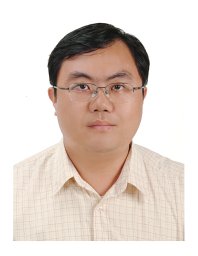 Chih-Peng Fan合作论文数Department of Electrical Engineering, National Chung Hsing University31
 Mustika Mentari合作论文数30
 Soe Thandar Aung合作论文数29
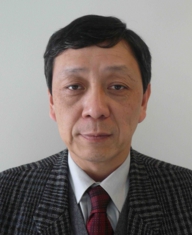 Teruo Higashino合作论文数Mobile Computing Laboratory, Graduate School of Information Science and Technology, Osaka University28
 Irin Tri Anggraini合作论文数23
 Komang Candra Brata合作论文数Comp Sci Fac, Brawijaya Univ23
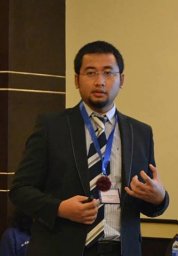 Sritrusta Sukaridhoto合作论文数23
 Khaing Hsu Wai合作论文数22Xiqin Lu合作论文数18Shigeto Tajima合作论文数18
 Yohanes Yohanie Fridelin Panduman合作论文数Grad Sch Nat Sci & Technol, Okayama Univ17
 Kwenga Ismael Munene合作论文数Graduate School of Natural Science and Technology, Okayama University16Yanqi Xiao合作论文数15Cheng-Liang Shih合作论文数14
 Nobuya Ishihara合作论文数Graduate School of Natural Science and Technology, Okayama University14
 Pradini Puspitaningayu合作论文数Dept Informat & Commun Syst, Okayama Univ14Kan Watanabe合作论文数13Wan-Chia Huang合作论文数11
 Evianita Dewi Fajrianti合作论文数Okayama University11Rahardhita Widyatra Sudibyo合作论文数Department of Electrical and Communication Engineering, Okayama University11
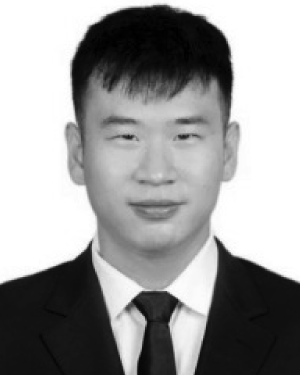 Yuanzhi Huo合作论文数10
 Kyaw Soe Lwin合作论文数West Yangon Technological University10
 Md. Selim Al Mamun合作论文数10Lynn Htet Aung合作论文数9Seishi Nishikawa合作论文数9
 Md. Mahbubur Rahman合作论文数U.S. Nat. Libr. of Med., Nat. Institutes of Health;c;U.S. Nat. Libr. of Med., Nat. Institutes of Health9Kiyoshi Ueda合作论文数9Huiyu Qi合作论文数8Shune Lae Aung合作论文数8
 Hendy Briantoro合作论文数Graduate School of Natural Science and Technology, Okayama University8Minoru Kuribayashi合作论文数8
 Manowarul Islam合作论文数8
 Sumon Debnath合作论文数8Shih-Wei Shen合作论文数7
 Andi Baso Kaswar合作论文数State University of Makassar7
 Putu Sugiartawan合作论文数Informatic Engineering, STMIK STIKOM Indonesia7
 Sujan Chandra Roy合作论文数Graduate School of Natural Science and Technology, Okayama University7
 Isao Echizen (越前功)合作论文数Information and Society Research Division, National Institute of Informatics;Department of Information and Communication Engineering, Graduate School of Information Science and Technology, The University of Tokyo;Graduate Institute for Advanced Studies, The Graduate University for Advanced Studies7Noriki Amano合作论文数7Yanhui Jing合作论文数6
 Ni Wayan Wardani合作论文数6
 Pramana Yoga Saputra合作论文数State Polytechnic of Malang6
 Prismahardi Aji Riyantoko合作论文数UPN Veteran Jawa Timur6Yukiko Matsushima合作论文数6Khin Thet Mon合作论文数5




