Cyanobacteria represent a group of diverse photoautotrophic microorganisms with enormous ecological significance and biotechnological applications including biomass production, poly(3-hydroxybutyrate) (PHB) accumulation, and wastewater phycoremediation. However, the nutrient regimes that maximize the biomass yield do not simultaneously enhance the PHB accumulation as the cellular growth and PHB synthesis are regulated by distinct physiological responses. In this study, we statistically optimized the biomass concentration of Limnospira fusiformis NRMCF6962 using Response Surface Methodology (RSM) with a Central Composite Design (CCD). Across the CCD matrix, the biomass concentration ranged from 0.34 to 0.94 g/L with the maximum experimentally observed value (0.94 g/L) recorded at 3.36 g/L sodium bicarbonate, 1.00 g/L sodium nitrate, 0.04 g/L magnesium sulphate heptahydrate, and 0.10 g/L dipotassium hydrogen phosphate. Of the cultures advancing from preliminary screening, the four selected for quantification exhibited PHB levels of 6.4–10.9% dry cell weight. Fourier transform infrared spectroscopy, x-ray diffraction, and thermal analyses of the purified polymer confirmed its consistent physicochemical features with known microbial PHB. During 16 days of cultivation in preliminary lab-scale analysis, phycoremediation of tannery effluent reduced total dissolved solids from 6500 to 5400 ppm, nitrate from 8.9 to 1.6 mg/L, and lead from 9.2 to 1.1 mg/L. These results emphasize the multifunctional potential of L. fusiformis for integrated biomass valorization, biopolymer production, and sustainable wastewater treatment.
Increasing pollution and global energy concerns, arising from the overreliance on fossil fuels, demand an urgent search for alternative energy sources. Microalgae and cyanobacteria hold multiple potential including high productivity of lipid and biomass, ability to use waste resources and eventually making them a sustainable source for biofuel production. It can generate a wide range of biofuels such as bioethanol, biobutanol, biohydrogen, and biodiesel. Recent advances in generation of biofuel from algae involves various indoor and outdoor cultivation strategies, genome engineering, metabolic regulation, omics-oriented tools and techniques. Besides, the role of Artificial Intelligence (AI) and Machine Learning (ML) in production of biofuel like assistance in bioreactor designing, strain selection, improvement and anticipation of lipid yield. Regardless of these outstanding innovations and technological developments, the persistence of certain bottlenecks including their scalability, environmental impacts and economic feasibility renders a barrier for its widespread acceptance and commercialization. Incorporation of interdisciplinary approaches such as multi-omics, synthetic biology, AI & ML can successfully allow them to overcome the challenges for sustainable biofuel production. Eventually, this review breaks down the unexplored capabilities of microalgae and cyanobacteria to contribute in the generation of sustainable energy and addressing the significant deficiencies in culture optimization and large-scale implementation.
Escalating global population leads to rising demand for food and food crops for human consumption necessitates alternative food source. This exacerbates the need of feed crops for the animals grown for meat, milk and eggs. Microalgae and cyanobacteria render a powerful solution to address these global food issues as they produce higher biomass per unit area in comparison with terrestrial crops. Algae represent a revolutionary bioresource for sustainable animal feed production, offering an exceptional nutritional profile rich in proteins, amino acids, fatty acids and other bioactive compounds. These constituents substantially enhance the overall health and development of the organisms fed with algal biomass as well as their product yield. Furthermore, in order to boost up the biomass productivity and other nutrients to improve the digestibility, advanced cultivation strategies and efficient extraction techniques can be incorporated to substitute the synthetic feed additives. Present review highlights the nutritional profile and its biological value of various microalgae and cyanobacteria. Their applicability as next generation feed ingredients, which can be alternative to the conventional feed for fish, poultry and animal feed in sustainable livestock and aquaculture farming.
Cyanobacteria are key components of freshwater ecosystems and serve as ecological indicators due to their sensitivity to environmental changes. Accurate taxonomic classification of cyanobacteria remains challenging because of high morphological variability and hidden genetic diversity. In this study, we aimed to resolve the taxonomy of 11 cyanobacterial strains isolated from temple ponds in South India using a polyphasic approach integrating molecular and structural analyses. We combined 16S rRNA gene sequencing, in-silico restriction digestion, and RNA secondary structure analysis to infer phylogenetic relationships and confirm species identities. Phylogenetic analysis, incorporating sequences of reference type strains from GenBank, delineated clades with close affinity to Chroococcus turgidus, C. minutus, and Synechococcus elongatus, showing moderate-to-high bootstrap support, despite the limited resolution of 540 bp 16S rRNA fragments. Structural and restriction-based profiling revealed strain-specific polymorphisms consistent with reference/type sequences, enhancing molecular discrimination. To our knowledge, this is the first molecular-level characterization of cyanobacteria from culturally significant temple pond ecosystems using a comprehensive polyphasic framework. These findings underscore the value of molecular tools for precise freshwater cyanobacterial taxonomy and their application in environmental monitoring and aquatic biodiversity assessment.
Background:Probiotic supplementation may influence mental health through the gut-brain axis, with potential effects on depression, anxiety, sleep, cognition, stress hormones, and gut microbial composition. This systematic review aimed to evaluate the effects of probiotics on psychological, physiological, and gut microbiome-related outcomes across diverse populations. Summary:A comprehensive search of PubMed, MEDLINE, PsycINFO, and ScienceDirect identified randomized controlled trials evaluating probiotic supplementation. Twenty RCTs were included, of which 15 were assessed as having a low risk of bias and five as having a high risk of bias. Commonly assessed outcomes included depression (n = 17), anxiety (n = 10), sleep quality (n = 9), stress (n = 6), cortisol (n = 7), cognitive function (n = 5), quality of life (n = 5), gut microbial composition (n = 11), and other neuroendocrine and inflammatory markers. Overall, probiotics were associated with improvements in depression, anxiety, sleep quality, mood, cognition, quality of life, and beneficial gut microbial populations, although findings for cortisol and stress-related outcomes were inconsistent. Key Message:Probiotic supplementation may provide beneficial effects on psychological well-being and gut microbial composition. However, heterogeneity among interventions, populations, outcome measures, and study quality warrants further well-designed RCTs.
Escalating depletion of the non-renewable resources and the crisis of global pollution creates a critical demand for advanced technologies and innovations in material sciences. In response, scientists are increasingly adopting the biological systems as inspiration for the development of sustainable and next generation materials. This review elucidates the concept of employing microalgae and cyanobacteria as living, photosynthetic substrates for the development of biomimetic systems and biomaterials. The organisms render a driving force for the engineered living materials emulating the natural biological mechanisms such as photosynthesis, carbon fixation, biomineralization, environmental sensing and resilience over hostile conditions. Besides, microalgae and cyanobacteria are crucial in the advancement of sustainable technology, reinforcing the generation of sustainable biomaterials for various applications including environmental biosensing, drug delivery systems and tissue oxygenation. Moreover, diverse biologically active frameworks, three-dimensional bioprinting, self-healing construction materials illustrates their potential of biomimicry versatility. Despite the barriers in the material stability and scalability persists, the integration of synthetic biology and artificial intelligence/machine learning provides adequate strategies to break through these constrains. By exploiting the intrinsic potential of these organisms, it is possible to replace the extractive material systems with the regenerative systems which ultimately accelerate the circular bioeconomy and redefine sustainability in biotechnology.
This study assesses the aptitude of heterocystous cyanobacterial strain Dolichospermum spiroides MBDU 903 in integrated wastewater treatment and biofuel production at a laboratory scale. The efficiency of the strain was assessed based on pigment accumulation, growth kinetics, nutrient remediation efficiency, and biodiesel fuel quality. The results demonstrated that the biomass productivity of D. spiroides MBDU 903 ranged from 69.27 to 167.08 mg L-1 day-1 across various nutrient regimes, achieving a maximum lipid content of 31% (w/w). Cultivation in municipal wastewater with BG11+ (50% v/v) yielded the highest pigment production biomass. The physicochemical properties of the derived biodiesel were estimated from gas chromatography-derived fatty acid methyl ester (FAME) profiles. Furthermore, the biorefinery potential was explored as a proof-of-concept by fermenting the post-transesterification residual biomass with Saccharomyces cerevisiae, yielding 14.5 mg/g of bioethanol from the pretreated residue. While a 10 L pilot-scale trial was conducted, significant productivity drops suggest that further optimization is required to bridge the gap between laboratory results and practical application. This study provides a baseline evaluation of the dual-fuel potential of a heterocystous cyanobacterium under wastewater-integrated conditions.
C-phycocyanin (C-PC) is a high-value blue phycobiliprotein extensively utilized as a natural colorant and multifunctional bioactive compound. This study employed a polyphasic framework to characterize eleven native cyanobacterial isolates (NTBN series) from temple ponds in Tamil Nadu, India, with the aim of quantifying extractable C-PC and correlating pigment yield with molecular traits of the C-PC β-subunit. All isolates were cultivated under identical, non-optimized conditions (BG-11 medium, 25 ± 2 °C, 16:8 h light: dark, 50 µmol photons m⁻² s⁻¹, 21 days, n = 3). Crude pigments were extracted and quantified spectrophotometrically, while cpcB sequences were subjected to homology modeling and physicochemical profiling (GRAVY, aliphatic index, instability index). Among the isolates, NTBN-07 and NTBN-15 exhibited the highest extractable C-PC content. Strains with lower GRAVY values (greater hydrophilicity) and moderate aliphatic indices consistently showed higher pigment productivity, as supported by multivariate analyses (heatmap and PCA). Homology models revealed conserved chromophore-binding residues with subtle tertiary conformational variations potentially influencing pigment stability and extractability. Although several native isolates yielded more C-PC than the laboratory reference Synechocystis sp. PCC 6803 under uniform, non-optimized conditions, their yields remained lower than those reported for optimized Arthrospira cultures. Study limitations include the use of crude extracts and reliance on in silico predictions pending protein-level validation. Overall, this work identifies temple-pond cyanobacteria as promising native bioresources for predictive strain selection, downstream process optimization, and sustainable pigment biotechnology. A polyphasic workflow illustrating the gene-to-function analysis of cyanobacteria isolated from temple ponds. The schematic integrates sampling, cpcB gene amplification, protein modeling, pigment yield analysis, and structure–function correlations to identify high-yielding strains such as Synechococcus elongatus. These strains are proposed as promising candidates for biotechnological applications, including natural pigment and antioxidant production.
Microalgal lipids are sustainable sources of biofuel production offering a cost-effective and eco-friendly alternative to fossil fuels. This study explores the use of ionic liquids (ILs) as a non-toxic replacement for conventional solvents in lipid extraction. Lipid extraction was optimized by varying the algae:IL ratio, with hexane used as the extraction solvent. Phytochemical analysis confirmed the presence of sterols, and high-performance thin-layer chromatography (HPTLC) identified sitosterol as a possible component. The optimal IL concentration (1:2), yielded 44.6 mg.g−1 of lipids, corresponding to an extraction efficiency of 4.46
Escalating detrimental effects of plastic pollution poses an urgent need to discover alternative solutions with bioplastic production is being a critical area of focus. Biopolymers derived from natural sources offers numerous intriguing properties including exceptional biodegradability, renewability and biocompatibility. These advantages make them progressively appealing substitutes for synthetic polymers. First generation of biopolymers derived from agricultural crops, faced limitations including the competition with food production, requirement of arable land, freshwater and nutrients. Although agricultural wastes render solution, its limited availability persists a challenge for large-scale production. Consequently, microalgae and cyanobacteria have drawn substantial attention as excellent sustainable feedstocks for biopolymer production, yielding extracted biopolymers such as Polyhydroxyalkanoates (PHAs) and Exopolysaccharides (EPS). These organisms offer several promising attributes including reduced water and energy consumption and no competition with food security. Even though extracted algal biopolymers confront certain performance challenges when applied in various sectors, their blending with other polymers either as purified polymers or as whole biomass incorporated into polymer matrices, successfully overcomes many of these barriers. To address the above knowledge gap, this review delivers comprehensive insight on the types of algal derived biopolymers (both extracted and biomass-based), their blends and compatibility with other polymers, and applications in food and biomedical industries.
 Dhanasekaran Dharumadurai合作论文数School of Life Sciences, Bharathidasan University78
 Panneerselvam Annamalai合作论文数Department of Botany;Sri Pushpam College;Department of Botany, Sri Pushpam College51
 Davoodbasha MubarakAli合作论文数School of Life Sciences, Bharathidasan University49
 Naiyf Sultan Alharbi合作论文数College of Science, King Saud University23
 Sulaiman Ali Alharbi合作论文数19
 Gangatharan Muralitharan合作论文数Department of Microbiology, Bharathidasan University18
 Lewis Oscar Felix Raj Lucas合作论文数17
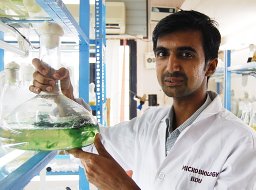 Baldev E合作论文数Department of Microbiology, Bharathidasan University17
 Arivalagan Pugazhendhi合作论文数Tecnológico De Monterrey;Maejo University;Asia University16
 Parveez Ahamed Abdul Azees合作论文数Dept Comprehens Dent, Univ Texas Hlth Sci Ctr San Antonio14
 Chinnasamy Muthukumar合作论文数Department of Microbiology;Facility for Marine Cyanobacteria, National;Bharathidasan University;Department of Microbiology, Bharathidasan University13
 Reehana Nazar合作论文数PG & Res Dept Microbiol, Jamal Mohamed Coll Autonomous12Fayaazuddin Thajuddin合作论文数11
 Narayanasamy Marappa合作论文数School of Life Sciences, Bharathidasan University11
 Ramasamy Vijayakumar合作论文数Department of Microbiology, Bharathidasan University Constituent College10A. Nagasathya合作论文数10D. Mubarak Ali合作论文数9
 Ramasamy Thangaraj合作论文数9
 Mohamed Yousuff Mohamed Imran合作论文数Queensland University of Technology (QUT)9Kim Jung-Wan合作论文数9
 Rout Jayashree合作论文数9Pandiaraj D合作论文数9Ilavarasi Asokaraja合作论文数9Chari Nithya合作论文数Department of Biotechnology, Alagappa University9R. Shyam Kumar合作论文数8
 Dharitri Borah合作论文数8
 Praveen Kumar Ramasamy合作论文数Biomass and Waste Energy Laboratory, Korea Institute of Energy Research (KIER),8
 Arunachalam Chinnathambi合作论文数Dept Bot & Microbiol, King Saud Univ8
 G. Subramanian合作论文数Department of Microbiology, Bharathidasan University8Chithirai Arutselvan合作论文数7R. Thenmozhi合作论文数7
 Subhasish Saha合作论文数The Novo Nordisk Foundation Center for Biosustainability, Technical University of Denmark (DTU),7
 Sangyul Lee合作论文数7M. Gunasekaran合作论文数6
 Ganesan Narchonai合作论文数Infect Dis Div, Brown Univ6
 Suresh Mickymaray合作论文数College of Science, Majmaah University6Kumar Muthukannan Satheesh合作论文数6Rasheed M U合作论文数6
 Jayakumar Velusamy合作论文数Crop Protection Division, Sugarcane Breeding Institute6Megha Pundir合作论文数5
 Suresh Arumugam合作论文数Sathyabama Univ.;c5
 Saravanan Chandraleka合作论文数Department of Chemistry, A.V.V.M. Sri Pushpam College, (Autonomous),5
 Sanjib K Patra Patra合作论文数Department of Chemistry, Indian Institute of Technology5Dharumaduari Dhanasekaran合作论文数5
 M A Akbarsha合作论文数School of Life Sciences, Bharathidasan University5
 Natarajan Amaresan合作论文数Department of Microbiology, Bharathidasan University5
 Anju Majeed合作论文数4
 anandan ranjani合作论文数School of Life Sciences, Bharathidasan University4
 Sathya Raghunathan合作论文数School of Life Sciences, B.S. Abdur Rahman Crescent Institute of Science and Technology4




