We have investigated the nature and bond dissociation energies (BDEs) of the aromatic C-H bonds in fluorinated benzenes C6R5H (each R can be H or F) using quantitative Kohn-Sham molecular orbital theory and a matching energy decomposition analysis (EDA). The C-H bond becomes stronger as the number of fluorine atoms in the benzene ring increases. This increase in the calculated BDE is additive and most pronounced for ortho-substituted C-H bonds. Our analyses of the C-H bond between and H˙ reveal that a fluorine inductive effect is responsible for this. Fluorine polarizes the closed-shell molecular orbitals of away from the carbon radical center and in this way reduces Pauli repulsion between [C˙] and the H˙ radical, leading to a stronger C-H bond. The ortho effect can be accurately modelled by a combination of Pauli repulsion (main contribution) and orbital interactions. We extend our analysis to other substituents, including ones with the opposite effect on C-H bond strength.
A metal-mediated migration of pnictogen atoms Pn (Pn = P, As) to form phosphaazaallene and arsaazaallene complexes Cp*(CO)(IPr)Ru–Pn=C=N–Xyl results from clean reactions of the ruthenium carbene complex Cp*(XylNC)(IPr)RuCl ( 1 , XylNC...
This review describes the thermodynamics of C-H bond activation in various hydrocarbons, especially (poly)fluorinated benzenes, by transition metal complexes, through experiments and computational studies, with a focus on the latter. Experimental metal-carbon bond dissociation enthalpies (BDEs), determined relative to an internal reference, were used to establish the relationship between H-C and M-C BDEs. In parallel, bond dissociation enthalpies or energies were computed with DFT methods. For a given metal complex and a set of sufficiently similar organic substrates a linear correlation with a characteristic slope R M-C/H-C was obtained. Both experimental and computational studies indicate that the slope is always greater than 1 and quantitatively agree on its value when comparison could be made, suggesting a systematic thermodynamic preference for cleaving stronger hydrogen-carbon bonds. The R M-C/H-C value is particularly high for (poly)fluorobenzenes, with the greatest increase in M-C BDE occurring when fluorine atoms are ortho to the M-C bond, as found by experiments. The polarity
The rational optimization of the Grignard reaction remains a considerable challenge for synthetic chemists. When assessing nucleophilic additions to unsaturated organic molecules, it has been shown that improved performance can be achieved using deep eutectic solvents (DESs). In this case, a solution of the Grignard in THF is added to the DES containing the substrate under vigorous stirring. In this study, we determine the underlying causes for this beneficial effect by combining ab initio molecular dynamics, QM/MM simulations, and enhanced sampling, using i -PrMgCl and acetophenone as reagents, THF as the organic solvent, and a 1:2 solution of choline chloride:glycerol as the DES. Our results show an increased preference for the Grignard reaction over the formation of by-products originating from a β-H transfer from the isopropyl group with the DES/THF media. This enhanced selectivity stems from the formation of chlorinated dimagnesium entities at the DES interface. While the reaction of a neutral Grignard in bulk THF kinetically favours the β-H transfer, the chlorine enrichment originating from the DES is shown to make the two reactions kinetically more equivalent, and to drastically favor the thermodynamic preference for the Grignard product, a result of increased intramolecular stabilizing interactions. This result is in line with experimental evidence of increased selectivity in the presence of various halide salts. This mechanistic interpretation paves the way for the rational improvement of Grignard reagents, allowing an even broader application of these compounds in these non-conventional solvents.
The Schlenk equilibrium is an essential characteristic of the Grignard reagents. However, its quantitative aspects remain poorly understood. In this work, we perform molecular dynamics simulations to characterise how the Schlenk reaction is affected by varying the alkyl R groups (Me, Et, i-Pr, t-Bu). For each R group, the reactivity profiles were obtained through enhanced sampling on fully solvated dinuclear species, leveraging a newly developed machine learning potential trained on ab initio data. While the topologies of the Helmholtz energy maps are qualitatively similar, the energy ranges vary significantly with the R groups. Bulkier R groups disfavour higher solvation of the magnesium centre, with direct implications for the activation and mechanism of the Schlenk exchange. With respect to dichloro-bridged species, the concentrations of monochloro-bridged and separated species increase with the size of R and the degree of solvation. The energy barrier for ligand exchange increases with the size of R, and it is particularly noticeable for R = t-Bu, in agreement with experimental data. As excess solvation of one of the magnesium centres is associated with the most important reaction pathways, it can be deduced that early formation of monochloro-bridged species favours the Cl/R exchange, especially for large R groups. The formation of these species is favoured by higher Mg solvation for small R groups, and by the steric volume of R itself for large R, pointing at a constructive effect of the solvent and R promoting Cl/R exchange. Our study shows that a full characterisation of the speciation of Grignard reagents in solution is possible at reasonable computational costs with machine-learning potentials.
This perspective begins with the discovery of the Grignard reaction by a graduate student in the last years of the 19th century, followed by describing why it has remained largely unexplained for more than a century. From the summary of what has been achieved, focusing on the computational aspects, it is now clear that further studies of the chemistry of any chemical species that is highly sensitive to solvents, such as Group I and II elements, require a holistic approach that includes the solute and the solvent together. Ab initio molecular dynamics, which meets these requirements, has produced some results but has hit hard limits due to its relatively high computational costs. In these days, it is becoming clear that data-driven methods, including machine learning potentials and simulations driven by quantitative on-the-fly calculation of relevant observables, have the potential to better and more completely explore the very large chemical space associated with the presence of a large number of species in solution. These methodologies have the chance to give the keys to enter the challenging and still poorly explored world of chemical species whose behaviour and reactivity are strongly influenced by the solvent and the experimental conditions.
Due to their high reactivity, organolithium and organomagnesium addition to ketones is usually performed under inert atmosphere at low temperature. Recent work has shown that, by dissolving the substrate in deep eutectic solvents (DES), these processes can be carried out on the benchtop, in air at room temperature. Surprisingly, the organometallic reagent, added to the DES from an organic solution, works in these conditions and gives better yields than in the standard setup. Here, we investigated acetophenone in a (1:2) choline chloride:glycerol (ChCl:Gly) DES solution by experimental liquid diffraction, neutron reflectometry, NMR, interfacial tension measurements, and by computational modelling. Our data show that this DES is a poor solvent for the ketone and promotes its accumulation at the surface of the liquid or its escape into the organic solvent. Molecular dynamics simulations of Grignard reagent i-PrMgCl in the (ChCl:Gly)/tetrahydrofuran biphasic system indicate also preference for its localisation at the interface. These results pinpoint why this combination of solvents promote the reaction, require stirring, and accounts for the lack of rapid decomposition of the organometallic reagents.
Organolithium and organomagnesium addition reactions to ketones are important and versatile processes used in synthetic organic chemistry. However, due to the high reactivity of these species, the reactions are usually done under an inert atmosphere at low temperature. Recent work has demonstrated the possibility to carry out these procedures safely on the benchtop, in air at room temperature using deep eutectic solvents (DES) to dissolve the organic substrate. Surprisingly the organometallic reagent, added in an organic solution, is compatible with these unconventional conditions, and instead of undergoing fast decomposition by the DES, better yields and selectivities are observed than when working under standard conditions. Earlier it was posited that the choline chloride component of the DES might chemically activate the ketone substrate making it more amenable to reaction. Here we probe this hypothesis with experiments; liquid diffraction, neutron reflectometry, NMR and interfacial tension measurements for acetophenone in DES and with all-atom molecular dynamics simulations. We show instead that the role of the choline chloride is to reduce the solubility of the ketone, forcing it to accumulate at the air-solvent (or organic solvent/DES) interface. Molecular dynamics simulations for isopropyl magnesium chloride in the same DES/tetrahydrofuran bi-phase system also indicate a preference to localize at the interface. These results suggest that surface accumulation promotes the addition reaction and account for these remarkable experimental conditions. Accumulation of the organic non-protic substrate at the interface could also protect the organometallic species from rapid decomposition by the protons of the DES.
The preferred structures of lithium halides (LiX, with X = Cl, Br, I) in organic solvents have been the subject of a wide scientific debate, and a large variety of forms has been isolated and characterized by X-ray diffraction. The identified molecular scaffolds for LiX are diverse, often built on (LiX) n rings with a prevalence of rhomboidal arrangements and an appropriate number of solvent or Lewis base molecules coordinating the lithium ions. Much less is known about the structures of LiX in solution, limiting the understanding of the synergistic role of LiX in reactions with various organometallic complexes, as prominently represented by the turbo Grignard reaction. Here, we trained a machine learning potential on ab initio data to explore the complex conformational landscape for systems comprising four LiX moieties in tetrahydrofuran (THF). For all the considered halogens a large number of scaffolds were found at thermally accessible free energy values, indicating that LiX in solution are a diverse ensemble constituted of (LiX) n moieties of various sizes, completed by the appropriate number of coordinating THF. LiCl shows a preference for compact, pseudo-cubane Li4Cl4(THF)4 structures, coexisting with open rings. At concentrations close to the solubility limit, LiCl forms hexagonal structures, in analogy with literature observations on pre-nucleating NaCl. LiBr tends to favour less compact, more solvated aggregates. LiI significantly differs from the two other cases, producing highly solvated, monomeric, dimeric, or linear structures. This study provides a comprehensive view of LiX in organic solvent, revealing dynamical polymorphism that is not easily observable experimentally.
Nucleophilic addition to carbonyl groups is one of the most important reactions in organic synthesis. In the case of a prochiral carbonyl group, the preference for the addition of a nucleophile to one face of the pi system leads to unequal amounts of the two possible diastereoisomers. The mechanism of this reaction for various nucleophiles (especially the early main group hydride and the Grignard reagents) and the various noncyclic and cyclic aldehydes or ketones has fascinated computational chemists for nearly 40 years. This article describes the research that has been done on this topic, the incentive for the present author being that she started her research with this topic and is returning to it in recent years.
The first page of this article is displayed as the abstract.
Paul R. Raithby opened discussion of the paper by Maria Diaz Lopez: In the pair distribution function (PDF) analysis of intermolecular hydrogen bonds, what error bars would normally be acceptable for a good quality analysis? Maria Diaz Lopez answered: In the paper the uncertainties in the atomic positions were ca
The halogen bond (XB) is a highly directional class of noncovalent interactions widely explored by experimental and computational studies. However, the NMR signature of the XB has attracted limited attention. The prediction and analysis of the solid-state NMR (SSNMR) chemical shift tensor provide useful strategies to better understand XB interactions. In this work, we employ a computational protocol for modeling and analyzing the 19F SSNMR chemical shifts previously measured in a family of square-planar trans NiII-L2-iodoaryl-fluoride (L = PEt3) complexes capable of forming self-complementary networks held by a NiF···I(C) halogen bond [Thangavadivale, V.; Chem. Sci. 2018, 9, 3767-3781]. To understand how the 19F NMR resonances of the nickel-bonded fluoride are affected by the XB, we investigate the origin of the shielding in trans-[NiF(2,3,5,6-C6F4I)(PEt3)2], trans-[NiF(2,3,4,5-C6F4I)(PEt3)2], and trans-[NiF(C6F5)(PEt3)2] in the solid state, where a XB is present in the two former systems but not in the last. We perform the 19F NMR chemical shift calculations both in periodic and molecular models. The results show that the crystal packing has little influence on the NMR signatures of the XB, and the NMR can be modeled successfully with a pair of molecules interacting via the XB. Thus, the observed difference in chemical shift between solid-state and solution NMR can be essentially attributed to the XB interaction. The very high shielding of the fluoride and its driving contributor, the most shielded component of the chemical shift tensor, are well reproduced at the 2c-ZORA level. Analysis of the factors controlling the shielding shows how the highest occupied Ni/F orbitals shield the fluoride in the directions perpendicular to the Ni-F bond and specifically perpendicular to the coordination plane. This shielding arises from the magnetic coupling of the Ni(3d)/F(2p lone pair) orbitals with the vacant σNi-F* orbital, thereby rationalizing the very highly upfield (shielded) resonance of the component (δ33) along this direction. We show that these features are characteristic of square-planar nickel-fluoride complexes. The deshielding of the fluoride in the halogen-bonded systems is attributed to an increase in the energy gap between the occupied and vacant orbitals that are mostly responsible for the paramagnetic terms, notably along the most shielded direction.
Ab initio molecular dynamics simulations are used to explore tetrahydrofuran (THF) solutions containing pure LiCl, and LiCl with CH3MgCl, as model constituents of the turbo Grignard reagent. LiCl aggregates as Li4Cl4, which preferentially assumes compact cubane-like conformations. In particular, an open-edge pseudo tetrahedral frame is promoted by solvent-assisted Li-Cl bond cleavage. Among the Grignard species involved in the Schlenk equilibrium, LiCl prefers coordinating MgCl2 through m-Cl bridges. Using a 1:1 Li:Mg ratio, the plastic tetranuclear LiCl cluster decomposes to a highly solvated mixed LiCl·MgCl2 aggregate with prevalent Li-(m2-Cl)2-Mg rings and linear LiCl entities. The MgCl2-assisted disaggregation of Li4Cl4 occurs through transient structures analogous to those detected for pure LiCl in THF, also corresponding to moieties observed in the solid state. This study identifies a synergistic role of LiCl for the determination of the compounds present in turbo Grignard solutions, in a scenario where LiCl shifts the Schlenk equilibrium promoting a higher concentration of dialkylmagnesium, meanwhile decomposing into smaller, more soluble, mixed Li:Mg:Cl clusters.
This rosarium article relates the adventure started 50 years ago of a computational chemist who was interested in molecules; what are they, what are their shape and how do they react. The story describes results, still valid today, obtained with highly simplified models of chemical reality and elementary computational methods and the gain resulting from the use of better models and more elaborate computational methods. It was necessary to select examples. In this presentation, focus is on hydride and dihydrogen complexes as well as on nucleophiles. Nucleophiles were considered as free hydrides in gas phase at the start of the rosarium while the Grignard reaction is treated with ab initio molecular mechanisms at the end of it.
A good meal cannot be defined in an absolute manner since it depends strongly on where and how it is eaten and how many people participate. A picnic shared by hikers after a challenging climbing is very different from a birthday party among a family or a banquet for a large convention. All of them can be memorable and also good. The same perspective applies to computational studies. Required level of calculations for spectroscopic properties of small molecular systems and properties of medium or large organic or organometallic, polymetallic systems are different. To well-specified chemical questions and chemical systems, efficient computational strategies can be established. In this chapter, the focus is on the energy profile representation of stoichiometric or catalytic reactions assisted by organometallic molecular entities. The multiple factors that can influence the quality of the calculations of the Gibbs energy profile and thus the mechanistic interpretation of reactions with molecular organometallic complexes are presented and illustrated by examples issued from mostly personal studies. The usual suspects to be discussed are known: representation of molecular models of increasing size, conformational and chemical complexity, methods and levels of calculations, successes and limitations of the density functional methods, thermodynamics corrections, spectator or actor role of the solvent, and static vs dynamics approaches. These well-identified points of concern are illustrated by presentation of computational studies of chemical reactions which are in direct connection with experimental data. Even if problems persist, this chapter aims at illustrating that one can reach a representation of the chemical reality that can be useful to address questions of present chemical interest. Computational chemistry is already well armed to bring meaningful energy information to numerous well-defined questions.
More than 100 years since its discovery, the mechanism of the Grignard reaction remains unresolved. Ambiguities arise from the concomitant presence of multiple organomagnesium species and the competing mechanisms involving either nucleophilic addition or the formation of radical intermediates. To shed light on this topic, quantum-chemical calculations and ab initio molecular dynamics simulations are used to study the reaction of CH3MgCl in tetrahydrofuran with acetaldehyde and fluorenone as prototypical reagents. All organomagnesium species coexisting in solution due to the Schlenk equilibrium are found to be competent reagents for the nucleophilic pathway. The range of activation energies displayed by all of these compounds is relatively small. The most reactive species are a dinuclear Mg complex in which the substrate and the nucleophile initially bind to different Mg centers and the mononuclear dimethyl magnesium. The radical reaction, which requires the homolytic cleavage of the Mg-CH3 bond, cannot occur unless a substrate with a low-lying π*(CO) orbital coordinates the Mg center. This rationalizes why a radical mechanism is detected only in the presence of substrates with a low reduction potential. This feature, in turn, does not necessarily favor the nucleophilic addition, as shown for the reaction with fluorenone. The solvent needs to be considered as a reactant for both the nucleophilic and the radical reactions, and its dynamics is essential for representing the energy profile. The similar reactivity of several species in fast equilibrium implies that the reaction does not occur via a single process but by an ensemble of parallel reactions.
 Kenneth Caulton合作论文数Department of Chemistry, The College of Arts & Sciences, Indiana University Bloomington65
 Eric Clot合作论文数Institut Charles Gerhardt Montpellier, Universite de Montpellier58
 Robert Crabtree合作论文数Department of Chemistry, Yale University43
 Marie-Eve L. Perrin合作论文数26
 Christophe Raynaud合作论文数Université Montpellier 2 Institut Charles Gerhardt26
 Laurent Maron合作论文数25
 John C. Huffman合作论文数Department of Chemistry, The College of Arts & Sciences, Indiana University Bloomington;Molecular Structure Center, Indiana University Bloomington25
 David Balcells合作论文数CTCC, Univ Oslo24
 Feliu Maseras合作论文数Institut Català d'Investigació Química22
 Robin Perutz合作论文数Department of Chemistry, University of York22
 Christophe Copéret合作论文数Lab. für Anorganische Chemie, Department of Chemistry and Applied Biosciences, ETH Zürich22
 Hélène Gérard合作论文数Laboratoire de Chimie Théorique (UMR-CNRS 7616), Université Pierre et Marie Curie21We Streib合作论文数19L Maron合作论文数18
 Stuart Alan Macgregor合作论文数Institute of Chemical Sciences, School of Engineering & Physical Sciences, Heriot-Watt University14
 Xavier Solans Monfort合作论文数Departament de Quimica, Facultat de Ciencies, Universitat Autonoma de Barcelona14
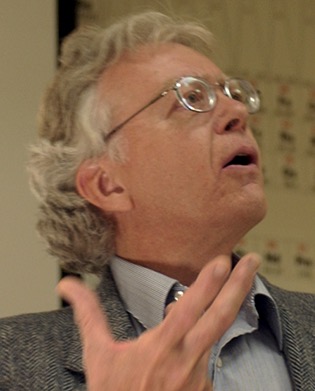 Richard (Dick) A. Andersen合作论文数Department of Chemistry, College of Chemistry, University of California, Berkeley14
 Canadell Casanova Enric合作论文数Department of Materials Simulation and Theory, Institut De Ciència De Materials De Barcelona14
 Ainara Nova合作论文数Dept Chem, Univ Oslo13Jn Coalter合作论文数12
 T. Don Tilley合作论文数College of Chemistry, University of California, Berkeley;Chemical Sciences Division, Lawrence Berkeley National Laboratory12
 Dejian Huang (黄德建)合作论文数Department of Food Science and Technology, Faculty of Science, National University of Singapore11
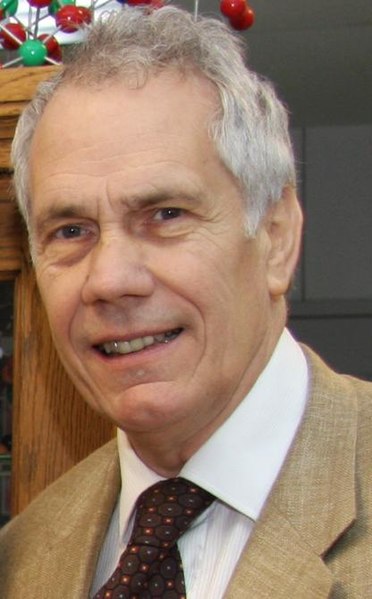 Malcolm H. Chisholm合作论文数Ohio State University11Evan L. Werkema合作论文数11
 Montserrat Olivan合作论文数10
 Michele Cascella合作论文数Dept Chem, Univ Oslo10
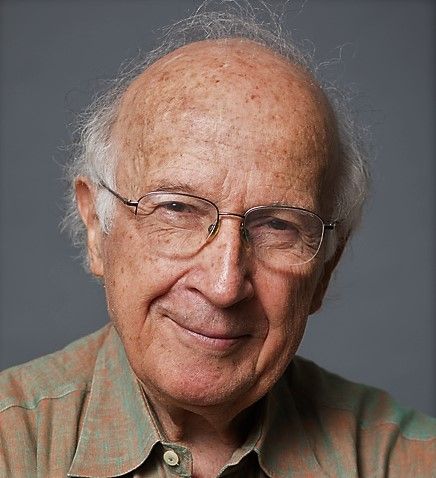 Roald Hoffmann合作论文数Department of Chemistry & Chemical Biology, The College of Arts & Sciences, Cornell University9G Sini合作论文数8J.-M. Lefour合作论文数8
 Francois Volatron合作论文数8
 R.A. Andersen合作论文数Division of Biology, California Institute of Technology, Pasadena, CA 91125, USA8Nguyen Trong Anh合作论文数8Christopher P Gordon合作论文数7Nt Anh合作论文数7
 Jean Marie Basset合作论文数Physical Science and Engineering Division, King Abdullah University of Science and Technology;Catalysis Center, King Abdullah University of Science and Technology7Michael P. Sigalas合作论文数Department of Chemistry, Aristotle University of Thessaloniki7Nathan D. Schley合作论文数Dept Chem, Vanderbilt Univ7
 Roger L. Kuhlman合作论文数The Dow Chemical Company7Sa Jackson合作论文数6Masamichi Ogasawara合作论文数Department of Regional Studies, University of Tokushima6Taoufik Mostafa合作论文数6Kirsten Folting合作论文数6Julie Guihaumé合作论文数6Sarah Jackson合作论文数6Noémi Barros合作论文数6
 Eduardo Víctor Peris Fajarnés合作论文数Department Química Inorgànica I Orgànica, Universitat Jaume I/Institute of Advanced Materials, Universitat Jaume I6Gj Spivak合作论文数5Wenbin Yao合作论文数5Tf Koetzle合作论文数5




