We present an approach to represent composite values (lists and maps, in particular) as literals in RDF data, and to extend SPARQL with features related to such literals. These extensions include an aggregation function to produce these composite values, functions to operate on these composite values in expressions, and a new operator to unfold such composite values into their individual components. As resources related to the approach, we provide two complete open source implementations, a formal specification, and a comprehensive test suite.
chapter Share on The Semantic Web: A New Form of Web Content that is Meaningful to Computers will Unleash a Revolution of New Possibilities Authors: Tim Berners-Lee Search about this author , James Hendler Search about this author , Ora Lassila Search about this author Authors Info & Claims Linking the World’s Information: Essays on Tim Berners-Lee’s Invention of the World Wide WebSeptember 2023Pages 91–103https://doi.org/10.1145/3591366.3591376Published:05 September 2023Publication History 0citation0DownloadsMetricsTotal Citations0Total Downloads0Last 12 Months0Last 6 weeks0 Get Citation AlertsNew Citation Alert added!This alert has been successfully added and will be sent to:You will be notified whenever a record that you have chosen has been cited.To manage your alert preferences, click on the button below.Manage my AlertsNew Citation Alert!Please log in to your account Save to BinderSave to BinderCreate a New BinderNameCancelCreateExport CitationPublisher SiteGet Access
Amazon Neptune is a graph database service that supports two graph models: W3C’s Resource Description Framework (RDF) and Labeled Property Graphs (LPG). Customers choose one or the other model. This choice determines which data modeling features can be used and – perhaps more importantly – which query languages are available. The choice between the two technology stacks is difficult and time consuming. It requires consideration of data modeling aspects, query language features, their adequacy for current and future use cases, as well as developer knowledge. Even in cases where customers evaluate the pros and cons and make a conscious choice that fits their use case, over time we often see requirements from new use cases emerge that could be addressed more easily with a different data model or query language. It is therefore highly desirable that the choice of the query language can be made without consideration of what graph model is chosen and can be easily revised or complemented at a later point. To this end, we advocate and explore the idea of OneGraph (“1G” for short), a single, unified graph data model that embraces both RDF and LPGs. The goal of 1G is to achieve interoperability at both data level, by supporting the co-existence of RDF and LPG in the same database, as well as query level, by enabling queries and updates over the unified data model with a query language of choice. In this paper, we sketch our vision and investigate technical challenges towards a unification of the two graph data models.
In this short position paper, we argue that there is a need for a unifying data model that can support popular graph formats such as RDF, RDF* and property graphs, while at the same time being powerful enough to naturally store information from complex knowledge graphs, such as Wikidata, without the need for a complex reification scheme. Our proposal, called the multilayer graph model, presents a simple and flexible data model for graphs that can naturally support all of the above, and more. We also observe that the idea of multilayer graphs has appeared in existing graph systems from different vendors and research groups, illustrating its versatility.
In this short position paper, we argue that there is a need for a unifying data model that can support popular graph formats such as RDF, RDF * and property graphs, while at the same time being powerful enough to naturally store information from complex knowledge graphs, such as Wikidata, without the need for a complex reification scheme. Our proposal, called the multilayer graph model , presents a simple and flexible data model for graphs that can naturally support all of the above, and more. We also observe that the idea of multilayer graphs has appeared in existing graph systems from different vendors and research groups, illustrating its versatility.
In software engineering, a design pattern is a general repeatable solution within a given context. A design pattern describes a template on how to solve a problem that can be reused in various situations. Design patterns are best practices to help solve common problems and speed up development processes.
Amazon Neptune is a graph database service that supports two graph (meta)models: W3C's Resource Description Framework (RDF) and Labeled Property Graphs (LPG). Customers opt in for one or the other model, and this choice determines which data modeling features can be used, and - perhaps more importantly - which query languages are available to query and manipulate the graph. The choice between the two technology stacks is difficult and requires consideration of data modeling aspects, query language features, their adequacy for current and future use cases, as well as many other factors (including developer preferences). Sometimes we see customers make the wrong choice with no easy way to reverse it later. It is therefore highly desirable that the choice of the query language can be made without consideration of what graph model is chosen, and can be easily revised or complemented at a later point. In this paper, we advocate and explore the idea of a single, unified graph data model that embraces both RDF and LPGs, and naturally supports different graph query languages on top. We investigate obstacles towards unifying the two graph data models, and propose an initial unifying model, dubbed"one graph"("1G"for short), as the basis for moving forward.
This book is a guide to designing and building knowledge graphs from enterprise relational databases in practice. It presents a principled framework centered on mapping patterns to connect relational databases with knowledge graphs, the roles within an organization responsible for the knowledge graph, and the process that combines data and people. The content of this book is applicable to knowledge graphs being built either with property graph or RDF graph technologies.
This paper presents some preliminary results and ideas from a research project dealing with the implementation of distributed problem-solving systems. The paper discusses the possibility of implementing these systems using a distributed object system. The basic approach is to use the object-oriented paradigm to hide the physical environment: the universe of objects is distributed across the network of machines involved in the problem-solving process, allowing different problem solvers to access the same underlying knowledge about the problem without actually having to know about the distribution itself. The problem-solving agents, however, may still communicate with each other by sending explicit messages, acknowledging the distributed nature of the environment if necessary. The software tools created and used in the research are presented: they are BEEF, a compact and powerful frame system, and BONE, its extension which allows frame-to-frame communication between frames in separate physical machines. The implementations of these systems are described.
Next generation distributed systems should be seamlessly spanned around heterogeneous concepts of the information providers, devices manufacturers and the cloud infrastructures. The enabling components such as Data, Computation, Scalable performance and Privacy aspects should be elaborated and leveraged in order to provide a foundation of such systems.
 Ian Oliver合作论文数Nokia Bell Labs;NSW Dept Planning and Environment11
 Mark H. Burstein合作论文数SIFT, Inc.8
 Stephen F. Smith合作论文数Intelligent Coordination and Logistics Laboratory, Carnegie Mellon University;The Robotics Institute, Carnegie Mellon University8
 Sergey Boldyrev合作论文数Nokia Research7Sheila A. McIlraith合作论文数6
 James A. Hendler合作论文数Department of Computer Science, Rensselaer Polytechnic Institute6
 Deepali Khushraj合作论文数Nokia Research Center6mika juhani mannermaa合作论文数5
 Tim Berners-Lee合作论文数World Wide Web;Department of Computer Science, University of Oxford;Laboratory for Computer Science and Artificial Intelligence, Department of Electrical Engineering and Computer Science, School of Engineering, Massachusetts Institute of Technology;Open Data Institute;Inrupt.com5
 Massimo Paolucci合作论文数Viering Jentschura Partners5
 Katia Sycara合作论文数Advanced Agent-Robotics Technology Lab, Robotics Institute, School of Computer Science, Carnegie Mellon University;Center for Advanced Learning and Discovery, Carnegie Mellon University;Human-Computer Interaction Institute, Carnegie Mellon University5Rebecca Montanari合作论文数Computer Engineering at DEIS (Dipartimento di Elettronica Informatica e Sistemistica);the University of Bologna5Alessandra Toninelli合作论文数University of Bologna5
 Srini Narayanan合作论文数Google DeepMind4
 Anupriya Ankolekar合作论文数Human-Computer Interaction Institute at Carnegie Mellon University.4
 Juan Sequeda合作论文数Data.World4D. Khushraj合作论文数4J. R. Hobbs合作论文数3Bryan B. Thompson合作论文数3
 Jukka Riekki合作论文数University of Oulu3
 David C. Martin合作论文数Department of Materials Science and Engineering, College of Engineering, University of Delaware;Department of Biomedical Engineering, College of Engineering, University of Delaware3Mikko Perttunen合作论文数University of Oulu3
 Seppo Törmä合作论文数Helsinki University of Technology3D. Mcdermott合作论文数3
 Terry R. Payne合作论文数Department of Computer Science, University of Liverpool3Carlos Rojas合作论文数2M. Syrjänen合作论文数2Ronak Sharda合作论文数2Brad Bebee合作论文数2Ralph R. Swick合作论文数2D Trossen合作论文数2
 Aidan Hogan合作论文数Department of Computer Science, University de Chile;Millennium Institute for Foundational Research on Data2
 Olaf Hartig合作论文数Division for Database and Information Techniques, Department of Computer and Information Science, Linköping University2
 Daniel Schwabe合作论文数PUC Rio2
 Pedro Szekely合作论文数Amazon2
 Max Van Kleek合作论文数Department of Computer Science, University of Oxford;Oxford Martin School, University of Oxford;Kellogg College, University of Oxford2
 Lalana Kagal合作论文数Computer Science & Artificial Intelligence Laboratory, Schwarzman College of Computing, Massachusetts Institute of Technology2
 Michael A Schmidt合作论文数Sophos GmbH2Marcel Becker合作论文数2
 Khandelwal Ankesh合作论文数Rensselaer Polytechnic Institute2Tuuli Lehtisalo合作论文数2
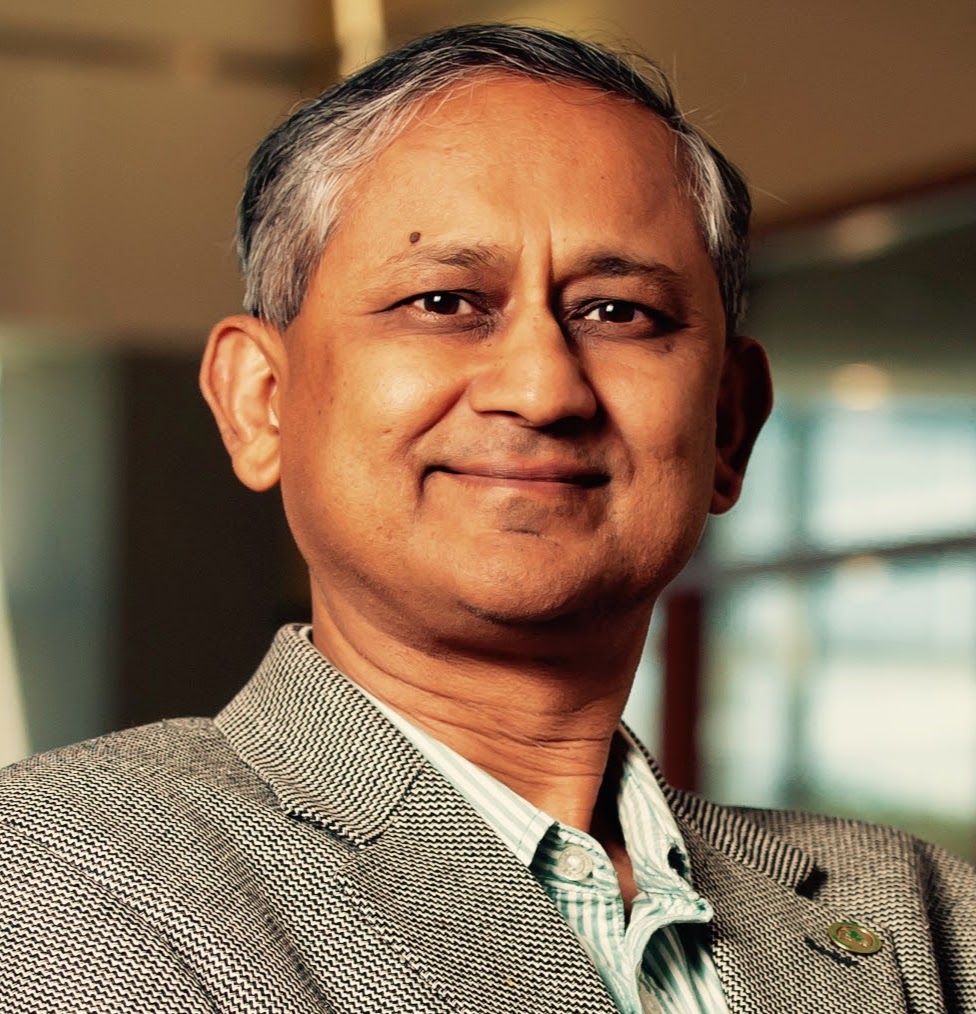 Amit Sheth合作论文数Department of Computer Science and Engineering, Molinaroli College of Engineering and Computing, University of South Carolina2
 Renzo Angles合作论文数Dept . of Computer Science|Universidad de Chile2Dana Pavel合作论文数2J. Honkola合作论文数2Marja Kalaja合作论文数2
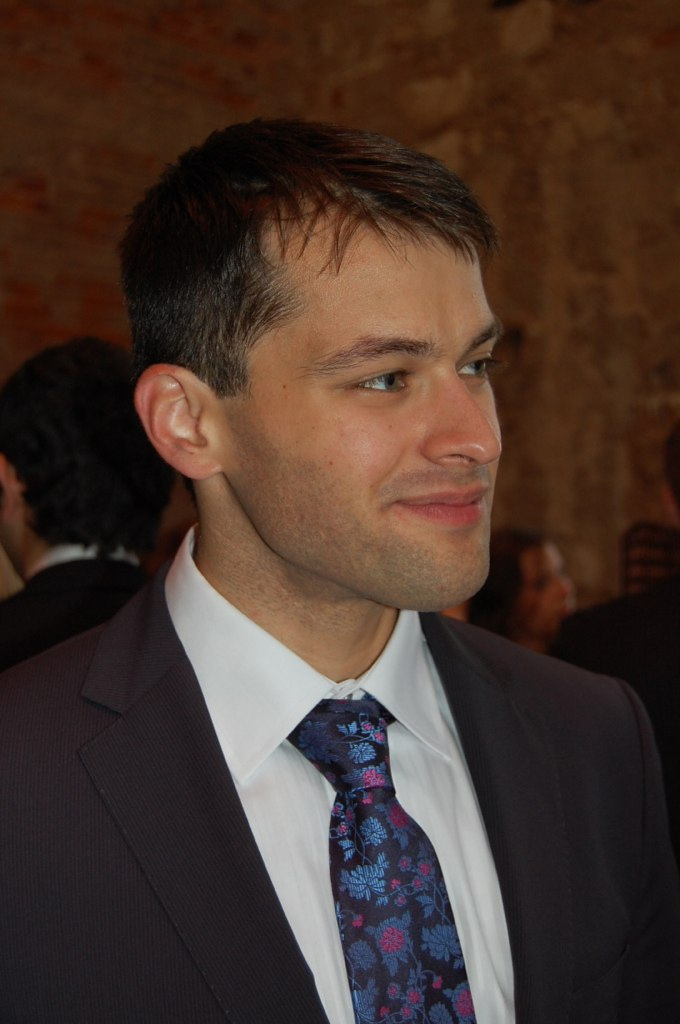 Domagoj Vrgoč合作论文数PUC Chile2Sven Hult合作论文数2




