Poreskoro, with three cat and four dog heads and a snake with a forked tongue as his tail, is responsible for epidemics of contagious diseases in Romany folklore. The Pishachas of Vedic mythology lurk in charnel houses and graveyards, waiting for humans to infect with madness. In Christian demonology, Pythius is known as the ruler of the eighth circle of the Inferno, bestowing heinous and unspeakable tortures on those who have committed fraud. Demons are the stuff of legends, and they are everywhere in mythology and theology. These are just three of the more than thirty I counted that start with the letter P.How lucky we are for the advent of science. A rational tonic, it scatters our demons, demystifying the world for us—or so, at least, we think. As Canales brilliantly shows in this book, our assumption has been far off the mark. In physics, computer science, genetics, neuroscience, and economics, not to mention in the very foundations of rationality itself, an underworld of imaginary creatures has sustained and continues to inhabit modern science. Scientific demons appear in many guises: as atomic and subatomic particle manipulators, as feedback and parallel-processing experts, as messengers who can travel faster than the speed of light, as computer-code spies, gene and bit selectors in evolution and in informatics, as triggers of cascades from the nano level to the level of full-blown ecological and astrophysical theaters. By inventing them, we have learned that causality does not always hold at the level of atoms, that the speed of message transmission is limited, that living systems spend energy, that perpetual-motion machines are impossible, and that there are corners of the universe we have not imagined.We have all heard of Laplace's Demon, and Maxwell's, but who knew that, borrowing from physics, the historian Henry Adams considered the action of demons in geopolitics or that the economist Paul Samuelson analyzed their role in producing more efficient markets? Who knew that the generation that gave us the Internet and artificial intelligence were tasked by their teachers in graduate school to insert as many demons as possible into their programs? Who among us has heard of Darwin's Demon, or Maxwell-Szilárd-Brillouin's, or Monod's, or Loschmidt's? Who is aware of Norbert Weiner's use of demons in conceptualizing cybernetics, or of the great scholar of Kabbalah Gershom Scholem's comparison between Israel's superfast computers and the Golem?As Canales shows convincingly, it has been difficult for both historians and scientists to countenance demons in science, and so they have been written out, in many ways and many instances, of the histories of which they are part and parcel. Thomas Kuhn and even the more radical philosopher Paul Feyerabend both failed to acknowledge in their social critiques of science the extent to which an imaginary underworld of beings has been constitutive of the modern scientific imagination. Ironically, it was the man who provided a hard-and-fast criterion by which to distinguish scientific and nonscientific pursuits, Karl Popper, who ultimately saw the light. Revisiting his classic book The Logic of Scientific Discovery from 1934, he clarified in Postscript to the Logic of Scientific Discovery in 1982 the extent to which every historical era has been characterized by a particular demon. We moderns believe that science is about facts and numbers, but we are mistaken. As Canales beautifully summarizes the stakes of her project, “What first sets science on its path of discovery—then as now—is the continued use of the imagination.”Tracking the fate of demons in modern thought from Descartes to Lord Kelvin to H. G. Wells to David Bohm, and from Conrad Hal Waddington to Henry Compton to Stephen Hawking and Steven Pinker, Bedeviled assumes that the demons of the church or of paganism and the demons of science differ and resemble each other in ways that can be usefully elaborated. What is more crucial, however, is how such demons become real, how they morph from fears to hopes, and from thought experiments into real experiments, and ultimately to things in this world like computer programs, transistors, and nanorobots. From weather systems to messenger RNAs to black holes, demons emerge everywhere. The hard question is: How does the imagination actually drive discovery and understanding? How does it change our world?Perhaps it has been a sidetrack to consider whether we have or have never been modern. Clearly, what reason will not allow, it perennially recruits for a shadowland that helps us to better see our world. Rather than aiming to exorcise science, one day, of all of its methodological and epistemological ghosts, perhaps we might make peace with the notion that every culture struggles with distinguishing truth from falsehood in its own unique way. Such struggles are sensitive to their times and are accomplished through leaps of imagination. But fear not: the debunking of “Western rationality” casts no wet blanket on the project of Enlightenment. If anything, as Canales writes, “an account of science that considers how scientists themselves do science only risks adding new insights into our repertoire of knowledge.” Perhaps, therefore, there is solace to be gained from the dictum, Always choose the Devil you know. Ultimately, there may be no other way forward.
This book should have been called “The Penis Book.” Sure, there are a few clitorises here and there, a few vaginas, but all in all, it’s about penises. Giant penises and tiny penises, singing penises and grabbing penises. Penises and more penises and still more penises galore. It’s an entertaining book. And a beautiful one. When it comes to the male member, exacting pencil illustrations by Julie Terrazzoni (alongside lush color illustrations of the implicated animals) help readers understand through their senses just how ingenious a designer Nature is. Take for example, the four-headed penis of the echidna. A cousin of the platypus, this ancient creature combines reptilian and mammalian features, like all monotremes, and is both oviparous and lactates. When erect, two of the male’s glans draw back, allowing the remaining two engorged ones to fit perfectly into the female. As with the twisting doubleheaded penis of the Common European Adder whose females writhe during sex, the locking mechanism explains why the ensuing mating is so prolonged—30 to 180 minutes. By comparison, we humans perform the deed on average only six minutes. Or what about the two-meter-long prehensile elephant penis? Sometimes referred to as a second trunk, males can use it to scratch their bellies and pick fruit from trees. By comparison the 16.5-inch-long Argentine lake duck penis may seem diminutive, but not if you consider that the duck’s entire body is 12 inches long. That’s peanuts compared to Darwin’s favorite animal, the barnacle, whose penis is fully eight times longer than itself. Attached as it is to a rock or back of a whale or hull of a ship, immobile, that kind of length can come in handy. Trunk shaped (the elephant and tapir), corkscrew shaped (the Muscovy duck), gutter shaped (the crocodile), or otherwise shaped like a jaw (in the fish Phallostethus cuulong, as detailed in the chapter “A Literal Dickhead”), penises in nature are a veritable smorgasbord. But penises don’t just come in different shapes and sizes; they also sport different strategies. The Great Argonaut, Argonauta argo, closely related to squid and octopus, has eight tentacles, but the third on the left is actually a penis. His entire body just 1–2 centimeters long as compared to the female’s 40–50 centimeter stature, the male uses its penis wisely by detaching it once it has crawled into the female’s hatch, an ingenious
A professor of English at Rhodes College in Tennessee, Newstok is exasperated. Not just with education systems these days, but with our modern techno-outlook in general. Luckily, his beloved Shakespeare provides a much needed antidote. For Shakespeare and his day reveled in proving all such dichotomies false. In fourteen short chapters with titles like “Of Thinking,” “Of Craft,” “Of Stock,” and “Of Attention,” Newstok goes about showing how “play emerges through work, creativity through imitation, autonomy through tradition, innovation through constraints, freedom through discipline” (xii). Education should fit each person like a glove, not be standardized like “an electric plug” (6), as Bill Gates hoped. It should be playful and pleasurable—or as Mark Twain said, “its own highest reward” (7)—and not reduced to a set of “skills” bubblesheeted to correspond with narrowly defined “goals.” Our incessant aiming at goals, in fact, is an instance of, as Paul Tillich put it, the “inner contradiction of an end that is the endless production of means without an end” (14) (and apparently every archer knows that aiming at the target is overrated). Rather, education’s end should be human flourishing, and development. As John Ruskin put it, “You must either make a tool of the creature, or a man of him. You cannot make both” (20). Teaching fleeting technical skills that will soon be obsolete rather than actual thinking, we emphasize information and logic over wisdom and creativity (Niels Bohr: “No, no. . . . You are not thinking, you are just being logical”) (x). And we measure what can be easily measured, rather than what really matters, since it’s easier that way. Newstok teaches in Memphis, which according to him is “the bull’s-eye of assessment-driven reforms,” funded to the hilt by the Gates Foundation and Race to the Top. He’s had enough of quality being
When the imposing natural historian Louis Agassiz established a summer camp for fledgling biologists on Penikese Island off the coast of Massachusetts in 1873, he set out to provide his underlings with proper guidance. Every species is a “thought of God,” the towering Swiss told the first cohort of aspirants, and nature is a sacred text. It is therefore the job of the taxonomist to “translate into human language . . . the thoughts of the Creator.” These thoughts convey a clear hierarchy in nature, with the white European man at the top, but other creatures had their place as well. If only students would pay attention, even a dandelion could offer them moral guidance.Among the first cohort on the island was twenty-two-year-old David Starr Jordan of Gainesville, New York, and he was hooked. He would go on to make the naming of new species of fish his lifetime work, placing thousands yet unknown to science on the Tree of Life and becoming America's greatest ichthyologist. But Jordan would need to fight adversity on his way to the top: his bottled collection of slimy holotype specimens was hit by lightning, ravaged by fire, and then, after having been reconstructed, more or less annihilated by the 1906 San Francisco earthquake.The resolve Jordan exhibited in the face of such bad luck (“Despair is a choice!”) would later inspire a young American radio producer and writer by the name of Lulu Miller, who had set out to search for order in the chaos of her own life. She had cheated on her boyfriend and been dumped, was experimenting with her sexuality, pursuing meaning in a world governed by inevitable entropy, and trying to figure out how to find love. Who better than a dead ichthyologist as a moral guide (“I was desperate,” she writes, “to discover the precise line in David Starr Jordan's scripture that justified forward momentum on doomed missions”). But as Miller delved deeper into Jordan's biography, seeking a rudder, she discovered a dark side: his early and influential championing of eugenics at the turn of the twentieth century in America (“for a race of men and a race of cattle are governed by the same laws of selection”), and, quite amazingly, his involvement in the possible murder of his boss. Jane Stanford and her robber baron husband, Leland, a US senator and former governor, had endowed a new university in California, and invited the up-and-coming Jordan to become its first president in 1891. But after Leland's death, the president of Stanford University fell out of favor with Leland's diminutive wife, until she died mysteriously in Hawaii after eating one too many salami and cheese sandwiches, just before ordering Jordan's outright dismissal.Miller's hero, in other words, morphs, as we read along, into a villain. As she reels from the blow (really?), trying to mend a broken heart, she is forced to reconsider the possibility that humans can never fight the second law of thermodynamics, however hard they try to take control of their lives. Nor can they do so by foolheartedly trying to order nature. True freedom, it turns out, stems from obliterating the real and metaphorical Scala Naturae, from absolving ourselves of the felt yet untenable impulse to force structure and system on a universe with no telos or rule, and instead experience it.From what does this deep insight emerge? From cladistics—how could it be otherwise? That system of ordering groups in nature, based on common ancestry rather than the shared characteristics of numerical taxonomy, was developed by the German Willi Hennig in 1950, and it put the lie (posthumously) to Jordan's life. After all, cladistics makes clear that there is no coherent category that we might call fish: “Birds exist,” Miller writes. “Mammals exist. Amphibians exist. But fish, in particular, do not exist.” Of course, we can call all kinds of slimy, swimming, tailed, and scaled creatures fish, but according to cladistics to do so is like making a category of all mammals that are loud. If Dr. Jordan had only known the “dandelion principle”—whereby in some contexts a dandelion can be considered a weed to be culled, in others a medical herb to be valued and cultivated—if only he had not adopted Agassiz's deeply racist theological creed—he might have been free to see nature in all its splendor. He would have known what Lulu Miller has found in her journey of discovery: there can never be a single way of classifying things in this world. “In every organism on which you gaze, there is complexity you will never comprehend,” she writes, having found her deliverance (and, by the way, also the love of her life). This, after all, was “Darwin's creed.”The history and philosophy of science have finally met the millennials. Passionate for learning, open and adaptive to change, challenging of hierarchies and the status quo, freethinking and creative, set on making the world better through personal fulfillment, and obsessed with authenticity and meaningfulness—and with themselves—millennials are now reinterpreting everything from sexuality to race relations to the science of taxonomizing fish. It is fascinating, and also a little scary, to be along for the ride.As it turns out, David Starr Jordan has been a prop all along, an idiosyncratic excuse. Nor does it really seem to matter that scholars have toiled on these historical episodes and philosophical pursuits since well before Miller's journey of discovery. Cladistics is confusedly marshaled to argue against the ordering of nature, but even that seems beside the point. For in some strangely naive and sweet way, using the history and philosophy of science to construct a self-help book emerges as a new way to make them relevant. Now hipsters in Brooklyn know something about David Starr Jordan, the famously forgotten, disgraced ichthyologist who died in 1931. There is a childishness to smile at, while reading this book, but only at the risk of missing something more fundamental. Our gaze on the world is changing, and with it the world itself.
During the 1960s and 1970s population geneticists pushed beyond models of single genes to grapple with the effect on evolution of multiple genes associated by linkage. The resulting models of multiple interacting loci suggested that blocks of genes, maybe even entire chromosomes or the genome itself, should be treated as a unit. In this context, Richard Lewontin wrote his famous 1974 book The Genetic Basis of Evolutionary Change, which concludes with an argument for considering the entire genome as the unit of selection as a result of linkage. Why did Lewontin and others devote so much intellectual energy to the "complications of linkage" in the 1960s and 1970s? We argue that this attention to linkage should be understood in the context of research on chromosomal inversions and co-adapted gene complexes that occupied mid-century evolutionary genetics. For Lewontin, the complications of linkage were an extension of this chromosomal focus expressed in the new language of models for linkage disequilibrium.
The Handbook of the Historiography of Biology is intended to foster a conversation about the historiographic traditions that have informed the history of biology. Explicit historiographical reflections by leading scholars in the history of biology will highlight important trends and innovations in the continuous stream of original research that has created this field. This will make it easier for new scholars to join the field and make their own original contributions.
The historiography of genetics has radically changed for the past few decades. Gregor Mendel’s Versuche uber Pflanzen-Hybriden is no longer simply regarded as a study of the problem of heredity (e.g. Olby 1979; Gliboff 1999; Muller-Wille and Orel 2007; Shan 2021). The so-called “great rediscovery” story has been greatly reshaped (e.g. Meijer 1985; Rheinberger 1995; Simunek, Hosfeld, and Breidbach 2011). The Mendelian-Biometrician controversy has been and is being re-examined (e.g. Sloan 2000; Radick 2005; Pence 2011; Shan 2020). The gene-centric narrative of the history of genetics has been seriously challenged (e.g. Keller 2000; Oyama 2000; Waters 2006). The significance and role of women in the history of genetics is being reassessed (e.g. Dietrich and Tambasco 2007; Richmond 2007; 2017). The history of developmental biology has been retold (e.g. Crowe et al. 2015). The role of non-Western geneticists and the networks they created is being established (e.g. Dietrich 2016). And there is an increasing interest in the role of the genome in the historiography of genetics (e.g. Lamm 2014; 2015). This special issue aims to explore and examine new approaches in the historiography of genetics by integrating the role of women, national and international peripheries and networks, development, genomics, and new frontiers in the methodologies now available to historians of biology.
Book Review| January 01 2021 Thomas Harriot: A Life in Science by Robyn Arianrhod Arianrhod, Robyn, Thomas Harriot: A Life in Science (Oxford: Oxford University Press, 2019), 376 pp. Oren Harman Oren Harman Search for other works by this author on: This Site Google Common Knowledge (2021) 27 (1): 121–122. https://doi.org/10.1215/0961754X-8723279 Cite Icon Cite Share Icon Share Twitter Permissions Search Site Citation Oren Harman; Thomas Harriot: A Life in Science by Robyn Arianrhod. Common Knowledge 1 January 2021; 27 (1): 121–122. doi: https://doi.org/10.1215/0961754X-8723279 Download citation file: Zotero Reference Manager EasyBib Bookends Mendeley Papers EndNote RefWorks BibTex toolbar search Search Dropdown Menu nav search search input Search input auto suggest search filter Books & JournalsAll JournalsCommon Knowledge Search Advanced Search The text of this article is only available as a PDF. Copyright © 2021 Duke University Press2021 Article PDF first page preview Close Modal Issue Section: LITTLE REVIEWS You do not currently have access to this content.
The story of genetics typically omits the original discovery of the molecular nature of DNA: Friedrich Miescher's 1869 discovery of the substance he christened “nuclein”. The article explains how he came... In 1869, the young Swiss biochemist Friedrich Miescher discovered the molecule we now refer to as DNA, developing techniques for its extraction. In this paper we explain why his name is all but forgotten, and his role in the history of genetics is mostly overlooked. We focus on the role of national rivalries and disciplinary turf wars in shaping historical memory, and on how the story we tell shapes our understanding of the science. We highlight that Miescher could just as correctly be portrayed as the person who understood the chemical nature of chromatin (before the term existed), and the first to suggest how stereochemistry might serve as the basis for the transmission of hereditary variation.
The Price equation was a piece of abstract mathematics. What kind of a connection could it possibly have had to George Price's personal life and biography? Here, I will argue that the initial impetus for Price's foray into mathematical population genetics stemmed from a preoccupation with the origins of family, one that was born following a divorce from his wife and the abandonment of their two young girls. What is special about the Price equation is the way in which it associates statistically between two groups, a ‘mother’ and ‘daughter’ population. The association need not mean genetic relatedness in the narrow sense of direct descent, and it allows us to see selection working at different levels simultaneously, a fact that was not lost on William Hamilton. Hamilton was one of the few friends who desperately tried to save Price from falling into the abyss of depression and homelessness in the period following the publication of ‘Selection and covariance’ (Price 1928Nature227, 520–521 (doi:10.1038/227520a0)). Viewed in this light, the Price equation assumes new meaning.This article is part of the theme issue ‘Fifty years of the Price equation’.
“There is grandeur in this view of life, with its several powers, having been originally breathed into a few forms or into one; and that, whilst this planet has gone cycling on according to the fix...
The bustle grew as the ship approached the Battery in lower Manhattan. Photographers, journalists, the curious—all began crowding the dock. Standing on deck wearing a gray wool coat and a black fel...
Hippasus knew things. Secrets that were to be kept from the uninitiated at all cost. But Hippasus had spoken, betraying his sworn word to the sect. Most damning of all was a truth only he and his l...
 Ehud Lamm合作论文数6
 Michael R. Dietrich合作论文数Department of History and Philosophy of Science, The Dietrich School of Arts & Sciences, University of Pittsburgh6
 Sophie Juliane Veigl合作论文数University of Vienna2
 Yafeng Shan合作论文数Dept Philosophy, Univ Kent2Stephen Grand合作论文数1Callaway, Ewen合作论文数1Roseann Campbell合作论文数1Dinah Loon合作论文数1Alison Abbott合作论文数1
 Maria Luisa Avila-Jimenez合作论文数Biol Dept, Univ Ctr Svalbard1mary abraham合作论文数1
 Jennifer M. Rampling合作论文数Department of History, Princeton University1
 Monique Borgerhoff Mulder合作论文数Department of Human Behavior, Ecology and Culture, Max Planck Institute for Evolutionary Anthropology;University of California at Davis;University of Bristol1
 Peter L. Galison合作论文数Department of Art, Film, and Visual Studies, Harvard University/Department of Philosophy, Harvard University/Department of Physics, Harvard University/Department of the History of Science, Harvard University1
 Jim Bell合作论文数School Of Earth and Space Exploration, Arizona State University;MILO Space Science Institute;Department of Astronomy, Cornell University1Patricia Fara合作论文数1
 Meredith Wadman合作论文数Science Magazine1
 David L. Katz合作论文数Diet ID, Inc1
 Virginia Valian合作论文数Department of Psychology, Hunter College, City University of New York1Tanguy Chouard合作论文数1Richard Van Noorden合作论文数Nature1Mark E Borrello合作论文数1Davide Castelvecchi合作论文数1
 Stuart Pimm合作论文数Nicholas School of the Environment, Duke University;Saving Nature1Richard C. Lewontin合作论文数1
 Cyrus C. M. Mody合作论文数Department of History, Rice University1
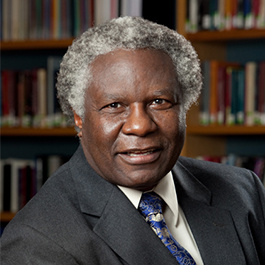 Calestous Juma合作论文数Belfer Center for Science and International Affairs, Harvard Kennedy School, Harvard University1
 Suzanne Alonzo合作论文数Department of Ecology and Evolutionary Biology, University of California, Santa Cruz1




