In this single institution retrospective medical record review, patients diagnosed with colorectal cancer from the years 2018-2022 were evaluated to distinguish an associative linear relationship between diagnosed colorectal cancer and a positive result for the presence of a microorganism. Based on the clinical incidence of this occurrence, it was observed patients with tumors in the left side of the colon had a higher incidence of a positive test result with a dominant microorganism. Species evaluation within this cohort found similarity to microorganisms identified as colorectal cancer biomarkers. These findings support clinical relevance and warrant further consideration for prospective study regarding microorganism involvement in colorectal cancer.
Colorectal carcinoma with sarcomatoid components (which includes so-called carcinosarcomas and sarcomatoid carcinomas) is a rare subtype with 50 reported cases in the literature and overlapping criteria with undifferentiated carcinoma. We collected and described 15 cases from 10 men and 5 women, with a mean age of 66 years. Symptoms included abdominal pain and gastrointestinal bleeding. Most tumors presented in the rectosigmoid region, with a mean size of 8.2 cm. The sarcomatoid component, on average, represented 58% of the tumors and took many forms, including spindled (10 cases), anaplastic (9 cases), and rhabdoid (3 cases); one case showed osteoid matrix. Tumor budding was usually high, and tumor-infiltrating lymphocytes were usually low. The sarcomatoid component was keratin-positive in 10 cases. One case showed loss of mismatch repair protein expression, and 2 cases showed SMARCA4 loss (1 also with SMARCA2 loss). Molecular testing identified mutations in KRAS (n=1), NRAS (n=2), BRAF (n=2), APC (n=1), and TP53 (n=1) in a few cases. Tumors often presented at advanced stage, with 11 cases pT4, 9 cases with nodal metastases, and 7 cases with distant metastases. Follow-up was available for 10 cases (median: 2 months), with 2 alive without disease, 3 alive with disease, and 5 dead. Our findings roughly corresponded with those in previously reported cases. Colorectal carcinoma with sarcomatoid components is rare and aggressive, with a poor prognosis for many patients. We suggest that spindled cells, anaplasia, heterologous elements, and/or a component with definable sarcomatous lineage be used to distinguish colorectal carcinoma with sarcomatoid components from undifferentiated carcinoma.
Primary liposarcoma of the lung is an exceedingly rare phenomenon, with fewer than ten cases reported in prior literature as of 2024. Rarer still, dedifferentiated liposarcoma of pulmonary origin is even less frequently reported, with only two cases having been described. Here, we detail the case of a 66-year-old female who presented with a large left-sided obstructing lung mass and underwent bronchoscopy with tumor cryoprobe debulking. Histological examination revealed a spindle cell sarcoma corresponding to a dedifferentiated liposarcoma with leiomyosarcomatous features as murine double minute 2 translocation was identified by fluorescence in situ hybridization and desmin by immunohistochemistry. The patient completed multiple radiotherapy sessions followed by pneumonectomy and a relatively uncomplicated postoperative course. As pulmonary liposarcoma tends to be poorly responsive to typical chemotherapy, standard management of pulmonary liposarcoma in the absence of metastases is surgical intervention to improve patient survival. Thus, we maintain that pulmonologists, oncologists, and radiologists should have a heightened awareness of this unique pathology in patients presenting with solitary lung mass.
Malakoplakia is a rare acquired histiocytic disorder first described in the urinary bladder. There have been 8 cases reported involving the liver, and this is the first reported case of malakoplakia involving an adult transplanted liver. We report a 63-year-old man with a medical history of orthotopic liver transplantation who presented with fever, chills, and abdominal pain. Imaging found confluent microabscesses in the right lobe of the liver that persisted despite prolonged antibiotics. He was taken to the operating room for a segment 6 hepatectomy of the abscess. Histologically, the inflammatory process showed malakoplakia.
DICER1 syndrome is a rare genetic disorder predisposing young patients to multiple types of cancer. A 17-year-old woman with a history of mixed Sertoli-Leydig cell tumor and juvenile granulosa cell tumor of the left ovary at age 14 presented with a pelvic mass. She underwent fertility preservation cytoreductive surgery and the pathology showed high-grade sarcoma with rhabdomyosarcomatous differentiation. After the surgery, patient received one cycle of chemotherapy but her disease continued to progress. She therefore underwent total hysterectomy, right salpingo-oophorectomy and hyperthermic intraperitoneal chemotherapy followed by consolidation chemotherapy. Magnetic resonance imaging revealed no evidence of the disease before and after the completion of her chemotherapy. Genetic testing confirmed the DICER1 pathogenic variant. However, she presented again with a recurrence of the disease 6 months later and ultimately died of the disease 11 months after the surgery. Our case demonstrates the challenging management of this rare disease in a young patient and the need for new and effective treatments.
Supplementary Figure 3 from Hedgehog-Producing Cancer Cells Respond to and Require Autocrine Hedgehog Activity
Supplementary Figure 4 from Hedgehog-Producing Cancer Cells Respond to and Require Autocrine Hedgehog Activity
Colorectal carcinoma with sarcomatoid components (which includes so-called carcinosarcomas and sarcomatoid carcinomas) is a rare subtype with 50 reported cases in the literature and overlapping criteria with undifferentiated carcinoma. We collected and described 15 cases from 10 men and 5 women, with a mean age of 66 years. Symptoms included abdominal pain and gastrointestinal bleeding. Most tumors presented in the rectosigmoid region, with a mean size of 8.2 cm. The sarcomatoid component, on average, represented 58% of the tumors and took many forms, including spindled (10 cases), anaplastic (9 cases), and rhabdoid (3 cases); one case showed osteoid matrix. Tumor budding was usually high, and tumor-infiltrating lymphocytes were usually low. The sarcomatoid component was keratin-positive in 10 cases. One case showed loss of mismatch repair protein expression, and 2 cases showed SMARCA4 loss (1 also with SMARCA2 loss). Molecular testing identified mutations in KRAS (n=1), NRAS (n=2), BRAF (n=2), APC (n=1), and TP53 (n=1) in a few cases. Tumors often presented at advanced stage, with 11 cases pT4, 9 cases with nodal metastases, and 7 cases with distant metastases. Follow-up was available for 10 cases (median: 2 months), with 2 alive without disease, 3 alive with disease, and 5 dead. Our findings roughly corresponded with those in previously reported cases. Colorectal carcinoma with sarcomatoid components is rare and aggressive, with a poor prognosis for many patients. We suggest that spindled cells, anaplasia, heterologous elements, and/or a component with definable sarcomatous lineage be used to distinguish colorectal carcinoma with sarcomatoid components from undifferentiated carcinoma.
Supplementary Figure 5 from Hedgehog-Producing Cancer Cells Respond to and Require Autocrine Hedgehog Activity
PDF file, 596K, Supplemental Figure S1. Validation of the shRNA knockdown efficiencies. Supplemental Figure S2. UC cell lines require HH signaling for proliferation. Supplemental Figure S3. SMO inhibition induces apoptosis in a subset of UC cell lines. Supplemental Figure S4. A 2507-gene signature predicts the HH-dependence of UC cells for proliferation. Supplemental Figure S5. Constitutive HH signaling is required for the anchorage-independent growth of UC cells. Supplemental Figure S6. UC cells maintain HH signaling activity through ligand expression. Supplemental Figure S7. SMO localizes to primary cilia in UC cell lines. Supplemental Figure S8. In situ hybridization (ISH) confirms the positive staining of SHH and GLI1 IHC in human UC. Supplemental Figure S9. Increased expression of SHH and GLI1 in bladders associated with cystitis cystica.
Supplementary Figure 6 from Hedgehog-Producing Cancer Cells Respond to and Require Autocrine Hedgehog Activity
 Samer Singh合作论文数Institute of Medical Science, Banaras Hindu University16Giambelli Camilla合作论文数16
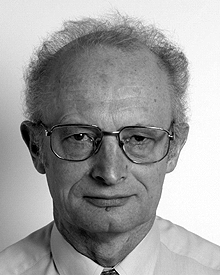 David J. Robbins合作论文数QinetiQ, Malvern16Anthony J. Capobianco合作论文数16Karoline J. Briegel合作论文数Howard Hughes Medical Institute, New York University School of Medicine16Robert Tokhunts合作论文数14
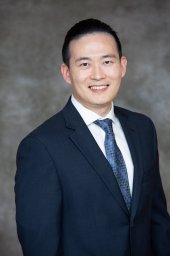 Long Jun合作论文数14Dennis Liang Fei合作论文数Department of Pharmacology and Toxicology, Dartmouth Medical School14
 Jezabel Rodriguez-Blanco合作论文数Departamento de Morfología y Biología Celular, Spain14Mariana Berho合作论文数13
 Andreas Tzakis合作论文数Transplant Center, Department of Surgery, Cleveland Clinic11Binbin Yue合作论文数11
 Ginette Serrero合作论文数11Monica Garcia合作论文数10
 Olga B. Ioffe合作论文数School of Medicine, University of Maryland10
 Asad Ur Rahman合作论文数Dept Gastroenterol, Cleveland Clin Florida9Adalberto Gonzalez合作论文数9
 Wadhwa Vaibhav合作论文数Department of Gastroenterology, Cleveland Clinic Foundation8Black Kendall E合作论文数8
 Ethan Lee合作论文数8Ethan Dmitrovsky合作论文数8
 John A. Goetz合作论文数Department of Pharmacology and Toxicology, Dartmouth Medical School8Tolga Erim合作论文数7
 Douglas M. Hawkins合作论文数School of Statistics, College of Liberal Arts, University of Minnesota;United States Food and Drug Administration7David M. Levi合作论文数7Gennaro Selvaggi合作论文数6
 Avencia Sanchez-Mejias合作论文数Natl Univ Singapore, Ctr Translat Med, Canc Sci Inst Singapore, 14 Med Dr,12-01, Singapore 117599, Singapore6
 Amir Riaz合作论文数Dept Internal Med, Cleveland Clin Florida6Phillip Ruiz合作论文数6
 Margaret Karagas合作论文数Department of Epidemiology, Geisel School of Medicine, Dartmouth College6
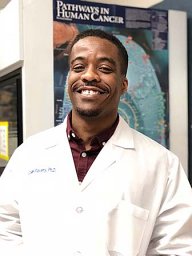 Colin A. Flaveny合作论文数Penn State Univ, University Pk6Phillips Jeffrey T合作论文数6
 Kanwarpreet Tandon合作论文数Digestive Diseases Institute, Cleveland Clinic6
 Wolfgang A Schulz合作论文数Department of Urology, Heinrich-Heine-Universitat Dusseldorf6Zervos Xaralambos B合作论文数6Seigo Nishida合作论文数School of Medicine, University of Miami6
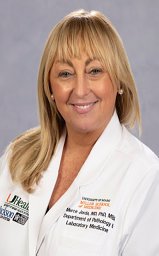 Merce Jorda合作论文数Miami6
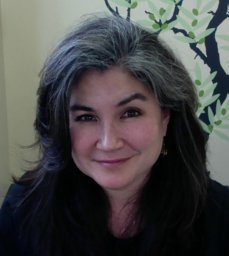 Teresa Zimmers合作论文数University of Miami6
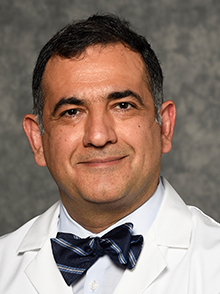 Mehdi S. Mirsaeidi合作论文数Department of Medicine, College of Medicine – Jacksonville, University of Florida;Division of Pulmonary, Critical Care and Sleep Medicine, University of Florida6
 Jonathan F. Head合作论文数6Jang I. Moon合作论文数6Daniela Allende合作论文数6Rafael Miret合作论文数Dept Internal Med, Cleveland Clin Florida5Eddie Island合作论文数5Leyla Maric合作论文数5Sikandar Khan合作论文数5
 Andrew K. Godwin合作论文数Division of Genomic Diagnostics, University of Kansas Medical Center;Center for Genetic Services and Health Equity, University of Kansas Medical Center;Kansas Institute for Precision Medicine, University of Kansas Medical Center5
 Lennox Jeffers合作论文数VA Medical Center, Miami, Florida5
 Tomoaki Kato合作论文数Division of Abdominal Organ Transplantation, Department of Surgery, Columbia University Irving Medical Center;Vagelos College of Physicians and Surgeons, Columbia University5




