We search for generic gravitational-wave transients associated with high-energy neutrinos detected by the IceCube Neutrino Observatory during the third Observing Run (O3) of Advanced LIGO, Advanced Virgo, and KAGRA. We perform an unmodeled, targeted search, which is sensitive to gravitational-wave signals weaker than those reported in real time or in the gravitional-wave transient catalog, and can thus uncover coincidences missed by typical neutrino follow-up searches. We find no statistically significant gravitational-wave signal and set lower bounds on the distance of possible gravitational-wave sources for different emission models.
We present the results of a search for gravitational-wave transients associated with core-collapse supernova SN 2023ixf, which was observed in the galaxy Messier 101 via optical emission on 2023 May 19, during the LIGO–Virgo–KAGRA 15th Engineering Run. We define a five-day on-source window during which an accompanying gravitational-wave signal may have occurred. No gravitational waves have been identified in data when at least two gravitational-wave observatories were operating, which covered ∼14% of this five-day window. We report the search detection efficiency for various possible gravitational-wave emission models. Considering the distance to M101 (6.7 Mpc), we derive constraints on the gravitational-wave emission mechanism of core-collapse supernovae across a broad frequency spectrum, ranging from 50 Hz to 2 kHz, where we assume the gravitational-wave emission occurred when coincident data are available in the on-source window. Considering an ellipsoid model for a rotating proto-neutron star, our search is sensitive to gravitational-wave energy 1 × 10 −4 M ⊙ c 2 and luminosity 2.6 × 10 −4 M ⊙ c 2 s −1 for a source emitting at 82 Hz. These constraints are around an order of magnitude more stringent than those obtained so far with gravitational-wave data. The constraint on the ellipticity of the proto-neutron star that is formed is as low as 1.08, at frequencies above 1200 Hz, surpassing past results.
We present results from a search for X-ray/gamma-ray counterparts of gravitational-wave (GW) candidates from the third observing run (O3) of the LIGO-Virgo-KAGRA network using the Swift Burst Alert Telescope (Swift-BAT). The search includes 636 GW candidates received with low latency, 86 of which have been confirmed by the offline analysis and included in the third cumulative Gravitational-Wave Transient Catalogs (GWTC-3). Targeted searches were carried out on the entire GW sample using the maximum-likelihood Non-imaging Transient Reconstruction and Temporal Search pipeline on the BAT data made available via the GUANO infrastructure. We do not detect any significant electromagnetic emission that is temporally and spatially coincident with any of the GW candidates. We report flux upper limits in the 15-350 keV band as a function of sky position for all the catalog candidates. For GW candidates where the Swift-BAT false alarm rate is less than 10(-3) Hz, we compute the GW-BAT joint false alarm rate. Finally, the derived Swift-BAT upper limits are used to infer constraints on the putative electromagnetic emission associated with binary black hole mergers.
This article describes an unexpected anthropic fine-tuning of gravity: human cognition arose on Earth only because the laws of gravity included gravitational waves. Their link is the heat from decays of the radioactive isotopes 238U and 232Th, which were synthesized mainly in rare explosive mergers of binary neutron stars, brought about by the loss of orbital energy to gravitational radiation. This heat, released in Earth's interior, has (1) maintained plate tectonics and (2) likely helped keep Earth's iron core molten. The core's magnetic field has protected all life from annihilation by the solar wind. More surprisingly, relative brain size, a proxy for cognition, has seen two sharp increases, first for mammals and then for humans, both attributed by evolutionary biologists to adaptations to major climatic changes caused by specific tectonic events. After the second event, the joining of North and South America, human brain size grew from chimpanzee levels to modern human ones. If the laws of gravity had not included gravitational waves, humans would not be capable of studying the laws of gravity.
Electromagnetic follow-up observations of gravitational wave events offer critical insights and provide significant scientific gain from this new class of astrophysical transients. Accurate identification of gravitational wave candidates and rapid release of sky localization information are crucial for the success of these electromagnetic follow-up observations. However, searches for gravitational wave candidates in real time suffer from a nonnegligible false alarm rate. By leveraging the sky localization information and other metadata associated with gravitational wave candidates, GWSkyNet , a machine-learning classifier developed by Cabero et al., demonstrated promising accuracy for the identification of the origin of event candidates. We improve the performance of the classifier for LIGO–Virgo–KAGRA's (LVK) fourth observing run by reviewing and updating the architecture and features used as inputs by the algorithm. We also retrain and fine-tune the classifier with data from the third observing run. To improve the prospect of electromagnetic follow-up observations, we incorporate GWSkyNet into LVK's low-latency infrastructure as an automatic pipeline for the evaluation of gravitational wave alerts in real time. We test the readiness of the algorithm on an LVK mock data challenge campaign. The results show that by thresholding on the GWSkyNet score, noise masquerading as astrophysical sources can be rejected efficiently and the majority of true astrophysical signals can be correctly identified.
We present Fermi Gamma-ray Burst Monitor (Fermi-GBM) and Swift Burst Alert Telescope (Swift-BAT) searches for gamma-ray/X-ray counterparts to gravitational wave (GW) candidate events identified during the third observing run of the Advanced LIGO and Advanced Virgo detectors. Using Fermi-GBM on-board triggers and sub-threshold gamma-ray burst (GRB) candidates found in the Fermi-GBM ground analyses, the Targeted Search and the Untargeted Search, we investigate whether there are any coincident GRBs associated with the GWs. We also search the Swift-BAT rate data around the GW times to determine whether a GRB counterpart is present. No counterparts are found. Using both the Fermi-GBM Targeted Search and the Swift-BAT search, we calculate flux upper limits and present joint upper limits on the gamma-ray luminosity of each GW. Given these limits, we constrain theoretical models for the emission of gamma-rays from binary black hole mergers.
Convolutional Neural Networks (CNNs) have demonstrated potential for the real-time analysis of data from gravitational-wave detector networks for the specific case of signals from coalescing compact-object binaries such as black-hole binaries. Unfortunately, training these CNNs requires a precise model of the target signal; they are therefore not applicable to a wide class of potential gravitational-wave sources, such as core-collapse supernovae and long gamma-ray bursts, where unknown physics or computational limitations prevent the development of comprehensive signal models. We demonstrate for the first time a CNN with the ability to detect generic signals -- those without a precise model -- with sensitivity across a wide parameter space. Our CNN has a novel structure that uses not only the network strain data but also the Pearson cross-correlation between detectors to distinguish correlated gravitational-wave signals from uncorrelated noise transients. We demonstrate the efficacy of our CNN using data from the second LIGO-Virgo observing run, and show that it has sensitivity comparable to that of the gold-standard transient searches currently used by LIGO-Virgo, at extremely low (order of 1 second) latency and using only a fraction of the computing power required by existing searches, allowing our models the possibility of true real-time detection of gravitational-wave transients associated with gamma-ray bursts, core-collapse supernovae, and other relativistic astrophysical phenomena.
Despite the growing number of confident binary black hole coalescences observed through gravitational waves so far, the astrophysical origin of these binaries remains uncertain. Orbital eccentricity is one of the clearest tracers of binary formation channels. Identifying binary eccentricity, however, remains challenging due to the limited availability of gravitational waveforms that include effects of eccentricity. Here, we present observational results for a waveform-independent search sensitive to eccentric black hole coalescences, covering the third observing run (O3) of the LIGO and Virgo detectors. We identified no new high-significance candidates beyond those that were already identified with searches focusing on quasi-circular binaries. We determine the sensitivity of our search to high-mass (total mass $M>70$ $M_\odot$) binaries covering eccentricities up to 0.3 at 15 Hz orbital frequency, and use this to compare model predictions to search results. Assuming all detections are indeed quasi-circular, for our fiducial population model, we place an upper limit for the merger rate density of high-mass binaries with eccentricities $0 < e \leq 0.3$ at $0.33$ Gpc$^{-3}$ yr$^{-1}$ at 90\% confidence level.
The magnetar SGR 1935+2154 is the only known Galactic source of fast radio bursts (FRBs). FRBs from SGR 1935+2154 were first detected by the Canadian Hydrogen Intensity Mapping Experiment (CHIME)/FRB and the Survey for Transient Astronomical Radio Emission 2 in 2020 April, after the conclusion of the LIGO, Virgo, and KAGRA Collaborations' O3 observing run. Here, we analyze four periods of gravitational wave (GW) data from the GEO600 detector coincident with four periods of FRB activity detected by CHIME/FRB, as well as X-ray glitches and X-ray bursts detected by NICER and NuSTAR close to the time of one of the FRBs. We do not detect any significant GW emission from any of the events. Instead, using a short-duration GW search (for bursts <= 1 s) we derive 50% (90%) upper limits of 10(48) (10(49)) erg for GWs at 300 Hz and 10(49) (10(50)) erg at 2 kHz, and constrain the GW-to-radio energy ratio to <= 10(14)-10(16). We also derive upper limits from a long-duration search for bursts with durations between 1 and 10 s. These represent the strictest upper limits on concurrent GW emission from FRBs.
We report the observation of a coalescing compact binary with component masses 2.5-4.5 M-circle dot and 1.2-2.0 M-circle dot (all measurements quoted at the 90% credible level). The gravitational-wave signal GW230529_181500 was observed during the fourth observing run of the LIGO-Virgo-KAGRA detector network on 2023 May 29 by the LIGO Livingston observatory. The primary component of the source has a mass less than 5 M-circle dot at 99% credibility. We cannot definitively determine from gravitational-wave data alone whether either component of the source is a neutron star or a black hole. However, given existing estimates of the maximum neutron star mass, we find the most probable interpretation of the source to be the coalescence of a neutron star with a black hole that has a mass between the most massive neutron stars and the least massive black holes observed in the Galaxy. We provisionally estimate a merger rate density of 55(-47)(+127) Gpc-3yr(-1) for compact binary coalescences with properties similar to the source of GW230529_181500; assuming that the source is a neutron star-black hole merger, GW230529_181500-like sources may make up the majority of neutron star-black hole coalescences. The discovery of this system implies an increase in the expected rate of neutron star-black hole mergers with electromagnetic counterparts and provides further evidence for compact objects existing within the purported lower mass gap.
Magnetars are neutron stars with exceptionally strong dipole magnetic fields which are observed to display a range of x-ray flaring behavior, but the flaring mechanism is not well understood. The third observing run of Advanced LIGO and Virgo extended from April 1, 2019 to March 27, 2020, and contained x-ray flares from known magnetar SGR 1935+2154, as well as the newly-discovered magnetar, Swift J1818-1607. We search for gravitational waves coincident with these magnetar flares with minimally modeled, coherent searches which specifically target both short-duration gravitational waves produced by excited f-modes in the magnetar's core, as well as long-duration gravitational waves motivated by the Quasi-Periodic Oscillations observed in the tails of giant flares. In this paper, we report on the methods and sensitivity estimates of these searches, and the astrophysical implications.
Among the various candidates for dark matter (DM), ultralight vector DM can be probed by laser interferometric gravitational wave detectors through the measurement of oscillating length changes in the arm cavities. In this context, KAGRA has a unique feature due to differing compositions of its mirrors, enhancing the signal of vector DM in the length change in the auxiliary channels. Here we present the result of a search for $U(1)_{B-L}$ gauge boson DM using the KAGRA data from auxiliary length channels during the first joint observation run together with GEO600. By applying our search pipeline, which takes into account the stochastic nature of ultralight DM, upper bounds on the coupling strength between the $U(1)_{B-L}$ gauge boson and ordinary matter are obtained for a range of DM masses. While our constraints are less stringent than those derived from previous experiments, this study demonstrates the applicability of our method to the lower-mass vector DM search, which is made difficult in this measurement by the short observation time compared to the auto-correlation time scale of DM.
Gravitational lensing by massive objects along the line of sight to the source causes distortions to gravitational wave (GW) signals; such distortions may reveal information about fundamental physics, cosmology, and astrophysics. In this work, we have extended the search for lensing signatures to all binary black hole events from the third observing run of the LIGO-Virgo network. We search for repeated signals from strong lensing by (1) performing targeted searches for subthreshold signals, (2) calculating the degree of overlap among the intrinsic parameters and sky location of pairs of signals, (3) comparing the similarities of the spectrograms among pairs of signals, and (4) performing dual-signal Bayesian analysis that takes into account selection effects and astrophysical knowledge. We also search for distortions to the gravitational waveform caused by (1) frequency-independent phase shifts in strongly lensed images, and (2) frequency-dependent modulation of the amplitude and phase due to point masses. None of these searches yields significant evidence for lensing. Finally, we use the nondetection of GW lensing to constrain the lensing rate based on the latest merger-rate estimates and the fraction of dark matter composed of compact objects.
The second Gravitational-Wave Transient Catalog reported on 39 compact binary coalescences observed by the Advanced LIGO and Advanced Virgo detectors between 1 April 2019 15:00 UTC and 1 October 2019 15:00 UTC. We present GWTC-2.1, which reports on a deeper list of candidate events observed over the same period. We analyze the final version of the strain data over this period with improved calibration and better subtraction of excess noise, which has been publicly released. We employ three matched-filter search pipelines for candidate identification, and estimate the astrophysical probability for each candidate event. While GWTC-2 used a false alarm rate threshold of 2 per year, we include in GWTC-2.1, 1201 candidates that pass a false alarm rate threshold of 2 per day. We calculate the source properties of a subset of 44 high-significance candidates that have an astrophysical probability greater than 0.5. Of these candidates, 36 have been reported in GWTC-2. If the 8 additional high-significance candidates presented here are astrophysical, the mass range of events that are unambiguously identified as binary black holes (both objects $\geq 3M_\odot$) is increased compared to GWTC-2, with total masses from $\sim 14 M_\odot$ for GW190924_021846 to $\sim 182 M_\odot$ for GW190426_190642. The primary components of two new candidate events (GW190403_051519 and GW190426_190642) fall in the mass gap predicted by pair instability supernova theory. We also expand the population of binaries with significantly asymmetric mass ratios reported in GWTC-2 by an additional two events (the mass ratio is less than $0.65$ and $0.44$ at $90\%$ probability for GW190403_051519 and GW190917_114630 respectively), and find that 2 of the 8 new events have effective inspiral spins $\chi_\mathrm{eff} > 0$ (at $90\%$ credibility), while no binary is consistent with $\chi_\mathrm{eff} < 0$ at the same significance.
We introduce GWDALI, a new Fisher-matrix, python based software that computes likelihood gradients to forecast parameter-estimation precision of arbitrary network of terrestrial gravitational wave detectors observing compact binary coalescences. The main new feature with respect to analogous software is to assess parameter uncertainties beyond Fisher-matrix approximation, using the derivative approximation for Likelihood (DALI). The software makes optional use of the LSC algorithm library LAL and the stochastic sampling algorithm Bilby, which can be used to perform Monte-Carlo sampling of exact or approximate likelihood functions. As an example we show comparison of estimated precision measurement of selected astrophysical parameters for both the actual likelihood, and for a variety of its derivative approximations, which turn out particularly useful when the Fisher matrix is not invertible.
We search for gravitational-wave (GW) transients associated with fast radio bursts (FRBs) detected by the Canadian Hydrogen Intensity Mapping Experiment Fast Radio Burst Project, during the first part of the third observing run of Advanced LIGO and Advanced Virgo (2019 April 1 15:00 UTC–2019 October 1 15:00 UTC). Triggers from 22 FRBs were analyzed with a search that targets both binary neutron star (BNS) and neutron star–black hole (NSBH) mergers. A targeted search for generic GW transients was conducted on 40 FRBs. We find no significant evidence for a GW association in either search. Given the large uncertainties in the distances of our FRB sample, we are unable to exclude the possibility of a GW association. Assessing the volumetric event rates of both FRB and binary mergers, an association is limited to 15% of the FRB population for BNS mergers or 1% for NSBH mergers. We report 90% confidence lower bounds on the distance to each FRB for a range of GW progenitor models and set upper limits on the energy emitted through GWs for a range of emission scenarios. We find values of order 10 51 –10 57 erg for models with central GW frequencies in the range 70–3560 Hz. At the sensitivity of this search, we find these limits to be above the predicted GW emissions for the models considered. We also find no significant coincident detection of GWs with the repeater, FRB 20200120E, which is the closest known extragalactic FRB.
Modern large-scale physics experiments create datasets with sizes and streaming rates that can exceed those from industry leaders such as Google Cloud and Netflix. Fully processing these datasets requires both sufficient compute power and efficient workflows. Recent advances in Machine Learning (ML) and Artificial Intelligence (AI) can either improve or replace existing domain-specific algorithms to increase workflow efficiency. Not only can these algorithms improve the physics performance of current algorithms, but they can often be executed more quickly, especially when run on coprocessors such as GPUs or FPGAs. In the winter of 2023, MIT hosted the Accelerating Physics with ML at MIT workshop, which brought together researchers from gravitational-wave physics, multi-messenger astrophysics, and particle physics to discuss and share current efforts to integrate ML tools into their workflows. The following white paper highlights examples of algorithms and computing frameworks discussed during this workshop and summarizes the expected computing needs for the immediate future of the involved fields.
We present a search for dark photon dark matter that could couple to gravitational-wave interferometers using data from Advanced LIGO and Virgo's third observing run. To perform this analysis, we use two methods, one based on cross-correlation of the strain channels in the two nearly aligned LIGO detectors, and one that looks for excess power in the strain channels of the LIGO and Virgo detectors. The excess power method optimizes the Fourier Transform coherence time as a function of frequency, to account for the expected signal width due to Doppler modulations. We do not find any evidence of dark photon dark matter with a mass between $m_{\rm A} \sim 10^{-14}-10^{-11}$ eV/$c^2$, which corresponds to frequencies between 10-2000 Hz, and therefore provide upper limits on the square of the minimum coupling of dark photons to baryons, i.e. $U(1)_{\rm B}$ dark matter. For the cross-correlation method, the best median constraint on the squared coupling is $\sim2.65\times10^{-46}$ at $m_{\rm A}\sim4.31\times10^{-13}$ eV/$c^2$; for the other analysis, the best constraint is $\sim 2.4\times 10^{-47}$ at $m_{\rm A}\sim 5.7\times 10^{-13}$ eV/$c^2$. These limits improve upon those obtained in direct dark matter detection experiments by a factor of $\sim100$ for $m_{\rm A}\sim [2-4]\times 10^{-13}$ eV/$c^2$, and are, in absolute terms, the most stringent constraint so far in a large mass range $m_A\sim$ $2\times 10^{-13}-8\times 10^{-12}$ eV/$c^2$.
We present directed searches for continuous gravitational waves from the neutron stars in the Cassiopeia A (Cas A) and Vela Jr. supernova remnants. We carry out the searches in the LIGO data from the first six months of the third Advanced LIGO and Virgo observing run, using the Weave semi-coherent method, which sums matched-filter detection-statistic values over many time segments spanning the observation period. No gravitational wave signal is detected in the search band of 20--976 Hz for assumed source ages greater than 300 years for Cas A and greater than 700 years for Vela Jr. Estimates from simulated continuous wave signals indicate we achieve the most sensitive results to date across the explored parameter space volume, probing to strain magnitudes as low as ~$6.3\times10^{-26}$ for Cas A and ~$5.6\times10^{-26}$ for Vela Jr. at frequencies near 166 Hz at 95% efficiency.
We present the first results from an all-sky all-frequency (ASAF) search for an anisotropic stochastic gravitational-wave background using the data from the first three observing runs of the Advanced LIGO and Advanced Virgo detectors. Upper limit maps on broadband anisotropies of a persistent stochastic background were published for all observing runs of the LIGO-Virgo detectors. However, a broadband analysis is likely to miss narrowband signals as the signal-to-noise ratio of a narrowband signal can be significantly reduced when combined with detector output from other frequencies. Data folding and the computationally efficient analysis pipeline, {\tt PyStoch}, enable us to perform the radiometer map-making at every frequency bin. We perform the search at 3072 {\tt{HEALPix}} equal area pixels uniformly tiling the sky and in every frequency bin of width $1/32$~Hz in the range $20-1726$~Hz, except for bins that are likely to contain instrumental artefacts and hence are notched. We do not find any statistically significant evidence for the existence of narrowband gravitational-wave signals in the analyzed frequency bins. Therefore, we place $95\%$ confidence upper limits on the gravitational-wave strain for each pixel-frequency pair, the limits are in the range $(0.030 - 9.6) \times10^{-24}$. In addition, we outline a method to identify candidate pixel-frequency pairs that could be followed up by a more sensitive (and potentially computationally expensive) search, e.g., a matched-filtering-based analysis, to look for fainter nearly monochromatic coherent signals. The ASAF analysis is inherently independent of models describing any spectral or spatial distribution of power. We demonstrate that the ASAF results can be appropriately combined over frequencies and sky directions to successfully recover the broadband directional and isotropic results.
 Flavio Travasso合作论文数Dipartimento di Fisica e Geologia, Università degli Studi di Perugia;Università di Camerino185
 Peter Raffai合作论文数Department of Atomic Physics, Institute of Physics and Astronomy, Faculty of Natural Sciences, Eotvos Lorand University185
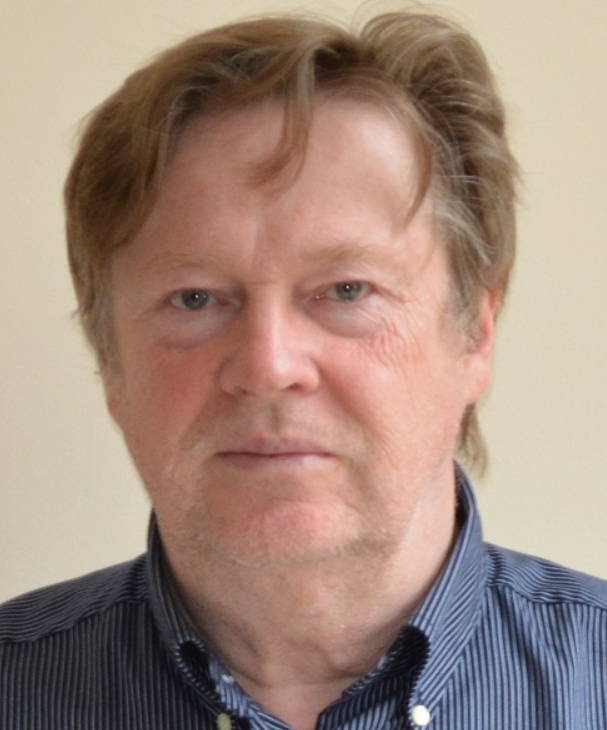 Jo van den Brand合作论文数Nikhef;Faculty of Science and Engineering, Maastricht University;European Gravitational Observatory180
 Ettore Majorana合作论文数Dipartimento di Fisica, Sapienza Università di Roma178
 Kenneth A. Strain合作论文数Institute for Gravitational Research, University of Glasgow177Alicia M. Sintes合作论文数Departament de F ´ õsica;Universitat de les Illes Balears;Departament de F ´ õsica, Universitat de les Illes Balears170
 Salvatore Vitale合作论文数Department of Physics, Massachusetts Institute of Technology168
 Amber Stuver合作论文数Department of Physics, Villanova University166
 Peter Shawhan合作论文数Department of Physics, College of Computer, Mathematical, & Natural Sciences, University of Maryland165
 Jameson Rollins合作论文数The Division of Physics, Mathematics and Astronomy, California Institute of Technology165
 J. S. Kissel合作论文数LIGO Hanford Observatory164
 Sheila Rowan合作论文数School of Physics and Astronomy, University of Glasgow;Institute for Gravitational Research, University of Glasgow163
 Keith Riles合作论文数Department of Physics, College of Literature, Science, and the Arts, University of Michigan163
 Matthew Pitkin合作论文数CEDAR Audio Ltd163
 Daniel Sigg合作论文数College of Arts and Sciences, Case Western Reserve University;California Institute of Technology;LIGO Hanford Observatory163
 David Tanner合作论文数Department of Physics, College of Liberal Arts and Sciences, University of Florida163
 Volker Quetschke合作论文数South Texas Space Science Institute, The University of Texas Rio Grande Valley162
 Susan Scott合作论文数Physics Education Centre, Research School of Physics, College of Science, Australian National University;Centre for Gravitational Astrophysics, Australian National University161H. Overmier合作论文数160
 David H. Reitze合作论文数Laser Interferometer Gravitational-wave Observatory Laboratory, California Institute of Technology;The Division of Physics, Mathematics and Astronomy, California Institute of Technology160
 Szabolcs Márka合作论文数Department of Physics, Columbia University158M. Pedraza合作论文数157
 Calum I. Torrie合作论文数California Institute of Technology157
 Stuart Reid合作论文数University of Strathclyde157
 Steven Penn合作论文数Department of Physics, College of Arts & Sciences, Syracuse University;Hobart & William Smith Colleges157
 Conor Mow-Lowry合作论文数Faculty of Science, The Australian National University157
 Tiffany Summerscales合作论文数Highmark Health156
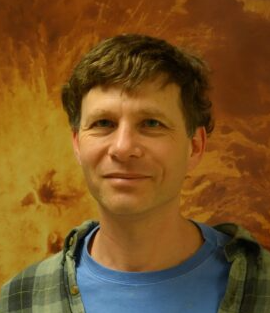 Richard Mittleman合作论文数Kavli Institute for Astrophysics and Space Research, Massachusetts Institute of Technology155
 Guenakh Mitselmakher合作论文数Institute for High Enery Physics and Astrophysics, Department of Physics, College of Liberal Arts and Sciences, University of Florida155V. P. Mitrofanov合作论文数Department of Oscillations Physics, Lomonosov Moscow State University154
 Gerardo Moreno合作论文数LIGO Hanford Observatory154
 Christopher Messenger合作论文数School of Physics & Astronomy, University of Glasgow154
 Bernard Schutz合作论文数Gravity Exploration Institute, School of Physics and Astronomy, Cardiff University154L. Wallace合作论文数152
 Alberto Vecchio合作论文数School of Physics and Astronomy, University of Birmingham152
 Roman Schnabel合作论文数Institut für Quantenphysik, Fachbereich Physik, Universität Hamburg;Institut für Laserphysik, Faculty of Mathematics, Informatics and Natural Sciences, Universität Hamburg;Noisy Labs151
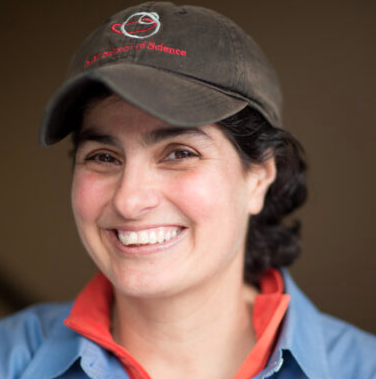 Nergis Mavalvala合作论文数Department of Physics, School of Science, Massachusetts Institute of Technology;Kavli Institute for Astrophysics & Space Research, Massachusetts Institute of Technology151D. Sellers合作论文数147
 Andreas Freise合作论文数Department of Physics and Astronomy, Vrije Universiteit Amsterdam147B. O’Reilly合作论文数Christopher Newport University147E. Maros合作论文数146
 Benno Willke合作论文数Max Planck Institute for Gravitational Physics;Leibniz Universität Hannover146G. Mendell合作论文数145M. Lormand合作论文数145
 John T. Whelan合作论文数Center for Computational Relativity and Gravitation, College of Science, Rochester Institute of Technology;School of Mathematical Sciences, College of Science, Rochester Institute of Technology145
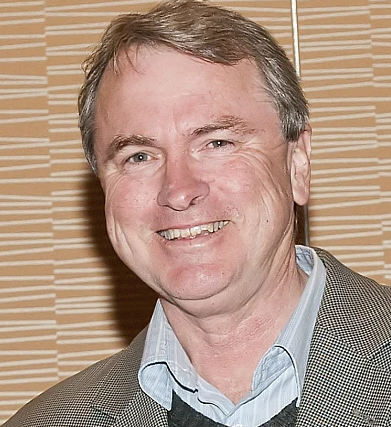 David McClelland合作论文数Centre for Gravitational Astrophysics, Research School of Physics, Australian National University145
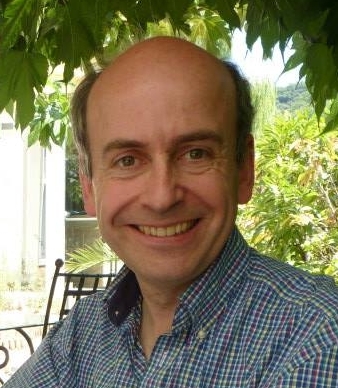 Graham Woan合作论文数School of Physics & Astronomy, University of Glasgow144F. Nocera合作论文数144
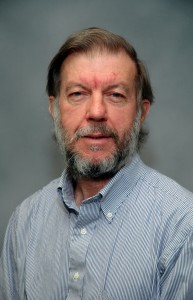 Bernard F. Whiting合作论文数Institute for Theoretical Physics, University of Florida;Department of Physics, College of Liberal Arts and Sciences, University of Florida144




