Moving to a circular economy (CE) is imperative. Wide-ranging economic and societal benefits, the capacity to grow and thrive, creation of green jobs, upskilling the workforce, reduction of import reliance, improvement of infrastructure, and a brighter outlook for future generations are all possible. Fundamentally, more action is needed urgently from government to unlock the scale of finance needed for this opportunity to have the greatest positive impact. Crucially, the value of utilising ‘waste’ carbon must be recognised, underpinned by supportive policies that promote blended finance investment in non-fossil carbon technologies. Whilst fossil carbon pervades the market, switching to alternative carbon sources will not be feasible without concerted policy and financial support.
The steel industry is responsible for between 7
As the youngest of the three sub-fields within sustainability assessment, development of social impact assessment lags behind life cycle and techno-economic assessments. This is manifested in comparatively lacking methodological maturity. The calculation of impact indicator results, achieved through the use of characterisation models, is a prime example of the field’s immaturity. This research initially identifies current methodologies observed within social impact assessment. This reveals that impact pathway characterisation models, analogous to those seen in life cycle assessment, have primarily been neglected; instead, research has been focused on less reproducible and more subjective reference scale approaches. Redressing this balance, a set of seven UNEP and SETAC indicators are evaluated, developing novel impact pathway-based characterisation models. Focussing on the effects of stimulating and de-stimulating factors on indicators, identifying hotspots where negative social impacts are likely to arise. The presented methodologies are tailored to applications involving the assessment of potential carbon dioxide utilisation (CDU) value chains. This focus results in open access characterisation models that are indiscriminate of technology readiness level, requiring no primary process data. Data from the World Bank and its partner organisations are utilised, generating complete results across all indicators for 129 countries. Development of these quantifiable characterisation models delivers significant value in the standardisation of assessment procedure and facilitates inter-assessment comparability, a benefit to stakeholders ranging from practitioners to commissioners.
With the monumental shift in industrial interest towards sustainable, defossilised supply chains in response to the climate crisis, the understanding of alternative supply chain viability has never been more vital. As part of their Clean Future initiative, Unilever Home Care has committed to the phasing out of fossil carbon sources from their supply chains. To better assess the viability of these prospective supply chains within a quick timeframe, a counterfactual screening method has been developed which pits the performance of eleven selected sustainability indicators against a success baseline, returning a results array on the sustainability performance of these routes. This paper briefly introduces the initiatives laid out by Unilever Home Care, before undertaking a concise review on existing sustainability screening methods from the literature, with the key limitations of these methods outlined. In response to these limitations, a new methodology is then defined, with a case study of defossilised Linear Alkylbenzene Sulfonate (LAS)-appropriate olefins being applied. This study both illustrates the functionality of the methodology, as well as provides an insight into the viability of the assessed supply chains. Within the study, 18 technologies forming 18 routes were assessed, spanning green ("from plants"), grey ("from plastic waste") and purple ("from CO2") feedstocks (according to the carbon rainbow). General results trends suggest that green and grey routes hold much greater viability than the purple routes, given their relatively lower capital and operating costs, as well as their superior likelihood of being commercially viable by 2030. Plans for further research are also provided, with plans for results validation included. The development of a novel sustainable supply chain screening method via performance distribution prediction for olefins.
This chapter discusses the many options to expand carbon dioxide (CO2) utilization beyond the current level of around 100 MtCO2/yr. The two classes of options are described—low- and high-energy processes. High-energy catalytic and electrochemical processes converting CO2 to a range of fuels and fuel precursors, including methanol, dimethyl ether, formic acid, and ethylene are described. Systems and processes for algal biomass cultivation and conversion to biofuels are discussed. Low energy processes, including the production of a variety of carbonate-based construction materials and the use of CO2 in the curing of concrete products, are then reviewed. Low-volume products that provide an economic niche to encourage technology development are also briefly described. Some challenges for CDU deployment are discussed, including sustainability and ethical supply of raw materials, cost competitiveness, and product compatibility, and some concluding remarks and future perspectives complete the chapter.
To stand a chance of achieving net zero greenhouse gas emissions and in the implementation of UN Sustainable Development Goals society must move away from being consumers of carbon to being custodians. While SDG 7 focuses on clean energy, chemicals and materials are themselves energy, energy stored in chemical bonds. Behavioural change is needed to appreciate the societal value of carbon and to recycle carbon already present in the environment, so extracting more fossil carbon from the Earth is avoided. Society needs to develop new technologies such as carbon capture and utilisation to create value-added products from what is otherwise waste. To do this effectively, the social impact of change must be considered, its effect on the environment, and whether this transition makes economic sense. If there is social injustice, then new approaches are needed. If there is no environmental benefit, then interventions must be reconsidered. This becomes an iterative process seeking to achieve the best-balanced scenarios. As new technologies develop, interventions by governments providing aid to subsidise and accelerate new technologies will be needed. Care must be taken to ensure fiduciary duty is applied so the best possible use of public money is delivered. In this paper a systems approach is taken in developing a new circular carbon economy, where models are developed to include lifecycle, techno-economic, and social impact assessment studies into any policy development and commercialisation plans. It is vitally important to develop this methodological thinking early in that planning phase to avoid serious errors that could be costly financially, socially and environmentally. In early stages of development, a coarse-grained approach is required focusing on hotspot analysis. Once hotspots have been identified, finer grained analysis can be undertaken to develop rational approaches to process and policy development. It is vitally important that all disciplines are included within the development of such models, relying not only on engineers and scientists, but also social scientists, psychologists and financial experts. If such an approach is developed now, there is a good chance of identifying acceptable pathways to achieving sustainable development goals. This paper addresses gaps in the CO2 utilisation where social and fiscal issues are often overlooked.
Supplementary material: Reaction indexes, Conservation equations, boundary conditions and used coefficients. Additional experimental results, Experimental data fitting, Stream properties and composition of the CO2 plant, Life Cycle Assessment indicators, assumptions and data input
• New survey data on trustworthiness and accountability in wood burner regulation. • Results suggest strengthening regulatory pressures on consumer compliance. • Results support enhancing collaboration across health/environment public agencies. • Results suggest need to empower national level expert delegated agencies in the UK.
Environmental sustainability assessments have been conducted around consumer goods since the 1960's, these adopted comparative approaches and followed no accepted methodology. As sustainability assessment rose to prominence, methodological standardization was universally called for. Furthermore, two additional “strands” of sustainability emerged, economic and societal; forming what has recently been termed the “triple helix”. Efforts have been made across the CCU (carbon capture and utilization) community to align, or “harmonize”, the respective assessment formats. Ultimately, targeting enhanced understanding of the interconnections and trade-offs between the three strands, and communication of findings to both industry and policymakers. This review examines key methodologies presented in the field. These were collated through targeted literature searches, focussing on standalone, CCU specific, and harmonized methodologies. Relevant guidance originates with ISO's 2007 standards and terminates in McCord et al's (2021) “triple helix framework”. Other key works reviewed include UNEP / SETAC's S-LCA (social life cycle assessment) guidelines, and GCIs (Global CO2 Initiative) integrated LCA and TEA (techno-economic assessment) guidelines. Analysis of the identified methodologies first considers each assessment strand in isolation, subsequently evaluating efforts toward their CDU specific harmonization and integration. Using the collated primary and secondary literature, a taxonomy of assessment methodologies leading to the triple helix framework is produced. Key methodological difficulties and divergent schools of thought are discussed, notably the prescription of system boundaries, impact indicators, and characterization methods. The overarching conclusion of the review is that while a robust combined LCA and TEA assessment methodology has been attained, holistic approaches incorporating social sustainability are still lacking; with substantial problems remaining unsolved. A majority of these originate from SIA's immaturity relative to LCA and TEA, causing issues around data availability and handling methods; exacerbated by the presence of qualitative data. Until a greater degree of maturity is achieved, SIA should be utilized within holistic assessments as a screening tool, determining the suitability of a process or system for more granular assessment.
As the world focuses on decarbonisation pathways to halt the warming of the atmosphere, new, more sustainable production methods of fuels and materials are at centre stage.
Urea is an important chemical compound used predominantly in the agricultural industry as a nitrogen-based fertilizer, while having many other applications in various industries. The main impediment to producing urea in a sustainable manner is fossil fuels being the main feedstock for its production and its energy intensive process. Therefore, sustainable design principles need to be adopted for green urea synthesis. For this to occur, based on the theory of change, sustainability in the production of the hydrogen (H2) required for ammonia (NH3) and the NH3 needed for urea synthesis must take place. Unsustainability throughout each stage of the integrated H2-NH3-urea production process is the main problem associated with current urea production methods. In this study, a review of various sustainable H2 and NH3 production technologies required for sustainable urea production has been carried out. The reviewed technologies are in the early stages of development and are yet to be adopted into industrial level production.
Dimethyl ether (DME) could have a promising future as a sustainable diesel fuel replacement as it requires only relatively minor engine modifications. It can be produced from renewable H 2 and captured CO 2 using Power-to-X technologies. To gain support through the EU Renewable Energy Directive, the production and use of CO 2 -derived DME as a fuel needs to produce emission savings of at least 70% over the petrodiesel alternative. This study assesses the carbon footprint of producing DME via the sorption-enhanced DME synthesis (SEDMES) process and using it as a transport fuel, compared to producing and using fossil-based petrodiesel. The cradle-to-grave (well-to-wheel) carbon footprint of using DME as a transport fuel is found to be 77% lower than for petrodiesel, if offshore wind power is used for H 2 synthesis and DME production. If renewable energy is also used for CO 2 capture and waste heat is used for the DME production and purification steps, the DME carbon footprint has the potential to be over 90% lower than that of the fossil-fuel comparator.
“Sustainable Carbon Capture – Technologies and Applications” is a muti-author book edited by Humbul Suleman, Philip Loldrup Fosbøl, Rizwan Nasir and Mariam Ameen, and published in 2022 by CRC Press, part of the Taylor & Francis Group.
With “defossilisation” at the core of many sustainability goals within industry, the exploration of new synthesis routes to chemicals has never been more vital. As part of their Clean Futures initiative, Unilever Home Care has published the Carbon Rainbow, a scheme which categorizes chemical sources into different “colors,” depending on their derivation. One of the sustainability goals of the Carbon Rainbow is to phase out non-renewable “black” carbon from supply chains by 2030. This complements the goals of the Clean Futures initiative, which looks toward a Net-Zero impact from all products from a cradle-to-shelf scope by 2039. Given the substantial contributions to atmospheric CO 2 emissions from the production and use of conventional surfactants, this paper reviews methods to form Linear Alkylbenzene Sulfonate (LAS) through means which look to utilize Carbon Rainbow-categorized carbon sources outside of traditional fossil sources. The focus when reviewing each method is the overall defossilization of the LAS production process. The inventories of new defossilised methods collated within this research will ultimately provide the backbone for a future study on sustainability assessment screening. Through a literature search and technological overview, the construction of a tree diagram showing many new routes to LAS-appropriate olefins has been accomplished, illustrating the breadth of technologies available that share the common goal of defossilization. The expanse of technologies works well as to provide options to the necessary companies, though also resulting in a vast array of options to consider and assess before pursuing the optimum route. In total, 19 technologies were reviewed, forming a map containing 27 different supply chain routes from feedstock to LAS-appropriate olefins. This research therefore also shows the need for a short-form sustainability screening in order to green-light technologies which are suitable for a long-form sustainability assessment before any new process is adopted.
“Advances in Carbon Capture and Utilization” is a multi-author book that is edited by Deepak Pant, Ashok Kumar Nadda, Kamal Kishore Pant and Avinash Kumar Agarwal and published by Springer.
The direct capture of carbon dioxide from the environment is increasingly becoming an urgent necessity to mitigate the worst effects of climate change. However, the high energy demands require creative implementation strategies to minimize the diversion of already-stretched conventional resources toward this cause. To alleviate these issues, creative implementation strategies must be devised to lower the barrier to economic applicability of DAC systems so that they can be widely deployed. To this end, the work described herein presents innovative technology for deploying specially designed, self-contained DAC railcars on both diesel and electrified rail lines outfitted with battery arrays, CO2 direct air capture systems, compression equipment, and ancillary gear that uniquely exploits the substantial sustainable energy generated on-board the train through regenerative braking as well as from solar panels mounted on compatible railcars. The units are equipped with large intakes that extend up into the slipstream of the moving train and collect CO2 feedstock air by fluidic, ramjet-type processes thus obviating the need for the fans required by land-based systems and places no demand on energy or land resources. Unloaded daily at crew change or fueling stops into regular CO2 tank cars, the network will curate delivery of the harvested CO2 to on-route sites for permanent underground sequestration, or delivery to end-users as feedstock for the circular carbon economy. The technology will harvest meaningful quantities of CO2 at far lower costs and has the conservative potential to reach annual productivity of 0.45 gigatons by 2030, 2.9 gigatons by 2050, and 7.8 gigatons by 2075 with each car having an annual capacity of 3,000 tonnes of CO2 in the near term and more as the technology progresses.
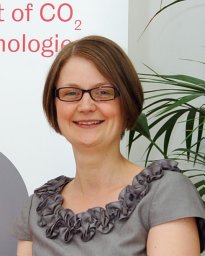 Katy Armstrong合作论文数UK Centre for Carbon Dioxide Utilisation, University of Sheffield25
 George R M Dowson合作论文数24
 John Goodby合作论文数Department of Chemistry, University of York20
 Stephen Mccord合作论文数UK Ctr Carbon Dioxide Utilisat, Univ Sheffield17
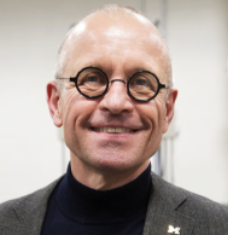 Volker Sick合作论文数Department of Mechanical Engineering, University of Michigan, Ann Arbor12
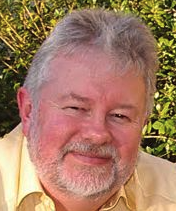 Duncan Bruce合作论文数Department of Chemistry, University of York12
 Stephen J. Haswell合作论文数12
 Peter Maitlis合作论文数Department of Chemistry, University of Sheffield11
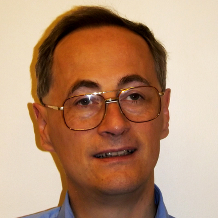 Michael North合作论文数Department of Chemistry, University of York9Ana Villa Zaragoza合作论文数8DA DUNMUR合作论文数8M. Hird合作论文数8
 Grant Wilson合作论文数School of Chemical Engineering, College of Engineering and Physical Sciences, University of Birmingham8
 Helen Gleeson合作论文数8
 Elena Lalinde合作论文数Departamento de Química Inorgánica, Universidad de Zaragoza8Lorenzo Cremonese合作论文数7Daniel Reed合作论文数7
 Niall Mac Dowell合作论文数Centre for Environmental Policy, Faculty of Natural Sciences, Imperial College London7
 Gillian M. Greenway合作论文数Department of Chemistry, University of Hull7
 Elsje Alessandra Quadrelli合作论文数Institut de Chimie de Lyon, Université de Lyon7David H. Brown合作论文数Department of Biological Chemistry, Washington University School of Medicine7Nam T. S. Phan合作论文数6V Skelton合作论文数6
 Joseph G. Yao合作论文数Dept Chem Engn, Imperial Coll London6
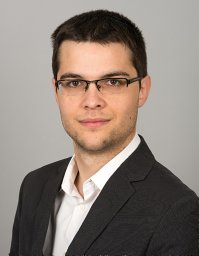 Guillermo Garcia-Garcia合作论文数Institute of Agricultural and Fisheries Research and Training (IFAPA),, Centre ‘Camino de Purchil’6
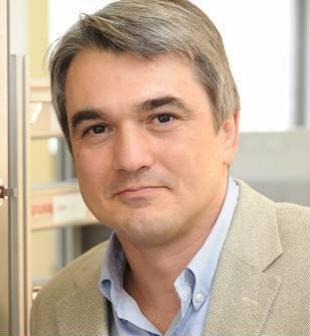 Stefano Brandani合作论文数Chemical Engineering, School of Engineering, The University of Edinburgh6
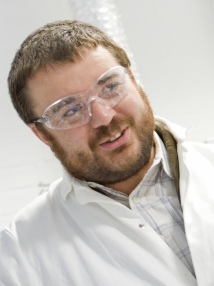 Paul Fennell合作论文数Department of Chemical Engineering, Faculty of Engineering, Imperial College London6Im Saez合作论文数6
 Harry Adams合作论文数Department of Chemistry, University of Sheffield6Andrew J. Slaney合作论文数6
 Jon Gibbins合作论文数Department of Mechanical Engineering, University of Sheffield/UK CCS Research Centre6
 Somsak Supasitmongkol合作论文数6
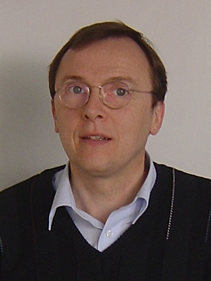 Reinhard Schomäcker合作论文数Faculty II Mathematics and Natural Sciences, Technische Universität Berlin6W. K. Robinson合作论文数5Edward G. Platt合作论文数5
 Katie J. Lamb合作论文数5Tim Langhorst合作论文数5
 Till Strunge合作论文数School of Engineering and Physical Sciences, Heriot-Watt University5
 Ian David Victor Ingram合作论文数Dept Nat Sci, Manchester Metropolitan Univ5Stavros Michailos合作论文数Dept Mech Engn, Univ Sheffield5
 Rosa Cuellar Franca合作论文数Department of Chemical Engineering and Analytical Science, School of Engineering, Faculty of Science and Engineering, The University of Manchester5
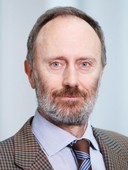 Marco Mazzotti合作论文数Institute of Science, Technology and Policy, Eidgenössische Technische Hochschule Zürich;Department of Mechanical and Process Engineering, Eidgenössische Technische Hochschule Zürich5
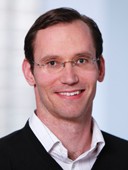 Christoph Müller合作论文数Department of Mechanical and Process Engineering, Eidgenössische Technische Hochschule Zürich5
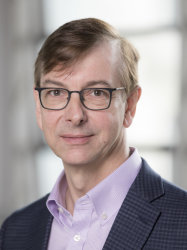 J. P. Martin Trusler合作论文数Department of Chemical Engineering, Faculty of Engineering, Imperial College London5
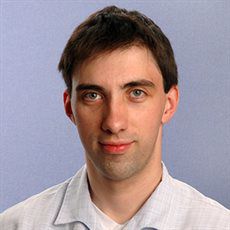 Christian Pfrang合作论文数School of Geography, Earth and Environmental Sciences, College of Life and Environmental Sciences, University of Birmingham5
 Michael Hird合作论文数Department of Chemistry, University of Hull5
 Walter Leitner合作论文数Max-Planck-Institute for Chemical Energy Conversion;Max-Planck-Institute for Coal Research;Institute of Technical and Macromolecular Chemistry, RWTH Aachen University5Chu Chuan Dong合作论文数5Ekk Sinn合作论文数5




